
Yum Brands (YUM)
Market Price (10/15/2026): $147.61 | Market Cap: $40.6 BilSector: Consumer Discretionary | Industry: Restaurants
Yum Brands (YUM)
Market Price (10/15/2026): $147.61Market Cap: $40.6 BilSector: Consumer DiscretionaryIndustry: Restaurants
Investment Highlights Why It Matters Detailed financial logic regarding cash flow yields vs trend-riding momentum.
Attractive yieldTotal YieldTotal Yield = Earnings Yield + Dividend Yield, Earnings Yield = Net Income / Market Cap Dividend Yield = Total Dividends / Market Cap is 7.5%, Dividend Yield is 2.0%, ERPEquity Risk Premium (ERP) = Total Yield - Risk Free Rate, Reflects the premium above risk free assets offered by the investment. is 3.6% Attractive operating marginsOp Mgn LTMOperating Margin = Operating Income / Revenue Reflects profitability before taxes and before impact of capital structure (interest payments). is 30% Attractive cash flow generationCFO/Rev LTMCash Flow from Operations / Revenue (Sales), Last Twelve Months (LTM) is 24%, FCF/Rev LTMFree Cash Flow / Revenue (Sales), Last Twelve Months (LTM) is 19%, CFO LTM is 2.1 Bil Stock buyback supportStock Buyback 3Y Total is 1.7 Bil Low stock price volatilityVol 12M is 24% Megatrend and thematic driversMegatrends include E-commerce & Digital Retail, Vegan & Alternative Foods, and Experience Economy & Premiumization. Themes include Last-Mile Delivery, Show more. | Weak multi-year price returns2Y Excs Rtn is -22%, 3Y Excs Rtn is -49% | Expensive valuation multiplesP/SPrice/Sales ratio is 4.6x Key risksYUM key risks include [1] the persistent underperformance and declining relevance of its Pizza Hut brand and [2] significant exposure to geopolitical and regulatory instability stemming from its heavy business concentration in China. |
| Attractive yieldTotal YieldTotal Yield = Earnings Yield + Dividend Yield, Earnings Yield = Net Income / Market Cap Dividend Yield = Total Dividends / Market Cap is 7.5%, Dividend Yield is 2.0%, ERPEquity Risk Premium (ERP) = Total Yield - Risk Free Rate, Reflects the premium above risk free assets offered by the investment. is 3.6% |
| Attractive operating marginsOp Mgn LTMOperating Margin = Operating Income / Revenue Reflects profitability before taxes and before impact of capital structure (interest payments). is 30% |
| Attractive cash flow generationCFO/Rev LTMCash Flow from Operations / Revenue (Sales), Last Twelve Months (LTM) is 24%, FCF/Rev LTMFree Cash Flow / Revenue (Sales), Last Twelve Months (LTM) is 19%, CFO LTM is 2.1 Bil |
| Stock buyback supportStock Buyback 3Y Total is 1.7 Bil |
| Low stock price volatilityVol 12M is 24% |
| Megatrend and thematic driversMegatrends include E-commerce & Digital Retail, Vegan & Alternative Foods, and Experience Economy & Premiumization. Themes include Last-Mile Delivery, Show more. |
| Weak multi-year price returns2Y Excs Rtn is -22%, 3Y Excs Rtn is -49% |
| Expensive valuation multiplesP/SPrice/Sales ratio is 4.6x |
| Key risksYUM key risks include [1] the persistent underperformance and declining relevance of its Pizza Hut brand and [2] significant exposure to geopolitical and regulatory instability stemming from its heavy business concentration in China. |
Qualitative Assessment
AI Analysis | Feedback
Yum Brands (YUM) stock has lost about 10% since 6/30/2026 because of the following key factors:
1. Taco Bell Cyclospora Outbreak Impacted Sales.
In July 2026, Taco Bell, a key growth driver for Yum Brands, experienced a cyclospora outbreak linked to contaminated lettuce, sickening thousands and leading to hundreds of hospitalizations. This public health issue caused Taco Bell's U.S. same-store sales to decline by 2% quarter-to-date through July 27, 2026, despite some moderation in declines thereafter. Reports indicated a significant 12.2% slump in Taco Bell customer traffic.
2. Pizza Hut Divestiture and Continued Underperformance.
Yum Brands' strategic decision to divest Pizza Hut, with the deal expected to close in fiscal Q3 2026, was influenced by the brand's persistent underperformance and declining same-store sales. In fiscal Q2 2026 (ending June 30, 2026), Pizza Hut's global same-store sales were down 1%. While the divestiture is anticipated to allow Yum to focus on higher-growth segments like Taco Bell and KFC, the "slower-paced Pizza Hut transition" and "Pizza category headwinds" were cited by analysts as ongoing challenges.
Show more
Yum Brands (YUM) stock has lost about 10% since 6/30/2026 because of the following key factors:
1. Taco Bell Cyclospora Outbreak Impacted Sales.
In July 2026, Taco Bell, a key growth driver for Yum Brands, experienced a cyclospora outbreak linked to contaminated lettuce, sickening thousands and leading to hundreds of hospitalizations. This public health issue caused Taco Bell's U.S. same-store sales to decline by 2% quarter-to-date through July 27, 2026, despite some moderation in declines thereafter. Reports indicated a significant 12.2% slump in Taco Bell customer traffic.
2. Pizza Hut Divestiture and Continued Underperformance.
Yum Brands' strategic decision to divest Pizza Hut, with the deal expected to close in fiscal Q3 2026, was influenced by the brand's persistent underperformance and declining same-store sales. In fiscal Q2 2026 (ending June 30, 2026), Pizza Hut's global same-store sales were down 1%. While the divestiture is anticipated to allow Yum to focus on higher-growth segments like Taco Bell and KFC, the "slower-paced Pizza Hut transition" and "Pizza category headwinds" were cited by analysts as ongoing challenges.
3. Broad Macroeconomic Headwinds and Consumer Spending Pressures.
The broader restaurant industry in 2026 has faced modest growth and persistent cost pressures, contributing to a challenging environment for Yum Brands. Tight consumer budgets, particularly for low- and middle-income households, have led to a pullback in spending, with over 60% of restaurant operators reporting traffic declines in 2025 and 40% of consumers reducing their restaurant frequency. High food and labor costs, coupled with overall inflation, continue to strain profitability across the sector.
4. Analyst Price Target Adjustments.
Between late September and early October 2026, several analyst firms reduced their price targets for Yum Brands. TD Cowen lowered its target to $177 from $180, Guggenheim cut its target to $155 from $180, and J.P. Morgan adjusted its target to $150 from $160. Additionally, Argus downgraded the stock to a "Hold" rating from a "Buy". These adjustments, while often maintaining bullish ratings, signal a more cautious outlook on the stock's near-term potential.
Show less
Stock Movement Drivers
Fundamental Drivers
The -7.8% change in YUM stock from 6/30/2026 to 10/14/2026 was primarily driven by a -28.2% change in the company's P/E Multiple.| (LTM values as of) | 6302026 | 10142026 | Change |
|---|---|---|---|
| Stock Price ($) | 159.06 | 146.69 | -7.8% |
| Change Contribution By: | |||
| Total Revenues ($ Mil) | 8,486 | 8,724 | 2.8% |
| Net Income Margin (%) | 20.5% | 25.4% | 24.1% |
| P/E Multiple | 25.4 | 18.2 | -28.2% |
| Shares Outstanding (Mil) | 277 | 275 | 0.7% |
| Cumulative Contribution | -7.8% |
Market Drivers
6/30/2026 to 10/14/2026| Return | Correlation | |
|---|---|---|
| YUM | -7.8% | |
| Market (SPY) | 3.1% | -2.3% |
| Sector (XLY) | -4.9% | 6.7% |
Fundamental Drivers
The -4.7% change in YUM stock from 3/31/2026 to 10/14/2026 was primarily driven by a -34.0% change in the company's P/E Multiple.| (LTM values as of) | 3312026 | 10142026 | Change |
|---|---|---|---|
| Stock Price ($) | 153.95 | 146.69 | -4.7% |
| Change Contribution By: | |||
| Total Revenues ($ Mil) | 8,214 | 8,724 | 6.2% |
| Net Income Margin (%) | 19.0% | 25.4% | 33.9% |
| P/E Multiple | 27.6 | 18.2 | -34.0% |
| Shares Outstanding (Mil) | 279 | 275 | 1.5% |
| Cumulative Contribution | -4.7% |
Market Drivers
3/31/2026 to 10/14/2026| Return | Correlation | |
|---|---|---|
| YUM | -4.7% | |
| Market (SPY) | 18.6% | -1.3% |
| Sector (XLY) | 2.5% | 14.8% |
Fundamental Drivers
The -1.6% change in YUM stock from 9/30/2025 to 10/14/2026 was primarily driven by a -37.4% change in the company's P/E Multiple.| (LTM values as of) | 9302025 | 10142026 | Change |
|---|---|---|---|
| Stock Price ($) | 149.10 | 146.69 | -1.6% |
| Change Contribution By: | |||
| Total Revenues ($ Mil) | 7,907 | 8,724 | 10.3% |
| Net Income Margin (%) | 18.1% | 25.4% | 40.3% |
| P/E Multiple | 29.1 | 18.2 | -37.4% |
| Shares Outstanding (Mil) | 279 | 275 | 1.5% |
| Cumulative Contribution | -1.6% |
Market Drivers
9/30/2025 to 10/14/2026| Return | Correlation | |
|---|---|---|
| YUM | -1.6% | |
| Market (SPY) | 16.5% | 2.1% |
| Sector (XLY) | -6.4% | 17.5% |
Fundamental Drivers
The 24.4% change in YUM stock from 9/30/2023 to 10/14/2026 was primarily driven by a 25.1% change in the company's Net Income Margin (%).| (LTM values as of) | 9302023 | 10142026 | Change |
|---|---|---|---|
| Stock Price ($) | 117.89 | 146.69 | 24.4% |
| Change Contribution By: | |||
| Total Revenues ($ Mil) | 6,991 | 8,724 | 24.8% |
| Net Income Margin (%) | 20.3% | 25.4% | 25.1% |
| P/E Multiple | 23.3 | 18.2 | -22.0% |
| Shares Outstanding (Mil) | 281 | 275 | 2.2% |
| Cumulative Contribution | 24.4% |
Market Drivers
9/30/2023 to 10/14/2026| Return | Correlation | |
|---|---|---|
| YUM | 24.4% | |
| Market (SPY) | 86.2% | 23.3% |
| Sector (XLY) | 41.7% | 26.1% |
Price Returns Compared
| 2021 | 2022 | 2023 | 2024 | 2025 | 2026 | Total [1] | |
|---|---|---|---|---|---|---|---|
| Returns | |||||||
| YUM Return | 30% | -6% | 4% | 5% | 15% | -1% | 51% |
| Peers Return | 33% | -17% | 24% | -5% | -5% | -22% | -2% |
| S&P 500 Return | 27% | -19% | 24% | 23% | 16% | 14% | 108% |
Monthly Win Rates [3] | |||||||
| YUM Win Rate | 67% | 33% | 50% | 58% | 50% | 60% | |
| Peers Win Rate | 55% | 42% | 55% | 45% | 45% | 38% | |
| S&P 500 Win Rate | 75% | 42% | 67% | 75% | 67% | 50% | |
Max Drawdowns [4] | |||||||
| YUM Max Drawdown | -9% | -23% | -18% | -12% | -14% | -19% | |
| Peers Max Drawdown | -18% | -33% | -21% | -27% | -27% | -32% | |
| S&P 500 Max Drawdown | -5% | -25% | -10% | -8% | -19% | -9% | |
[1] Cumulative total returns since the beginning of 2021
[2] Peers: MCD, QSR, DPZ, CMG, PZZA. See YUM Returns vs. Peers.
[3] Win Rate = % of calendar months in which monthly returns were positive
[4] Max drawdown represents maximum peak-to-trough decline within a year
[5] 2026 data is for the year up to 10/14/2026 (YTD)
How Low Can It Go
| Event | YUM | S&P 500 |
|---|---|---|
| Summer-Fall 2023 Five Percent Yield Shock | ||
| % Loss | -14.7% | -9.5% |
| % Gain to Breakeven | 17.3% | 10.5% |
| Time to Breakeven | 132 days | 24 days |
| 2022 Inflation Shock & Fed Tightening | ||
| % Loss | -21.8% | -24.5% |
| % Gain to Breakeven | 27.9% | 32.4% |
| Time to Breakeven | 184 days | 427 days |
| 2020 COVID-19 Crash | ||
| % Loss | -46.3% | -33.7% |
| % Gain to Breakeven | 86.1% | 50.9% |
| Time to Breakeven | 238 days | 140 days |
| 2015-2016 China Devaluation / Global Growth Scare | ||
| % Loss | -22.3% | -12.2% |
| % Gain to Breakeven | 28.6% | 13.9% |
| Time to Breakeven | 117 days | 62 days |
| 2011 US Debt Ceiling Crisis & European Contagion | ||
| % Loss | -12.4% | -17.9% |
| % Gain to Breakeven | 14.1% | 21.8% |
| Time to Breakeven | 42 days | 123 days |
| 2010 Eurozone Sovereign Debt Crisis / Flash Crash | ||
| % Loss | -12.3% | -15.4% |
| % Gain to Breakeven | 14.0% | 18.2% |
| Time to Breakeven | 62 days | 125 days |
In The Past
Yum Brands's stock fell -4.8% during the 2025 US Tariff Shock. Such a loss loss requires a 5.0% gain to breakeven.
Preserve Wealth
Limiting losses and compounding gains is essential to preserving wealth.
Asset Allocation
Actively managed asset allocation strategies protect wealth. Learn more.
| Event | YUM | S&P 500 |
|---|---|---|
| 2022 Inflation Shock & Fed Tightening | ||
| % Loss | -21.8% | -24.5% |
| % Gain to Breakeven | 27.9% | 32.4% |
| Time to Breakeven | 184 days | 427 days |
| 2020 COVID-19 Crash | ||
| % Loss | -46.3% | -33.7% |
| % Gain to Breakeven | 86.1% | 50.9% |
| Time to Breakeven | 238 days | 140 days |
| 2015-2016 China Devaluation / Global Growth Scare | ||
| % Loss | -22.3% | -12.2% |
| % Gain to Breakeven | 28.6% | 13.9% |
| Time to Breakeven | 117 days | 62 days |
| 2008-2009 Global Financial Crisis | ||
| % Loss | -41.4% | -53.4% |
| % Gain to Breakeven | 70.6% | 114.4% |
| Time to Breakeven | 475 days | 1085 days |
In The Past
Yum Brands's stock fell -4.8% during the 2025 US Tariff Shock. Such a loss loss requires a 5.0% gain to breakeven.
Preserve Wealth
Limiting losses and compounding gains is essential to preserving wealth.
Asset Allocation
Actively managed asset allocation strategies protect wealth. Learn more.
About Yum Brands (YUM)
Yum Brands (YUM) is a prominent global quick-service restaurant (QSR) company that develops, operates, and franchises a vast network of restaurant units worldwide. Headquartered in Louisville, Kentucky, the company has established a significant international presence, extending its operations across approximately 157 countries and territories.
The company's business revolves around its portfolio of globally recognized restaurant brands, each specializing in distinct food categories. Its main brands include KFC, famous for its chicken; Pizza Hut, a leading pizza chain; Taco Bell, offering Mexican-style food; and The Habit Burger Grill, known for made-to-order chargrilled burgers and sandwiches. Yum Brands primarily leverages a franchising model, allowing independent operators to run these branded restaurants while benefiting from the company's established brand equity and operational support.
Yum Brands serves a massive and diverse global customer base, catering to individuals and families seeking convenient, affordable, and branded quick-service meal options. With an expansive network comprising tens of thousands of units for each of its major brands, its primary market encompasses the worldwide consumer demand for accessible and well-known fast-food experiences.
AI Analysis | Feedback
Here are 1-3 brief analogies for Yum Brands:
The Procter & Gamble (P&G) of fast food.
Like a Unilever for restaurant chains.
AI Analysis | Feedback
- KFC (Kentucky Fried Chicken): Offers a variety of chicken products and related fast food items.
- Pizza Hut: Provides a wide range of pizzas, pasta, and other Italian-American cuisine.
- Taco Bell: Specializes in Mexican-style fast food, including tacos, burritos, and nachos.
- The Habit Burger Grill: Features made-to-order chargrilled burgers, sandwiches, and other casual dining options.
AI Analysis | Feedback
Yum Brands (YUM) sells primarily to individuals through its network of quick-service restaurants, including KFC, Pizza Hut, Taco Bell, and The Habit Burger Grill.
The company serves several categories of customers:
- Convenience-seeking individuals: Customers who prioritize speed, ease of access, and a quick meal solution for lunch, dinner, or snacks, often while on the go or when time is limited.
- Families and groups: Customers looking for accessible, generally affordable, and diverse meal options that can satisfy multiple preferences within a family or group setting.
- Value-conscious consumers: Customers whose primary motivation is to find affordable meals, deals, and promotions that offer good value for their money.
AI Analysis | Feedback
- PepsiCo (PEP)
- Sysco Corporation (SYY)
- US Foods Holding Corp. (USFD)
AI Analysis | Feedback
Chris Turner, Chief Executive Officer
Chris Turner assumed the role of Chief Executive Officer of Yum! Brands on October 1, 2025. Previously, he served as the company's Chief Financial & Franchise Officer, holding the CFO position since 2019 and expanding his role to include Chief Franchise Officer in 2024. Before joining Yum! Brands in 2019, Turner held senior leadership positions at PepsiCo, where he managed PepsiCo's retail and e-commerce business with Walmart across the U.S. and over 25 international markets. His earlier career included over 13 years as a partner at McKinsey & Company, providing advisory services to major companies in various sectors such as retail, restaurants, consumer packaged goods, airlines, tech, and media. Turner holds an MBA from Stanford University and a bachelor's degree in industrial engineering from the University of Arkansas. He also serves on the Board of Directors of Academy Sports and Outdoors, Inc.
Ranjith Roy, Chief Financial Officer
Ranjith Roy currently serves as the Chief Financial Officer of Yum! Brands, Inc.
Tracy Skeans, Chief Operating Officer and Chief People & Culture Officer
Tracy Skeans is the Chief Operating Officer and Chief People & Culture Officer for Yum! Brands, Inc., a position she was promoted to in February 2021, while retaining her Chief People Officer responsibilities. She joined the company in 2000 and has a significant background in finance, including roles in strategic planning, asset development, and accounting at Pizza Hut before moving into HR leadership. Skeans previously served as President of Pizza Hut International, overseeing a business with over 5,900 restaurants across more than 85 countries. As Chief Transformation & People Officer starting in 2016, she was instrumental in the company's transformation to a pure-play franchisor in 2019 and played a central role in navigating the COVID-19 pandemic and integrating The Habit Burger Grill. Prior to Yum! Brands, Skeans worked in an international treasury role at Union Switch & Signal and as a senior auditor with Price Waterhouse LLP. She serves on the Board of Directors for Brown-Forman and the Women's Foodservice Forum.
Sean Tresvant, Chief Executive Officer, Taco Bell Division, and Chief Consumer Officer
Sean Tresvant holds the dual role of Chief Executive Officer of the Taco Bell Division and Chief Consumer Officer for Yum! Brands, Inc.
Erika Burkhardt, Chief Legal Officer & Corporate Secretary
Erika Burkhardt is the Chief Legal Officer & Corporate Secretary of Yum! Brands.
AI Analysis | Feedback
The key risks to Yum! Brands' business include its significant exposure to international markets, particularly China, the critical importance of food safety and brand reputation, and its heavy reliance on the performance and execution of its franchisees.
- Global Operations and Geopolitical/Economic Risks, particularly China: Yum! Brands operates extensively across international markets, with a substantial portion of its business, notably its KFC division, concentrated in mainland China through its largest franchisee, Yum China. This global footprint subjects the company to a range of risks, including political instability, fluctuating economic conditions (such as consumer spending and inflation), uncertainties in the regulatory environment, and heightened data and cybersecurity risks within China. Furthermore, broad global operations expose Yum! Brands to foreign currency exchange rate fluctuations, which can adversely impact financial results. The company is also sensitive to macroeconomic conditions globally, including inflationary pressures and consumer discretionary spending.
- Food Safety, Quality, and Reputation Risk: As a quick-service restaurant company, Yum! Brands is highly vulnerable to food safety incidents, which can quickly lead to negative publicity, consumer complaints, litigation, and governmental investigations. Past food quality scandals, particularly in China, have demonstrated the potential for significant adverse effects on sales and brand reputation. The company's reliance on a vast network of third-party suppliers and delivery aggregators further amplifies the risk of food safety issues occurring outside of its direct control. Beyond food safety, issues such as workplace violence and safety at its restaurants can also lead to legal liabilities and reputational damage.
- Reliance on Franchisees and Execution Risk: A fundamental aspect of Yum! Brands' business model is its extensive franchising, with approximately 97% to 98% of its restaurants operated by independent franchisees. Consequently, the company's growth, brand consistency, and overall success are heavily dependent on the operational efficiency, financial health, and adherence to brand standards by its franchisees. Challenges such as inconsistent execution of brand strategies (e.g., new product launches), financial distress among franchisees, or labor shortages impacting franchisee operations can directly affect Yum! Brands' operating results and compromise the integrity of its brands.
AI Analysis | Feedback
The rise of ghost kitchens and virtual restaurant brands represents a clear emerging threat. These businesses operate without traditional dining rooms, focusing solely on delivery. They leverage technology to create multiple virtual brands from a single kitchen, offering greater flexibility, lower overhead costs, and rapid market entry compared to established quick-service restaurant models. This trend can potentially erode market share from traditional QSRs like Yum Brands by offering a competitive alternative focused on convenience and delivery efficiency, challenging the long-standing advantage of physical restaurant footprints and dine-in experiences.
AI Analysis | Feedback
For Yum Brands (symbol: YUM), the addressable markets for its main products and services are sized as follows:
- Chicken: The global fried chicken market reached a value of approximately $93.33 billion in 2024 and is projected to grow to $130.63 billion by 2029.
- Pizza: The global pizza market was valued at approximately $155.0 billion in 2024 and is projected to reach $210 billion by 2035. Separately, the global pizza industry represented $160 billion in sales in 2020.
- Burgers/Sandwiches: The burgers/sandwiches segment accounted for a revenue of $252.53 billion in 2021 within the global fast food market, representing the largest segment with a 42.56% revenue share in 2021. In the U.S. alone, consumers consume about 50 billion burgers each year.
- Mexican-style food: The global Mexican food market size was valued at $21.75 billion in 2025 and is projected to reach approximately $44.83 billion by 2035, growing at a CAGR of 7.5% from 2026 to 2035. North America accounted for the largest share of the Mexican food market in 2025. Additionally, the broader Asian/Latin American food segment within the global fast food market was valued at $155.5 billion in 2019 and is expected to reach $203.6 billion by 2027.
AI Analysis | Feedback
Yum! Brands (YUM) is expected to drive future revenue growth over the next two to three years through several key strategic initiatives:
- Accelerated Unit Growth and International Expansion: Yum! Brands plans to open 2,500-3,000 net new restaurants annually, with a particular focus on international markets, especially for KFC and Taco Bell. KFC is a primary driver in emerging economies, with ambitions for 10,000 stores in China, while Taco Bell aims to expand its international presence from 1,200 to over 2,000 locations by 2027. The company targets approximately 5% annual unit growth.
- Enhanced Digital Sales and Technology Integration: Digital capabilities are a significant sales driver, with digital sales approaching $8 billion (Q1 2024) and surpassing $11 billion (Q4 2025), representing nearly 60% of system sales. The global rollout of the "Byte by Yum!" platform, coupled with investments in loyalty ecosystems and AI-driven personalized marketing, is expected to boost sales and improve operational efficiency across its brands.
- Same-Store Sales Growth through Menu Innovation and Customer Focus: The company anticipates low to mid-single-digit same-store sales growth. This will be achieved by continually battling for the future consumer, focusing on new menu innovation, and engaging the next generation of customers. Examples include KFC's rollout of the KWENCH beverage platform and the development of numerous scalable sauce options. Taco Bell U.S. specifically achieved 7% same-store sales growth in Q4 2025.
- Improved Franchisee Economics: Yum! Brands' growth strategy is rooted in its asset-light franchising model, which generates high-margin, recurring revenue streams. By leveraging its global scale, supply-chain efficiencies, and the Byte platform to enhance store-level profitability for franchisees, the company fosters a self-reinforcing growth loop that encourages further unit development and robust operational performance.
- Strategic Optimization of Pizza Hut: An ongoing strategic review and modernization program for Pizza Hut, including targeted closures of underperforming U.S. units, aims to stabilize the brand and align it for future performance. This "Hutt Forward plan" is designed to optimize Pizza Hut's market position, reducing its drag on overall revenue and contributing to a healthier portfolio.
AI Analysis | Feedback
Share Repurchases
- Yum! Brands authorized a new share repurchase program of up to $2 billion in May 2024, set to begin on July 1, 2024, and continue through December 31, 2026.
- In September 2022, the company's Board of Directors approved a new share repurchase authorization of up to $2.0 billion.
- The company's annual share buybacks were $552 million in 2025, $441 million in 2024, and $50 million in 2023.
Share Issuance
- Yum! Brands has generally been reducing its shares outstanding through repurchases. For instance, shares outstanding declined by 1.4% in 2025 from 2024, and by 1.72% in 2023 from 2022.
Outbound Investments
- In May 2021, Yum! Brands acquired Dragontail Systems for $72.6 million, a provider of delivery and takeaway solutions services.
- The acquisition of 128 Taco Bell restaurants was completed by Yum! Brands in 2025.
- The 2020 acquisition of The Habit Burger Grill for approximately $375 million positioned it as a platform for growth in the fast-casual segment, with plans to scale significantly through franchising.
Capital Expenditures
- Yum! Brands expects to invest approximately $400 million in capital expenditures in 2026.
- Annual capital expenditures were -$371 million in 2025, -$257 million in 2024, and -$285 million in 2023. (Note: negative values often represent cash outflows).
- The primary focus of capital expenditures is on high-return unit development and technology investments, aligning with its asset-light franchisor model. The company is also integrating AI into operations to enhance efficiency and customer experience.
Peer Outperformance in Restaurants
| Ticker | Name | Rev Growth 3Y Avg | P/E | 1Y | 3Y | 5Y | 5Y Gap |
|---|---|---|---|---|---|---|---|
| YUM | Yum Brands | 7.8% | 18.2x | 6.7% | 33.3% | 30.9% | — |
| CAKE | Cheesecake Factory | 4.4% | 29.3x | 112.8% | 315.5% | 187.5% | +157pp |
| DRI | Darden Restaurants | 7.5% | 19.8x | 14.7% | 69.0% | 62.2% | +31pp |
| Industry | Names | 1Y med | 3Y med | 5Y med | Top 3 by 5Y |
|---|---|---|---|---|---|
| Education Services | 14 | -17.3% | 83.1% | 86.7% | CVSA 263% · PRDO 237% · LRN 146% |
| Homebuilding | 18 | -4.7% | 32.5% | 46.0% | GRBK 183% · PHM 145% · TOL 140% |
| Specialty Stores | 7 | 9.7% | 37.8% | 17.7% | ASO 40% · DKS 29% · FIVE 18% |
| Hotels, Resorts & Cruise Lines | 21 | 9.7% | 36.6% | 13.7% | RCL 236% · MAR 151% · LIND 142% |
| Home Furnishings | 3 | -4.3% | 47.1% | 1.4% | SGI 50% · MHK -34% |
| Home Improvement Retail | 5 | -20.3% | 2.4% | -2.0% | HD -1% · LOW -2% · FND -62% |
| Footwear | 9 | 69.5% | 49.8% | -11.3% | DECK 45% · SHOO 19% · CROX -11% |
| Automotive Retail | 18 | -15.4% | 3.5% | -11.4% | MUSA 229% · PAG 119% · ORLY 111% |
| Specialized Consumer Services | 10 | -12.0% | 15.0% | -14.3% | HRB 110% · FTDR 86% · SCI 38% |
| Distributors | 4 | -8.8% | -26.5% | -15.4% | ARMK 116% · GPC 22% · LKQ -52% |
| Restaurants ← | 36 | -8.9% | -8.2% | -18.5% | EAT 321% · CAKE 188% · TXRH 100% |
| Apparel Retail | 26 | 0.5% | 17.4% | -39.9% | ANF 303% · TJX 140% · ROST 124% |
| Leisure Facilities | 12 | 6.5% | -8.0% | -40.7% | OSW 130% · LTH 128% · PLNT -40% |
| Household Appliances | 18 | 3.3% | 1.7% | -40.7% | |
| Computer & Electronics Retail | 3 | 15.4% | 46.5% | -40.8% | BBY 0% · GME -41% |
| Leisure Products | 14 | -17.8% | -16.9% | -44.8% | GOLF 84% · HAS 33% · MAT -12% |
| Automotive Parts & Equipment | 39 | -7.6% | -20.0% | -46.5% | MOD 1343% · GTX 258% · BWA 57% |
| Broadline Retail | 14 | -5.4% | 25.5% | -48.5% | EBAY 70% · AMZN 57% · OLLI 39% |
| Casinos & Gaming | 20 | -7.9% | -23.6% | -49.4% | MCRI 95% · RRR 15% · BYD 10% |
| Apparel, Accessories & Luxury Goods | 29 | 2.1% | 18.9% | -49.5% | RL 254% · TPR 241% · KTB 67% |
| Consumer Electronics | 11 | -22.5% | -25.3% | -76.5% | GRMN 98% · SONO -44% |
| Other Specialty Retail | 17 | -31.9% | -37.6% | -78.3% | ULTA 46% · TSCO -5% · BBWI -68% |
| Automobile Manufacturers | 8 | -73.1% | -54.8% | -79.0% | GM 52% · TSLA 39% · F 6% |
Latest Trefis Analyses
Research & Analysis
Invest in Strategies
Wealth Management
Peer Comparisons
| Peers to compare with: |
Financials
| Median | |
|---|---|
| Name | |
| Mkt Price | 109.98 |
| Mkt Cap | 32.0 |
| Rev LTM | 9,212 |
| Op Inc LTM | 2,267 |
| FCF LTM | 1,600 |
| FCF 3Y Avg | 1,417 |
| CFO LTM | 1,994 |
| CFO 3Y Avg | 1,726 |
Growth & Margins
| Median | |
|---|---|
| Name | |
| Rev Chg LTM | 6.4% |
| Rev Chg 3Y Avg | 6.2% |
| Rev Chg Q | 4.2% |
| QoQ Delta Rev Chg LTM | 1.0% |
| Op Inc Chg LTM | 5.9% |
| Op Inc Chg 3Y Avg | 7.0% |
| Op Mgn LTM | 23.2% |
| Op Mgn 3Y Avg | 23.2% |
| QoQ Delta Op Mgn LTM | -0.1% |
| CFO/Rev LTM | 19.2% |
| CFO/Rev 3Y Avg | 18.2% |
| FCF/Rev LTM | 14.7% |
| FCF/Rev 3Y Avg | 14.2% |
Valuation
| Median | |
|---|---|
| Name | |
| Mkt Cap | 32.0 |
| P/S | 2.9 |
| P/Op Inc | 11.6 |
| P/EBIT | 11.6 |
| P/E | 19.5 |
| P/CFO | 14.1 |
| Total Yield | 8.6% |
| Dividend Yield | 2.8% |
| FCF Yield 3Y Avg | 3.7% |
| D/E | 0.3 |
| Net D/E | 0.3 |
Returns
| Median | |
|---|---|
| Name | |
| 1M Rtn | -8.0% |
| 3M Rtn | -7.0% |
| 6M Rtn | -16.3% |
| 12M Rtn | -23.6% |
| 3Y Rtn | -3.7% |
| 1M Excs Rtn | -8.3% |
| 3M Excs Rtn | -14.2% |
| 6M Excs Rtn | -27.4% |
| 12M Excs Rtn | -39.3% |
| 3Y Excs Rtn | -84.4% |
Comparison Analyses
Segment Financials
Revenue by Segment| $ Mil | 2025 | 2024 | 2023 | 2022 | 2021 |
|---|---|---|---|---|---|
| Kentucky Fried Chicken (KFC) Division | 3,542 | 3,099 | 2,830 | 2,834 | 2,793 |
| Taco Bell Division | 3,095 | 2,860 | 2,641 | 2,437 | 2,238 |
| Pizza Hut Division | 1,013 | 1,008 | 1,019 | 1,004 | 1,028 |
| Habit Burger & Grill Division | 570 | 600 | 586 | 567 | 525 |
| Unallocated Franchise and property revenues | -7 | -18 | |||
| Total | 8,213 | 7,549 | 7,076 | 6,842 | 6,584 |
| $ Mil | 2025 | 2024 | 2023 | 2022 | 2021 |
|---|---|---|---|---|---|
| Kentucky Fried Chicken (KFC) Division | 1,503 | 1,363 | 1,304 | 1,198 | 1,230 |
| Taco Bell Division | 1,129 | 1,049 | 944 | 850 | 758 |
| Pizza Hut Division | 340 | 373 | 391 | 387 | 387 |
| Unallocated Refranchising gain (loss) | 48 | 34 | 29 | 27 | 35 |
| Unallocated Other income (expense) | -3 | -44 | -9 | 52 | -14 |
| Unallocated Franchise and property revenues | -7 | -18 | |||
| Habit Burger & Grill Division | -13 | 0 | -14 | -24 | 2 |
| Unallocated Company restaurant expenses | -22 | -8 | |||
| Corporate and unallocated General and administrative (G&A) expenses | -402 | -346 | -326 | -297 | -260 |
| Unallocated Franchise and property expenses | -1 | -6 | 1 | ||
| Total | 2,573 | 2,403 | 2,318 | 2,187 | 2,139 |
| $ Mil | 2024 | 2023 | 2022 | 2021 | 2020 |
|---|---|---|---|---|---|
| Kentucky Fried Chicken (KFC) Division | 2,611 | 2,281 | 2,227 | 2,313 | 2,011 |
| Taco Bell Division | 1,626 | 1,544 | 1,483 | 1,397 | 1,387 |
| Corporate and Unallocated | 1,145 | 962 | 757 | 820 | 1,113 |
| Pizza Hut Division | 732 | 814 | 788 | 850 | 804 |
| Habit Burger & Grill Division | 613 | 630 | 591 | 586 | 537 |
| Total | 6,727 | 6,231 | 5,846 | 5,966 | 5,852 |
Price Behavior
| Market Price | $146.69 | |
| Market Cap ($ Bil) | 40.3 | |
| First Trading Date | 09/17/1997 | |
| Distance from 52W High | -12.0% | |
| 50 Days | 200 Days | |
| DMA Price | $145.10 | $152.36 |
| DMA Trend | down | indeterminate |
| Distance from DMA | 1.1% | -3.7% |
| 3M | 1YR | |
| Volatility | 28.6% | 24.4% |
| Downside Capture | 48.75 | -8.54 |
| Upside Capture | 22.43 | 0.52 |
| Correlation (S&P 500) | -0.5% | 2.1% |
| 1M | 2M | 3M | 6M | 1Y | 3Y | |
|---|---|---|---|---|---|---|
| Beta | 0.29 | -0.37 | -0.11 | -0.03 | 0.03 | 0.33 |
| Up Beta | 0.50 | -0.90 | -0.02 | 0.73 | 0.55 | 0.36 |
| Down Beta | 0.22 | -1.36 | -0.16 | -0.10 | 0.01 | 0.37 |
| Up Capture | -26% | -40% | -41% | -28% | -11% | 8% |
| Bmk +ve Days | 6 | 16 | 27 | 66 | 132 | 424 |
| Stock +ve Days | 7 | 15 | 25 | 56 | 114 | 377 |
| Down Capture | 154% | 62% | 44% | -23% | -12% | 52% |
| Bmk -ve Days | 16 | 26 | 37 | 60 | 120 | 328 |
| Stock -ve Days | 15 | 27 | 39 | 70 | 138 | 374 |
[1] Upside and downside betas calculated using positive and negative benchmark daily returns respectively
Based On 1-Year Data
| Annualized Return | Annualized Volatility | Sharpe Ratio | Correlation with YUM | |
|---|---|---|---|---|
| YUM | 6.5% | 24.4% | 0.20 | - |
| Sector ETF (XLY) | -4.1% | 19.1% | -0.35 | 17.2% |
| Equity (SPY) | 17.1% | 12.7% | 0.96 | 1.5% |
| Gold (GLD) | -0.6% | 29.4% | -0.02 | 3.7% |
| Commodities (DBC) | 49.3% | 20.7% | 1.82 | -18.0% |
| Real Estate (VNQ) | 5.7% | 13.7% | 0.15 | 35.9% |
| Bitcoin (BTCUSD) | -27.9% | 43.7% | -0.63 | -1.2% |
Smart multi-asset allocation framework can stack odds in your favor. Learn How
Based On 5-Year Data
| Annualized Return | Annualized Volatility | Sharpe Ratio | Correlation with YUM | |
|---|---|---|---|---|
| YUM | 5.5% | 21.1% | 0.18 | - |
| Sector ETF (XLY) | 5.1% | 24.1% | 0.17 | 40.5% |
| Equity (SPY) | 13.6% | 17.1% | 0.60 | 41.4% |
| Gold (GLD) | 17.9% | 18.9% | 0.76 | 7.0% |
| Commodities (DBC) | 10.0% | 19.5% | 0.39 | 1.1% |
| Real Estate (VNQ) | 1.2% | 18.8% | -0.05 | 46.0% |
| Bitcoin (BTCUSD) | 8.5% | 51.8% | 0.34 | 12.8% |
Smart multi-asset allocation framework can stack odds in your favor. Learn How
Based On 10-Year Data
| Annualized Return | Annualized Volatility | Sharpe Ratio | Correlation with YUM | |
|---|---|---|---|---|
| YUM | 10.6% | 23.0% | 0.42 | - |
| Sector ETF (XLY) | 12.0% | 22.2% | 0.49 | 50.7% |
| Equity (SPY) | 15.4% | 17.9% | 0.73 | 53.4% |
| Gold (GLD) | 12.0% | 16.4% | 0.60 | 8.0% |
| Commodities (DBC) | 8.2% | 18.1% | 0.37 | 13.6% |
| Real Estate (VNQ) | 4.8% | 20.7% | 0.19 | 53.0% |
| Bitcoin (BTCUSD) | 63.5% | 66.2% | 1.03 | 10.1% |
Smart multi-asset allocation framework can stack odds in your favor. Learn How
Earnings Returns History
Updated 9/1/2026| Forward Returns | |||
|---|---|---|---|
| Earnings Date | 1D Returns | 5D Returns | 21D Returns |
| 7/30/2026 | 3.3% | 0.3% | -0.8% |
| 4/29/2026 | 2.2% | -1.6% | -3.6% |
| 2/4/2026 | 0.5% | 0.1% | 0.4% |
| 11/4/2025 | 7.3% | 6.4% | 5.1% |
| 8/5/2025 | -5.1% | -3.9% | -1.2% |
| 4/30/2025 | 1.9% | 0.4% | -2.0% |
| 2/6/2025 | 9.7% | 11.6% | 24.4% |
| 11/5/2024 | 1.5% | 2.9% | 4.6% |
| ... | |||
| SUMMARY STATS | |||
| # Positive | 16 | 15 | 13 |
| # Negative | 8 | 9 | 11 |
| Median Positive | 2.0% | 2.9% | 5.1% |
| Median Negative | -1.8% | -3.7% | -3.6% |
| Max Positive | 9.7% | 11.6% | 24.4% |
| Max Negative | -5.1% | -4.3% | -8.5% |
| Forward Returns | |||
|---|---|---|---|
| Earnings Date | 1D Returns | 5D Returns | 21D Returns |
| 7/30/2026 | 3.3% | 0.3% | -0.8% |
| 4/29/2026 | 2.2% | -1.6% | -3.6% |
| 2/4/2026 | 0.5% | 0.1% | 0.4% |
| 11/4/2025 | 7.3% | 6.4% | 5.1% |
| 8/5/2025 | -5.1% | -3.9% | -1.2% |
| 4/30/2025 | 1.9% | 0.4% | -2.0% |
| 2/6/2025 | 9.7% | 11.6% | 24.4% |
| 11/5/2024 | 1.5% | 2.9% | 4.6% |
| 8/6/2024 | 2.6% | 1.7% | 1.6% |
| 5/1/2024 | -4.2% | -3.8% | -4.1% |
| 2/7/2024 | 1.9% | 3.1% | 10.9% |
| 11/1/2023 | 0.4% | 3.8% | 4.4% |
| 8/2/2023 | -1.0% | -1.6% | -4.1% |
| 5/3/2023 | -3.9% | -3.7% | -7.0% |
| 2/8/2023 | 1.6% | 1.2% | -2.1% |
| 11/2/2022 | -0.7% | 3.6% | 9.8% |
| 8/3/2022 | -1.9% | -4.3% | -8.5% |
| 5/4/2022 | 3.0% | -3.8% | 5.1% |
| 2/9/2022 | 2.2% | -1.6% | -6.9% |
| 10/28/2021 | 0.1% | -1.4% | -0.9% |
| 7/29/2021 | 6.3% | 8.9% | 7.6% |
| 4/28/2021 | 1.0% | 2.5% | 3.5% |
| 2/4/2021 | -1.7% | 0.1% | 0.1% |
| 10/29/2020 | -0.1% | 3.7% | 13.3% |
| SUMMARY STATS | |||
| # Positive | 16 | 15 | 13 |
| # Negative | 8 | 9 | 11 |
| Median Positive | 2.0% | 2.9% | 5.1% |
| Median Negative | -1.8% | -3.7% | -3.6% |
| Max Positive | 9.7% | 11.6% | 24.4% |
| Max Negative | -5.1% | -4.3% | -8.5% |
SEC Filings
Expand for More| Report Date | Filing Date | Filing |
|---|---|---|
| 06/30/2026 | 08/05/2026 | 10-Q |
| 03/31/2026 | 05/06/2026 | 10-Q |
| 12/31/2025 | 02/20/2026 | 10-K |
| 09/30/2025 | 11/07/2025 | 10-Q |
| 06/30/2025 | 08/07/2025 | 10-Q |
| 03/31/2025 | 05/07/2025 | 10-Q |
| 12/31/2024 | 02/19/2025 | 10-K |
| 09/30/2024 | 11/07/2024 | 10-Q |
| 06/30/2024 | 08/08/2024 | 10-Q |
| 03/31/2024 | 05/07/2024 | 10-Q |
| 12/31/2023 | 02/20/2024 | 10-K |
| 09/30/2023 | 11/07/2023 | 10-Q |
| 06/30/2023 | 08/07/2023 | 10-Q |
| 03/31/2023 | 05/09/2023 | 10-Q |
| 12/31/2022 | 02/27/2023 | 10-K |
| 09/30/2022 | 11/08/2022 | 10-Q |
| Report Date | Filing Date | Filing |
|---|---|---|
| 06/30/2026 | 08/05/2026 | 10-Q |
| 03/31/2026 | 05/06/2026 | 10-Q |
| 12/31/2025 | 02/20/2026 | 10-K |
| 09/30/2025 | 11/07/2025 | 10-Q |
| 06/30/2025 | 08/07/2025 | 10-Q |
| 03/31/2025 | 05/07/2025 | 10-Q |
| 12/31/2024 | 02/19/2025 | 10-K |
| 09/30/2024 | 11/07/2024 | 10-Q |
| 06/30/2024 | 08/08/2024 | 10-Q |
| 03/31/2024 | 05/07/2024 | 10-Q |
| 12/31/2023 | 02/20/2024 | 10-K |
| 09/30/2023 | 11/07/2023 | 10-Q |
| 06/30/2023 | 08/07/2023 | 10-Q |
| 03/31/2023 | 05/09/2023 | 10-Q |
| 12/31/2022 | 02/27/2023 | 10-K |
| 09/30/2022 | 11/08/2022 | 10-Q |
| 06/30/2022 | 08/08/2022 | 10-Q |
| 03/31/2022 | 05/10/2022 | 10-Q |
| 12/31/2021 | 02/23/2022 | 10-K |
| 09/30/2021 | 11/03/2021 | 10-Q |
| 06/30/2021 | 08/05/2021 | 10-Q |
| 03/31/2021 | 05/05/2021 | 10-Q |
| 12/31/2020 | 02/22/2021 | 10-K |
| 09/30/2020 | 11/05/2020 | 10-Q |
| 06/30/2020 | 08/05/2020 | 10-Q |
| 03/31/2020 | 05/06/2020 | 10-Q |
| 12/31/2019 | 02/20/2020 | 10-K |
| 09/30/2019 | 11/05/2019 | 10-Q |
Recent Forward Guidance
Updated 7/31/2026Latest: Q2 2026 Earnings Reported 7/30/2026
| Forward Guidance | Guidance Change | |||||||
|---|---|---|---|---|---|---|---|---|
| Metric | Source | Low | Mid | High | % Chg | % Delta | Change | Prior |
| 2026 Unit Growth | Reported | 5.0% | 0.0% | Affirmed | Guidance: 5.0% for 2026 | |||
| 2026 Core Operating Profit Growth | Reported | 8.0% | 8.0% | 0.0% | Affirmed | Guidance: 8.0% for 2026 | ||
| 2026 System Sales Growth | Reported | 7.0% | 0.0% | Affirmed | Guidance: 7.0% for 2026 | |||
Prior: Q1 2026 Earnings Reported 4/29/2026
| Forward Guidance | Guidance Change | |||||||
|---|---|---|---|---|---|---|---|---|
| Metric | Source | Low | Mid | High | % Chg | % Delta | Change | Prior |
| 2026 Unit Growth | Reported | 5.0% | 0 | Affirmed | Guidance: 5.0% for 2026 | |||
| 2026 Core Operating Profit Growth | Reported | 8.0% | 0 | Affirmed | Guidance: 8.0% for 2026 | |||
| 2026 System Sales Growth | Reported | 7.0% | 0 | Affirmed | Guidance: 7.0% for 2026 | |||
Q4 2025 Earnings Reported 2/4/2026
| Forward Guidance | Guidance Change | |||||||
|---|---|---|---|---|---|---|---|---|
| Metric | Source | Low | Mid | High | % Chg | % Delta | Change | Prior |
| 2026 Unit Growth | Reported | 5.0% | 0 | Same New | Actual: 5.0% for 2025 | |||
| 2026 Core Operating Profit Growth | Reported | 8.0% | 0 | Same New | Actual: 8.0% for 2025 | |||
| 2026 System Sales Growth | Reported | 7.0% | 0 | Same New | Actual: 7.0% for 2025 | |||
| Q1 2026 Dividends | Reported | 0.75 | ||||||
Q3 2025 Earnings Reported 11/4/2025
| Forward Guidance | Guidance Change | |||||||
|---|---|---|---|---|---|---|---|---|
| Metric | Source | Low | Mid | High | % Chg | % Delta | Change | Prior |
| 2025 Unit Growth | Reported | 5.0% | 0.0% | Affirmed | Guidance: 5.0% for 2025 | |||
| 2025 Core Operating Profit Growth | Reported | 8.0% | 0.0% | Affirmed | Guidance: 8.0% for 2025 | |||
| 2025 System Sales Growth | Reported | 7.0% | 0.0% | Affirmed | Guidance: 7.0% for 2025 | |||
Insider Activity
Updated 10/7/2026| # | Owner | Title | Holding | Action | Filing Date | Price | Shares | Transacted Value | Value of Held Shares | Form |
|---|---|---|---|---|---|---|---|---|---|---|
| 1 | Turner, Christopher Lee | Chief Executive Officer | Direct | Sell | 10072026 | 140.11 | 285 | 39,931 | 8,858,407 | Form |
| 2 | Mezvinsky, Scott | KFC Division CEO | Direct | Sell | 10012026 | 136.89 | 241 | Form | ||
| 3 | Mezvinsky, Scott | KFC Division CEO | Direct | Sell | 9012026 | 153.64 | 268 | Form | ||
| 4 | Turner, Christopher Lee | Chief Executive Officer | Direct | Sell | 9012026 | 153.64 | 261 | 40,100 | 9,757,624 | Form |
| 5 | Skeans, Tracy L | COO and CPO | Direct | Sell | 8242026 | 158.00 | 3,494 | 552,052 | 474 | Form |
| # | Owner | Title | Holding | Action | Filing Date | Price | Shares | Transacted Value | Value of Held Shares | Form |
|---|---|---|---|---|---|---|---|---|---|---|
| 1 | Turner, Christopher Lee | Chief Executive Officer | Direct | Sell | 10072026 | 140.11 | 285 | 39,931 | 8,858,407 | Form |
| 2 | Mezvinsky, Scott | KFC Division CEO | Direct | Sell | 10012026 | 136.89 | 241 | Form | ||
| 3 | Mezvinsky, Scott | KFC Division CEO | Direct | Sell | 9012026 | 153.64 | 268 | Form | ||
| 4 | Turner, Christopher Lee | Chief Executive Officer | Direct | Sell | 9012026 | 153.64 | 261 | 40,100 | 9,757,624 | Form |
| 5 | Skeans, Tracy L | COO and CPO | Direct | Sell | 8242026 | 158.00 | 3,494 | 552,052 | 474 | Form |
| 6 | Russell, David Eric | Sr. Vice President, Controller | Direct | Sell | 8042026 | 153.15 | 7,961 | 1,219,227 | 1,831,674 | Form |
| 7 | Mezvinsky, Scott | KFC Division CEO | Direct | Sell | 8032026 | 153.15 | 268 | Form | ||
| 8 | Turner, Christopher Lee | Chief Executive Officer | Direct | Sell | 8032026 | 153.15 | 261 | 39,972 | 9,766,477 | Form |
| 9 | Mezvinsky, Scott | KFC Division CEO | Direct | Sell | 7012026 | 160.42 | 277 | Form | ||
| 10 | Powell, Aaron | CEO - Pizza Hut | Direct | Sell | 7012026 | 160.42 | 6,001 | 962,680 | 1,925,598 | Form |
| 11 | Turner, Christopher Lee | Chief Executive Officer | Direct | Sell | 7012026 | 160.42 | 250 | 40,105 | 10,271,959 | Form |
| 12 | Mezvinsky, Scott | KFC Division CEO | Direct | Sell | 6022026 | 148.14 | 261 | Form | ||
| 13 | Turner, Christopher Lee | Chief Executive Officer | Direct | Sell | 6022026 | 148.14 | 270 | 39,998 | 9,522,685 | Form |
| 14 | Tresvant, Sean | Taco Bell, CEO, YUM CCO | Direct | Sell | 5262026 | 154.68 | 3,000 | 464,040 | 485,695 | Form |
| 15 | Powell, Aaron | CEO - Pizza Hut | Direct | Sell | 5192026 | 152.35 | 6,001 | 914,252 | 2,742,983 | Form |
| 16 | Skeans, Tracy L | COO and CPO | Direct | Sell | 5152026 | 152.00 | 1,837 | 279,224 | 531,544 | Form |
| 17 | Turner, Christopher Lee | CEO, Chairman of Board | Direct | Sell | 5012026 | 160.48 | 250 | 40,120 | 10,359,250 | Form |
| 18 | Mezvinsky, Scott | KFC Division CEO | Direct | Sell | 5012026 | 160.48 | 277 | Form | ||
| 19 | Mezvinsky, Scott | KFC Division CEO | Direct | Sell | 4012026 | 154.18 | 271 | Form | ||
| 20 | Turner, Christopher Lee | CEO, Chairman of Board | Direct | Sell | 4012026 | 154.18 | 257 | 39,624 | 9,991,120 | Form |
| 21 | Mezvinsky, Scott | KFC Division CEO | Direct | Sell | 3022026 | 166.29 | 287 | Form | ||
| 22 | Turner, Christopher Lee | CEO, Chairman of Board | Direct | Sell | 3022026 | 166.29 | 238 | 39,577 | 10,818,605 | Form |
| 23 | Mezvinsky, Scott | KFC Division CEO | Direct | Sell | 2262026 | 166.02 | 284 | Form | ||
| 24 | Turner, Christopher Lee | CEO, Chairman of Board | Direct | Sell | 2262026 | 166.02 | 242 | 40,177 | 10,840,551 | Form |
| 25 | Skeans, Tracy L | COO and CPO | Skeans Trust | Sell | 2172026 | 160.80 | 2,970 | Form | ||
| 26 | Skeans, Tracy L | COO and CPO | Direct | Sell | 2172026 | 160.16 | 5,341 | 855,415 | 854,293 | Form |
| 27 | Mezvinsky, Scott | KFC Division CEO | Direct | Sell | 2172026 | 164.63 | 1,612 | Form | ||
| 28 | Powell, Aaron | CEO - Pizza Hut | Direct | Sell | 2062026 | 161.44 | 12,000 | 1,937,280 | 2,365,173 | Form |
| 29 | Mezvinsky, Scott | KFC Division CEO | Direct | Sell | 12012025 | 153.17 | 276 | Form | ||
| 30 | Skeans, Tracy L | COO and CPO | Direct | Sell | 11182025 | 149.10 | 24,332 | Form | ||
| 31 | Powell, Aaron | CEO - Pizza Hut | Direct | Sell | 11122025 | 150.48 | 2,790 | 419,839 | 4,010,364 | Form |
| 32 | Mezvinsky, Scott | KFC Division CEO | Direct | Sell | 11072025 | 148.81 | 1,755 | Form | ||
| 33 | Mezvinsky, Scott | KFC Division CEO | Direct | Sell | 11062025 | 154.27 | 273 | 42,116 | 270,744 | Form |
| 34 | Burkhardt, Erika | Chief Legal Officer & Corp Sec | Direct | Sell | 11052025 | 149.37 | 1,269 | 189,551 | 9,560 | Form |
| 35 | Mezvinsky, Scott | KFC Division CEO | Direct | Sell | 10012025 | 152.59 | 275 | 41,962 | 267,795 | Form |
Investor Activity (13F)
Updated Oct 15, 2026Active managers (13F portfolio over $250M, at least 3 holdings) with a position over $5M that is either over 10% of their portfolio or held in a concentrated book of 50 or fewer total positions. Index/ETF, sovereign, bank, community-bank and charitable/donor-advised filers are excluded.
YUM Trade Sentinel
Constructive
CONVICTION RATIONALE
The recent sale of Pizza Hut sharpens focus on two powerful growth engines: KFC's global unit expansion and Taco Bell's domestic market share gains. While a food safety issue creates near-term uncertainty for Taco Bell, management's strong execution record and affirmed full-year guidance suggest the long-term compounding story remains intact.
STOCK ARCHETYPE
Global Franchisor / Royalty CollectorSystem Sales Growth = (Same-Store Sales Growth) + (Net New Unit Growth) Driving high-margin franchise royalty growth through global unit expansion and same-store sales increases, while leveraging scale to control corporate G&A expenses.
INVESTMENT THESIS
Evidence suggests yes. The recent sale of Pizza Hut allows for concentrated investment in KFC's international unit expansion and Taco Bell's proven ability to gain market share in the U.S.
- The company added 481 net new units in Q2 2026.
- Taco Bell delivered 7% same-store sales growth in Q2, outperforming the industry.
- The sale of the Pizza Hut brand was completed in September 2026.
- Management affirmed its 2026 guidance for Unit Growth and System Sales Growth.
- The company's operating margin was 30.4% over the last twelve months.
PRIMARY RISK
A July 2026 food safety incident caused a 'meaningful near-term impact on sales,' with same-store sales turning negative 2% quarter-to-date through July 27. In a highly competitive market, any lasting damage to consumer trust could permanently impair the brand's growth trajectory, which has been a primary driver of company performance.
- Taco Bell's U.S. same-store sales growth was negative 2% quarter-to-date through July 27.
- The company guided Taco Bell's Q3 U.S. company restaurant margin to 19% to 21%.
- The retail food industry is described as 'intensely competitive'.
- A competitor noted a 'challenging consumer environment' with flat to negative traffic.
| KPI | Status | Rationale |
|---|---|---|
| Same-Store Sales Growth | 3% year-over-year for Q2 2026 - Stable | Worldwide same-store sales growth has been consistent at 3% for the past three quarters, indicating steady underlying consumer demand across the global system. This stability comes as the company focuses on its core growth brands, KFC and Taco Bell. |
| Net New Unit Growth | 5% year-over-year for Q2 2026 - Accelerating | Unit growth has accelerated from 2025 levels, driven by record development at KFC. Management expects KFC to deliver its 'best development year ever,' signaling strong franchisee confidence and a robust pipeline. |
| System Sales Growth (ex-FX) | +5 (Q2 2026) | Indicates the overall strength of the business across both company-owned and franchise restaurants, incorporating same-store sales and net new unit growth. It is a primary driver of franchise royalty revenue. |
Portfolio Focus vs. Brand Crisis
BULL VIEW
The structural benefits of selling Pizza Hut and accelerating global unit growth (481 net new units in Q2) will compound value long after the temporary sales disruption at Taco Bell, which management has already financially bracketed, is resolved.
CORE TENSION
Can accelerating unit growth and portfolio focus offset the near-term sales and margin pressure from the Taco Bell brand incident?
PREVAILING SENTIMENT
The bull case. Management affirmed full-year guidance despite the incident, signaling confidence in a recovery, and the strategic rationale for the Pizza Hut sale remains powerful and is now complete.
BEAR VIEW
The Taco Bell food safety issue (negative 2% QTD sales) is not just noise; it's a direct hit to the company's primary growth engine in a tough consumer environment, potentially causing lasting brand damage that portfolio moves cannot offset.
| Timeline | Event & Metric To Watch |
|---|---|
10/13/2026 | Competitive Pressure Watch: Peer commentary on market share gains, consumer traffic trends, and the effectiveness of value promotions, setting expectations for YUM's results. |
10/29/2026 | Peer Earnings Report Watch: Peer Restaurant Brands International (QSR) is scheduled to report earnings. |
11/2/2026 | Taco Bell Sales Recovery Watch: Q3 same-store sales for the Taco Bell division and management's commentary on the pace of recovery into Q4. |
11/2/2026 | Post-Divestiture Disruption Watch: Disclosure of transaction-related costs, stranded overhead, or operational distractions in the Q3 report and their impact on G&A guidance. |
11/2/2026 | Margin Compression Watch: Q3 gross and operating margin trends, particularly at Taco Bell given its forecasted 19% to 21% equity store margin range. |
11/2/2026 | Company Earnings Report Watch: Yum Brands is scheduled to report its next earnings. |
11/3/2026 | Peer Earnings Report Watch: Peer McDonald's (MCD) is scheduled to report earnings. |
by the end of the year | KFC Loyalty Program Expansion Watch: KFC's loyalty program will be in markets representing over 75% of KFC system sales, excluding China. |
| Date | Event | Stock Impact |
|---|---|---|
2026-09-01 | Pizza Hut Sale Completed Details: LongRange Capital announced it completed its acquisition of Pizza Hut, excluding Mainland China, from Yum! Brands. | -1.3% $152.54 -> $150.51 |
2026-07-30 | Reports Second-Quarter Results Details: The company reported second-quarter results with GAAP EPS of $3.08 and EPS excluding Special Items of $1.62. | +0.9% $151.16 -> $152.51 |
2026-07-17 | Taco Bell Food Safety Incident Details: Health officials identified shredded iceberg lettuce from supplier Taylor Farms served at Taco Bell restaurants as the likely source of a multistate cyclospora outbreak. | -3.1% $151.34 -> $146.63 |
2026-06-16 | Agrees to Sell Pizza Hut Details: The company entered into definitive agreements to sell the Pizza Hut brand for $2.7 billion in aggregate to LongRange Capital and Yum China. | -0.4% $153.89 -> $153.30 |
2026-04-29 | Reports First-Quarter Results Details: The company reported first-quarter results with EPS excluding Special Items of $1.50, a 15% increase year-over-year. | +2.0% $154.92 -> $158.08 |
2026-04-24 | Pizza Hut Sale Considered Details: Press reports indicated that the company's CEO was considering strategic options for the Pizza Hut brand, including a potential sale. | -3.5% $159.14 -> $153.64 |
2026-03-30 | KFC Launches Value Feast Details: KFC introduced its Value Feast lineup, featuring Box Feasts starting at $7, in a move to redefine its value offerings and compete on price. | +1.0% $152.44 -> $153.95 |
Position Sizing
5% - 7%
NORMAL POSITION
Sizing is volatility-based: YUM trades at roughly 24% annualized options-implied volatility versus about 13% for the S&P 500 (1.8x the market), around the 85th percentile of its own trailing year. A 5% - 7% position keeps a single-name swing of that size within a diversified portfolio's risk budget.
Diversification Alternatives
MCD - McDonald's
Industry LeaderMcDonald's offers superior profitability, with a trailing-twelve-month operating margin of 45.7% versus 30.4% for Yum Brands. This provides a structural advantage for reinvestment and competing on value.
QSR - Restaurant Brands International
Diversified FranchisorQSR provides exposure to a different portfolio of iconic franchised brands, including Burger King and Tim Hortons, offering diversification within the same asset-light business model.
An asset-light global franchisor monetizing two iconic, category-leading QSR brands (KFC and Taco Bell) while investing in a proprietary tech platform to drive future growth.
Yum! Brands is primarily a royalty collector on a massive and growing global restaurant footprint, which provides a high-margin, capital-efficient business model. Growth is centered on expanding its two powerhouse brands: KFC internationally and Taco Bell in the U.S. The recent divestiture of the underperforming Pizza Hut brand sharpens this focus, freeing up capital and management attention for its core growth engines. The company is also making significant investments in its proprietary 'Byte by Yum!' technology platform to enhance operational efficiency and customer engagement across its system.
Sustained mid-to-high single-digit unit growth, positive same-store sales at KFC and Taco Bell, and evidence of the 'Byte by Yum!' platform improving franchisee economics or driving digital sales mix.
A significant slowdown in international development for KFC, sustained negative same-store sales at Taco Bell, or widespread franchisee pushback on corporate initiatives.
Minor legal investigations or short-term commodity price fluctuations.
Repricing Catalyst
The recent completion of the Pizza Hut sale allows for a more focused portfolio and capital reallocation. Management expects to use the majority of the net proceeds for share repurchases, providing a clear catalyst for shareholder returns.
Kentucky Fried Chicken (KFC) Division
$3.5B TTM (43% of Total) · 42% MarginWhat It Is
The segment includes the worldwide operations of the KFC concept, which offers fried and non-fried chicken products such as sandwiches, strips, and chicken-on-the-bone to consumers.
Who Pays & How
Franchisees, who operate 99% of KFC units, pay royalty fees to leverage KFC's global brand leadership in the chicken category, its operational expertise, and its established supply chain.
Competition
Taco Bell Division
$3.1B TTM (38% of Total) · 36% MarginWhat It Is
The segment includes the worldwide operations of the Taco Bell concept, which specializes in Mexican-style food products like tacos, burritos, and quesadillas for consumers.
Who Pays & How
Franchisees, who operate 93% of Taco Bell units, pay royalty fees to utilize the brand's leadership in the Mexican-style food category and its proven 'magic formula' of value, innovation, and cultural relevance.
Competition
Pizza Hut Division
$1.0B TTM (12% of Total) · 34% MarginWhat It Is
The segment included the worldwide operations of the Pizza Hut concept, which sells ready-to-eat pizza products. The company has since completed the sale of this division.
Who Pays & How
Prior to its sale, franchisees paid royalty fees to operate under the globally recognized Pizza Hut brand, a leader in the pizza category.
Competition
Habit Burger & Grill Division
$570M TTM (7% of Total) · -2% MarginWhat It Is
The segment includes the worldwide operations of the Habit Burger & Grill concept, a fast-casual restaurant specializing in made-to-order chargrilled burgers and sandwiches.
Who Pays & How
Franchisees and consumers at company-owned restaurants. The brand aims to attract customers with a distinctive and diverse menu centered on chargrilled, made-to-order products.
Competition
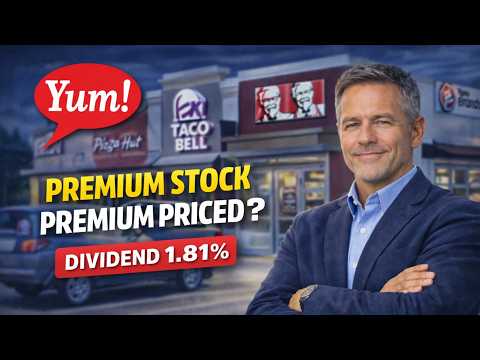
Yum Brands — Investor Video Playlist





Industry Resources
| Consumer Discretionary Resources |
| Retail Dive |
| Business of Fashion (BoF) |
| WWD (Women's Wear Daily) |
| National Retail Federation (NRF) |
| McKinsey & Company - Consumer |
| Mintel Consumer Trends |
| Restaurants Resources |
| Nation's Restaurant News |
| Restaurant Business |
| QSR Magazine |
External Quote Links
| Y Finance | Barrons |
| TradingView | Morningstar |
| SeekingAlpha | ValueLine |
| Motley Fool | Robinhood |
| CNBC | Etrade |
| MarketWatch | Unusual Whales |
| YCharts | Perplexity Finance |
| FinViz |
Prefer one of these to Trefis? Tell us why.