
BKV (BKV)
Market Price (10/1/2026): $21.35 | Market Cap: $2.3 BilSector: Energy | Industry: Oil & Gas Exploration & Production
BKV (BKV)
Market Price (10/1/2026): $21.35Market Cap: $2.3 BilSector: EnergyIndustry: Oil & Gas Exploration & Production
Investment Highlights Why It Matters Detailed financial logic regarding cash flow yields vs trend-riding momentum.
Attractive yieldTotal YieldTotal Yield = Earnings Yield + Dividend Yield, Earnings Yield = Net Income / Market Cap Dividend Yield = Total Dividends / Market Cap is 11%, ERPEquity Risk Premium (ERP) = Total Yield - Risk Free Rate, Reflects the premium above risk free assets offered by the investment. is 7.6% Strong revenue growthRev Chg LTMRevenue Change % Last Twelve Months (LTM) is 37% Attractive cash flow generationCFO/Rev LTMCash Flow from Operations / Revenue (Sales), Last Twelve Months (LTM) is 27% Low stock price volatilityVol 12M is 44% Megatrend and thematic driversMegatrends include US Energy Independence, and Energy Transition & Decarbonization. Themes include US LNG, US Oilfield Technologies, Show more. | Weak multi-year price returns2Y Excs Rtn is -15%, 3Y Excs Rtn is -58% | Not cash flow generativeFCF/Rev LTMFree Cash Flow / Revenue (Sales), Last Twelve Months (LTM) is -41% Key risksBKV key risks include [1] substantial derivative losses contributing to recent net losses and [2] historically high operating expenses that have pressured profitability. |
| Attractive yieldTotal YieldTotal Yield = Earnings Yield + Dividend Yield, Earnings Yield = Net Income / Market Cap Dividend Yield = Total Dividends / Market Cap is 11%, ERPEquity Risk Premium (ERP) = Total Yield - Risk Free Rate, Reflects the premium above risk free assets offered by the investment. is 7.6% |
| Strong revenue growthRev Chg LTMRevenue Change % Last Twelve Months (LTM) is 37% |
| Attractive cash flow generationCFO/Rev LTMCash Flow from Operations / Revenue (Sales), Last Twelve Months (LTM) is 27% |
| Low stock price volatilityVol 12M is 44% |
| Megatrend and thematic driversMegatrends include US Energy Independence, and Energy Transition & Decarbonization. Themes include US LNG, US Oilfield Technologies, Show more. |
| Weak multi-year price returns2Y Excs Rtn is -15%, 3Y Excs Rtn is -58% |
| Not cash flow generativeFCF/Rev LTMFree Cash Flow / Revenue (Sales), Last Twelve Months (LTM) is -41% |
| Key risksBKV key risks include [1] substantial derivative losses contributing to recent net losses and [2] historically high operating expenses that have pressured profitability. |
Qualitative Assessment
AI Analysis | Feedback
BKV (BKV) stock has lost about 20% since 6/30/2026 because of the following key factors:
1. Decline in GAAP Net Income for Fiscal Q2 2026 and Weakness in the Power Segment. BKV reported its fiscal Q2 2026 earnings on August 6, 2026, revealing a GAAP net income attributable to BKV of $75.8 million, a decrease of approximately 30% from $107.8 million in the prior year's comparable quarter. This decline was partly attributed to a significantly smaller unrealized derivative gain of $45.5 million in fiscal Q2 2026, compared to $111.1 million a year earlier. Furthermore, the Power segment experienced a net loss of $6.8 million, with operating income falling to $5.8 million. This was primarily due to weaker average power prices, which declined to $41.59/MWh from $45.10/MWh, and increased operating expenses, despite higher electricity generation.
2. Issuance of Upsized Convertible Senior Notes. In September 2026, BKV announced and subsequently priced an upsized offering of $500 million in convertible senior notes, which ultimately totaled $575 million with the exercise of a purchaser option. These notes bear a 1.625% coupon and mature in 2031. The net proceeds of approximately $554.7 million are intended for general corporate purposes, including debt repayment and capital expenditures. While aimed at strategic investments, the issuance of new debt, especially convertible notes that could lead to future equity dilution, can be perceived negatively by investors, contributing to downward pressure on the stock price.
Show more
BKV (BKV) stock has lost about 20% since 6/30/2026 because of the following key factors:
1. Decline in GAAP Net Income for Fiscal Q2 2026 and Weakness in the Power Segment. BKV reported its fiscal Q2 2026 earnings on August 6, 2026, revealing a GAAP net income attributable to BKV of $75.8 million, a decrease of approximately 30% from $107.8 million in the prior year's comparable quarter. This decline was partly attributed to a significantly smaller unrealized derivative gain of $45.5 million in fiscal Q2 2026, compared to $111.1 million a year earlier. Furthermore, the Power segment experienced a net loss of $6.8 million, with operating income falling to $5.8 million. This was primarily due to weaker average power prices, which declined to $41.59/MWh from $45.10/MWh, and increased operating expenses, despite higher electricity generation.
2. Issuance of Upsized Convertible Senior Notes. In September 2026, BKV announced and subsequently priced an upsized offering of $500 million in convertible senior notes, which ultimately totaled $575 million with the exercise of a purchaser option. These notes bear a 1.625% coupon and mature in 2031. The net proceeds of approximately $554.7 million are intended for general corporate purposes, including debt repayment and capital expenditures. While aimed at strategic investments, the issuance of new debt, especially convertible notes that could lead to future equity dilution, can be perceived negatively by investors, contributing to downward pressure on the stock price.
3. Potential Share Overhang from S-3 Registration Statement. On August 24, 2026, a Form S-3 resale registration statement filed with the U.S. Securities and Exchange Commission by BKV became effective. This registration covers 5,315,390 shares of BKV common stock held by Banpu Power US Corporation, a subsidiary of BKV's majority stockholder. These shares were issued as consideration for an acquisition in fiscal Q1 2026 and were subject to a lock-up period. The effectiveness of this registration allows for these shares to be resold into the market, creating a potential overhang of additional supply that can pressure the stock price.
Show less
Stock Movement Drivers
Fundamental Drivers
The -22.0% change in BKV stock from 6/30/2026 to 9/30/2026 was primarily driven by a -14.8% change in the company's Net Income Margin (%).| (LTM values as of) | 6302026 | 9302026 | Change |
|---|---|---|---|
| Stock Price ($) | 27.36 | 21.34 | -22.0% |
| Change Contribution By: | |||
| Total Revenues ($ Mil) | 1,109 | 1,163 | 4.9% |
| Net Income Margin (%) | 27.0% | 23.0% | -14.8% |
| P/E Multiple | 9.3 | 8.7 | -6.4% |
| Shares Outstanding (Mil) | 102 | 109 | -6.7% |
| Cumulative Contribution | -22.0% |
Market Drivers
6/30/2026 to 9/30/2026| Return | Correlation | |
|---|---|---|
| BKV | -22.0% | |
| Market (SPY) | 2.1% | -4.5% |
| Sector (XLE) | 15.8% | 39.9% |
Fundamental Drivers
The -25.2% change in BKV stock from 3/31/2026 to 9/30/2026 was primarily driven by a -42.5% change in the company's P/E Multiple.| (LTM values as of) | 3312026 | 9302026 | Change |
|---|---|---|---|
| Stock Price ($) | 28.52 | 21.34 | -25.2% |
| Change Contribution By: | |||
| Total Revenues ($ Mil) | 1,005 | 1,163 | 15.7% |
| Net Income Margin (%) | 17.2% | 23.0% | 33.4% |
| P/E Multiple | 15.2 | 8.7 | -42.5% |
| Shares Outstanding (Mil) | 92 | 109 | -15.8% |
| Cumulative Contribution | -25.2% |
Market Drivers
3/31/2026 to 9/30/2026| Return | Correlation | |
|---|---|---|
| BKV | -25.2% | |
| Market (SPY) | 17.6% | -10.0% |
| Sector (XLE) | 1.1% | 48.5% |
Fundamental Drivers
The -7.7% change in BKV stock from 9/30/2025 to 9/30/2026 was primarily driven by a -22.6% change in the company's Shares Outstanding (Mil).| (LTM values as of) | 9302025 | 9302026 | Change |
|---|---|---|---|
| Stock Price ($) | 23.13 | 21.34 | -7.7% |
| Change Contribution By: | |||
| Total Revenues ($ Mil) | 847 | 1,163 | 37.2% |
| P/S Multiple | 2.3 | 2.0 | -13.2% |
| Shares Outstanding (Mil) | 85 | 109 | -22.6% |
| Cumulative Contribution | -7.7% |
Market Drivers
9/30/2025 to 9/30/2026| Return | Correlation | |
|---|---|---|
| BKV | -7.7% | |
| Market (SPY) | 15.4% | 8.1% |
| Sector (XLE) | 40.8% | 48.5% |
Fundamental Drivers
nullnull
Market Drivers
9/30/2023 to 9/30/2026| Return | Correlation | |
|---|---|---|
| BKV | ||
| Market (SPY) | 84.5% | 32.9% |
| Sector (XLE) | 48.7% | 53.5% |
Price Returns Compared
| 2021 | 2022 | 2023 | 2024 | 2025 | 2026 | Total [1] | |
|---|---|---|---|---|---|---|---|
| Returns | |||||||
| BKV Return | - | - | - | 32% | 14% | -20% | 20% |
| Peers Return | 104% | 46% | 6% | 44% | 7% | 5% | 411% |
| S&P 500 Return | 27% | -19% | 24% | 23% | 16% | 12% | 104% |
Monthly Win Rates [3] | |||||||
| BKV Win Rate | - | - | - | 75% | 58% | 44% | |
| Peers Win Rate | 65% | 65% | 52% | 65% | 55% | 58% | |
| S&P 500 Win Rate | 75% | 42% | 67% | 75% | 67% | 44% | |
Max Drawdowns [4] | |||||||
| BKV Max Drawdown | - | - | - | - | -40% | -33% | |
| Peers Max Drawdown | -24% | -31% | -20% | -22% | -21% | -20% | |
| S&P 500 Max Drawdown | -5% | -25% | -10% | -8% | -19% | -9% | |
[1] Cumulative total returns since the beginning of 2021
[2] Peers: EQT, RRC, AR, WMB, KMI.
[3] Win Rate = % of calendar months in which monthly returns were positive
[4] Max drawdown represents maximum peak-to-trough decline within a year
[5] 2026 data is for the year up to 9/30/2026 (YTD)
How Low Can It Go
| Event | BKV | S&P 500 |
|---|---|---|
| 2025 US Tariff Shock | ||
| % Loss | -36.7% | -18.8% |
| % Gain to Breakeven | 57.9% | 23.1% |
| Time to Breakeven | 213 days | 79 days |
In The Past
BKV's stock fell -36.7% during the 2025 US Tariff Shock. Such a loss loss requires a 57.9% gain to breakeven.
Preserve Wealth
Limiting losses and compounding gains is essential to preserving wealth.
Asset Allocation
Actively managed asset allocation strategies protect wealth. Learn more.
| Event | BKV | S&P 500 |
|---|---|---|
| 2025 US Tariff Shock | ||
| % Loss | -36.7% | -18.8% |
| % Gain to Breakeven | 57.9% | 23.1% |
| Time to Breakeven | 213 days | 79 days |
In The Past
BKV's stock fell -36.7% during the 2025 US Tariff Shock. Such a loss loss requires a 57.9% gain to breakeven.
Preserve Wealth
Limiting losses and compounding gains is essential to preserving wealth.
Asset Allocation
Actively managed asset allocation strategies protect wealth. Learn more.
About BKV (BKV)
BKV is a forward-thinking, growth-driven energy company primarily focused on producing natural gas and natural gas liquids (NGLs) from its owned and operated upstream properties. The company holds significant acreage, particularly in the Barnett Shale in Texas, where it is the largest natural gas producer, and in the Marcellus Shale in Northeastern Pennsylvania. BKV differentiates itself with a strong commitment to achieving net zero Scope 1 and 2 emissions by the early 2030s, and net zero Scope 1, 2, and 3 emissions by the late 2030s, employing a "closed-loop" and vertically integrated approach to its operations.
BKV's business model is supported by four core lines: natural gas production, natural gas midstream services, power generation, and carbon capture, utilization, and sequestration (CCUS). Its midstream assets gather, process, and transport natural gas for both BKV's own production and third parties. Through a joint venture, the company owns modern combined cycle gas power plants in Texas, selling electricity into the ERCOT market, and also has a retail marketing business, BKV Energy, serving commercial, industrial, and residential customers in Texas. The CCUS business captures and sequesters CO2, generating carbon credits that are used to offset BKV's own emissions and to create "Carbon Sequestered Gas," a premium, third-party certified, carbon-neutral natural gas product.
AI Analysis | Feedback
1. Like Occidental Petroleum, but a natural gas producer aggressively building out carbon capture and power generation to achieve net-zero emissions.
2. The Impossible Foods of natural gas, developing 'carbon-sequestered gas' through its integrated production, power, and carbon capture businesses.
AI Analysis | Feedback
- Natural Gas and NGL Production: Produces natural gas and natural gas liquids from owned and operated upstream assets in the Barnett and Marcellus Shales.
- Natural Gas Midstream Services: Provides gathering, processing, and transportation of natural gas for its upstream assets and third-party producers.
- Power Generation and Retail Sales: Generates electricity through modern power plants and sells it to commercial, industrial, and residential customers in Texas.
- Carbon Capture, Utilization, and Sequestration (CCUS): Captures and sequesters CO2 emissions, develops CCUS projects, and generates tradable carbon credits.
- Carbon Sequestered Gas: Offers a premium natural gas product by bundling Responsibly Sourced Gas with carbon credits to offset associated emissions.
AI Analysis | Feedback
BKV primarily sells to other companies. Based on the provided description, the following customer companies are identified:
- ENGIE Energy Marketing NA, Inc. (a subsidiary of ENGIE S.A., symbol: ENGIY) - Purchases up to 10,000 MMBtu/d of Carbon Sequestered Gas.
- Kiewit Infrastructure South Co. (a subsidiary of Kiewit Corporation, which is privately held and has no public symbol) - Purchases up to 100 MMBtu/d of Carbon Sequestered Gas.
In addition to these named customers, BKV also serves various categories of unnamed corporate customers across its business lines, including:
- Third-party natural gas producers (for natural gas gathering, processing, and transportation services).
- Utilities, industrial users, and energy marketers on the ERCOT power network (for wholesale power generation).
- Commercial and industrial retail electricity customers in Texas (served by its BKV Energy brand).
- Other energy and industrial sources (for its Carbon Capture, Utilization and Sequestration business).
- Potential unrelated third parties (for sales of carbon credits).
AI Analysis | Feedback
- Project Canary
AI Analysis | Feedback
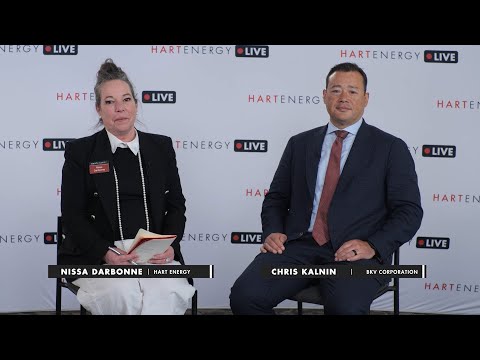
Chris Kalnin, Chief Executive Officer
Christopher (Chris) Kalnin is the Founder and Chief Executive Officer of BKV Corporation, which he started in June 2015 with the vision to create a successful natural gas E&P company. Prior to founding BKV, he served as Vice President of Strategic Business Operations and Planning at Level 3 Communications (now Lumen/CenturyLink). He also worked as a strategic advisor to the CEO at Thailand's national oil and gas company PTT Exploration and Production (PTTEP) and as a consultant with McKinsey & Company. He began his career as a Financial Analyst with Credit Suisse First Boston.
David Tameron, Chief Financial Officer
David Tameron is the Chief Financial Officer at BKV Corporation, a role he assumed on April 1, 2025. He brings over two decades of Wall Street and energy industry experience to this position. Before becoming CFO, he served as BKV's Vice President of Strategic Finance and Investor Relations for three years. Prior to joining BKV in August 2022, Tameron spent 25 years in corporate banking leadership roles on Wall Street, including two decades as a Sell-Side Analyst within the exploration and production (E&P) sector. His experience also includes roles as Managing Director of Denver-based Corporate Banking and Managing Director, Institutional Equity Research, both at Wells Fargo & Company. He also previously worked at ExxonMobil and in the private M&A sector.
Eric Jacobsen, President, Upstream
Eric Jacobsen is the President, Upstream at BKV Corporation. He is also listed as Chief Operating Officer in some sources. Eric brings relationships with emitters and project contacts, which helps accelerate the appraisal of new carbon capture projects.
Lindsay Larrick, Chief Legal Officer
Lindsay Larrick serves as the Chief Legal Officer for BKV Corporation.
Dilanka Seimon, Chief Commercial Officer
Dilanka Seimon is the Chief Commercial Officer at BKV Corporation.
AI Analysis | Feedback
- Reliance on the successful development and market acceptance of Carbon Capture, Utilization and Sequestration (CCUS) and Carbon Sequestered Gas: BKV's net-zero emissions goals and its strategy to develop "Carbon Sequestered Gas" as a differentiated, premium product are highly dependent on the successful development, operation, and external funding of its CCUS projects, including the Barnett Zero Project. This strategy also relies on the establishment of a blockchain ledger and tokens by a third party, and the certification and utilization of these tokens with the American Carbon Registry, which has not yet been established. Delays or failures in any of these areas, including market acceptance or premium pricing for Carbon Sequestered Gas, could significantly impact the company's financial performance and its ability to achieve its environmental goals.
- Exposure to volatile natural gas and NGL commodity prices: As a natural gas and NGL producer, BKV's revenues, profitability, and cash flow are directly and significantly impacted by fluctuations in the prices of natural gas and NGLs. Sustained low commodity prices could negatively affect its ability to fund operations, capital expenditures for its upstream, midstream, and power businesses, and the substantial capital requirements for its CCUS projects.
- Dependency on Section 45Q tax credits and other external funding for CCUS projects: The economic viability and projected positive net income from BKV's CCUS business, including the Barnett Zero Project, are substantially contingent on receiving Section 45Q tax credits. The company also expects to fund up to 50% of its CCUS business from external sources such as joint ventures, project-based equity partnerships, and federal grants. Any changes to the Section 45Q tax credit program, or an inability to secure sufficient external funding, could adversely affect the development and profitability of its CCUS initiatives.
AI Analysis | Feedback
AI Analysis | Feedback
The addressable markets for BKV's main products and services are as follows:
- Natural Gas Production: The U.S. natural gas market is estimated to be approximately $473.4 billion in 2025 and is projected to reach about $601.8 billion by 2032, growing at a Compound Annual Growth Rate (CAGR) of 3.5% from 2025 to 2032.
- Natural Gas Midstream: null
- Power Generation: The Electric Reliability Council of Texas (ERCOT), which manages approximately 90% of Texas's electric load, serves over 27 million customers. Electricity demand in ERCOT reached 372 terawatthours (TWh) from January to September 2025, a 5% increase compared to the same period in 2024. Demand is forecast to increase by another 14% to 425 TWh in the first nine months of 2026. In 2023, households in the Texas competitive energy market (ERCOT) paid an average of 15.9 cents per kWh, totaling approximately $3 billion more in aggregate compared to the non-ERCOT market.
- Carbon Capture, Utilization and Sequestration (CCUS): The global carbon capture, utilization, and storage market was valued at approximately $4.57 billion in 2024 and is projected to reach about $68.92 billion by 2034, with a CAGR of roughly 28.1% between 2025 and 2034. Specifically for the U.S., the CCUS market was estimated at $13.57 billion in 2023 and is anticipated to reach $36.94 billion by 2032, with a CAGR of 7.1% from 2023 to 2050.
AI Analysis | Feedback
Here are 3-5 expected drivers of future revenue growth for BKV (symbol: BKV) over the next 2-3 years:
- Increased Natural Gas Production Volumes: BKV plans to leverage its substantial development inventory, which includes over 15 years of core development, 540 gross drilling locations, and 2,097 gross refracture candidates in the Barnett and Marcellus Shales. This ongoing development and operational efficiency are expected to maintain and grow natural gas production volumes.
- Expansion of Carbon Sequestered Gas Sales: BKV is advancing its "Carbon Sequestered Gas" product, a Scope 1, 2, and 3 carbon-neutral natural gas, with deliveries expected to commence by the end of 2024. The company has already secured contracts with ENGIE Energy Marketing NA, Inc. and Kiewit Infrastructure South Co. for the sale and purchase of this differentiated product.
- Growth of Retail Electricity Marketing Business (BKV Energy): The BKV-BPP Power Joint Venture, through its subsidiary BKV-BPP Retail, LLC, launched its retail electricity marketing business, BKV Energy, in February 2023. BKV Energy has rapidly built a portfolio of over 57,000 customers in Texas, indicating strong potential for continued customer acquisition and revenue growth in the deregulated Texas power market.
- Revenue Generation from Carbon Capture, Utilization and Sequestration (CCUS) Projects: BKV expects its CCUS business to contribute significantly to revenue through two main avenues. The Barnett Zero Project is anticipated to begin generating positive net income via Section 45Q tax credits in 2024, and a second CCUS project is slated to commence sequestration activities in the first half of 2026. Additionally, BKV may sell carbon credits associated with its CCUS projects to third parties, creating a new revenue stream.
AI Analysis | Feedback
Inbound Investments
- BKV anticipates funding up to 50% of its Carbon Capture, Utilization and Sequestration (CCUS) business through external sources, including joint ventures, project-based equity partnerships, and federal grants.
Outbound Investments
- In October 2020, BKV acquired over 289,000 net acres, 3,850 operated wells, and associated upstream assets in the Barnett Shale from Devon Energy Corporation.
- On June 30, 2022, the company expanded its Barnett position by acquiring approximately 165,000 net acres, 2,100 operated wells, and related upstream, midstream, and other assets through the Exxon Barnett Acquisition.
Capital Expenditures
- Capital investment required to maintain flat year-over-year production was less than approximately 60% of BKV's Adjusted EBITDAX for the 2023 fiscal year.
- BKV expects its capital expenditure program for upstream, midstream, and power to be funded by Adjusted Free Cash Flow from its upstream assets.
- A second CCUS project is expected to begin sequestration activities in the first half of 2026, indicating ongoing capital deployment in this area.
Peer Outperformance in Oil & Gas Exploration & Production
null| Industry | Names | 1Y med | 3Y med | 5Y med | Top 3 by 5Y |
|---|---|---|---|---|---|
| Oil & Gas Refining & Marketing | 12 | 93.3% | 113.1% | 346.6% | MPC 595% · PBF 531% · VLO 515% |
| Integrated Oil & Gas | 7 | 37.6% | 52.8% | 218.3% | IMO 328% · SU 302% · CVE 252% |
| Oil & Gas Storage & Transportation | 21 | 25.3% | 105.3% | 206.4% | INSW 877% · LPG 836% · TRGP 492% |
| Oil & Gas Equipment & Services | 34 | 32.3% | 8.3% | 84.2% | SEI 914% · FTI 787% · TDW 552% |
| Coal & Consumable Fuels | 14 | -11.5% | 23.3% | 67.5% | EU 983% · CCJ 297% · LEU 238% |
| Oil & Gas Drilling | 7 | 61.0% | -2.0% | 58.1% | VAL 120% · PDS 97% · NE 78% |
| Oil & Gas Exploration & Production ← | 53 | 18.2% | -0.7% | 42.0% | KGEI 9408% · OBE 6219% · EP 2182% |
Latest Trefis Analyses
| Title | Date | |
|---|---|---|
| DASHBOARDS | ||
| BKV Earnings Notes | 12/25/2025 | |
| BKV Stock Jump Looks Great, But How Secure Is That Gain? | 10/17/2025 | |
| Why BKV Stock Moved: BKV Stock Has Gained 12% Since 2024 Fiscal End, Primarily Due To Favorable Change In Revenues | 08/08/2025 | |
| BKV (BKV) Valuation Ratios Comparison | 08/08/2025 | |
| BKV Dip Buy Analysis | 07/10/2025 | |
| BKV (BKV) Operating Cash Flow Comparison | 02/17/2025 | |
| BKV (BKV) Net Income Comparison | 02/15/2025 | |
| BKV (BKV) Operating Income Comparison | 02/14/2025 |
| Title | |
|---|---|
| ARTICLES |
Research & Analysis
Invest in Strategies
Wealth Management
Peer Comparisons
| Peers to compare with: |
Financials
| Median | |
|---|---|
| Name | |
| Mkt Price | 35.22 |
| Mkt Cap | 20.4 |
| Rev LTM | 7,548 |
| Op Inc LTM | 2,616 |
| FCF LTM | 1,142 |
| FCF 3Y Avg | 1,386 |
| CFO LTM | 3,986 |
| CFO 3Y Avg | 2,901 |
Growth & Margins
| Median | |
|---|---|
| Name | |
| Rev Chg LTM | 18.0% |
| Rev Chg 3Y Avg | 2.2% |
| Rev Chg Q | 10.3% |
| QoQ Delta Rev Chg LTM | 2.4% |
| Op Inc Chg LTM | 71.2% |
| Op Inc Chg 3Y Avg | 22.7% |
| Op Mgn LTM | 31.0% |
| Op Mgn 3Y Avg | 23.6% |
| QoQ Delta Op Mgn LTM | 0.1% |
| CFO/Rev LTM | 39.0% |
| CFO/Rev 3Y Avg | 38.8% |
| FCF/Rev LTM | 19.3% |
| FCF/Rev 3Y Avg | 18.3% |
Price Behavior
| Market Price | $21.34 | |
| Market Cap ($ Bil) | 2.3 | |
| First Trading Date | 09/26/2024 | |
| Distance from 52W High | -33.6% | |
| 50 Days | 200 Days | |
| DMA Price | $24.43 | $27.07 |
| DMA Trend | down | down |
| Distance from DMA | -12.7% | -21.2% |
| 3M | 1YR | |
| Volatility | 45.1% | 44.3% |
| Downside Capture | -10.53 | 27.41 |
| Upside Capture | -140.12 | 13.30 |
| Correlation (SPY) | -4.9% | 7.9% |
| 1M | 2M | 3M | 6M | 1Y | 3Y | |
|---|---|---|---|---|---|---|
| Beta | -0.10 | -0.64 | -0.18 | -0.33 | 0.27 | -0.02 |
| Up Beta | 3.41 | 0.13 | 1.49 | -0.48 | -0.44 | -0.19 |
| Down Beta | -3.44 | 0.46 | 0.54 | 0.90 | 1.18 | 0.31 |
| Up Capture | -72% | -119% | -113% | -55% | 7% | 14% |
| Bmk +ve Days | 6 | 16 | 27 | 66 | 132 | 424 |
| Stock +ve Days | 8 | 17 | 27 | 62 | 128 | 262 |
| Down Capture | 132% | -30% | -7% | -41% | 35% | 69% |
| Bmk -ve Days | 16 | 26 | 37 | 60 | 120 | 328 |
| Stock -ve Days | 12 | 23 | 35 | 62 | 120 | 234 |
[1] Upside and downside betas calculated using positive and negative benchmark daily returns respectively
Based On 1-Year Data
| Annualized Return | Annualized Volatility | Sharpe Ratio | Correlation with BKV | |
|---|---|---|---|---|
| BKV | -10.1% | 44.3% | -0.12 | - |
| Sector ETF (XLE) | 39.5% | 21.9% | 1.42 | 48.7% |
| Equity (SPY) | 15.9% | 13.0% | 0.87 | 8.0% |
| Gold (GLD) | 8.1% | 29.6% | 0.26 | 3.7% |
| Commodities (DBC) | 43.1% | 20.8% | 1.61 | 35.8% |
| Real Estate (VNQ) | 2.2% | 13.6% | -0.09 | 3.0% |
| Bitcoin (BTCUSD) | -27.1% | 44.5% | -0.58 | 2.0% |
Smart multi-asset allocation framework can stack odds in your favor. Learn How
Based On 5-Year Data
| Annualized Return | Annualized Volatility | Sharpe Ratio | Correlation with BKV | |
|---|---|---|---|---|
| BKV | 4.1% | 43.5% | 0.35 | - |
| Sector ETF (XLE) | 24.5% | 25.6% | 0.84 | 53.4% |
| Equity (SPY) | 13.2% | 17.2% | 0.59 | 32.8% |
| Gold (GLD) | 18.2% | 18.9% | 0.78 | 3.6% |
| Commodities (DBC) | 10.6% | 19.6% | 0.42 | 37.4% |
| Real Estate (VNQ) | 0.5% | 18.9% | -0.08 | 19.5% |
| Bitcoin (BTCUSD) | 13.9% | 52.3% | 0.44 | 16.1% |
Smart multi-asset allocation framework can stack odds in your favor. Learn How
Based On 10-Year Data
| Annualized Return | Annualized Volatility | Sharpe Ratio | Correlation with BKV | |
|---|---|---|---|---|
| BKV | 2.0% | 43.5% | 0.35 | - |
| Sector ETF (XLE) | 10.6% | 29.6% | 0.39 | 53.4% |
| Equity (SPY) | 15.4% | 17.9% | 0.73 | 32.8% |
| Gold (GLD) | 11.8% | 16.4% | 0.58 | 3.6% |
| Commodities (DBC) | 8.4% | 18.1% | 0.38 | 37.4% |
| Real Estate (VNQ) | 4.5% | 20.7% | 0.18 | 19.5% |
| Bitcoin (BTCUSD) | 63.6% | 66.2% | 1.03 | 16.1% |
Smart multi-asset allocation framework can stack odds in your favor. Learn How
Returns Analyses
Earnings Returns History
Updated 9/14/2026| Forward Returns | |||
|---|---|---|---|
| Earnings Date | 1D Returns | 5D Returns | 21D Returns |
| 8/6/2026 | 4.3% | 13.5% | 14.3% |
| 5/7/2026 | -3.0% | -7.0% | -13.1% |
| 2/25/2026 | 1.0% | 5.5% | 1.4% |
| 11/10/2025 | 0.9% | 10.1% | 14.1% |
| 8/12/2025 | 6.9% | 6.8% | 10.4% |
| 5/9/2025 | 6.7% | 17.6% | 17.5% |
| 2/26/2025 | -5.1% | -15.9% | -8.6% |
| SUMMARY STATS | |||
| # Positive | 5 | 5 | 5 |
| # Negative | 2 | 2 | 2 |
| Median Positive | 4.3% | 10.1% | 14.1% |
| Median Negative | -4.1% | -11.5% | -10.8% |
| Max Positive | 6.9% | 17.6% | 17.5% |
| Max Negative | -5.1% | -15.9% | -13.1% |
| Forward Returns | |||
|---|---|---|---|
| Earnings Date | 1D Returns | 5D Returns | 21D Returns |
| 8/6/2026 | 4.3% | 13.5% | 14.3% |
| 5/7/2026 | -3.0% | -7.0% | -13.1% |
| 2/25/2026 | 1.0% | 5.5% | 1.4% |
| 11/10/2025 | 0.9% | 10.1% | 14.1% |
| 8/12/2025 | 6.9% | 6.8% | 10.4% |
| 5/9/2025 | 6.7% | 17.6% | 17.5% |
| 2/26/2025 | -5.1% | -15.9% | -8.6% |
| SUMMARY STATS | |||
| # Positive | 5 | 5 | 5 |
| # Negative | 2 | 2 | 2 |
| Median Positive | 4.3% | 10.1% | 14.1% |
| Median Negative | -4.1% | -11.5% | -10.8% |
| Max Positive | 6.9% | 17.6% | 17.5% |
| Max Negative | -5.1% | -15.9% | -13.1% |
SEC Filings
Expand for More| Report Date | Filing Date | Filing |
|---|---|---|
| 06/30/2026 | 08/06/2026 | 10-Q |
| 03/31/2026 | 05/07/2026 | 10-Q |
| 12/31/2025 | 03/06/2026 | 10-K |
| 09/30/2025 | 11/10/2025 | 10-Q |
| 06/30/2025 | 08/12/2025 | 10-Q |
| 03/31/2025 | 05/09/2025 | 10-Q |
| 12/31/2024 | 03/31/2025 | 10-K |
| 09/30/2024 | 11/13/2024 | 10-Q |
| 06/30/2024 | 09/27/2024 | 424B4 |
| 03/31/2024 | 07/05/2024 | S-1/A |
| 09/30/2023 | 01/12/2024 | S-1/A |
| 06/30/2023 | 10/06/2023 | S-1/A |
| 03/31/2023 | 06/26/2023 | S-1/A |
| 09/30/2022 | 06/27/2023 | S-1/A |
| Report Date | Filing Date | Filing |
|---|---|---|
| 06/30/2026 | 08/06/2026 | 10-Q |
| 03/31/2026 | 05/07/2026 | 10-Q |
| 12/31/2025 | 03/06/2026 | 10-K |
| 09/30/2025 | 11/10/2025 | 10-Q |
| 06/30/2025 | 08/12/2025 | 10-Q |
| 03/31/2025 | 05/09/2025 | 10-Q |
| 12/31/2024 | 03/31/2025 | 10-K |
| 09/30/2024 | 11/13/2024 | 10-Q |
| 06/30/2024 | 09/27/2024 | 424B4 |
| 03/31/2024 | 07/05/2024 | S-1/A |
| 09/30/2023 | 01/12/2024 | S-1/A |
| 06/30/2023 | 10/06/2023 | S-1/A |
| 03/31/2023 | 06/26/2023 | S-1/A |
| 09/30/2022 | 06/27/2023 | S-1/A |
Insider Activity
Updated 9/29/2026| # | Owner | Title | Holding | Action | Filing Date | Price | Shares | Transacted Value | Value of Held Shares | Form |
|---|---|---|---|---|---|---|---|---|---|---|
| 1 | Hinojosa, Javier | Senior Vice President of Power | Direct | Sell | 9292026 | 22.66 | 7,428 | 168,321 | 1,741,406 | Form |
| 2 | Tameron, David | Chief Financial Officer | Direct | Sell | 8212026 | 25.63 | 1,500 | 38,445 | 1,461,525 | Form |
| 3 | Hinojosa, Javier | Senior Vice President of Power | Direct | Sell | 8212026 | 25.73 | 12,377 | 318,453 | 2,168,371 | Form |
| 4 | Tameron, David | Chief Financial Officer | Direct | Sell | 8212026 | 26.56 | 4,321 | 114,766 | 1,554,397 | Form |
| 5 | Larrick, Lindsay B | Chief Legal and Admin Officer | Direct | Sell | 8172026 | 26.16 | 10,000 | 261,613 | 2,195,587 | Form |
| # | Owner | Title | Holding | Action | Filing Date | Price | Shares | Transacted Value | Value of Held Shares | Form |
|---|---|---|---|---|---|---|---|---|---|---|
| 1 | Hinojosa, Javier | Senior Vice President of Power | Direct | Sell | 9292026 | 22.66 | 7,428 | 168,321 | 1,741,406 | Form |
| 2 | Tameron, David | Chief Financial Officer | Direct | Sell | 8212026 | 25.63 | 1,500 | 38,445 | 1,461,525 | Form |
| 3 | Hinojosa, Javier | Senior Vice President of Power | Direct | Sell | 8212026 | 25.73 | 12,377 | 318,453 | 2,168,371 | Form |
| 4 | Tameron, David | Chief Financial Officer | Direct | Sell | 8212026 | 26.56 | 4,321 | 114,766 | 1,554,397 | Form |
| 5 | Larrick, Lindsay B | Chief Legal and Admin Officer | Direct | Sell | 8172026 | 26.16 | 10,000 | 261,613 | 2,195,587 | Form |
| 6 | Jacobsen, Eric S | President, Upstream | Direct | Sell | 6012026 | 26.89 | 25,000 | 672,145 | 6,125,741 | Form |
| 7 | Jacobsen, Eric S | President, Upstream | Direct | Sell | 5042026 | 30.96 | 25,000 | 773,895 | 7,826,957 | Form |
| 8 | Tameron, David | Chief Financial Officer | Direct | Sell | 3272026 | 29.71 | 7,300 | 216,919 | 1,840,095 | Form |
| 9 | Kalnin, Christopher P | Chief Executive Officer | Direct | Sell | 3252026 | 30.06 | 100,000 | 3,005,790 | 35,986,610 | Form |
| 10 | Kalnin, Christopher P | Chief Executive Officer | Direct | Sell | 11172025 | 28.04 | 78,281 | 2,194,757 | 35,006,313 | Form |
| 11 | Kalnin, Christopher P | Chief Executive Officer | Direct | Sell | 11142025 | 28.00 | 21,719 | 608,202 | 37,156,354 | Form |
| 12 | Kalnin, Christopher P | Chief Executive Officer | Direct | Sell | 11122025 | 27.13 | 100,000 | 2,713,140 | 36,588,863 | Form |
| 13 | Kalnin, Christopher P | Chief Executive Officer | Direct | Sell | 11122025 | 26.16 | 100,000 | 2,615,860 | 37,892,825 | Form |
| 14 | Larrick, Lindsay B | Chief Legal and Admin Officer | Direct | Sell | 11062025 | 25.00 | 6,518 | 162,950 | 3,428,850 | Form |
| 15 | Larrick, Lindsay B | Chief Legal and Admin Officer | Direct | Sell | 11062025 | 25.00 | 22,669 | 566,739 | 3,591,886 | Form |
| 16 | Larrick, Lindsay B | Chief Legal and Admin Officer | Direct | Sell | 11042025 | 23.37 | 10,000 | 233,700 | 3,887,389 | Form |
| 17 | Larrick, Lindsay B | Chief Legal and Admin Officer | Direct | Sell | 10012025 | 23.20 | 15,000 | 347,936 | 4,090,355 | Form |
| 18 | Larrick, Lindsay B | Chief Legal and Admin Officer | Direct | Sell | 9022025 | 23.18 | 9,187 | 212,984 | 4,435,897 | Form |
Investor Activity (13F)
Updated Oct 1, 2026Active managers (13F portfolio over $250M, at least 3 holdings) with a position over $5M that is either over 10% of their portfolio or held in a concentrated book of 50 or fewer total positions. Index/ETF, sovereign, bank, community-bank and charitable/donor-advised filers are excluded.
| Active Manager |
|---|


Industry Resources
External Quote Links
| Y Finance | Barrons |
| TradingView | Morningstar |
| SeekingAlpha | ValueLine |
| Motley Fool | Robinhood |
| CNBC | Etrade |
| MarketWatch | Unusual Whales |
| YCharts | Perplexity Finance |
| FinViz |
Prefer one of these to Trefis? Tell us why.