
Is The Selloff In Oracle Stock Justified?
Oracle (ORCL) stock just dropped after reporting Q2 fiscal 2026 results. The company beat on earnings but missed revenue expectations, and investors got spooked by something else: management raised capital expenditure guidance to $50 billion for the ongoing fiscal year 2026 – up from $21 billion in fiscal 2025. That’s a massive jump, all aimed at AI infrastructure.
So is this selloff a buying opportunity?
Not really. The stock still looks expensive at around $200.
That being said, if you seek an upside with less volatility than holding an individual stock like ORCL, consider the High Quality Portfolio. It has comfortably outperformed its benchmark – a combination of the S&P 500, Russell, and S&P MidCap indexes – and has achieved returns exceeding 105% since its inception. Why is that? As a group, HQ Portfolio stocks provided better returns with less risk versus the benchmark index; less of a roller-coaster ride, as evident in HQ Portfolio performance metrics.
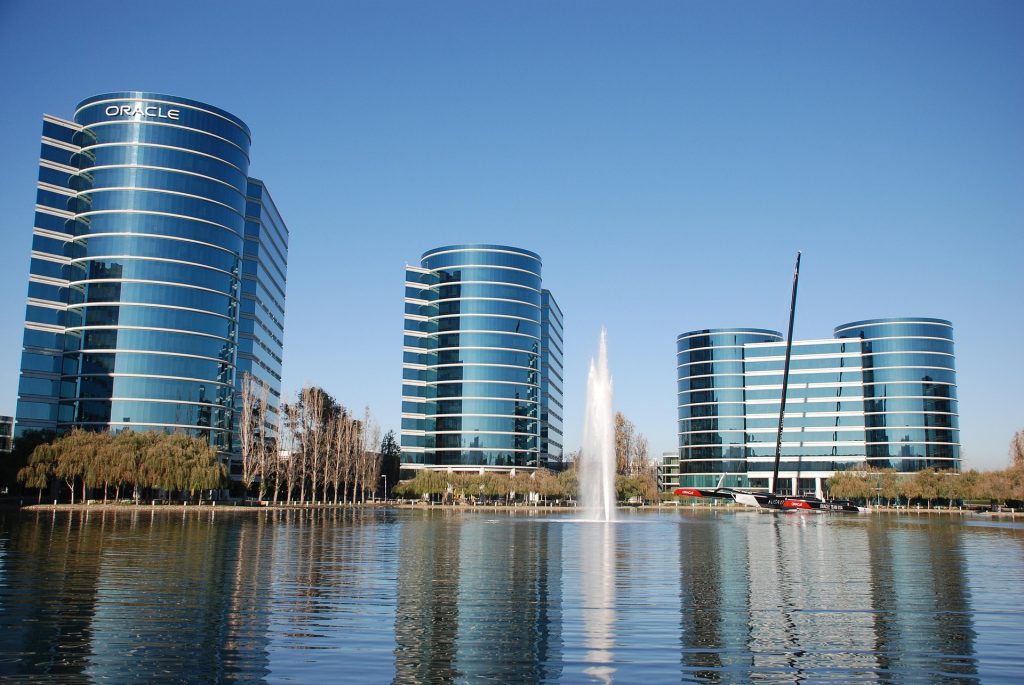
Image by JJ from Pixabay
Why the “expensive” label?
Let’s start with valuation. Oracle trades at a P/S ratio of 9.3x versus 3.2x for the S&P 500. Its P/E ratio sits at 36.7x compared to the market’s 23.4x. You’re paying nearly triple what you’d pay for the average S&P 500 company on a sales basis, and about 57% more on an earnings basis.
But wait – aren’t premium valuations justified if the company is growing? After all, Oracle’s growth story looks solid, doesn’t it?
Fair point. Oracle has delivered:
- 10.2% average annual revenue growth over the last three years (versus 5.5% for the S&P 500)
- 14.2% revenue growth over the last twelve months, from $51.2 billion to $58.3 billion
- 14% year-over-year growth in the most recent quarter, hitting $16.1 billion
That’s legitimately strong top-line performance, nearly double the S&P 500’s pace.
What about profitability?
This is where Oracle really shines. The company’s margins are exceptional:
- Operating margin of 30.4% (versus 18.8% for the S&P 500)
- Operating cash flow margin of 27.4% (versus 20.4% for the index)
- Net income margin of 25.3% (versus 13.1% for the benchmark)
Oracle converts revenue into profit at rates that most companies can only dream about. Over the last four quarters, it generated $19 billion in operating income and $15 billion in net income.
Is the balance sheet strong enough to support that $50 billion capex plan?
Yes, though it’s not without pressure. Oracle carries $106 billion in debt against a market cap of $570 billion, yielding a debt-to-equity ratio of 19% – a sizable figure for a tech company, even though it is slightly better than the S&P 500’s 20.4%. The company holds $19 billion in cash against $180 billion in total assets, giving it an 11% cash-to-assets ratio (versus 7% for the market).
The balance sheet can handle the capex increase, but investors are right to wonder about returns on that investment and how it impacts near-term cash generation.
How does Oracle perform during market stress?
Surprisingly well, though not uniformly:
- 2022 Inflation Shock: ORCL fell 41.1% versus 25.4% for the S&P 500, but recovered to its pre-crisis peak by May 2023
- 2020 COVID Pandemic: ORCL dropped 28.6% versus 33.9% for the S&P 500, recovering by July 2020
- 2008 Financial Crisis: ORCL declined 41.1% versus 56.8% for the index, recovering by December 2009
The pattern is clear: Oracle tends to fall during crises but recovers relatively quickly and outperforms the broader market in magnitude of decline. See our dashboard on – Would You Still Hold Oracle Stock If It Fell Another 30%? – for more details.
So what’s the verdict?
Oracle scores “Strong” across Growth, Profitability, Financial Stability, and Downturn Resilience. The operating performance and financial condition are legitimately impressive.
But that doesn’t make it a buy at current prices.
The issue isn’t quality – it’s the price. When you’re paying 9.3x sales and 36.7x earnings for a company growing at 14%, you’re pricing in a lot of future perfection. That $50 billion AI capex commitment adds uncertainty about near-term returns and cash flow allocation. The rich valuation creates limited upside in the near-to-mid term. You’re buying a great company at a price that assumes it stays great and accelerates from here. That’s a tough bet after a 14% revenue growth quarter that still disappointed investors.
If you want exposure to strong companies without the valuation risk of individual names like Oracle, diversified portfolios that systematically target quality at reasonable prices offer a more balanced risk-reward proposition. Consider the Trefis Reinforced Value (RV) Portfolio, which has outperformed its all-cap stocks benchmark (combination of the S&P 500, S&P mid-cap, and Russell 2000 benchmark indices) to produce strong returns for investors. Why is that? The quarterly rebalanced mix of large-, mid-, and small-cap RV Portfolio stocks provided a responsive way to make the most of upbeat market conditions while limiting losses when markets head south, as detailed in RV Portfolio performance metrics.
Invest with Trefis Market-Beating Portfolios
See all Trefis Price Estimates