
Why You Should Wait Before Buying Oracle Stock
Oracle (ORCL) shares shed more than 11% in after hours trading, following the Q2 fiscal 2026 report, a violent repricing that seemingly contradicts the headline narrative of booming AI demand.
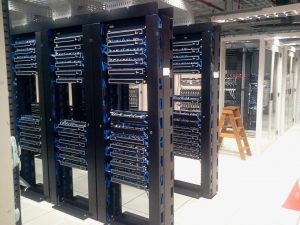
Image by evertonpestana from Pixabay
While most coverage will focus on the slight revenue miss ($16.06 billion versus $16.20 estimated), the real story is about physics. Remaining Performance Obligations (RPO) surged 438% year-over-year to $523 billion, with a $68 billion quarterly increase, reflecting massive AI bookings. Yet, the company couldn’t convert that demand into realized revenue fast enough to satisfy Wall Street.
Why? The bottleneck has shifted. It is no longer about selling cloud credits; it is about pouring concrete and securing megawatts.
Let’s bypass the standard earnings recap and analyze the Deployment Gap that may be suppressing the stock.
- The Thematic Anchor:
The primary reason Oracle missed revenue estimates while growing backlog is likely not a lack of customers, but a lack of energized capacity. There have been doubts about the costs and time required to develop AI infrastructure at such a massive scale.
- The Reality: Oracle is constructing very large AI clusters that require significant power and physical build-out. Customers can commit today, but the revenue doesn’t appear until those facilities are energized and operational.
- The Constraint: Power availability has become a practical bottleneck across the industry. Software can scale instantly; data centers cannot. They move at the pace of construction timelines and the utility grid.
- The Implication: The broader AI cycle is increasingly shaped by physical constraints rather than sales momentum. The stock’s 11% drop reflects investors recalibrating to the idea that Oracle’s growth will hinge on how quickly it can set up new capacity, not on demand alone.
- The Valuation Sanity Test: The “Depreciation” Drag
Investors are accustomed to valuing Oracle as a software company with high margins. The Q2 report confirms its transition into a capital-intensive infrastructure builder.
- The Capex Surge: Capital expenditures hit $12 billion this quarter, with guidance for continued aggression.
- The Hidden Cost: As these massive GPU clusters come online, Depreciation costs will surge, creating a headwind for earnings per share (EPS).
- The Reset: At 25x consensus FY’27 earnings, the market may be stripping away the “Software Premium.” Investors are wary of paying software multiples for a business model that increasingly resembles a utility provider with heavy depreciation schedules.
- The Black Box: The “Multi-Cloud” Cannibalization
A critical, under-discussed detail for Oracle has been the rapid success of the Oracle Database@Azure and Oracle Database@AWS partnerships.
- The Strategy: Oracle is placing its hardware inside its competitors’ data centers.
- The Trade-off: This is brilliant for high-margin database revenue, but it creates a complex narrative for OCI (Oracle Cloud Infrastructure).
- The Risk: Is Oracle prioritizing database dominance over OCI exclusivity? While this maximizes total revenue, it might confuse investors who bought the stock solely for the “OCI displacing AWS” narrative. The market is struggling to model a company that is simultaneously a fierce competitor and a strategic partner to the Hyperscalers.
- The Competitive Moat: Data Gravity vs. GPU Arbitrage
Why are customers waiting in a $500 billion plus line for Oracle when they could go elsewhere?
- The Moat: It isn’t just cheap GPUs anymore; it is Data Gravity.
- The Logic: Customers moving to AI want to train models where their data already lives. For vast sectors of healthcare, finance, and logistics, that data lives in Oracle Databases.
- The Stickiness: Moving petabytes of data out of Oracle to train on AWS is slow and expensive (egress fees). Oracle’s moat is the ability to bring the “AI Cluster” to the “Database” via RDMA networking. This structural advantage protects them from churn even as deployment delays frustrate customers.
Our Take
The 11% correction is a rational response to the “Deployment Lag.” The market effectively discounted the stock because the time-to-revenue for the multi-billion backlog just got longer.
- Bull Case: The bottleneck may be temporary. As nuclear SMRs (Small Modular Reactors) or grid upgrades come online in late 2026, Oracle unlocks some backlog, leading to a massive revenue catch-up phase.
- Bear Case: The capacity constraints are structural. Utility delays persist, forcing Oracle to sit on expensive, depreciating hardware that it cannot fully monetize, crushing ROIC (Return on Invested Capital).
The Outlook: We view the stock as dead money in the short term. The “Backlog” is impressive, but until management proves they can accelerate the physical deployment of these clusters, the stock will remain in the penalty box. Wait for evidence of Capacity Energization—not just contract signing—before buying the dip.
Multi-Asset Portfolios Offer More Upside With Less Risk
Markets move differently but a mix of assets smooths volatility. A multi-asset portfolio keeps you invested and reduces the impact of sharp drops in any single area.
The asset allocation framework of Trefis’ Boston-based, wealth management partner yielded positive returns during the 2008-09 period when the S&P lost more than 40%. Our partner’s strategy now includes Trefis High Quality Portfolio, which has a track record of comfortably outperforming its benchmark that includes all three – the S&P 500, S&P mid-cap, and Russell 2000 indices.
Invest with Trefis Market-Beating Portfolios
See all Trefis Price Estimates