
Macy's (M)
Market Price (9/16/2026): $22.1 | Market Cap: $-Sector: Consumer Discretionary | Industry: Broadline Retail
Macy's (M)
Market Price (9/16/2026): $22.1Market Cap: $-Sector: Consumer DiscretionaryIndustry: Broadline Retail
Investment Highlights Why It Matters Detailed financial logic regarding cash flow yields vs trend-riding momentum.
Low stock price volatilityVol 12M is 42% | Key risksM key risks include [1] the significant execution challenge of its "Bold New Chapter" turnaround strategy, Show more. |
| Low stock price volatilityVol 12M is 42% |
| Key risksM key risks include [1] the significant execution challenge of its "Bold New Chapter" turnaround strategy, Show more. |
Qualitative Assessment
AI Analysis | Feedback
Macy's (M) stock has gained about 5% since 5/31/2026 because of the following key factors:
1. Mixed Analyst Sentiment and Price Targets
The stock experienced equilibrium due to varied analyst outlooks, with a consensus "Hold" rating despite some upgrades and increased price targets. The average price target from 13 analysts was $22.78, ranging from $10.00 to $30.00, suggesting that the stock was perceived as fairly valued, thus limiting significant directional movement.
2. Ongoing "Bold New Chapter" Restructuring Efforts
Macy's continued to implement its "Bold New Chapter" strategy, involving the closure of underperforming stores and reinvestment in digital capabilities and luxury brands. In fiscal 2026, 14 stores were slated for closure as part of a larger plan to shutter approximately 150 underproductive locations by the end of the year. While this strategy aims for long-term profitability, the short-term operational adjustments and associated costs likely tempered investor enthusiasm.
Show more
Macy's (M) stock has gained about 5% since 5/31/2026 because of the following key factors:
1. Mixed Analyst Sentiment and Price Targets
The stock experienced equilibrium due to varied analyst outlooks, with a consensus "Hold" rating despite some upgrades and increased price targets. The average price target from 13 analysts was $22.78, ranging from $10.00 to $30.00, suggesting that the stock was perceived as fairly valued, thus limiting significant directional movement.
2. Ongoing "Bold New Chapter" Restructuring Efforts
Macy's continued to implement its "Bold New Chapter" strategy, involving the closure of underperforming stores and reinvestment in digital capabilities and luxury brands. In fiscal 2026, 14 stores were slated for closure as part of a larger plan to shutter approximately 150 underproductive locations by the end of the year. While this strategy aims for long-term profitability, the short-term operational adjustments and associated costs likely tempered investor enthusiasm.
3. Positive Fiscal Q1 2026 Earnings Performance Balanced by Broader Retail Cautious Outlook
Macy's reported strong fiscal Q1 2026 (ended May 2, 2026) results on June 3, 2026, with diluted earnings per share (EPS) of $0.13, significantly exceeding the consensus estimate of $0.02. Revenue also grew 1.8% year-over-year to $4.89 billion, surpassing expectations. However, investor caution stemming from the broader macroeconomic environment, including concerns about consumer spending and rising prices, likely prevented a substantial sustained rally, with the stock seeing only a modest 1.7% increase following the Q1 report.
4. Significant Insider Selling Activity
The company experienced insider selling activity totaling approximately $6.40 million over the past 12 months, with no reported insider buying in the same period. Such selling by company insiders can signal to the market a lack of strong conviction in substantial near-term stock appreciation, contributing to the stock remaining largely at its current level.
Show less
Stock Movement Drivers
Fundamental Drivers
nullnull
Market Drivers
5/31/2026 to 9/15/2026| Return | Correlation | |
|---|---|---|
| M | 3.1% | |
| Market (SPY) | 0.1% | 31.1% |
| Sector (XLY) | -8.3% | 37.7% |
Fundamental Drivers
nullnull
Market Drivers
2/28/2026 to 9/15/2026| Return | Correlation | |
|---|---|---|
| M | 14.7% | |
| Market (SPY) | 10.7% | 33.0% |
| Sector (XLY) | -4.9% | 38.4% |
Fundamental Drivers
nullnull
Market Drivers
8/31/2025 to 9/15/2026| Return | Correlation | |
|---|---|---|
| M | 74.7% | |
| Market (SPY) | 18.4% | 33.8% |
| Sector (XLY) | -3.8% | 39.4% |
Fundamental Drivers
nullnull
Market Drivers
8/31/2023 to 9/15/2026| Return | Correlation | |
|---|---|---|
| M | 107.2% | |
| Market (SPY) | 74.1% | 42.0% |
| Sector (XLY) | 32.9% | 41.3% |
Price Returns Compared
| 2021 | 2022 | 2023 | 2024 | 2025 | 2026 | Total [1] | |
|---|---|---|---|---|---|---|---|
| Returns | |||||||
| M Return | 136% | -19% | 2% | -12% | 37% | 4% | 143% |
| Peers Return | 70% | -6% | 18% | 11% | 30% | -3% | 165% |
| S&P 500 Return | 27% | -19% | 24% | 23% | 16% | 11% | 103% |
Monthly Win Rates [3] | |||||||
| M Win Rate | 83% | 25% | 50% | 42% | 50% | 56% | |
| Peers Win Rate | 53% | 45% | 55% | 55% | 60% | 51% | |
| S&P 500 Win Rate | 75% | 42% | 67% | 75% | 67% | 44% | |
Max Drawdowns [4] | |||||||
| M Max Drawdown | -37% | -45% | -55% | -33% | -40% | -28% | |
| Peers Max Drawdown | -27% | -46% | -32% | -25% | -31% | -30% | |
| S&P 500 Max Drawdown | -5% | -25% | -10% | -8% | -19% | -9% | |
[1] Cumulative total returns since the beginning of 2021
[2] Peers: DDS, KSS, TJX, ROST, BURL. See M Returns vs. Peers.
[3] Win Rate = % of calendar months in which monthly returns were positive
[4] Max drawdown represents maximum peak-to-trough decline within a year
[5] 2026 data is for the year up to 9/15/2026 (YTD)
How Low Can It Go
| Event | M | S&P 500 |
|---|---|---|
| 2025 US Tariff Shock | ||
| % Loss | -33.8% | -18.8% |
| % Gain to Breakeven | 50.9% | 23.1% |
| Time to Breakeven | 148 days | 79 days |
| 2024 Yen Carry Trade Unwind | ||
| % Loss | -19.3% | -7.8% |
| % Gain to Breakeven | 24.0% | 8.5% |
| Time to Breakeven | 417 days | 18 days |
| Summer-Fall 2023 Five Percent Yield Shock | ||
| % Loss | -33.5% | -9.5% |
| % Gain to Breakeven | 50.3% | 10.5% |
| Time to Breakeven | 49 days | 24 days |
| 2023 SVB Regional Banking Crisis | ||
| % Loss | -38.7% | -6.7% |
| % Gain to Breakeven | 63.1% | 7.1% |
| Time to Breakeven | 288 days | 31 days |
| 2022 Inflation Shock & Fed Tightening | ||
| % Loss | -43.1% | -24.5% |
| % Gain to Breakeven | 75.9% | 32.4% |
| Time to Breakeven | 1172 days | 427 days |
| 2020 COVID-19 Crash | ||
| % Loss | -71.7% | -33.7% |
| % Gain to Breakeven | 253.1% | 50.9% |
| Time to Breakeven | 300 days | 140 days |
In The Past
Macy's's stock fell -33.8% during the 2025 US Tariff Shock. Such a loss loss requires a 50.9% gain to breakeven.
Preserve Wealth
Limiting losses and compounding gains is essential to preserving wealth.
Asset Allocation
Actively managed asset allocation strategies protect wealth. Learn more.
| Event | M | S&P 500 |
|---|---|---|
| 2025 US Tariff Shock | ||
| % Loss | -33.8% | -18.8% |
| % Gain to Breakeven | 50.9% | 23.1% |
| Time to Breakeven | 148 days | 79 days |
| Summer-Fall 2023 Five Percent Yield Shock | ||
| % Loss | -33.5% | -9.5% |
| % Gain to Breakeven | 50.3% | 10.5% |
| Time to Breakeven | 49 days | 24 days |
| 2023 SVB Regional Banking Crisis | ||
| % Loss | -38.7% | -6.7% |
| % Gain to Breakeven | 63.1% | 7.1% |
| Time to Breakeven | 288 days | 31 days |
| 2022 Inflation Shock & Fed Tightening | ||
| % Loss | -43.1% | -24.5% |
| % Gain to Breakeven | 75.9% | 32.4% |
| Time to Breakeven | 1172 days | 427 days |
| 2020 COVID-19 Crash | ||
| % Loss | -71.7% | -33.7% |
| % Gain to Breakeven | 253.1% | 50.9% |
| Time to Breakeven | 300 days | 140 days |
| Q4 2018 Fed Policy Error / Growth Scare | ||
| % Loss | -24.3% | -19.2% |
| % Gain to Breakeven | 32.1% | 23.8% |
| Time to Breakeven | 1023 days | 105 days |
| 2016-2017 Trump Reflation Bond Selloff | ||
| % Loss | -38.4% | -3.7% |
| % Gain to Breakeven | 62.3% | 3.9% |
| Time to Breakeven | 343 days | 6 days |
| 2011 US Debt Ceiling Crisis & European Contagion | ||
| % Loss | -24.4% | -17.9% |
| % Gain to Breakeven | 32.2% | 21.8% |
| Time to Breakeven | 67 days | 123 days |
| 2010 Eurozone Sovereign Debt Crisis / Flash Crash | ||
| % Loss | -30.8% | -15.4% |
| % Gain to Breakeven | 44.5% | 18.2% |
| Time to Breakeven | 87 days | 125 days |
| 2008-2009 Global Financial Crisis | ||
| % Loss | -77.7% | -53.4% |
| % Gain to Breakeven | 348.9% | 114.4% |
| Time to Breakeven | 520 days | 1085 days |
| Summer 2007 Credit Crunch | ||
| % Loss | -26.2% | -8.6% |
| % Gain to Breakeven | 35.5% | 9.5% |
| Time to Breakeven | 1619 days | 47 days |
In The Past
Macy's's stock fell -33.8% during the 2025 US Tariff Shock. Such a loss loss requires a 50.9% gain to breakeven.
Preserve Wealth
Limiting losses and compounding gains is essential to preserving wealth.
Asset Allocation
Actively managed asset allocation strategies protect wealth. Learn more.
About Macy's (M)
Macy's, Inc. (M) is a long-standing omni-channel retail organization, operating a comprehensive network of department stores, e-commerce websites, and mobile applications. The company's core business revolves around providing a diverse array of consumer goods to a broad customer base, leveraging both its physical retail presence and digital platforms.
The company offers a wide range of merchandise, including apparel and accessories for men, women, and children, cosmetics, and home furnishings. Macy's also functions as a beauty products and spa retailer through brands like bluemercury. Its extensive portfolio includes well-known names such as Macy's, Macy's Backstage, Market by Macy's, Bloomingdale's, Bloomingdale's The Outlet, and Bloomies, each catering to various consumer segments.
Macy's primarily serves general consumers across the United States, including territories like the District of Columbia, Puerto Rico, and Guam. Furthermore, the company expands its global footprint via license agreements, operating select stores in international markets such as Dubai, United Arab Emirates, and Al Zahra, Kuwait.
AI Analysis | Feedback
Here are 1-3 brief analogies to describe Macy's (symbol: M):
A traditional department store chain, similar to a more accessible Nordstrom or a higher-end Kohl's.
An omni-channel retailer specializing in fashion, home goods, and beauty, akin to Target's non-grocery sections combined with a beauty retailer like Sephora.
AI Analysis | Feedback
- Apparel and Accessories: A wide selection of clothing, footwear, and accessories for men, women, and children.
- Cosmetics and Beauty Products: Various makeup, skincare, fragrance, and hair care items from numerous brands.
- Home Furnishings: Items for home decoration and furnishing, including furniture, bedding, bath, kitchenware, and decor.
- Other Consumer Goods: A broad range of general merchandise and consumer products typically found in department stores.
- Spa Services: Personal care and beauty treatments offered at its bluemercury beauty product and spa retail locations.
AI Analysis | Feedback
Macy's (symbol: M) sells primarily to individuals. Its customer base can be broadly categorized into the following:
-
Mainstream Department Store Shoppers: These customers are individuals seeking a wide variety of merchandise, including apparel, home goods, and beauty products, typically at mid-range price points. They often shop for everyday needs, special occasions, and gifts, valuing the convenience and selection offered by a traditional department store.
-
Affluent and Luxury Consumers: Catering to a more upscale demographic through brands like Bloomingdale's, these customers are individuals interested in high-end fashion, designer brands, premium beauty products, and luxury home furnishings. They seek quality, brand prestige, and a more curated shopping experience.
-
Value-Oriented Shoppers: This category includes individuals who are looking for discounted merchandise, clearance items, and off-price offerings. They are served by formats such as Macy's Backstage and Bloomingdale's The Outlet, where the focus is on providing brand-name goods at lower prices.
AI Analysis | Feedback
AI Analysis | Feedback
Tony Spring, Chairman and Chief Executive Officer, Macy's, Inc. Tony Spring assumed the role of Chief Executive Officer of Macy's, Inc. in February 2024 and was appointed Chairman of the Board in April 2024. He previously served as President of Macy's, Inc. since March 2023. Prior to that, he was Chairman and Chief Executive Officer of Bloomingdale's from 2014-2023, overseeing all facets of Bloomingdale's, including merchandising, marketing, operations, stores, and online. In 2021, he became Executive Vice President of Macy's, Inc. and assumed oversight of Bluemercury. Spring began his career at Bloomingdale's in 1987.
Tom Edwards, Chief Operating Officer and Chief Financial Officer, Macy's, Inc. Tom Edwards was appointed Chief Operating Officer and Chief Financial Officer of Macy's, Inc. on June 22, 2025. He is responsible for a range of financial and operational functions at Macy's, Inc., including technology, supply chain, call centers, and finance. Before joining Macy's, he was Chief Financial Officer and Chief Operating Officer of Capri Holdings Limited, where he spearheaded the acquisition and integration of Versace and Jimmy Choo. He also served as Executive Vice President and Chief Financial Officer of Brinker International, Inc., and held various finance and operations positions at Wyndham Hotel Group, Kraft Foods, and Nabisco.
Barbie Cameron, Chief Stores Officer Barbie Cameron serves as Macy's Chief Stores Officer, leading store operations across the Macy's nameplate.
Nata Dvir, Chief Merchandising Officer Nata Dvir was appointed Macy's Chief Merchandising Officer in February 2021. In September 2017, Dvir was named Macy's General Business Manager for Beauty, a role in which she transformed the cosmetics and fragrance business.
Sharon Otterman, Chief Marketing Officer Sharon Otterman was appointed Macy's Chief Marketing Officer in December 2023. In this role, she oversees the company's strategic marketing, leading Macy's brand evolution and building awareness, engagement, and loyalty. She is responsible for brand activations, campaign advertising and content planning, creative, visual merchandising, branded entertainment, and media strategy, including iconic experiences like the Thanksgiving Day Parade and Macy's July 4th Fireworks. Prior to joining Macy's, Sharon served as CMO at Caesars Entertainment.
AI Analysis | Feedback
1. Intense Competition and Shifting Consumer Behavior
Macy's faces significant challenges from a rapidly evolving retail landscape, characterized by intense competition from e-commerce giants like Amazon, fast-fashion retailers, and specialized online brands. There is a pronounced shift in consumer preferences towards convenient online shopping, niche retailers, and personalized experiences, which has led to declining foot traffic in traditional department stores and a decrease in physical store sales. This fundamental change in how consumers shop and what they value puts continuous pressure on Macy's to adapt its business model.
2. Economic Pressures and Fluctuations in Consumer Spending
Macy's business is highly susceptible to macroeconomic factors, including inflation, broader economic uncertainty, and cautious consumer spending on discretionary goods. These external forces directly impact the company's ability to meet sales forecasts and can lead to reduced net sales and profitability. Additionally, trade policies, such as tariffs on imported goods, can increase merchandise costs and squeeze gross margins.
3. Execution Risk of Turnaround Strategy
Macy's is in the midst of a significant restructuring effort, known as its "Bold New Chapter" strategy, which involves closing 150 underperforming stores and reinvesting in a smaller portfolio of "go-forward" locations, as well as enhancing its omnichannel capabilities. The successful execution of this complex turnaround plan is critical for the company's future, and any missteps in workforce changes, supply chain adjustments, or maintaining customer loyalty during this transition could derail its recovery.
AI Analysis | Feedback
The accelerating market capture and competitive pressure from pure-play e-commerce and ultra-fast fashion retailers. These companies leverage highly agile supply chains, aggressive pricing strategies, rapid trend replication, and sophisticated digital-first marketing to directly compete with and often undercut traditional department stores like Macy's in key categories such as apparel and home goods. This evolving competitive landscape poses a significant threat by continuously driving down prices, demanding faster inventory turnover, and diverting customer traffic and sales, particularly among younger demographics, away from brick-and-mortar and traditional online department store channels.
AI Analysis | Feedback
- Apparel and Accessories: The United States apparel market is valued at approximately $361.68 billion in 2025 and is projected to reach nearly $458.48 billion by 2035.
- Cosmetics and Beauty Products: The U.S. cosmetics market size is anticipated to be around USD 107 billion in 2025, with projections to reach USD 155 billion by 2033. Another estimate indicates the U.S. cosmetics market size was valued at USD 61.5 billion in 2023 and is expected to exceed USD 110.7 billion by 2033.
- Home Furnishings: The U.S. household furniture market was valued at USD 91.1 billion in 2024 and is expected to grow to USD 118.6 billion by 2032. Separately, the market size of Home Furnishings Stores in the U.S. was $70.3 billion in 2025.
- Beauty Products and Spa Services (through Bluemercury): The United States spa market was valued at USD 22.16 billion in 2025 and is projected to reach USD 62.92 billion by 2035. The U.S. Health & Wellness Spa Market was valued at USD 21.29 billion in 2023.
AI Analysis | Feedback
Macy's, Inc. (M) is focusing on several strategic initiatives to drive future revenue growth over the next two to three years, primarily through its "Bold New Chapter" strategy. These drivers include:
- Investment in "Go-Forward" Stores and Small Formats: Macy's is prioritizing investments in its "go-forward" locations, including its "First 50" stores, which have consistently shown positive comparable sales growth. The company plans to expand these initiatives to an additional 75 Macy's locations in fiscal year 2025. This strategy involves store remodeling, enhancing the customer experience, and expanding into new, smaller off-mall formats.
- Growth of Luxury Brands: Macy's anticipates continued revenue growth from its luxury nameplates, Bloomingdale's and Bluemercury. Both brands have demonstrated consistent positive comparable sales growth and are key components of the company's strategy to scale initiatives that resonate with customers for long-term profitable growth.
- Digital and Omnichannel Expansion: The company is investing significantly in its digital and omnichannel capabilities, including improving online shopping experiences, enhancing data and analytics, and strengthening its technology infrastructure and fulfillment services. The launch of an online marketplace featuring third-party merchants on Macy's and Bloomingdale's sites is also expected to contribute to digital growth.
- Expansion of Off-Price Formats: Macy's off-price concepts, particularly Macy's Backstage, are identified as a driver of revenue growth. The company has been expanding the number of Backstage shop-in-shops within its Macy's stores to capture a broader customer base and adapt to evolving consumer demand.
AI Analysis | Feedback
Share Repurchases
- Macy's authorized a new $2.0 billion share repurchase program on February 22, 2022, with no expiration date.
- The company repurchased $601 million in shares during fiscal year 2023.
- As of the end of the third quarter of fiscal year 2025, Macy's had repurchased 15.4 million shares for $201 million year-to-date, with approximately $1.2 billion remaining under its $2.0 billion authorization.
Share Issuance
- Macy's shares outstanding increased by 1.22% in fiscal year 2025 to 0.282 billion shares from 0.278 billion in fiscal year 2024.
- Shares outstanding declined by 1.03% in fiscal year 2024 to 0.278 billion shares from 0.281 billion in fiscal year 2023, and by 10.48% in fiscal year 2023 to 0.281 billion shares from 0.314 billion in fiscal year 2022.
Inbound Investments
- Macy's rejected an acquisition bid of approximately $6.9 billion from Arkhouse Management Co. LP and Brigade Capital Management, LP in July 2024.
- The Board of Directors deemed the offer non-actionable and not providing compelling value, opting instead to focus on its "A Bold New Chapter" strategy.
Outbound Investments
- No significant outbound investments, such as acquisitions of other companies, were reported within the last 3-5 years.
Capital Expenditures
- Macy's reported capital expenditures of $597 million in fiscal year 2021 (ended January 2022), $1.30 billion in fiscal year 2022 (ended January 2023), $993 million in fiscal year 2023 (ended February 2024), and $518 million in fiscal year 2024 (ended February 2025).
- Capital expenditures for the year-to-date third quarter of fiscal year 2025 were $525 million.
- The primary focus of capital expenditures is on investments in continuing stores, smaller-format stores, cost reductions, supply chain enhancements, and luxury brand expansion, all part of the "Bold New Chapter" strategy.
Peer Outperformance in Broadline Retail
| Industry | Names | 1Y med | 3Y med | 5Y med | Top 3 by 5Y |
|---|---|---|---|---|---|
| Education Services | 14 | -23.0% | 88.2% | 73.6% | LINC 303% · PRDO 237% · CVSA 231% |
| Homebuilding | 18 | -11.2% | 25.0% | 42.1% | GRBK 194% · PHM 160% · MHO 130% |
| Specialty Stores | 7 | 9.1% | 36.7% | 6.1% | SIG 30% · FIVE 26% · ASO 14% |
| Home Improvement Retail | 5 | -27.0% | -6.1% | 2.8% | HVT 15% · HD 3% · LOW 3% |
| Automotive Retail | 18 | -12.0% | 6.6% | 1.7% | MUSA 239% · PAG 158% · ORLY 110% |
| Hotels, Resorts & Cruise Lines | 22 | 11.3% | 43.3% | 0.4% | RCL 211% · MAR 143% · HLT 136% |
| Distributors | 4 | -12.5% | -25.6% | -13.3% | ARMK 161% · GPC 22% · LKQ -48% |
| Home Furnishings | 4 | -7.1% | 19.8% | -13.9% | SGI 44% · LZB 2% · MHK -30% |
| Specialized Consumer Services | 10 | -16.5% | 27.1% | -17.8% | HRB 117% · FTDR 73% · SCI 42% |
| Restaurants | 35 | -14.2% | -17.3% | -19.1% | EAT 309% · CAKE 141% · RAVE 126% |
| Footwear | 9 | 46.6% | 36.1% | -29.4% | WEYS 160% · SHOO 17% · DECK 6% |
| Leisure Products | 13 | -25.1% | -20.8% | -34.8% | GOLF 71% · HAS 12% · BC -21% |
| Automotive Parts & Equipment | 38 | -14.0% | -15.1% | -39.0% | MOD 1468% · GTX 285% · CAAS 87% |
| Apparel, Accessories & Luxury Goods | 27 | -10.0% | 5.6% | -39.4% | RL 229% · TPR 227% · ELA 213% |
| Leisure Facilities | 11 | -5.3% | -4.5% | -39.5% | OSW 121% · JAKK 108% · ESCA 27% |
| Apparel Retail | 25 | -13.9% | 8.9% | -40.5% | ANF 266% · URBN 131% · ROST 110% |
| Household Appliances | 18 | -7.3% | 12.7% | -43.2% | KEQU 174% · FLXS 168% · HBB 125% |
| Casinos & Gaming | 19 | -9.0% | -28.2% | -52.5% | MCRI 113% · RRR 46% · RSI 38% |
| Broadline Retail ← | 15 | -17.4% | 14.1% | -58.1% | DDS 309% · EBAY 58% · AMZN 42% |
| Computer & Electronics Retail | 3 | -16.0% | 17.7% | -58.4% | BBY 6% · GME -58% · UPBD -62% |
| Automobile Manufacturers | 8 | -77.7% | -49.7% | -72.8% | GM 73% · TSLA 41% · F 37% |
| Consumer Electronics | 11 | -15.5% | -13.0% | -78.5% | AXIL 2216% · GRMN 83% · SONO -57% |
| Other Specialty Retail | 18 | -35.7% | -51.3% | -78.7% | TLF 109% · BBW 72% · WINA 72% |
Latest Trefis Analyses
Research & Analysis
Invest in Strategies
Wealth Management
Peer Comparisons
| Peers to compare with: |
Financials
| Median | |
|---|---|
| Name | |
| Mkt Price | 175.43 |
| Mkt Cap | 14.3 |
| Rev LTM | 15,430 |
| Op Inc LTM | 988 |
| FCF LTM | 1,034 |
| FCF 3Y Avg | 741 |
| CFO LTM | 1,415 |
| CFO 3Y Avg | 1,149 |
Growth & Margins
| Median | |
|---|---|
| Name | |
| Rev Chg LTM | 7.7% |
| Rev Chg 3Y Avg | 6.8% |
| Rev Chg Q | 5.4% |
| QoQ Delta Rev Chg LTM | 1.3% |
| Op Inc Chg LTM | 22.2% |
| Op Inc Chg 3Y Avg | 19.3% |
| Op Mgn LTM | 11.1% |
| Op Mgn 3Y Avg | 11.4% |
| QoQ Delta Op Mgn LTM | 0.7% |
| CFO/Rev LTM | 11.6% |
| CFO/Rev 3Y Avg | 11.3% |
| FCF/Rev LTM | 9.4% |
| FCF/Rev 3Y Avg | 8.1% |
Valuation
| Median | |
|---|---|
| Name | |
| Mkt Cap | 14.3 |
| P/S | 1.5 |
| P/Op Inc | 14.5 |
| P/EBIT | 14.1 |
| P/E | 20.0 |
| P/CFO | 13.9 |
| Total Yield | 5.8% |
| Dividend Yield | 1.4% |
| FCF Yield 3Y Avg | 3.9% |
| D/E | 0.1 |
| Net D/E | 0.1 |
Returns
| Median | |
|---|---|
| Name | |
| 1M Rtn | -10.9% |
| 3M Rtn | -7.0% |
| 6M Rtn | 9.7% |
| 12M Rtn | 9.8% |
| 3Y Rtn | 75.5% |
| 1M Excs Rtn | -8.4% |
| 3M Excs Rtn | -7.4% |
| 6M Excs Rtn | -3.6% |
| 12M Excs Rtn | -1.6% |
| 3Y Excs Rtn | 0.2% |
Comparison Analyses
Segment Financials
Revenue by Segment| $ Mil | 2026 | 2025 | 2024 | 2023 | 2022 |
|---|---|---|---|---|---|
| Single Segment | 22,621 | 23,006 | 23,866 | 25,449 | |
| Credit card revenues, net | 832 | ||||
| Home/Other | 4,654 | ||||
| Macy's Media Network revenue, net | 107 | ||||
| Men's and Kids | 5,247 | ||||
| Women's Accessories, Shoes, Cosmetics and Fragrances | 9,385 | ||||
| Women's Apparel | 5,174 | ||||
| Total | 22,621 | 23,006 | 23,866 | 25,449 | 25,399 |
| $ Mil | 2001 | 2000 |
|---|---|---|
| Department Stores | 1,950 | 2 |
| Direct to Customer | -392 | 0 |
| Corporated | -1,008 | -0 |
| Total | 550 | 2 |
| $ Mil | 2001 | 2000 |
|---|---|---|
| Department Stores | 12,989 | 13 |
| Direct to Customer | 2,405 | 3 |
| Corporated | 1,618 | 2 |
| Total | 17,012 | 18 |
Price Behavior
| Market Price | $22.08 | |
| Market Cap ($ Bil) | 5.8 | |
| First Trading Date | 02/05/1992 | |
| Distance from 52W High | -15.0% | |
| 50 Days | 200 Days | |
| DMA Price | $23.24 | $21.23 |
| DMA Trend | up | indeterminate |
| Distance from DMA | -5.0% | 4.0% |
| 3M | 1YR | |
| Volatility | 42.0% | 41.5% |
| Downside Capture | 182.22 | 111.60 |
| Upside Capture | 112.16 | 124.63 |
| Correlation (SPY) | 30.2% | 35.4% |
| 1M | 2M | 3M | 6M | 1Y | 3Y | |
|---|---|---|---|---|---|---|
| Beta | 1.64 | 1.37 | 0.86 | 0.91 | 1.17 | 1.31 |
| Up Beta | 1.93 | 0.35 | -0.15 | 0.71 | 1.10 | 1.46 |
| Down Beta | 0.26 | 1.03 | 1.13 | 0.65 | 0.97 | 1.14 |
| Up Capture | 39% | 146% | 113% | 108% | 183% | 218% |
| Bmk +ve Days | 10 | 21 | 32 | 68 | 138 | 427 |
| Stock +ve Days | 9 | 20 | 33 | 65 | 129 | 360 |
| Down Capture | 376% | 229% | 109% | 105% | 103% | 106% |
| Bmk -ve Days | 11 | 21 | 32 | 59 | 113 | 324 |
| Stock -ve Days | 12 | 22 | 31 | 62 | 119 | 381 |
[1] Upside and downside betas calculated using positive and negative benchmark daily returns respectively
Based On 1-Year Data
| Annualized Return | Annualized Volatility | Sharpe Ratio | Correlation with M | |
|---|---|---|---|---|
| M | 36.5% | 41.6% | 0.85 | - |
| Sector ETF (XLY) | -6.6% | 19.5% | -0.47 | 42.2% |
| Equity (SPY) | 16.3% | 12.8% | 0.90 | 35.4% |
| Gold (GLD) | 17.6% | 29.3% | 0.55 | 3.9% |
| Commodities (DBC) | 48.6% | 20.6% | 1.82 | -22.0% |
| Real Estate (VNQ) | 5.3% | 13.5% | 0.13 | 25.2% |
| Bitcoin (BTCUSD) | -33.1% | 43.8% | -0.79 | 17.2% |
Smart multi-asset allocation framework can stack odds in your favor. Learn How
Based On 5-Year Data
| Annualized Return | Annualized Volatility | Sharpe Ratio | Correlation with M | |
|---|---|---|---|---|
| M | 4.2% | 53.2% | 0.27 | - |
| Sector ETF (XLY) | 4.6% | 24.1% | 0.15 | 50.5% |
| Equity (SPY) | 12.4% | 17.2% | 0.55 | 47.9% |
| Gold (GLD) | 18.7% | 18.8% | 0.80 | 2.3% |
| Commodities (DBC) | 11.7% | 19.5% | 0.47 | 5.6% |
| Real Estate (VNQ) | 0.8% | 18.9% | -0.06 | 36.7% |
| Bitcoin (BTCUSD) | 10.7% | 52.5% | 0.38 | 16.6% |
Smart multi-asset allocation framework can stack odds in your favor. Learn How
Based On 10-Year Data
| Annualized Return | Annualized Volatility | Sharpe Ratio | Correlation with M | |
|---|---|---|---|---|
| M | -0.6% | 56.0% | 0.22 | - |
| Sector ETF (XLY) | 11.8% | 22.2% | 0.48 | 47.1% |
| Equity (SPY) | 15.1% | 18.0% | 0.71 | 44.2% |
| Gold (GLD) | 12.0% | 16.4% | 0.60 | -3.1% |
| Commodities (DBC) | 8.7% | 18.1% | 0.39 | 14.0% |
| Real Estate (VNQ) | 4.6% | 20.7% | 0.18 | 39.0% |
| Bitcoin (BTCUSD) | 63.4% | 66.2% | 1.03 | 12.8% |
Smart multi-asset allocation framework can stack odds in your favor. Learn How
Returns Analyses
Earnings Returns History
Updated 9/15/2026| Forward Returns | |||
|---|---|---|---|
| Earnings Date | 1D Returns | 5D Returns | 21D Returns |
| 9/10/2026 | -4.7% | ||
| 6/3/2026 | 0.6% | 2.4% | 8.1% |
| 3/18/2026 | 4.7% | 8.6% | 12.8% |
| 12/3/2025 | -1.1% | -0.6% | 1.4% |
| 9/3/2025 | 20.7% | 27.6% | 34.6% |
| 5/28/2025 | -0.3% | -4.6% | -6.2% |
| 3/6/2025 | -0.7% | 4.6% | -13.1% |
| 12/11/2024 | -0.8% | 1.1% | -12.0% |
| ... | |||
| SUMMARY STATS | |||
| # Positive | 16 | 18 | 12 |
| # Negative | 9 | 6 | 12 |
| Median Positive | 4.9% | 7.2% | 10.4% |
| Median Negative | -1.1% | -5.5% | -12.3% |
| Max Positive | 21.2% | 30.5% | 57.6% |
| Max Negative | -14.1% | -17.4% | -25.9% |
| Forward Returns | |||
|---|---|---|---|
| Earnings Date | 1D Returns | 5D Returns | 21D Returns |
| 9/10/2026 | -4.7% | ||
| 6/3/2026 | 0.6% | 2.4% | 8.1% |
| 3/18/2026 | 4.7% | 8.6% | 12.8% |
| 12/3/2025 | -1.1% | -0.6% | 1.4% |
| 9/3/2025 | 20.7% | 27.6% | 34.6% |
| 5/28/2025 | -0.3% | -4.6% | -6.2% |
| 3/6/2025 | -0.7% | 4.6% | -13.1% |
| 12/11/2024 | -0.8% | 1.1% | -12.0% |
| 8/21/2024 | -12.9% | -13.4% | -12.6% |
| 5/21/2024 | 5.1% | 6.7% | -3.1% |
| 2/27/2024 | 3.4% | 6.0% | -0.3% |
| 11/16/2023 | 5.7% | 17.7% | 57.6% |
| 8/22/2023 | -14.1% | -17.4% | -25.9% |
| 6/1/2023 | 1.2% | 19.3% | 19.3% |
| 3/2/2023 | 11.1% | 3.0% | -16.1% |
| 11/17/2022 | 15.0% | 18.8% | 4.3% |
| 8/23/2022 | 3.8% | -3.0% | -10.8% |
| 5/26/2022 | 19.3% | 23.9% | 5.9% |
| 2/22/2022 | -5.0% | 0.9% | 5.4% |
| 11/18/2021 | 21.2% | 4.2% | -19.9% |
| 8/19/2021 | 19.6% | 30.5% | 22.2% |
| 5/18/2021 | -0.4% | -6.5% | -2.7% |
| 2/23/2021 | 3.9% | 0.3% | 5.3% |
| 11/19/2020 | 2.1% | 22.4% | 16.0% |
| 9/2/2020 | 0.6% | 7.7% | -16.7% |
| SUMMARY STATS | |||
| # Positive | 16 | 18 | 12 |
| # Negative | 9 | 6 | 12 |
| Median Positive | 4.9% | 7.2% | 10.4% |
| Median Negative | -1.1% | -5.5% | -12.3% |
| Max Positive | 21.2% | 30.5% | 57.6% |
| Max Negative | -14.1% | -17.4% | -25.9% |
SEC Filings
Expand for More| Report Date | Filing Date | Filing |
|---|---|---|
| 07/31/2026 | 09/10/2026 | 10-Q |
| 04/30/2026 | 06/04/2026 | 10-Q |
| 01/31/2026 | 03/27/2026 | 10-K |
| 10/31/2025 | 12/10/2025 | 10-Q |
| 07/31/2025 | 09/10/2025 | 10-Q |
| 04/30/2025 | 06/05/2025 | 10-Q |
| 01/31/2025 | 03/21/2025 | 10-K |
| 10/31/2024 | 12/12/2024 | 10-Q |
| 07/31/2024 | 09/04/2024 | 10-Q |
| 04/30/2024 | 05/30/2024 | 10-Q |
| 01/31/2024 | 03/22/2024 | 10-K |
| 10/31/2023 | 11/28/2023 | 10-Q |
| 07/31/2023 | 08/25/2023 | 10-Q |
| 04/30/2023 | 06/06/2023 | 10-Q |
| 01/31/2023 | 03/24/2023 | 10-K |
| 10/31/2022 | 11/30/2022 | 10-Q |
| Report Date | Filing Date | Filing |
|---|---|---|
| 07/31/2026 | 09/10/2026 | 10-Q |
| 04/30/2026 | 06/04/2026 | 10-Q |
| 01/31/2026 | 03/27/2026 | 10-K |
| 10/31/2025 | 12/10/2025 | 10-Q |
| 07/31/2025 | 09/10/2025 | 10-Q |
| 04/30/2025 | 06/05/2025 | 10-Q |
| 01/31/2025 | 03/21/2025 | 10-K |
| 10/31/2024 | 12/12/2024 | 10-Q |
| 07/31/2024 | 09/04/2024 | 10-Q |
| 04/30/2024 | 05/30/2024 | 10-Q |
| 01/31/2024 | 03/22/2024 | 10-K |
| 10/31/2023 | 11/28/2023 | 10-Q |
| 07/31/2023 | 08/25/2023 | 10-Q |
| 04/30/2023 | 06/06/2023 | 10-Q |
| 01/31/2023 | 03/24/2023 | 10-K |
| 10/31/2022 | 11/30/2022 | 10-Q |
| 07/31/2022 | 08/26/2022 | 10-Q |
| 04/30/2022 | 06/07/2022 | 10-Q |
| 01/31/2022 | 03/25/2022 | 10-K |
| 10/31/2021 | 12/07/2021 | 10-Q |
| 07/31/2021 | 09/03/2021 | 10-Q |
| 04/30/2021 | 06/07/2021 | 10-Q |
| 01/31/2021 | 03/29/2021 | 10-K |
| 10/31/2020 | 12/08/2020 | 10-Q |
| 07/31/2020 | 09/03/2020 | 10-Q |
| 04/30/2020 | 07/02/2020 | 10-Q |
| 01/31/2020 | 03/30/2020 | 10-K |
| 10/31/2019 | 12/10/2019 | 10-Q |
Recent Forward Guidance
Updated 9/11/2026Latest: Q2 2026 Earnings Reported 9/10/2026
| Forward Guidance | Guidance Change | |||||||
|---|---|---|---|---|---|---|---|---|
| Metric | Source | Low | Mid | High | % Chg | % Delta | Change | Prior |
| Q3 2026 Regular Quarterly Dividend Per Share | Reported | 0.19 | ||||||
| 2026 Comparable sales change | Reported | 0.01 | 0.01 | 0.01 | 0.4% | Raised | Guidance: 0.01 for 2026 | |
| 2026 Net sales | Reported | 21.68 Bil | 21.75 Bil | 21.82 Bil | 0.6% | Raised | Guidance: 21.62 Bil for 2026 | |
| 2026 Adjusted EBITDA % of total revenue | Reported | 7.8% | 7.9% | 8.0% | 0.1% | Raised | Guidance: 7.8% for 2026 | |
| 2026 Adjusted diluted EPS | Reported | 2.15 | 2.25 | 2.35 | 7.1% | Raised | Guidance: 2.1 for 2026 | |
Prior: Q1 2026 Earnings Reported 6/3/2026
| Forward Guidance | Guidance Change | |||||||
|---|---|---|---|---|---|---|---|---|
| Metric | Source | Low | Mid | High | % Chg | % Delta | Change | Prior |
| 2026 Comparable sales change | Reported | 0.01 | 0.01 | 0.01 | 0.8% | Raised | Guidance: 0 for 2026 | |
| 2026 Net sales | Reported | 21.50 Bil | 21.62 Bil | 21.75 Bil | 0.5% | Raised | Guidance: 21.52 Bil for 2026 | |
| 2026 Adjusted EBITDA % of total revenue | Reported | 7.7% | 7.8% | 7.9% | 0.0% | Affirmed | Guidance: 7.8% for 2026 | |
| 2026 Adjusted diluted EPS | Reported | 2 | 2.1 | 2.2 | 5.0% | Raised | Guidance: 2 for 2026 | |
Q4 2025 Earnings Reported 3/18/2026
| Forward Guidance | Guidance Change | |||||||
|---|---|---|---|---|---|---|---|---|
| Metric | Source | Low | Mid | High | % Chg | % Delta | Change | Prior |
| 2026 Comparable sales change | Reported | -0.01 | 0 | 0.01 | -0.2% | Lower New | Actual: 0 for 2025 | |
| 2026 Net sales | Reported | 21.40 Bil | 21.52 Bil | 21.65 Bil | -0.1% | Lower New | Actual: 21.55 Bil for 2025 | |
| 2026 Adjusted EBITDA % of total revenue | Reported | 7.7% | 7.8% | 7.9% | -0.1% | Lower New | Actual: 7.9% for 2025 | |
| 2026 Adjusted diluted EPS | Reported | 1.9 | 2 | 2.1 | -4.8% | Lower New | Actual: 2.1 for 2025 | |
Q3 2025 Earnings Reported 12/3/2025
| Forward Guidance | Guidance Change | |||||||
|---|---|---|---|---|---|---|---|---|
| Metric | Source | Low | Mid | High | % Chg | % Delta | Change | Prior |
| 2025 Comparable owned-plus-licensed-plus-marketplace sales change | Reported | 0 | 0 | 0.01 | 1.2% | Raised | Guidance: -0.01 for 2025 | |
| 2025 Go-forward business comparable owned-plus-licensed-plus marketplace sales change | Reported | 0 | 0.01 | 0.01 | 1.2% | Raised | Guidance: -0.01 for 2025 | |
| 2025 Net sales | Reported | 21.48 Bil | 21.55 Bil | 21.62 Bil | 1.2% | Raised | Guidance: 21.30 Bil for 2025 | |
| 2025 Adjusted EBITDA % of total revenue | Reported | 7.8% | 7.9% | 8.0% | ||||
| 2025 Core Adjusted EBITDA % of total revenue | Reported | 7.5% | 7.65% | 7.8% | ||||
| 2025 Adjusted diluted earnings per share | Reported | 2 | 2.1 | 2.2 | 12.0% | Raised | Guidance: 1.88 for 2025 | |
Insider Activity
Updated 7/1/2026| # | Owner | Title | Holding | Action | Filing Date | Price | Shares | Transacted Value | Value of Held Shares | Form |
|---|---|---|---|---|---|---|---|---|---|---|
| 1 | Griscom, Paul | SVP and Controller | Direct | Sell | 6262026 | 25.63 | 10,077 | 258,278 | 650,320 | Form |
| 2 | Edwards, Thomas JR | EVP, COO & CFO | Direct | Sell | 6242026 | 24.89 | 16,419 | 408,726 | 497,870 | Form |
| 3 | Bron, Olivier | CEO, Bloomingdale's | Direct | Sell | 4072026 | 17.92 | 7,228 | 129,555 | 386,981 | Form |
| 4 | Griscom, Paul | SVP and Controller | Direct | Sell | 4072026 | 17.92 | 745 | 13,353 | 635,406 | Form |
| 5 | Kirgan, Danielle L | EVP, Chief HR Officer | Direct | Sell | 4072026 | 17.92 | 10,010 | 179,408 | 1,935,817 | Form |
| # | Owner | Title | Holding | Action | Filing Date | Price | Shares | Transacted Value | Value of Held Shares | Form |
|---|---|---|---|---|---|---|---|---|---|---|
| 1 | Griscom, Paul | SVP and Controller | Direct | Sell | 6262026 | 25.63 | 10,077 | 258,278 | 650,320 | Form |
| 2 | Edwards, Thomas JR | EVP, COO & CFO | Direct | Sell | 6242026 | 24.89 | 16,419 | 408,726 | 497,870 | Form |
| 3 | Bron, Olivier | CEO, Bloomingdale's | Direct | Sell | 4072026 | 17.92 | 7,228 | 129,555 | 386,981 | Form |
| 4 | Griscom, Paul | SVP and Controller | Direct | Sell | 4072026 | 17.92 | 745 | 13,353 | 635,406 | Form |
| 5 | Kirgan, Danielle L | EVP, Chief HR Officer | Direct | Sell | 4072026 | 17.92 | 10,010 | 179,408 | 1,935,817 | Form |
| 6 | Preston, Tracy M | EVP, CLO & Corporate Secretary | Direct | Sell | 4072026 | 17.92 | 5,271 | 94,481 | 515,747 | Form |
| 7 | Spring, Antony | Chairman & CEO | Direct | Sell | 4072026 | 17.92 | 50,044 | 896,984 | 8,707,271 | Form |
| 8 | Griscom, Paul | SVP and Controller | Direct | Sell | 4022026 | 18.08 | 490 | 8,857 | 606,729 | Form |
| 9 | Kirgan, Danielle L | EVP, Chief HR Officer | Direct | Sell | 4022026 | 18.08 | 6,573 | 118,817 | 1,776,912 | Form |
| 10 | Spring, Antony | Chairman & CEO | Direct | Sell | 4022026 | 18.08 | 14,606 | 264,025 | 7,903,735 | Form |
| 11 | Griscom, Paul | SVP and Controller | Direct | Sell | 3302026 | 17.92 | 2,919 | 52,304 | 560,362 | Form |
| 12 | Bron, Olivier | CEO, Bloomingdale's | Direct | Sell | 3302026 | 17.91 | 4,712 | 84,407 | 200,968 | Form |
| 13 | Kirgan, Danielle L | EVP, Chief HR Officer | Direct | Sell | 3302026 | 17.91 | 15,415 | 276,126 | 1,538,942 | Form |
| 14 | Spring, Antony | Chairman & CEO | Direct | Sell | 3302026 | 17.91 | 41,450 | 742,457 | 7,121,047 | Form |
| 15 | Kirgan, Danielle L | EVP, Chief HR Officer | Direct | Sell | 3262026 | 18.72 | 3,047 | 57,032 | 1,060,391 | Form |
| 16 | Spring, Antony | Chairman & CEO | Direct | Sell | 3262026 | 18.72 | 3,024 | 56,605 | 6,385,126 | Form |
| 17 | Griscom, Paul | SVP and Controller | Direct | Sell | 3262026 | 18.75 | 379 | 7,106 | 452,587 | Form |
| 18 | Kirgan, Danielle L | EVP, Chief HR Officer | Direct | Sell | 12112025 | 23.92 | 85,000 | 2,032,996 | 1,223,648 | Form |
| 19 | Bron, Olivier | CEO, Bloomingdale's | Direct | Sell | 12092025 | 22.21 | 13,500 | 299,870 | 117,771 | Form |
| 20 | Kirgan, Danielle L | EVP, Chief HR Officer | Direct | Sell | 9182025 | 17.75 | 100,000 | 1,775,000 | 2,416,858 | Form |
| 21 | Kirgan, Danielle L | EVP, Chief HR Officer | Direct | Sell | 9122025 | 17.50 | 50,000 | 875,000 | 4,132,818 | Form |
| 22 | Griscom, Paul | SVP and Controller | Direct | Sell | 9112025 | 17.26 | 12,843 | 221,671 | 403,524 | Form |
| 23 | Kirgan, Danielle L | EVP, Chief HR Officer | Direct | Sell | 9092025 | 17.30 | 100,000 | 1,729,530 | 4,949,240 | Form |
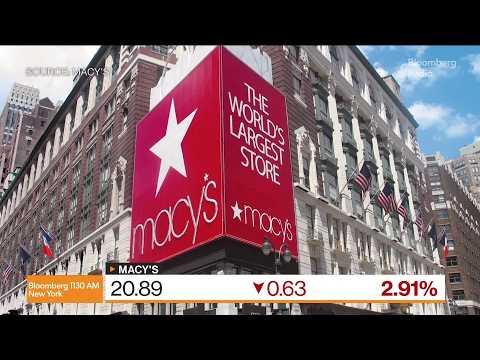
Macy's — Investor Video Playlist





Industry Resources
| Consumer Discretionary Resources |
| Retail Dive |
| Business of Fashion (BoF) |
| WWD (Women's Wear Daily) |
| National Retail Federation (NRF) |
| McKinsey & Company - Consumer |
| Mintel Consumer Trends |
| Broadline Retail Resources |
| Chain Store Age |
| RetailWire |
External Quote Links
| Y Finance | Barrons |
| TradingView | Morningstar |
| SeekingAlpha | ValueLine |
| Motley Fool | Robinhood |
| CNBC | Etrade |
| MarketWatch | Unusual Whales |
| YCharts | Perplexity Finance |
| FinViz |
Prefer one of these to Trefis? Tell us why.