
Flowers Foods (FLO)
Market Price (9/23/2026): $5.885 | Market Cap: $1.2 BilSector: Consumer Staples | Industry: Packaged Foods & Meats
Flowers Foods (FLO)
Market Price (9/23/2026): $5.885Market Cap: $1.2 BilSector: Consumer StaplesIndustry: Packaged Foods & Meats
Investment Highlights Why It Matters Detailed financial logic regarding cash flow yields vs trend-riding momentum.
Attractive yieldTotal YieldTotal Yield = Earnings Yield + Dividend Yield, Earnings Yield = Net Income / Market Cap Dividend Yield = Total Dividends / Market Cap is 19%, Dividend Yield is 15%, ERPEquity Risk Premium (ERP) = Total Yield - Risk Free Rate, Reflects the premium above risk free assets offered by the investment. is 15%, FCF Yield is 25% Valuation becoming less expensiveP/S 6M Chg %Price/Sales change over 6 months. Declining P/S indicates valuation has become less expensive. is -27% Low stock price volatilityVol 12M is 39% Megatrend and thematic driversMegatrends include Health & Wellness Trends, and Vegan & Alternative Foods. Themes include Organic & Natural Products, Vegan Products, Show more. | Weak multi-year price returns2Y Excs Rtn is -109%, 3Y Excs Rtn is -144% | Debt is significantNet D/ENet Debt/Equity. Debt net of cash. Negative indicates net cash. Equity is taken as the Market Capitalization is 157% Weak revenue growthRev Chg QQuarterly Revenue Change % is -4.0% Significant short interestShort Interest % of Basic SharesShort Interest % of Basic Shares = (Short Interest Quantity) / (Basic Shares Outstanding). A high fraction of short interest can indicate potential risk of a short squeeze. is 21% Key risksFLO key risks include [1] shrinking demand and pricing pressure for its core traditional bread products due to shifting consumer preferences and [2] potential disruption and litigation related to its independent distributorship model. |
| Attractive yieldTotal YieldTotal Yield = Earnings Yield + Dividend Yield, Earnings Yield = Net Income / Market Cap Dividend Yield = Total Dividends / Market Cap is 19%, Dividend Yield is 15%, ERPEquity Risk Premium (ERP) = Total Yield - Risk Free Rate, Reflects the premium above risk free assets offered by the investment. is 15%, FCF Yield is 25% |
| Valuation becoming less expensiveP/S 6M Chg %Price/Sales change over 6 months. Declining P/S indicates valuation has become less expensive. is -27% |
| Low stock price volatilityVol 12M is 39% |
| Megatrend and thematic driversMegatrends include Health & Wellness Trends, and Vegan & Alternative Foods. Themes include Organic & Natural Products, Vegan Products, Show more. |
| Weak multi-year price returns2Y Excs Rtn is -109%, 3Y Excs Rtn is -144% |
| Debt is significantNet D/ENet Debt/Equity. Debt net of cash. Negative indicates net cash. Equity is taken as the Market Capitalization is 157% |
| Weak revenue growthRev Chg QQuarterly Revenue Change % is -4.0% |
| Significant short interestShort Interest % of Basic SharesShort Interest % of Basic Shares = (Short Interest Quantity) / (Basic Shares Outstanding). A high fraction of short interest can indicate potential risk of a short squeeze. is 21% |
| Key risksFLO key risks include [1] shrinking demand and pricing pressure for its core traditional bread products due to shifting consumer preferences and [2] potential disruption and litigation related to its independent distributorship model. |
Qualitative Assessment
AI Analysis | Feedback
Flowers Foods (FLO) stock has lost about 20% since 5/31/2026 because of the following key factors:
1. Flowers Foods missed its fiscal Q2 2026 earnings expectations and lowered its full-year guidance.The company reported adjusted diluted EPS of $0.21 for fiscal Q2 2026, which ended July 2, 2026, missing the consensus estimate of $0.22. Net sales for the quarter decreased 4.0% year-over-year to $1.19 billion, falling short of analysts' expectations of $1.23 billion. Following these results, Flowers Foods revised its fiscal 2026 net sales guidance downward to a range of $5.070 billion to $5.142 billion, adjusted its adjusted EBITDA guidance to $453 million to $481 million, and lowered its adjusted diluted EPS outlook to $0.75 to $0.85 per share.
2. Significant volume declines in the fresh packaged bread category contributed to reduced sales and profitability.The decrease in net sales during fiscal Q2 2026 was primarily driven by a 5.8% decline in volume, specifically a 7.6% volume decrease in the Branded Retail segment and a 9.5% year-over-year decline in fresh bread volume, which outweighed favorable price/mix increases of 1.8%. This indicates a weakening demand for the company's core products, directly impacting top-line performance.
Show more
Flowers Foods (FLO) stock has lost about 20% since 5/31/2026 because of the following key factors:
1. Flowers Foods missed its fiscal Q2 2026 earnings expectations and lowered its full-year guidance.The company reported adjusted diluted EPS of $0.21 for fiscal Q2 2026, which ended July 2, 2026, missing the consensus estimate of $0.22. Net sales for the quarter decreased 4.0% year-over-year to $1.19 billion, falling short of analysts' expectations of $1.23 billion. Following these results, Flowers Foods revised its fiscal 2026 net sales guidance downward to a range of $5.070 billion to $5.142 billion, adjusted its adjusted EBITDA guidance to $453 million to $481 million, and lowered its adjusted diluted EPS outlook to $0.75 to $0.85 per share.
2. Significant volume declines in the fresh packaged bread category contributed to reduced sales and profitability.The decrease in net sales during fiscal Q2 2026 was primarily driven by a 5.8% decline in volume, specifically a 7.6% volume decrease in the Branded Retail segment and a 9.5% year-over-year decline in fresh bread volume, which outweighed favorable price/mix increases of 1.8%. This indicates a weakening demand for the company's core products, directly impacting top-line performance.
3. The company experienced margin pressure due to increased operating costs and a challenging consumer environment.Gross margin for fiscal Q2 2026 declined as materials, supplies, labor, and other production costs rose to 51.6% of sales, representing a 0.4 percentage point increase year-over-year. This, combined with a "challenging consumer environment" marked by increased price sensitivity and competitive activity, led to a 30.3% decrease in net income to $40.7 million.
4. Analyst downgrades and a cautious consensus rating reflected a negative outlook for the stock.Following the Q2 2026 results, analysts responded by lowering price targets; for instance, Stephens reduced its price target for Flowers Foods from $8 to $6 on August 24, 2026. The consensus analyst rating for Flowers Foods is "Hold" or "Reduce," with 2 out of 6 analysts issuing a "sell" rating and 4 a "hold" rating, indicating a generally negative or cautious sentiment towards the stock's future performance.
Show less
Stock Movement Drivers
Fundamental Drivers
The -20.1% change in FLO stock from 5/31/2026 to 9/22/2026 was primarily driven by a -23.6% change in the company's Net Income Margin (%).| (LTM values as of) | 5312026 | 9222026 | Change |
|---|---|---|---|
| Stock Price ($) | 7.36 | 5.88 | -20.1% |
| Change Contribution By: | |||
| Total Revenues ($ Mil) | 5,274 | 5,224 | -0.9% |
| Net Income Margin (%) | 1.4% | 1.1% | -23.6% |
| P/E Multiple | 21.4 | 22.6 | 5.6% |
| Shares Outstanding (Mil) | 212 | 212 | -0.1% |
| Cumulative Contribution | -20.1% |
Market Drivers
5/31/2026 to 9/22/2026| Return | Correlation | |
|---|---|---|
| FLO | -20.1% | |
| Market (SPY) | 2.5% | 6.2% |
| Sector (XLP) | 0.5% | 54.7% |
Fundamental Drivers
The -36.6% change in FLO stock from 2/28/2026 to 9/22/2026 was primarily driven by a -33.8% change in the company's Net Income Margin (%).| (LTM values as of) | 2282026 | 9222026 | Change |
|---|---|---|---|
| Stock Price ($) | 9.27 | 5.88 | -36.6% |
| Change Contribution By: | |||
| Total Revenues ($ Mil) | 5,256 | 5,224 | -0.6% |
| Net Income Margin (%) | 1.6% | 1.1% | -33.8% |
| P/E Multiple | 23.4 | 22.6 | -3.3% |
| Shares Outstanding (Mil) | 211 | 212 | -0.3% |
| Cumulative Contribution | -36.6% |
Market Drivers
2/28/2026 to 9/22/2026| Return | Correlation | |
|---|---|---|
| FLO | -36.6% | |
| Market (SPY) | 13.3% | 5.0% |
| Sector (XLP) | -6.9% | 40.8% |
Fundamental Drivers
The -56.6% change in FLO stock from 8/31/2025 to 9/22/2026 was primarily driven by a -75.5% change in the company's Net Income Margin (%).| (LTM values as of) | 8312025 | 9222026 | Change |
|---|---|---|---|
| Stock Price ($) | 13.55 | 5.88 | -56.6% |
| Change Contribution By: | |||
| Total Revenues ($ Mil) | 5,099 | 5,224 | 2.5% |
| Net Income Margin (%) | 4.3% | 1.1% | -75.5% |
| P/E Multiple | 13.1 | 22.6 | 73.2% |
| Shares Outstanding (Mil) | 211 | 212 | -0.4% |
| Cumulative Contribution | -56.6% |
Market Drivers
8/31/2025 to 9/22/2026| Return | Correlation | |
|---|---|---|
| FLO | -56.6% | |
| Market (SPY) | 21.2% | 1.9% |
| Sector (XLP) | 5.3% | 44.7% |
Fundamental Drivers
The -70.0% change in FLO stock from 8/31/2023 to 9/22/2026 was primarily driven by a -76.4% change in the company's Net Income Margin (%).| (LTM values as of) | 8312023 | 9222026 | Change |
|---|---|---|---|
| Stock Price ($) | 19.59 | 5.88 | -70.0% |
| Change Contribution By: | |||
| Total Revenues ($ Mil) | 5,003 | 5,224 | 4.4% |
| Net Income Margin (%) | 4.5% | 1.1% | -76.4% |
| P/E Multiple | 18.6 | 22.6 | 21.7% |
| Shares Outstanding (Mil) | 212 | 212 | 0.0% |
| Cumulative Contribution | -70.0% |
Market Drivers
8/31/2023 to 9/22/2026| Return | Correlation | |
|---|---|---|
| FLO | -70.0% | |
| Market (SPY) | 78.3% | 11.4% |
| Sector (XLP) | 23.4% | 50.3% |
Price Returns Compared
| 2021 | 2022 | 2023 | 2024 | 2025 | 2026 | Total [1] | |
|---|---|---|---|---|---|---|---|
| Returns | |||||||
| FLO Return | 26% | 8% | -19% | -4% | -44% | -42% | -65% |
| Peers Return | 9% | 21% | -14% | -4% | -20% | -3% | -16% |
| S&P 500 Return | 27% | -19% | 24% | 23% | 16% | 13% | 107% |
Monthly Win Rates [3] | |||||||
| FLO Win Rate | 75% | 50% | 33% | 58% | 17% | 33% | |
| Peers Win Rate | 50% | 65% | 37% | 48% | 37% | 56% | |
| S&P 500 Win Rate | 75% | 42% | 67% | 75% | 67% | 56% | |
Max Drawdowns [4] | |||||||
| FLO Max Drawdown | -10% | -16% | -28% | -17% | -48% | -47% | |
| Peers Max Drawdown | -16% | -15% | -30% | -19% | -28% | -27% | |
| S&P 500 Max Drawdown | -5% | -25% | -10% | -8% | -19% | -9% | |
[1] Cumulative total returns since the beginning of 2021
[2] Peers: SJM, CPB, GIS, MDLZ, CAG. See FLO Returns vs. Peers.
[3] Win Rate = % of calendar months in which monthly returns were positive
[4] Max drawdown represents maximum peak-to-trough decline within a year
[5] 2026 data is for the year up to 9/22/2026 (YTD)
How Low Can It Go
| Event | FLO | S&P 500 |
|---|---|---|
| Summer-Fall 2023 Five Percent Yield Shock | ||
| % Loss | -16.8% | -9.5% |
| % Gain to Breakeven | 20.2% | 10.5% |
| Time to Breakeven | 189 days | 24 days |
| 2022 Inflation Shock & Fed Tightening | ||
| % Loss | -10.8% | -24.5% |
| % Gain to Breakeven | 12.0% | 32.4% |
| Time to Breakeven | 40 days | 427 days |
| 2020 COVID-19 Crash | ||
| % Loss | -19.3% | -33.7% |
| % Gain to Breakeven | 23.9% | 50.9% |
| Time to Breakeven | 15 days | 140 days |
| 2015-2016 China Devaluation / Global Growth Scare | ||
| % Loss | -34.9% | -12.2% |
| % Gain to Breakeven | 53.6% | 13.9% |
| Time to Breakeven | 783 days | 62 days |
| 2014-2016 Oil Price Collapse | ||
| % Loss | -11.3% | -6.8% |
| % Gain to Breakeven | 12.8% | 7.3% |
| Time to Breakeven | 35 days | 15 days |
| 2013 Taper Tantrum | ||
| % Loss | -10.7% | -0.2% |
| % Gain to Breakeven | 12.0% | 0.2% |
| Time to Breakeven | 42 days | 1 days |
In The Past
Flowers Foods's stock fell 0.0% during the 2024 Yen Carry Trade Unwind. Such a loss loss requires a 0.0% gain to breakeven.
Preserve Wealth
Limiting losses and compounding gains is essential to preserving wealth.
Asset Allocation
Actively managed asset allocation strategies protect wealth. Learn more.
| Event | FLO | S&P 500 |
|---|---|---|
| 2015-2016 China Devaluation / Global Growth Scare | ||
| % Loss | -34.9% | -12.2% |
| % Gain to Breakeven | 53.6% | 13.9% |
| Time to Breakeven | 783 days | 62 days |
| 2011 US Debt Ceiling Crisis & European Contagion | ||
| % Loss | -20.5% | -17.9% |
| % Gain to Breakeven | 25.9% | 21.8% |
| Time to Breakeven | 281 days | 123 days |
In The Past
Flowers Foods's stock fell 0.0% during the 2024 Yen Carry Trade Unwind. Such a loss loss requires a 0.0% gain to breakeven.
Preserve Wealth
Limiting losses and compounding gains is essential to preserving wealth.
Asset Allocation
Actively managed asset allocation strategies protect wealth. Learn more.
About Flowers Foods (FLO)
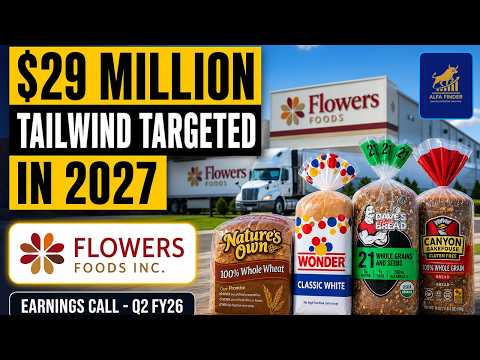
Flowers Foods, Inc. (FLO) is a prominent U.S. producer and marketer of packaged bakery products. The company operates a vast network of 46 bakeries to manufacture and distribute a wide variety of baked goods across the nation. Its distribution strategy leverages both a direct-store-delivery system and a warehouse delivery system, ensuring extensive market penetration and product availability.
The company's core product offerings include fresh breads, buns, rolls, snack cakes, and tortillas, alongside frozen breads and rolls. These products are sold under several well-recognized brand names, such as Nature's Own, Dave's Killer Bread, Wonder, Canyon Bakehouse, Mrs. Freshley's, and Tastykake, appealing to a broad spectrum of consumer tastes and preferences.
Flowers Foods serves a diverse and extensive customer base, reaching nearly every segment of the food retail and foodservice industries. Its primary customers include mass merchandisers, supermarkets, convenience stores, and other retailers. The company also supplies national and regional restaurants, quick-serve chains, retail in-store bakeries, foodservice distributors, food wholesalers, institutions, dollar stores, and vending companies, ensuring its products are accessible through numerous channels.
AI Analysis | Feedback
Here are a few analogies to describe Flowers Foods:
The Frito-Lay of the bakery aisle.
A Kellogg's or General Mills, but specializing in bread and snack cakes.
AI Analysis | Feedback
- Fresh Baked Goods: This category includes a variety of fresh breads, buns, and rolls.
- Snack Cakes: The company offers a range of packaged snack cakes under various brand names.
- Tortillas: Flowers Foods produces and markets tortillas as part of its bakery product portfolio.
- Frozen Baked Goods: This includes a selection of frozen breads and rolls.
AI Analysis | Feedback
AI Analysis | Feedback
AI Analysis | Feedback
A. Ryals McMullian, Chairman and Chief Executive Officer
Ryals McMullian is the chairman and chief executive officer of Flowers Foods, Inc. He was elected CEO in 2019 and became chairman in 2023. Mr. McMullian joined Flowers Foods in 2003 and has held a variety of leadership positions, including chief operating officer, chief strategy officer, vice president of mergers and acquisitions and deputy general counsel, and vice president and associate general counsel. He has led initiatives to standardize and centralize corporate processes, with a focus on organizational realignment, indirect spend, and supply-chain optimization. Mr. McMullian holds a master's degree in business administration, a juris doctorate, and a bachelor's degree in finance and real estate from Florida State University.
D. Anthony Scaglione, Chief Financial Officer
Anthony Scaglione is the chief financial officer of Flowers Foods, Inc., appointed in 2026. In this role, he guides the company's financial strategy and oversees treasury, investor relations, accounting, tax, internal audit, risk, procurement, and information security functions. Prior to joining Flowers Foods, Mr. Scaglione served as CFO for several public and private multi-billion-dollar organizations, including Total Wine & More, ODP Corporation, and ABM Industries. His leadership experience also spans strategy, real estate, procurement, mergers and acquisitions, and information technology. Mr. Scaglione earned two Bachelor of Science degrees in Finance and Accounting from Rutgers University and a Master of Business Administration from Fairleigh Dickinson University. He is also a Certified Public Accountant (CPA-NY).
Heeth Varnedoe, President and Chief Operating Officer
Heeth Varnedoe is the president and chief operating officer of Flowers Foods, Inc. He was named chief operating officer in 2022 and president in 2023, overseeing Flowers' operations, including the company's supply chain and field sales execution. Before this role, Mr. Varnedoe served as chief transformation officer, where he was responsible for overseeing the implementation of cross-functional initiatives to advance Flowers' long-term strategic plans.
Stephanie B. Tillman, Chief Legal Counsel and Corporate Secretary
Stephanie Tillman is the chief legal counsel and corporate secretary of Flowers Foods, Inc., a position she was appointed to in 2020. She is responsible for the company's legal, corporate governance, compliance, and governmental affairs. Ms. Tillman joined Flowers in 1995 as a corporate attorney and has held various legal leadership roles, including vice president, chief compliance officer and deputy general counsel, associate general counsel, and vice president of compliance and assistant general counsel.
H. Mark Courtney, Chief Brand Officer
H. Mark Courtney is the chief brand officer of Flowers Foods, Inc., serving in this role since 2020. He leads the company's brand organization, revenue growth management, and shopper marketing functions. Mr. Courtney is responsible for managing the Flowers brand portfolio, which includes Nature's Own, Dave's Killer Bread, Canyon Bakehouse, Wonder Bread, Tastykake, and Mrs. Freshley's.
AI Analysis | Feedback
The key risks to Flowers Foods (FLO) include shifting consumer preferences away from traditional bakery items, significant operational and cost challenges within its direct-store-delivery model, and intense competitive pressures from both branded rivals and growing private-label offerings.
- Changing Consumer Preferences and Declining Demand for Traditional Products: Flowers Foods faces a significant challenge from evolving consumer tastes, with a noticeable shift away from traditional white and wheat bread loaves, which constitute a substantial portion of its core business. This trend is exacerbated by increasing consumer interest in "better-for-you" options and the potential impact of dietary trends, such as the use of GLP-1 medications, which may reduce carbohydrate intake. This structural decline in demand for mainstream products directly impacts sales volumes and profitability, necessitating continuous product innovation and adaptation to meet new consumer demands.
- Operational and Cost Challenges with the Direct-Store-Delivery (DSD) Model: The company's reliance on its direct-store-delivery (DSD) distribution model and independent distributor partners (IDPs) presents considerable operational risks. Disruptions within this intricate distribution system, potential negative changes in relationships with IDPs (including litigation or regulatory challenges concerning their independent contractor classification), and rising distribution costs can severely impact the company's efficiency and financial performance. Furthermore, Flowers Foods is subject to volatile commodity prices for key ingredients like wheat and sugar, ongoing labor shortages, increased employee turnover, and escalating employee-related expenses, all of which put pressure on margins and operational profitability.
- Intense Competition and Growth of Private Label Brands: The packaged bakery sector is highly competitive. Flowers Foods contends with significant rivalry from large national producers like Bimbo Bakeries USA and various regional players. An increasing threat comes from private-label brands offered by mass merchandisers and supermarkets, which provide similar products often at lower price points. This competitive landscape can lead to pricing pressures, erode market share, and reduce the company's profitability.
AI Analysis | Feedback
AI Analysis | Feedback
For Flowers Foods (symbol: FLO), the addressable markets for their main products in the United States are as follows:
- Bakery Products (Overall): The U.S. bakery products market was valued at USD 78.96 billion in 2023 and is projected to reach USD 86.93 billion by 2029, growing at a Compound Annual Growth Rate (CAGR) of 1.62% during the forecast period. Alternatively, the U.S. Bakery Items Market was valued at USD 46 billion in 2024 and is projected to reach USD 68.57 billion by 2032, with a CAGR of 5.2%.
- Fresh Bread & Bakery Goods: The market size of Fresh Bread & Bakery Goods Wholesaling in the U.S. was $73.2 billion in 2024. The value of fresh bread and miscellaneous bakery production was $50.7 billion in 2024, with consumption value at $56.1 billion in the same year. The U.S. retail packaged bread market is estimated to grow at over 1.8% CAGR through 2032. The United States bread market was valued at USD 29.93 billion in 2022 and is projected to grow at a CAGR of 3.95% through 2028.
- Buns and Rolls: The buns and rolls segment of fresh bread accounts for over $6 billion in annual retail sales in the USA (as of March 2022). Center store buns and rolls saw $4.6 billion in dollar sales for the 52 weeks ending March 20, 2022.
- Snack Cakes: Snack cake dollar sales in the U.S. reached US$2.12 billion over the 52 weeks ending May 18 (article published July 14, 2025), marking a 6% decline compared to the previous year. The North American snack cakes market was valued at USD 2.1 billion in 2024 and is projected to rise to USD 2.6 billion by 2035.
- Tortillas: The United States tortilla market is projected to reach a market size of US$28.556 billion in 2028 from US$20.262 billion in 2021. Another estimate places the US tortilla market size at approximately $9.91 billion (USD 9909.8 million) in 2024, with a projection to reach about $13.8 billion (USD 13800.0 million) by 2035.
- Frozen Breads and Rolls (part of Frozen Bakery Products): The U.S. frozen bakery market generated a revenue of USD 24,500.2 million (approximately $24.5 billion) in 2024 and is expected to reach USD 32,619.9 million (approximately $32.62 billion) by 2030, growing at a CAGR of 4.9% from 2025 to 2030. The U.S. frozen bakery products market size is also expected to reach $9.2 billion by 2030, rising at a market growth of 5.0% CAGR. The U.S. frozen bakery products market was valued at USD 4.72 billion in 2025.
AI Analysis | Feedback
Flowers Foods, Inc. (FLO) anticipates several key drivers for future revenue growth over the next two to three years:
- New Product Launches and Innovation: The company plans to introduce new products, particularly focusing on "better-for-you" and "value-oriented offerings," to stimulate top-line performance and gain market share. Management has expressed enthusiasm for upcoming innovation in 2026, supported by investments in marketing and innovation.
- Strategic Acquisitions: Recent acquisitions, such as Simple Mills and Papa Pita, are expected to contribute to sales growth through successful integration and expansion of the product portfolio. The Simple Mills acquisition, for instance, has already significantly aided net sales.
- Effective Pricing Actions and Mix Management: Flowers Foods expects revenue to benefit from pricing actions taken to mitigate inflationary pressures, along with continued strategic price/mix management. The company plans for "wraparound pricing" in branded retail and new pricing in selected foodservice accounts to positively impact the first half of the upcoming fiscal years.
- Growth of Key Branded Products and Branded Retail Market Share Gains: Flowers Foods aims to drive volume and share gains through its portfolio strategy and investments in strong brands like Dave's Killer Bread, Wonder, and Nature's Own Perfectly Crafted. Dave's Killer Bread has been a notable performer, achieving record retail sales and consistent unit growth.
- Cost Savings and Supply Chain Optimization: The company is focused on enhancing its cost structure and improving supply chain efficiencies through savings initiatives and strategic actions to optimize its operations. These efforts are expected to improve margins, which can then be reinvested to fuel further growth.
AI Analysis | Feedback
Capital Allocation Decisions (Last 3-5 Years) for Flowers Foods (FLO)
Share Repurchases
- Flowers Foods' annual share buybacks amounted to $22.703 million in 2024.
- For the quarter ending March 31, 2025, the company's share buybacks totaled $5.499 million.
- In May 2022, the board increased the share repurchase authorization by 20 million shares, resulting in a total outstanding authorization of 25.4 million shares.
Share Issuance
- The number of shares outstanding for Flowers Foods has remained relatively stable over the last few years, fluctuating between approximately 0.211 billion and 0.213 billion from 2021 to 2025, indicating no significant share issuances.
Outbound Investments
- In January 2025, Flowers Foods entered into a definitive agreement to acquire Simple Mills for $795 million in cash.
- This acquisition is strategically aimed at expanding Flowers Foods' presence in the "better-for-you" and attractive snacking segments.
Capital Expenditures
- Capital expenditures for fiscal year 2024 were $132.1 million. [cite: 10 of prev search]
- The company's capital expenditures were approximately $127 million for December 2025 (preliminary), $127 million for December 2024, and $132 million for December 2023. [cite: 6 of prev search]
- In fiscal year 2022, capital expenditures increased to $169.1 million. [cite: 9 of prev search]
Peer Outperformance in Packaged Foods & Meats
| Ticker | Name | Rev Growth 3Y Avg | P/E | 1Y | 3Y | 5Y | 5Y Gap |
|---|---|---|---|---|---|---|---|
| FLO | Flowers Foods | 1.5% | 22.6x | -51.1% | -69.1% | -67.6% | — |
| TR | Tootsie Roll Industries | 0.5% | 29.5x | -4.2% | 36.7% | 51.7% | +119pp |
| SJM | JM Smucker | 2.7% | 56.4x | 16.7% | 7.5% | 21.1% | +89pp |
| MDLZ | Mondelez International | 5.2% | 66.9x | -0.5% | -5.4% | 14.8% | +82pp |
| PPC | Pilgrims Pride | 2.6% | 12.6x | -29.6% | 43.4% | 14.7% | +82pp |
| HSY | Hershey | 3.9% | 22.9x | -9.8% | -12.0% | 9.7% | +77pp |
| Industry | Names | 1Y med | 3Y med | 5Y med | Top 3 by 5Y |
|---|---|---|---|---|---|
| Consumer Staples Merchandise Retail | 12 | 8.0% | 41.2% | 54.6% | NGVC 239% · VLGEA 147% · WMT 146% |
| Food Retail | 6 | -7.2% | 48.0% | 42.6% | CASY 219% · SFM 202% · KR 62% |
| Tobacco | 6 | -40.6% | 9.5% | 31.7% | PM 137% · MO 106% · TPB 40% |
| Food Distributors | 9 | -0.6% | 29.1% | 12.5% | CHEF 244% · USFD 169% · ANDE 145% |
| Soft Drinks & Non-alcoholic Beverages | 12 | -5.7% | -16.6% | 2.4% | COKE 410% · BRFH 168% · CCHGY 113% |
| Brewers | 3 | -14.5% | -35.2% | -6.1% | BUD 43% · TAP -6% · SAM -68% |
| Agricultural Products & Services | 12 | 2.0% | 2.2% | -14.3% | BG 60% · ADM 57% · INGR 27% |
| Household Products | 19 | -2.0% | -7.6% | -14.8% | ACU 103% · IPAR 89% · CL 28% |
| Personal Care Products | 4 | -0.3% | -2.9% | -24.7% | ELF 250% · PG 17% · EL -66% |
| Packaged Foods & Meats ← | 47 | -24.8% | -33.5% | -40.7% | MAMA 459% · LWAY 305% · SENEA 295% |
| Distillers & Vintners | 5 | -43.7% | -59.4% | -77.9% | STZ -40% · BF-B -57% · MGPI -78% |
| Drug Retail | 3 | -40.3% | -85.7% | -93.5% | HITI -57% · PETS -93% · SCNX -99% |
Latest Trefis Analyses
Research & Analysis
Invest in Strategies
Wealth Management
Peer Comparisons
| Peers to compare with: |
Financials
| Median | |
|---|---|
| Name | |
| Mkt Price | 27.83 |
| Mkt Cap | 10.0 |
| Rev LTM | 10,605 |
| Op Inc LTM | 1,531 |
| FCF LTM | 1,284 |
| FCF 3Y Avg | 1,132 |
| CFO LTM | 1,656 |
| CFO 3Y Avg | 1,538 |
Growth & Margins
| Median | |
|---|---|
| Name | |
| Rev Chg LTM | -0.2% |
| Rev Chg 3Y Avg | 1.9% |
| Rev Chg Q | -0.2% |
| QoQ Delta Rev Chg LTM | -0.0% |
| Op Inc Chg LTM | -13.3% |
| Op Inc Chg 3Y Avg | -0.1% |
| Op Mgn LTM | 11.6% |
| Op Mgn 3Y Avg | 13.5% |
| QoQ Delta Op Mgn LTM | -0.5% |
| CFO/Rev LTM | 11.6% |
| CFO/Rev 3Y Avg | 13.3% |
| FCF/Rev LTM | 8.2% |
| FCF/Rev 3Y Avg | 9.7% |
Valuation
| Median | |
|---|---|
| Name | |
| Mkt Cap | 10.0 |
| P/S | 0.8 |
| P/Op Inc | 6.4 |
| P/EBIT | 7.7 |
| P/E | 16.3 |
| P/CFO | 6.1 |
| Total Yield | 11.6% |
| Dividend Yield | 7.4% |
| FCF Yield 3Y Avg | 8.2% |
| D/E | 0.9 |
| Net D/E | 0.8 |
Returns
| Median | |
|---|---|
| Name | |
| 1M Rtn | -10.7% |
| 3M Rtn | 2.8% |
| 6M Rtn | -0.2% |
| 12M Rtn | -18.9% |
| 3Y Rtn | -37.9% |
| 1M Excs Rtn | -11.9% |
| 3M Excs Rtn | -2.6% |
| 6M Excs Rtn | -18.6% |
| 12M Excs Rtn | -36.1% |
| 3Y Excs Rtn | -112.9% |
Comparison Analyses
Segment Financials
Revenue by Segment| $ Mil | 2026 | 2024 | 2023 | 2022 |
|---|---|---|---|---|
| Simple Mills and legacy Flowers Foods | 5,256 | 5,103 | 5,091 | 4,806 |
| Total | 5,256 | 5,103 | 5,091 | 4,806 |
| $ Mil | 2016 | 2015 | 2013 | 2012 | 2011 |
|---|---|---|---|---|---|
| DSD | 302 | 284 | 351 | 233 | 203 |
| WarehouseSegment | 55 | ||||
| Other | -60 | ||||
| Unallocated | -60 | -64 | -51 | -42 | |
| Warehouse Delivery | 51 | 49 | 36 | 27 | |
| Total | 298 | 275 | 335 | 219 | 189 |
| $ Mil | 2016 | 2015 | 2013 | 2012 | 2011 |
|---|---|---|---|---|---|
| DSD | 2,410 | 2,094 | 2,146 | 1,639 | 1,223 |
| WarehouseSegment | 334 | ||||
| Other | 141 | ||||
| Unallocated | 114 | 124 | 112 | 100 | |
| Warehouse Delivery | 201 | 234 | 245 | 231 | |
| Total | 2,885 | 2,409 | 2,504 | 1,996 | 1,554 |
Price Behavior
| Market Price | $5.88 | |
| Market Cap ($ Bil) | 1.2 | |
| First Trading Date | 11/05/1987 | |
| Distance from 52W High | -51.3% | |
| 50 Days | 200 Days | |
| DMA Price | $7.00 | $8.34 |
| DMA Trend | down | down |
| Distance from DMA | -15.9% | -29.5% |
| 3M | 1YR | |
| Volatility | 40.2% | 38.6% |
| Downside Capture | 101.51 | 43.76 |
| Upside Capture | -37.10 | -47.11 |
| Correlation (SPY) | 4.9% | 2.3% |
| 1M | 2M | 3M | 6M | 1Y | 3Y | |
|---|---|---|---|---|---|---|
| Beta | 1.49 | 0.62 | 0.14 | 0.12 | 0.04 | 0.21 |
| Up Beta | 1.54 | -0.04 | 0.23 | 0.03 | 0.27 | 0.41 |
| Down Beta | 2.53 | 2.02 | 0.06 | 0.15 | 0.22 | 0.11 |
| Up Capture | 99% | -25% | -4% | -17% | -28% | -2% |
| Bmk +ve Days | 10 | 21 | 32 | 68 | 138 | 427 |
| Stock +ve Days | 12 | 16 | 30 | 57 | 106 | 347 |
| Down Capture | 203% | 155% | 40% | 60% | 40% | 60% |
| Bmk -ve Days | 11 | 21 | 32 | 59 | 113 | 324 |
| Stock -ve Days | 9 | 24 | 32 | 67 | 138 | 388 |
[1] Upside and downside betas calculated using positive and negative benchmark daily returns respectively
Based On 1-Year Data
| Annualized Return | Annualized Volatility | Sharpe Ratio | Correlation with FLO | |
|---|---|---|---|---|
| FLO | -51.2% | 38.5% | -1.77 | - |
| Sector ETF (XLP) | 7.1% | 14.5% | 0.25 | 44.7% |
| Equity (SPY) | 17.6% | 13.0% | 0.98 | 2.6% |
| Gold (GLD) | 18.0% | 29.3% | 0.56 | -2.3% |
| Commodities (DBC) | 46.6% | 20.7% | 1.75 | -12.9% |
| Real Estate (VNQ) | 5.2% | 13.6% | 0.12 | 31.9% |
| Bitcoin (BTCUSD) | -26.0% | 44.9% | -0.54 | -12.6% |
Smart multi-asset allocation framework can stack odds in your favor. Learn How
Based On 5-Year Data
| Annualized Return | Annualized Volatility | Sharpe Ratio | Correlation with FLO | |
|---|---|---|---|---|
| FLO | -20.3% | 26.2% | -0.87 | - |
| Sector ETF (XLP) | 5.7% | 13.7% | 0.19 | 51.9% |
| Equity (SPY) | 13.3% | 17.2% | 0.59 | 18.2% |
| Gold (GLD) | 18.9% | 18.8% | 0.81 | -1.2% |
| Commodities (DBC) | 10.8% | 19.6% | 0.43 | -6.9% |
| Real Estate (VNQ) | 1.0% | 18.9% | -0.05 | 33.0% |
| Bitcoin (BTCUSD) | 12.7% | 52.6% | 0.42 | 1.7% |
Smart multi-asset allocation framework can stack odds in your favor. Learn How
Based On 10-Year Data
| Annualized Return | Annualized Volatility | Sharpe Ratio | Correlation with FLO | |
|---|---|---|---|---|
| FLO | -5.0% | 25.6% | -0.18 | - |
| Sector ETF (XLP) | 7.3% | 14.9% | 0.35 | 53.5% |
| Equity (SPY) | 15.4% | 17.9% | 0.73 | 26.4% |
| Gold (GLD) | 12.2% | 16.4% | 0.61 | 1.1% |
| Commodities (DBC) | 8.3% | 18.1% | 0.37 | -0.9% |
| Real Estate (VNQ) | 4.7% | 20.7% | 0.19 | 35.1% |
| Bitcoin (BTCUSD) | 64.0% | 66.2% | 1.04 | 4.0% |
Smart multi-asset allocation framework can stack odds in your favor. Learn How
Returns Analyses
Earnings Returns History
Updated 9/23/2026| Forward Returns | |||
|---|---|---|---|
| Earnings Date | 1D Returns | 5D Returns | 21D Returns |
| 8/20/2026 | -2.1% | -1.7% | -14.3% |
| 5/21/2026 | 13.3% | 9.0% | 9.5% |
| 2/12/2026 | -8.7% | -11.3% | -19.5% |
| 11/6/2025 | 1.9% | -2.2% | -7.0% |
| 8/15/2025 | -5.4% | -6.6% | -17.3% |
| 5/16/2025 | 1.4% | -2.8% | -4.7% |
| 2/7/2025 | -1.3% | -2.8% | 2.8% |
| 11/8/2024 | -2.7% | -0.9% | 0.5% |
| ... | |||
| SUMMARY STATS | |||
| # Positive | 10 | 8 | 9 |
| # Negative | 14 | 16 | 15 |
| Median Positive | 2.1% | 3.3% | 3.5% |
| Median Negative | -3.7% | -3.2% | -7.0% |
| Max Positive | 13.3% | 9.0% | 9.5% |
| Max Negative | -9.9% | -11.3% | -19.5% |
| Forward Returns | |||
|---|---|---|---|
| Earnings Date | 1D Returns | 5D Returns | 21D Returns |
| 8/20/2026 | -2.1% | -1.7% | -14.3% |
| 5/21/2026 | 13.3% | 9.0% | 9.5% |
| 2/12/2026 | -8.7% | -11.3% | -19.5% |
| 11/6/2025 | 1.9% | -2.2% | -7.0% |
| 8/15/2025 | -5.4% | -6.6% | -17.3% |
| 5/16/2025 | 1.4% | -2.8% | -4.7% |
| 2/7/2025 | -1.3% | -2.8% | 2.8% |
| 11/8/2024 | -2.7% | -0.9% | 0.5% |
| 8/16/2024 | 0.2% | 0.7% | 5.3% |
| 5/16/2024 | -4.1% | -7.4% | -10.2% |
| 2/9/2024 | -5.1% | -4.5% | -0.1% |
| 11/9/2023 | -6.9% | -6.0% | 0.1% |
| 8/11/2023 | 4.2% | -2.6% | -4.6% |
| 5/19/2023 | -9.9% | -9.5% | -14.3% |
| 2/10/2023 | 0.8% | 1.2% | -1.7% |
| 11/10/2022 | -8.5% | -3.5% | -0.4% |
| 8/12/2022 | -0.2% | 2.0% | -2.0% |
| 5/20/2022 | 5.5% | 8.9% | 0.3% |
| 2/10/2022 | -0.6% | 0.9% | -12.0% |
| 11/12/2021 | 2.3% | 4.7% | 4.1% |
| 8/13/2021 | 6.4% | 8.1% | 3.5% |
| 5/21/2021 | -2.2% | -2.8% | -2.5% |
| 2/12/2021 | 1.1% | -1.3% | 7.2% |
| 11/6/2020 | -3.4% | -8.7% | -7.0% |
| SUMMARY STATS | |||
| # Positive | 10 | 8 | 9 |
| # Negative | 14 | 16 | 15 |
| Median Positive | 2.1% | 3.3% | 3.5% |
| Median Negative | -3.7% | -3.2% | -7.0% |
| Max Positive | 13.3% | 9.0% | 9.5% |
| Max Negative | -9.9% | -11.3% | -19.5% |
SEC Filings
Expand for More| Report Date | Filing Date | Filing |
|---|---|---|
| 06/30/2026 | 08/20/2026 | 10-Q |
| 03/31/2026 | 05/21/2026 | 10-Q |
| 12/31/2025 | 02/25/2026 | 10-K |
| 09/30/2025 | 11/06/2025 | 10-Q |
| 06/30/2025 | 08/15/2025 | 10-Q |
| 03/31/2025 | 05/16/2025 | 10-Q |
| 12/31/2024 | 02/18/2025 | 10-K |
| 09/30/2024 | 11/08/2024 | 10-Q |
| 06/30/2024 | 08/16/2024 | 10-Q |
| 03/31/2024 | 05/16/2024 | 10-Q |
| 12/31/2023 | 02/21/2024 | 10-K |
| 09/30/2023 | 11/09/2023 | 10-Q |
| 06/30/2023 | 08/10/2023 | 10-Q |
| 03/31/2023 | 05/18/2023 | 10-Q |
| 12/31/2022 | 02/22/2023 | 10-K |
| 09/30/2022 | 11/10/2022 | 10-Q |
| Report Date | Filing Date | Filing |
|---|---|---|
| 06/30/2026 | 08/20/2026 | 10-Q |
| 03/31/2026 | 05/21/2026 | 10-Q |
| 12/31/2025 | 02/25/2026 | 10-K |
| 09/30/2025 | 11/06/2025 | 10-Q |
| 06/30/2025 | 08/15/2025 | 10-Q |
| 03/31/2025 | 05/16/2025 | 10-Q |
| 12/31/2024 | 02/18/2025 | 10-K |
| 09/30/2024 | 11/08/2024 | 10-Q |
| 06/30/2024 | 08/16/2024 | 10-Q |
| 03/31/2024 | 05/16/2024 | 10-Q |
| 12/31/2023 | 02/21/2024 | 10-K |
| 09/30/2023 | 11/09/2023 | 10-Q |
| 06/30/2023 | 08/10/2023 | 10-Q |
| 03/31/2023 | 05/18/2023 | 10-Q |
| 12/31/2022 | 02/22/2023 | 10-K |
| 09/30/2022 | 11/10/2022 | 10-Q |
| 06/30/2022 | 08/11/2022 | 10-Q |
| 03/31/2022 | 05/19/2022 | 10-Q |
| 12/31/2021 | 02/23/2022 | 10-K |
| 09/30/2021 | 11/12/2021 | 10-Q |
| 06/30/2021 | 08/12/2021 | 10-Q |
| 03/31/2021 | 05/20/2021 | 10-Q |
| 12/31/2020 | 02/24/2021 | 10-K |
| 09/30/2020 | 11/05/2020 | 10-Q |
| 06/30/2020 | 08/06/2020 | 10-Q |
| 03/31/2020 | 05/13/2020 | 10-Q |
| 12/31/2019 | 02/19/2020 | 10-K |
| 09/30/2019 | 11/06/2019 | 10-Q |
Recent Forward Guidance
Updated 8/21/2026Latest: Q2 2026 Earnings Reported 8/20/2026
| Forward Guidance | Guidance Change | |||||||
|---|---|---|---|---|---|---|---|---|
| Metric | Source | Low | Mid | High | % Chg | % Delta | Change | Prior |
| 2026 Depreciation and Amortization | Reported | 165.00 Mil | 167.50 Mil | 170.00 Mil | 0 | Affirmed | Guidance: 167.50 Mil for 2026 | |
| 2026 Revenue | Reported | 5.07 Bil | 5.11 Bil | 5.14 Bil | -2.1% | Lowered | Guidance: 5.21 Bil for 2026 | |
| 2026 Adjusted EBITDA | Reported | 453.00 Mil | 467.00 Mil | 481.00 Mil | -2.7% | Lowered | Guidance: 480.00 Mil for 2026 | |
| 2026 Net Interest Expense | Reported | 65.00 Mil | 67.50 Mil | 70.00 Mil | 0 | Affirmed | Guidance: 67.50 Mil for 2026 | |
| 2026 Effective Tax Rate | Reported | 26.0% | 0 | Affirmed | Guidance: 26.0% for 2026 | |||
| 2026 Adjusted Diluted EPS | Reported | 0.75 | 0.8 | 0.85 | -5.9% | Lowered | Guidance: 0.85 for 2026 | |
| 2026 Weighted Average Diluted Share Count | Reported | 213.50 Mil | ||||||
| 2026 Capital Expenditures | Reported | 115.00 Mil | 120.00 Mil | 125.00 Mil | 0 | Affirmed | Guidance: 120.00 Mil for 2026 | |
Prior: Q1 2026 Earnings Reported 5/21/2026
| Forward Guidance | Guidance Change | |||||||
|---|---|---|---|---|---|---|---|---|
| Metric | Source | Low | Mid | High | % Chg | % Delta | Change | Prior |
| 2026 Depreciation and Amortization | Reported | 165.00 Mil | 167.50 Mil | 170.00 Mil | ||||
| 2026 Net Sales | Reported | 5.16 Bil | 5.21 Bil | 5.27 Bil | 0 | Affirmed | Guidance: 5.21 Bil for 2026 | |
| 2026 Net Sales Growth | Reported | -1.8% | -0.8% | 0.2% | ||||
| 2026 Adjusted EBITDA | Reported | 465.00 Mil | 480.00 Mil | 495.00 Mil | 0 | Affirmed | Guidance: 480.00 Mil for 2026 | |
| 2026 Net Interest Expense | Reported | 65.00 Mil | 67.50 Mil | 70.00 Mil | ||||
| 2026 Effective Tax Rate | Reported | 26.0% | ||||||
| 2026 Adjusted Diluted EPS | Reported | 0.8 | 0.85 | 0.9 | 0 | Affirmed | Guidance: 0.85 for 2026 | |
| 2026 Capital Expenditures | Reported | 115.00 Mil | 120.00 Mil | 125.00 Mil | ||||
Q4 2025 Earnings Reported 2/12/2026
| Forward Guidance | Guidance Change | |||||||
|---|---|---|---|---|---|---|---|---|
| Metric | Source | Low | Mid | High | % Chg | % Delta | Change | Prior |
| 2026 Net Sales | Reported | 5.16 Bil | 5.21 Bil | 5.27 Bil | -1.2% | Lower New | Actual: 5.28 Bil for 2025 | |
| 2026 Adjusted EBITDA | Reported | 465.00 Mil | 480.00 Mil | 495.00 Mil | -8.3% | Lower New | Actual: 523.50 Mil for 2025 | |
| 2026 Adjusted Diluted EPS | Reported | 0.8 | 0.85 | 0.9 | -19.0% | Lower New | Actual: 1.05 for 2025 | |
Q3 2025 Earnings Reported 11/6/2025
| Forward Guidance | Guidance Change | |||||||
|---|---|---|---|---|---|---|---|---|
| Metric | Source | Low | Mid | High | % Chg | % Delta | Change | Prior |
| 2025 Depreciation and Amortization | Reported | 168.00 Mil | 170.00 Mil | 172.00 Mil | ||||
| 2025 Net Sales | Reported | 5.25 Bil | 5.28 Bil | 5.31 Bil | 0.1% | Raised | Guidance: 5.27 Bil for 2025 | |
| 2025 Net Sales Growth | Reported | 2.9% | 3.45% | 4.0% | 0.1% | Raised | Guidance: 3.35% for 2025 | |
| 2025 Adjusted EBITDA | Reported | 515.00 Mil | 523.50 Mil | 532.00 Mil | -0.3% | Lowered | Guidance: 525.00 Mil for 2025 | |
| 2025 Net Interest Expense | Reported | 58.00 Mil | 60.00 Mil | 62.00 Mil | ||||
| 2025 Effective Tax Rate | Reported | 24.5% | -0.5% | Lowered | Guidance: 25.0% for 2025 | |||
| 2025 Adjusted Diluted EPS | Reported | 1.02 | 1.05 | 1.08 | 0 | Affirmed | Guidance: 1.05 for 2025 | |
| 2025 Capital Expenditures | Reported | 120.00 Mil | 125.00 Mil | 130.00 Mil | -10.7% | Lowered | Guidance: 140.00 Mil for 2025 | |
Insider Activity
Updated 6/16/2026| # | Owner | Title | Holding | Action | Filing Date | Price | Shares | Transacted Value | Value of Held Shares | Form |
|---|---|---|---|---|---|---|---|---|---|---|
| 1 | Scaglione, Diego Anthony | Chief Financial Officer | Direct | Buy | 6102026 | 7.51 | 5,000 | 37,542 | 1,457,981 | Form |
| 2 | McMullian, Ryals | Chairman and CEO | Dellwood-McMullian Holdings, LLC | Sell | 4022026 | 8.03 | 209,000 | 1,679,294 | 6,535,427 | Form |
| 3 | McMullian, Ryals | Chairman and CEO | Dellwood-McMullian Holdings, LLC | Sell | 1062026 | 10.87 | 209,000 | 2,271,663 | 11,112,453 | Form |
| 4 | Stith, Melvin T | Spouse as custodian for minor grandchild | Buy | 12052025 | 10.90 | 456 | 4,972 | 5,968 | Form | |
| 5 | McMullian, Ryals | Chairman and CEO | Dellwood-McMullian Holdings, LLC | Sell | 9262025 | 12.82 | 350,000 | 4,488,750 | 15,792,448 | Form |
| # | Owner | Title | Holding | Action | Filing Date | Price | Shares | Transacted Value | Value of Held Shares | Form |
|---|---|---|---|---|---|---|---|---|---|---|
| 1 | Scaglione, Diego Anthony | Chief Financial Officer | Direct | Buy | 6102026 | 7.51 | 5,000 | 37,542 | 1,457,981 | Form |
| 2 | McMullian, Ryals | Chairman and CEO | Dellwood-McMullian Holdings, LLC | Sell | 4022026 | 8.03 | 209,000 | 1,679,294 | 6,535,427 | Form |
| 3 | McMullian, Ryals | Chairman and CEO | Dellwood-McMullian Holdings, LLC | Sell | 1062026 | 10.87 | 209,000 | 2,271,663 | 11,112,453 | Form |
| 4 | Stith, Melvin T | Spouse as custodian for minor grandchild | Buy | 12052025 | 10.90 | 456 | 4,972 | 5,968 | Form | |
| 5 | McMullian, Ryals | Chairman and CEO | Dellwood-McMullian Holdings, LLC | Sell | 9262025 | 12.82 | 350,000 | 4,488,750 | 15,792,448 | Form |
| 6 | Cox, Cindy | Chief Human Resources Officer | Direct | Sell | 9102025 | 15.00 | 3,600 | 54,000 | 254,910 | Form |


Industry Resources
| Consumer Staples Resources |
| FoodNavigator |
| Consumer Goods Technology (CGT) |
| Beverage Digest |
| Packaged Foods & Meats Resources |
| USDA Data |
| Food Processing |
| Meat+Poultry |
| Just Food |
External Quote Links
| Y Finance | Barrons |
| TradingView | Morningstar |
| SeekingAlpha | ValueLine |
| Motley Fool | Robinhood |
| CNBC | Etrade |
| MarketWatch | Unusual Whales |
| YCharts | Perplexity Finance |
| FinViz |
Prefer one of these to Trefis? Tell us why.