
Can A $30K Robot Save Tesla And Make Musk A Trillionaire?
Tesla is facing a real rough patch. Sales are down this year, with deliveries falling 6% in the first nine months of 2025. Margins have compressed, competition has intensified, the much hyped Cybertruck appears to be a commercial dud, and the brand has taken a hit from Elon Musk’s political involvement. Google is also proving that Tesla is no longer the only serious contender in the self-driving space. related Why Is Tesla Still Worth A Trillion?
Despite these pressures, Tesla is still valued at roughly $1.2 trillion, with the stock up 6% year-to-date. Why is that? We think that the markets increasingly see Tesla less as an automaker and more as a proxy for “physical AI” — a narrative built on three big pillars: full self-driving, a future robotaxi network, and the Optimus humanoid robot. And within those three components, Optimus is emerging as the biggest swing factor. Musk has stated that Optimus could eventually represent around 80% of Tesla’s long-term value — positioning it above FSD and robotaxis as the core driver of Tesla’s future. Musk’s $1 trillion stock compensation plan is also tied to Tesla hitting massive milestones tied to Optimus. That brings us to a key question: is this a real roadmap with notable proof points, or just another way to keep the hype machine running at a time when the core business is under real pressure?
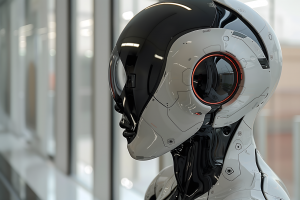
What Tesla Claims Optimus Can Become
Tesla envisions a humanoid robot that can be mass-produced, deployed to address labor shortages, reshape daily work, and potentially become the company’s most important product. Early pricing guidance reinforces this ambition.
Early pricing indicators underscore Tesla’s mass-market focus. Musk has consistently projected an initial debut price of $20,000–$30,000 per unit. This is a fraction of competitors like Boston Dynamics’ Atlas (estimated at over $100,000). Musk has hinted at further reductions below $20,000 as production matures. If Tesla delivers on capability and pricing, Optimus could pay for itself in under a year in many high-wage jobs, making widespread adoption realistic for the first time. The production ramp is meant to be just as aggressive: several thousand units targeted in 2025, scaling to 50,000 units in 2026, and then far higher volumes if demand materializes.
Tesla has a promising robot that could replace humans for repetitive or dangerous tasks and the market could be massive. The global labor force was approximately 3.7 billion workers in 2024, and there has been steady growth in 2025, driven by population dynamics in emerging markets like China and India. In advanced economies—home to about 800 million workers—aging populations in countries such as Japan could amplify demand for automation. Labor costs in these economies are also high. If Musk and co have truly solved robotics, capturing even 1% of the addressable labor market in developed economies would already generate potentially hundreds of billions in Tesla Revenue.
Tesla’s Competitive Advantages
Tesla does have meaningful advantages: in-house AI, massive compute infrastructure, custom silicon, and years of neural-network training from its Full Self-Driving program. Musk says the same AI backbone powering Tesla’s cars is being adapted directly for humanoid robotics, enabling Optimus to learn tasks, navigate environments, and interact more naturally with people. So far, demos have shown Optimus walking, balancing, lifting small boxes, and performing scripted movements under controlled conditions — early, but directionally consistent with Tesla’s broader AI ambitions.
A key differentiator is Tesla’s vertically integrated technology stack. The company designs its own motors and actuators, builds custom AI inference chips, and trains models on its Dojo supercomputer. This full-stack control gives Tesla advantages in cost efficiency, performance scaling, and rapid iteration that competitors relying on off-the-shelf components may struggle to match. It’s the same integration flywheel that pushed down the cost of Tesla’s FSD hardware over time, and the company believes this approach can similarly drive down the cost and complexity of Optimus as production scales.
Why Experts Are Skeptical
Despite the progress Tesla highlights, many experts indicate that Optimus is still in the very early stages of development. The core concerns revolve around agility, dexterity, and whether a general-purpose humanoid can function reliably in the chaotic environments humans take for granted – highly populated spaces, cluttered surfaces, unexpected objects, or tasks requiring fine motor precision. Researchers suggest Tesla may be underestimating just how hard these problems are. Even Boston Dynamics, which is widely considered one of the leaders in robotics, has spent decades perfecting locomotion and manipulation and still hasn’t brought a truly commercial, general-purpose humanoid to market. For now, Tesla’s demos remain limited to controlled settings, showing Optimus walking, balancing, lifting light objects, and performing pre-scripted tasks. Related: Tesla Q3 Metrics That Went Under The Radar
Scaling Challenges
Scaling the hardware is another major hurdle. Producing a million humanoids a year would require an entirely new supply chain for actuators, sensors, and robot-grade components — much of which doesn’t exist today. Costs would need to fall sharply to make Optimus financially viable outside of narrow industrial settings. China may also be vital to this scale of an ambitious task. Rare earth magnets are vital for the robot’s actuators. The robot could also rely heavily on Chinese-made servo motors and actuators — with Chinese suppliers like Inovance Technology and Estun providing high-precision systems. This could be a risk, especially with trade and geopolitical tensions running high.
Distractions. And Timeline Problems
There’s also the fundamental question of demand. No company has ever proven there is a large-scale market appetite for general-purpose humanoids. The assumption that enterprises or households will adopt them by the tens or hundreds of thousands remains untested. Investing heavily in Optimus could also pull capital and focus away from Tesla’s core auto and FSD operations at a time when margins are under pressure. And then there is the timeline credibility issue. Musk has a long history of offering aggressive timelines – robotaxis by 2020, Level 4 autonomy, solar roof expansion — that ended up slipping significantly. Investors are right to question whether Optimus follows the same pattern: massive vision upfront, with execution taking much longer than promised.
Individual stocks can soar or tank, but one thing matters: staying invested. High Quality Portfolio helps you do that. The Trefis High Quality (HQ) Portfolio, with a collection of 30 stocks, has a track record of comfortably outperforming its benchmark that includes all 3 – the S&P 500, S&P mid-cap, and Russell 2000 indices. Why is that? As a group, HQ Portfolio stocks provided better returns with less risk versus the benchmark index; less of a roller-coaster ride, as evident in HQ Portfolio performance metrics.