
What To Expect From Tesla In 2026?
As 2026 begins, the key question for Tesla (NASDAQ:TSLA) is no longer how fast it can grow vehicle volumes – it’s EV sales don’t seem to matter much to investors. It’s whether its AI ambitions can translate into durable, monetizable businesses. After a difficult 2025 marked by margin pressure, fading EV subsidies, and intensifying global competition, Tesla enters 2026 trading at over 200x consensus earnings. That valuation reflects expectations far beyond auto manufacturing, with markets assigning a premium for autonomy, software, energy systems, and robotics. The narrative is already priced in. In 2026, what matters is execution, not aspiration, and investors will be watching closely for concrete proof that Tesla’s AI strategy can justify its valuation.
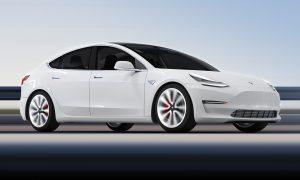
Image by thepassenger from Pixabay
Tesla’s AI Business
Robotaxi Reality vs. Expectations: As 2025 closes, Tesla’s robotaxi operations remain limited to tightly constrained pilots, most visibly in Austin, where a small, supervised fleet operates under narrow conditions. Fully unsupervised autonomy at scale has not yet been achieved, and regulatory acceptance remains limited. In 2026, investors should expect expanded pilots and gradual reductions in human intervention, but also heightened regulatory scrutiny as deployments expand. The key test is not just about fleet size or geographic expansion, but whether ride economics, utilization rates, and safety transparency begin to resemble a scalable business rather than a prolonged experiment.
Cybercab Launch: Tesla plans to begin limited Cybercab production in early 2026 at Gigafactory, Texas, positioning it as a purpose-built platform for autonomy. While Tesla is apparently shooting for a sub $30,000 robotaxi, its real significance is operational rather than consumer-facing. Cybercab is a test of whether Tesla can materially lower per-unit costs, simplify manufacturing, and ramp production faster than in prior vehicle launches. That being said, the platform’s value is contingent on autonomy readiness and self-driving software improvement will remain the key trend to watch.
Optimus: Tesla’s Optimus humanoid robot remains in an early, experimental phase heading into 2026. The focus will be on broader internal deployment across Tesla’s factories and logistics operations, building on the units already piloted, with limited external placements possible late in the year. While mass manufacturing is expected to begin in late 2026 and technical demonstrations may continue to improve, meaningful revenue contribution remains unlikely. Optimus represents long-term optionality for Tesla stock, and it is unlikely to be a near-term valuation driver.
Tesla EV Business
Tesla’s EV business will remain the company’s financial backbone in 2026, even as investors continue to discount it in valuation terms. 2025 was a difficult year for Tesla’s EV business following the expiration of the U.S. federal EV tax credit in late September and intensifying global competition. In Europe, demand weakened sharply as buyers shifted toward newer, lower-priced alternatives from Chinese manufacturers such as BYD and SAIC. Pricing pressure in China also remained persistent, limiting Tesla’s ability to defend margins. As a result, expectations for 2026 should remain modest.
EV demand is more likely to normalize than rebound in 2026. The post-tax-credit demand pull-forward in the U.S. has created a slower baseline, while ongoing price competition in Europe and China suggests Tesla’s volume growth will likely track global EV demand rather than exceed it. Moreover, Tesla appears to be prioritizing vehicle refreshes and efficiency over expansion. Instead of launching a clean-sheet new model or low-cost platform, the company has focused on cost reductions, regional variants, and incremental model updates to protect share and improve manufacturing economics. This strategy may stabilize margins but could also cap volume growth.
Finally, margin defense becomes the key objective. Any further deterioration in margins could directly pressure free cash flow and reduce Tesla’s ability to self-fund autonomy and robotics ventures. Key indicators to watch in 2026 include automotive gross margin excluding regulatory credits, average selling prices, and capital expenditure per vehicle as Tesla shifts from capacity expansion toward asset efficiency in its manufacturing operations.
The 2026 Reality Check
Tesla exits 2025 priced for near-perfection but operating in an increasingly constrained cash-flow environment. In 2026, investor patience will depend on execution across a couple of fronts:Autonomy progressing from pilots toward viable operations and automotive margins stabilizing and potentially improving. If these conditions are met, Tesla stock’s AI premium may endure. If not, 2026 risks becoming the year the valuation finally collides with operational reality.
Invest with Trefis Market-Beating Portfolios
See all Trefis Price Estimates