
Google’s Plan to Out-Muscle Nvidia With Its TPUs
Google’s Capex Is Going Nuclear
Wall Street kicked off 2025 thinking Alphabet (NASDAQ:GOOG), Google’s parent, would spend around $60 billion in capex.
- February: Google surprised, issuing $75 billion guidance
- Mid-year: Up to $85 billion.
- October 2025: Now sitting at $91–93 billion—that’s almost 50% higher than the original guess.
- And 2026? Another big ramp vs. 2025 is likely.
So where’s all this cash going?
Straight into AI infrastructure: servers, storage, power and cooling infrastructure, and a ton of chips to power Search, Ads, YouTube, Gemini, and Google Cloud.
No matter where GOOG stock goes, your portfolio should stay on track. See how High Quality Portfolio can help you do that.
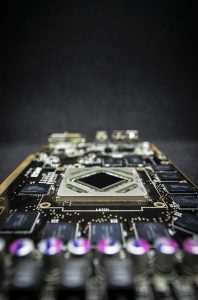
Google’s Still Nvidia’s VIP Customer
Google is one of Nvidia (NASDAQ:NVDA) biggest direct buyers.
In Nvidia’s Q2 FY26 earnings, two mystery customers made up 39% of revenue (23% + 16%) – you can be sure that’s Microsoft, Google, and Amazon in some order.
The big three hyperscalers (Amazon AWS, MS Azure, Google Cloud) own over 60% of global cloud. They are VIP customers for Nvidia.
But the red flag – GPU spending is likely growing way faster than Google revenue from cloud.
Case in point:
- Google Cloud: +33.5% YoY → $15.1B last quarter. Solid, steady growth.
- Capex: +75% YoY.
- Nvidia’s own sales: +58% led by strong pricing power, demand.
Translation? Google is probably growing spending on chips at a faster rate than the revenue those chips help generate. Cash flows can be squeezed, ROIs eventually take a hit. That’s why Google’s wants to take back control and balance the scales a bit.
Can Google Ditch Nvidia?
No, not in the near future.
- Nvidia’s sticky for good reasons:
- CUDA lock-in: Almost all AI code is written for Nvidia. Reworking it? Forget it. Massive effort, huge costs, downtime.
- Enterprise demand: Cloud customers expect Nvidia stacks. Take them away, and they’ll just deflect to AWS or Azure.
- What about Intel and AMD?
- Intel’s GPU effort, Gaudi 3 looks cheaper on paper, but Google hasn’t made it native on GCP. Adoption is tiny, Intel’s AI revenue is under $1 billion run-rate.
- AMD MI300X/MI325X are on GCP, helps Google negotiate better prices from Nvidia. But Google’s own stuff—Search, Ads, Gemini—doesn’t run on AMD.
- Doesn’t seem to be much commitment overall.
Here’s the real game-changer: TPUs
Google’s running a dual-track strategy: Nvidia for flexibility and its own custom Tensor Processing Units or TPUs for raw efficiency and cost control.
The AI world is moving from training (building models), which relied heavily on cutting edge GPUs to inference (running them billions of times a day). That’s TPU territory.
- TPUs are literally hard-wired with Matrix Multiply Units (MXUs)—perfect for the repetitive math AI relies on.
- GPUs are the Swiss Army knife; TPUs are more specialized for Google-scale inference. Related: Can Nvidia stock surge to $350?
- Latest TPU launched last week Ironwood (v7) is a beast: >4× faster than Trillium (v6), 10× peak compute vs v5p
- Every TPU generation delivers 2–3× performance-per-dollar, and it’s speeding up
- The latest TPUs focus on massive memory bandwidth low latency, and way lower cost per query.
Google’s Strong Position To Boost TPU Both In-House, Outside
AI isn’t just a product for Google—it’s everywhere: Search, Ads, YouTube, Gmail, Maps, Android, Gemini. Billions of identical inferences daily. Perfect for rigid, hyperefficient TPUs.
TPUs already run most internal workloads, and now they’re exploding outward:
- Vertex AI tools makes them available to devs.
- Anthropic just signed for up to 1 million TPUs—tens of billions of dollars.
- What likely swayed Anthropic? Google’s press release says it is the TPUs “strong price-performance and efficiency”
- Anthropic expects over a gigawatt of new compute in 2026 to fuel their $7 billion run-rate revenues.
Will TPUs Help Reduce Compute And Capex Costs?
Very likely.
- Nvidia margins? 70% gross margins overall, 80% on top chips.
- Google on TPUs? Often better performance-per-dollar. It shows up in slightly better pricing for some metrics.
- Gemini 2.5 Pro offers Input token price of $1.25/million (≤200K tokens), $2.50 above, Open AI Input: $2/million.
- There are moving parts to pricing, but consensus is that TPU are more cost-effective for large-scale machine learning tasks.
As TPUs garner more workloads (inside GOOG and with partners like Anthropic), Google gets real bargaining power with Nvidia:
- Raise prices? Cool, we’ll shift more to TPUs.
- Supply shortages? We’ve got our own chips.
The result? More leverage + power at the negotiating table for Google.
Every extra workload that lands on TPUs is a workload Nvidia doesn’t get paid for.
Bottom Line
As we noted before, Google isn’t trying to cancel Nvidia – they’re essentially optimizing their dependency.
- TPUs = cost, control, margin on inference and internal workloads.
- Nvidia = flexibility and customer compatibility.
Google’s chips are a calculated power move to reshape AI economics, keep costs down, and hold leverage over the world’s hottest chipmaker. This could drive Google’s valuation, with its stock up by 50% already this year.
For Additional Perspective, Compare Price To Earnings Ratio (P/E) With Peers On Alphabet (GOOG) Price Ratios
When the biggest AI product player in the world starts writing smaller checks to Nvidia, things will get interesting.
The Trefis High Quality (HQ) Portfolio, with a collection of 30 stocks, has a track record of comfortably outperforming its benchmark that includes all 3 – the S&P 500, S&P mid-cap, and Russell 2000 indices. Why is that? As a group, HQ Portfolio stocks provided better returns with less risk versus the benchmark index; less of a roller-coaster ride, as evident in HQ Portfolio performance metrics.
Invest with Trefis Market-Beating Portfolios
See all Trefis Price Estimates