
Why Is Nvidia’s 6 Year Old GPU Still Sold Out?

Nvidia (NASDAQ:NVDA) just posted a blowout set of Q4 FY26 earnings, reporting a massive 73% year-over-year revenue jump and a 75% surge in net profits. But hidden behind the headline numbers is a fascinating and counterintuitive trend: Nvidia’s six-year-old Ampere (A100) chips are still virtually impossible to find.
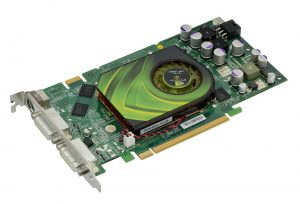
About one-third of Nvidia’s $62.3 billion in quarterly data center revenue, effectively over $20 billion, is still being driven by these older architectures, alongside the previous-generation Hopper chips. While Wall Street fixates on the bleeding-edge Blackwell rollouts, the insatiable demand for legacy chips is far more important than it appears on the surface. related Nvidia Stock’s Cheap 25x Multiple The Loudest Warning Yet?
Why?
Because it actively reinforces the company’s proprietary software ecosystem, CUDA, and helps guarantee the long-term stickiness of Nvidia’s revenue.
- Why MU, NVDA Could Outperform GLOBALFOUNDRIES Stock
- NVIDIA or Marvell Technology: Which Stock Has More Upside?
- MU, NVDA Look Smarter Buy Than ON Semiconductor Stock
- Stronger Bet Than Microchip Technology Stock: AVGO, NVDA Deliver More
- Is NVIDIA Stock’s New CPU Story Big Enough to Cover Its China Silence?
- MU, NVDA Look Smarter Buy Than Analog Devices Stock
Why Older Chips Are Still In High Demand
A single A100 starts at about $10,000 on the secondary market, depending on memory configuration. Blackwell GPUs are priced at as much as $50,000 per chip, and Nvidia actually prioritizes selling rack-scale systems that can cost several hundred thousand dollars. Because A100s and other legacy chips are more affordable and widely available in cloud rental spaces than the heavily backlogged Blackwell systems, they have become the default starting point for the next generation of AI development.
When a new AI startup or university lab builds its first prototype, they very likely rent an A100. Because they are operating on an A100, these developers write, test, and optimize their code using Nvidia’s proprietary CUDA platform. By the time that startup secures funding, scales up, and requires massive compute power, their entire software stack is natively bound to Nvidia’s architecture. Because all Nvidia GPUs are architecturally compatible, the code optimized for an A100 translates seamlessly to the newest Blackwell systems.
How Nvidia’s CUDA Locks Customers In
Unlike CPUs, which largely share the standard x86 instruction set, making the switch between vendors Intel and AMD relatively trivial, GPUs are bound to proprietary software.
If a company considers moving away from Nvidia to a competitor like AMD or a custom silicon provider, they aren’t just buying a new physical chip. They face massive switching costs that can run to hundreds of millions of dollars in engineering time and lost productivity.
At the heart of this lock-in is CUDA. It is not just a programming language but a tightly integrated ecosystem that bundles low-level GPU programming, high-performance math libraries, model-optimization tools, and distributed-training support into a single platform. While CUDA is not technically irreplaceable, by many accounts it represents the closest thing to almost absolute “vendor lock-in” the silicon industry has seen.
While competitors like AMD are improving their ROCm software and custom AI accelerators are entering the market, Nvidia boasts a decade-plus lead in foundational libraries, developer tools, and workflow familiarity.
The Risk: Inference Changes the Game
Training has favored Nvidia’s high-performance, flexible GPUs. But over time, inference – essentially putting models to use at scale – will represent the vast majority of AI compute.
In inference-heavy environments, cost per query, power efficiency, latency, and margin structure become more important than raw training flexibility. That is where hyperscalers have incentive to deploy custom ASICs optimized for their own workloads.
Companies like Alphabet, Meta, and Amazon (NASDAQ:AMZN), are already investing aggressively in in-house silicon. If inference becomes dominant faster than expected, Nvidia’s share of incremental data center spending could compress, and margins could face structural pressure as customers substitute lower-cost, task-specific chips.
For now, Nvidia owns the training stack and the developer ecosystem. The key question is whether that dominance translates cleanly into the inference era.
Why HNI Portfolios Choose Multi-Asset Over Stock Picking
Don’t let short-term market noise derail your long-term goals. A professional wealth framework helps you stay disciplined, turning volatility into opportunity.
Would a portfolio with 10% commodities, 10% gold, and 2% crypto protect you better if markets crash 20%? In today’s volatile landscape, diversifying beyond stocks is critical. We’ve crunched the numbers and found that multi-asset allocation is key. Our wealth management partner helps HNIs implement these strategies, using tools like the Trefis High Quality Portfolio to optimize the equity portion.