
Why The Iran Conflict Is A Structural Inflection Point For AeroVironment
On February 28, 2026, the U.S. and Israel launched joint strikes on Iran, killing Supreme Leader Khamenei and targeting nuclear sites, missile infrastructure, and IRGC command structures. Iran retaliated immediately with missile and drone strikes across Gulf states hosting U.S. assets including Bahrain, Kuwait, Qatar, and the UAE.
This isn’t a one-day event. The conflict is going to run for days, possibly weeks. And that’s where AeroVironment comes in.
Why AVAV? The Loitering Munition Thesis.
What does AVAV make that matters here? The Switchblade. AeroVironment’s flagship loitering munition — small enough to fit in a backpack, launches from a tube, loiters over a target area, and detonates on command. Combat-proven in Ukraine. The unit economics are compelling: a $70,000–$100,000 Switchblade destroying a $2M missile launcher or neutralizing a drone swarm is a ratio the DoD can defend in any budget hearing.
AeroVironment is not the only one making such systems. Textron, Northrop Grumman, and Raytheon are some of the large players involved in multiple loitering munition programs. However, unlike diversified defense giants, AVAV’s focus is almost entirely on unmanned and autonomous systems, bolstered by the May 2025 acquisition of BlueHalo, which added counter-UAS (unmanned aerial systems) and space-based capabilities.
Why does this conflict validate the product?
Iran’s retaliatory capability is heavily drone and missile based. The battlefield has become a drone-vs-drone war in real time. Every theater commander watching this unfold is going to want more Switchblades — not fewer.
That being said, if you seek an upside with less volatility than holding an individual stock like AVAV, consider the High Quality Portfolio. It has comfortably outperformed its benchmark—a combination of the S&P 500, Russell, and S&P MidCap indexes—and has achieved returns exceeding 105% since its inception. Why is that? As a group, HQ Portfolio stocks provided better returns with less risk versus the benchmark index; less of a roller-coaster ride, as evident in HQ Portfolio performance metrics.
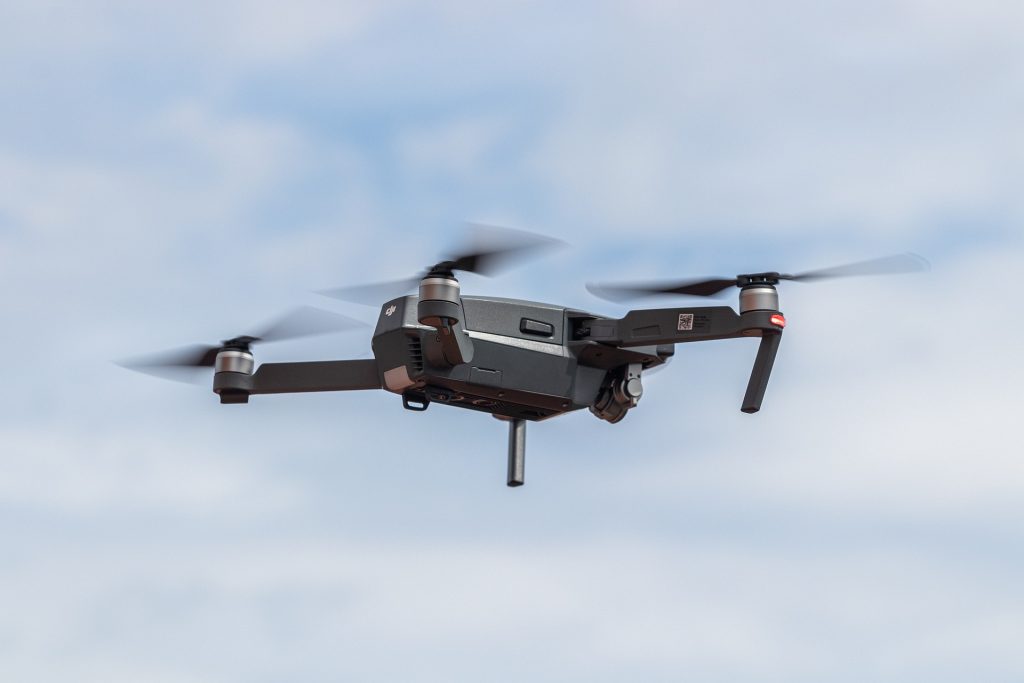
Image by Dominic Wunderlich from Pixabay
What AeroVironment Looked Like Before the Conflict
Revenue: AVAV posted record Q2 FY2026 revenue of $472.5 million, up 151% year-over-year, with full-year FY2026 guidance of $1.95–$2.0 billion. Stripping out the BlueHalo acquisition, organic growth was 21% — the drone and loitering munitions business growing on its own before any Iran premium.
Backlog: Funded backlog hit $1.1 billion as of November 2025, up from $726.6 million six months prior. Q2 bookings were $1.4 billion with a book-to-bill ratio of 2.9x — for every dollar of revenue recognized, nearly three dollars of new orders booked. The company is being pulled faster than it can supply.
Margins: GAAP gross margin compressed to 22% from 39%, driven by $24.2 million in non-cash intangible amortization from BlueHalo. This is accounting noise, not operational deterioration. Non-GAAP adjusted EBITDA was $45 million for the quarter, with full-year guidance of $300–$320 million.
Most recent contract signal: Days before the Iran strikes, the U.S. Army placed a $186 million delivery order for next-generation Switchblade 600 Block 2 and Switchblade 300 Block 20 systems — the first procurement under a $990 million 5-year IDIQ (indefinite delivery indefinite quantity) contract. The pipeline was already filling. The conflict just opened the floodgates.
How the Iran Conflict Changes the Demand Equation
Is this a one-time surge or structural demand?
Structural. Three reasons.
- Iran’s strikes on U.S. bases across the Gulf mean every U.S. asset in the Middle East just got a live threat assessment. Base commanders will be requesting Counter-UAS and precision strike replenishment immediately.
- Second, this conflict proves — in real time — that loitering munitions are the dominant tactical weapon. AVAV already had plans to increase Switchblade 600 Block 2 output sixfold over 12 months, with a fivefold increase in P550 production and threefold in Titan Counter-UAS systems. Production expansion was in motion before the conflict started.
- Third, every NATO ally watching this will accelerate procurement. AVAV already sells to Greece, Lithuania, and Australia. A hot war involving U.S. forces makes those conversations much shorter.
What does incremental demand look like in dollars?
The $990 million IDIQ runs for five years. At the current pace, the first tranche barely scratches the surface. Emergency supplemental defense spending — which Congress typically authorizes during active U.S. military engagements — could pull forward years of Switchblade procurement into 12–18 months. An active U.S. campaign is categorically different from a foreign conflict support role.
Valuation: Where Does AVAV Stock Stand?
At roughly $250–$260 per share pre-conflict, AVAV traded at approximately 10–11x sales — expensive by defense sector standards. Analyst consensus projected $2.6 billion in revenue and $264 million in earnings by FY2028, implying 47% annual revenue growth. The bull case had $2.9 billion in revenue and $380 million in earnings by FY2028, with a fair value around $376.
With an active U.S. military campaign, that bull case becomes the base case. Pre-conflict consensus targets were already around 50% above the current price. Post-conflict, those targets move higher.
The Risks
- Margin compression is real. BlueHalo amortization drag persists through FY2027. GAAP earnings will look terrible while non-GAAP looks fine. Investors who don’t separate the two will sell at the wrong time.
- Production capacity is the binding constraint. AVAV is completing a Utah manufacturing build-out with $60–70 million in capex. That facility needs to come online before any revenue surge can be recognized.
- War-premium unwind. If the conflict de-escalates faster than expected, the stock gives back the tactical premium. The structural demand case survives; the short-term trade does not.
- Valuation is not cheap. At 10x+ sales, you are paying for perfection. Estimate revisions need to be material — and sustained — to justify the multiple.
The Bottom Line
AeroVironment is the closest pure-play on the dominant weapons technology of this conflict. The Switchblade is deployed, combat-proven, with an existing multi-hundred-million-dollar contract vehicle, a 2.9x book-to-bill, and manufacturing capacity already expanding. The Iran conflict doesn’t create demand — it accelerates demand that was already building at speed.
The Q3 FY2026 earnings call on March 3, 2026, will be management’s first opportunity to quantify the impact — and likely the catalyst that reprices the stock toward analyst targets of $360–$430, representing 40–65% upside from pre-conflict levels.
The question isn’t whether AVAV benefits. It’s whether production can match the demand signal, and whether you can stomach a premium multiple while acquisition accounting clouds the earnings picture. Those risks are real. But the demand picture just got materially clearer — and that’s what ultimately drives the stock.
Portfolios Over Individual Stock Picks
Stocks soar and sink – the key is staying invested. A balanced portfolio helps you ride market volatility, boosts gains, and reduces single stock risk. Beating the market consistently is hard, but the Trefis High Quality (HQ) Portfolio makes it look achievable. By selecting 30 high-conviction stocks, the HQ strategy has historically outpaced the S&P 500, S&P Mid-cap, and Russell 2000. See how this curated selection delivers superior risk-adjusted returns in our detailed performance factsheet.
Invest with Trefis Market-Beating Portfolios
See all Trefis Price Estimates