
Why You Shouldn’t Be Buying AeroVironment Stock

AeroVironment (NASDAQ:AVAV), a leading drone manufacturer, saw its stock jump over 20% on June 25th after reporting stronger-than-expected Q4 results (fiscal ends in April). The company’s adjusted earnings of $1.61 per share and sales of $275 million significantly surpassed the consensus estimates of $1.39 and $242 million, respectively.
Drones are being widely used by the U.S. Department of Defense for surveillance or payload delivery, and the demand for these uncrewed aerial vehicles is expected to remain robust. Drones offer advantages in terms of faster deployment and lower cost.
While AeroVironment’s flagship product is the Switchblade, new offerings like the P550, Jump 20-X, and Red Dragon are anticipated to secure orders from the U.S. and its allies. The company further strengthened its position through the $4.1 billion acquisition of BlueHalo, a defense technology company specializing in drones and laser weapon systems. This acquisition significantly enhances AeroVironment’s product portfolio.
Despite these positive developments, the crucial question remains: is AVAV stock a buy at $235? We believe it is not. At its current price, AVAV stock appears expensive. Our conclusion is based on a comprehensive analysis of AeroVironment’s current valuation against its recent operating performance and its historical and current financial health. Our assessment of AeroVironment across key parameters—Growth, Profitability, Financial Stability, and Downturn Resilience—indicates that the company exhibits very weak operating performance and financial condition. We will detail these findings further below. That said, if you seek upside with lower volatility than individual stocks, the Trefis High Quality portfolio presents an alternative — having outperformed the S&P 500 and generated returns exceeding 91% since its inception. Separately, see – QuantumScape: What’s Happening With QS Stock?
- SanDisk’s Surge Explained: What’s Fueling the Move?
- From Cyclical To Core: Vale’s Shift In 2026
- Why Booking Holdings’ Recent Selloff May Be Overdone
- Palantir At 80x Earnings: What Revenue Growth Rate Justifies The Valuation?
- Should You Pay Attention To Chevron Stock’s Momentum?
- What Is Happening With Caterpillar Stock?
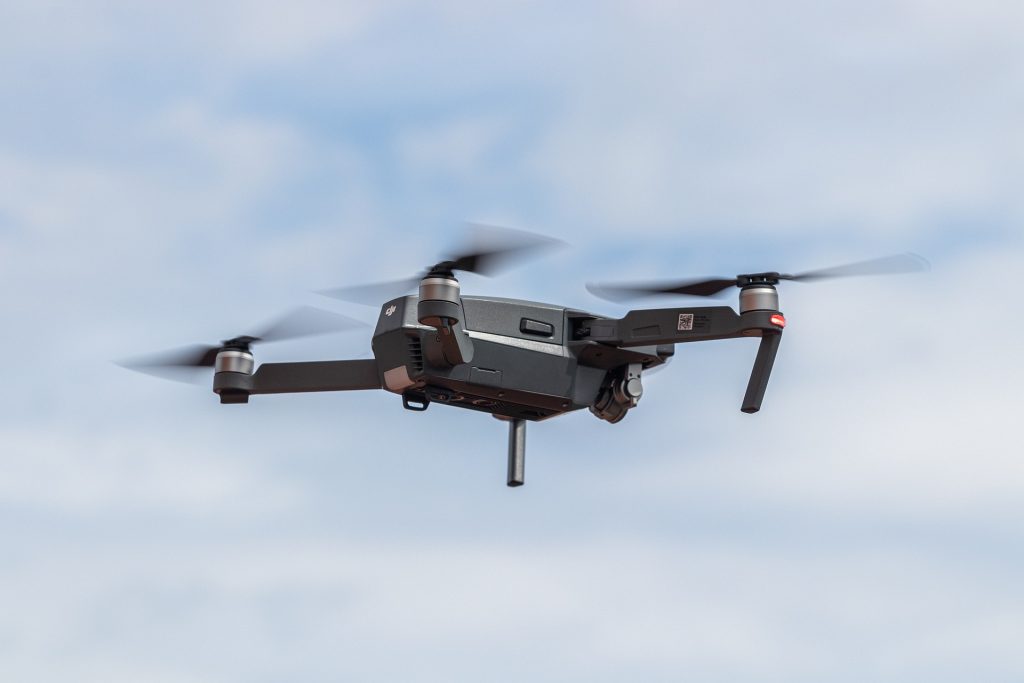
Image by Dominic Wunderlich from Pixabay
How Does AeroVironment’s Valuation Look vs. The S&P 500?
Going by what you pay per dollar of sales or profit, AVAV stock looks expensive compared to the broader market.
- AeroVironment has a price-to-sales (P/S) ratio of 7.3 vs. a figure of 3.1 for the S&P 500
- And, it has a price-to-earnings (P/E) ratio of 164.3 vs. the benchmark’s 26.9
How Have AeroVironment’s Revenues Grown Over Recent Years?
AeroVironment’s Revenues have grown marginally over recent years.
- AeroVironment has seen its top line grow at an average rate of 19.5% over the last 3 years (vs. increase of 5.5% for S&P 500)
- Its revenues have grown 5.2% from $706 Mil to $743 Mil in the last 12 months (vs. growth of 5.5% for S&P 500)
- Also, its quarterly revenues declined 10.2% to $168 Mil in the most recent quarter from $187 Mil a year ago (vs. 4.8% improvement for S&P 500)
How Profitable Is AeroVironment?
AeroVironment’s profit margins are considerably worse than most companies in the Trefis coverage universe.
- AeroVironment’s Operating Income over the last four quarters was $33 Mil, which represents a very poor Operating Margin of 4.4%
- AeroVironment’s Operating Cash Flow (OCF) over this period was $-13 Mil, pointing to a very poor OCF Margin of -1.7% (vs. 14.9% for S&P 500)
- For the last four-quarter period, AeroVironment’s Net Income was $33 Mil – indicating a poor Net Income Margin of 4.4% (vs. 11.6% for S&P 500)
Does AeroVironment Look Financially Stable?
AeroVironment’s balance sheet looks fine.
- AeroVironment’s Debt figure was $59 Mil at the end of the most recent quarter, while its market capitalization is $6.6 Bil (as of 6/25/2025). This implies a very strong Debt-to-Equity Ratio of 1.1% (vs. 19.4% for S&P 500). [Note: A low Debt-to-Equity Ratio is desirable]
- Cash (including cash equivalents) makes up $47 Mil of the $1.0 Bil in Total Assets for AeroVironment. This yields a poor Cash-to-Assets Ratio of 4.5%
How Resilient Is AVAV Stock During A Downturn?
AVAV stock has fared much worse than the benchmark S&P 500 index during some of the recent downturns. Worried about the impact of a market crash on AVAV stock? Our dashboard How Low Can Stocks Go During A Market Crash captures how key stocks fared during and after previous market crashes.
Inflation Shock (2022)
- AVAV stock fell 61.0% from a high of $137.94 on 9 February 2021 to $53.78 on 28 January 2022, vs. a peak-to-trough decline of 25.4% for the S&P 500
- The stock fully recovered to its pre-Crisis peak by 1 December 2023
- Since then, the stock has increased to a high of $235.17 on 11 November 2024 and currently trades at around $235
COVID-19 Pandemic (2020)
- AVAV stock fell 58.7% from a high of $119.83 on 18 September 2018 to $49.54 on 27 August 2019, vs. a peak-to-trough decline of 33.9% for the S&P 500
- The stock fully recovered to its pre-Crisis peak by 14 January 2021
Global Financial Crisis (2008)
- AVAV stock fell 51.9% from a high of $40.03 on 13 February 2009 to $19.27 on 18 March 2009, vs. a peak-to-trough decline of 56.8% for the S&P 500
- The stock fully recovered to its pre-Crisis peak by 24 March 2014
Putting All The Pieces Together: What It Means For AVAV Stock
In summary, AeroVironment’s performance across the parameters detailed above are as follows:
- Growth: Neutral
- Profitability: Extremely Weak
- Financial Stability: Neutral
- Downturn Resilience: Extremely Weak
- Overall: Very Weak
Given AeroVironment’s (AVAV) weak performance across key financial metrics and its current high valuation, we believe the stock is unattractive at $235.
Now, we could be wrong in our assessment and investors may be willing to pay a premium for AVAV, driven by the increasing demand for drones, expanding applications, new product offerings, and the recent BlueHalo acquisition. All of these factors could boost sales. Still, we see higher risk at the current price. We think investors would likely be better off waiting for a pullback before picking AVAV stock.
While you would do well to avoid AVAV stock for now, you could explore the Trefis Reinforced Value (RV) Portfolio, which has outperformed its all-cap stocks benchmark (combination of the S&P 500, S&P mid-cap, and Russell 2000 benchmark indices) to produce strong returns for investors. Why is that? The quarterly rebalanced mix of large-, mid- and small-cap RV Portfolio stocks provided a responsive way to make the most of upbeat market conditions while limiting losses when markets head south, as detailed in RV Portfolio performance metrics.
Invest with Trefis Market-Beating Portfolios
See all Trefis Price Estimates