
The Bet That Could Turbocharge SpaceX’s $800 Billion Valuation
SpaceX has evolved from a disruptive startup into an $800 billion powerhouse and now one of the world’s most valuable private companies. While growth was driven by the reusable Falcon 9 rockets and the global cash-flow engine of Starlink Internet, Starship – the company’s largest rocket yet – could be a bigger game-changer. So why is this so important? Unlike current rockets, Starship is designed for “aircraft-like” total reusability and massive scale, aiming to cut launch costs to unprecedented lows.
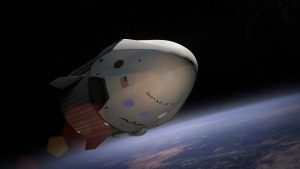
Image by SpaceX-Imagery from Pixabay
Unmatched Scale
Standing at 121 meters tall, the rocket is dramatically larger than SpaceX’s workhorse Falcon 9, which stands at about 70 meters. Starship’s diameter is 9 meters, compared to just 3.7 meters for Falcon 9. That increase in diameter changes payload design, allowing far larger and heavier cargo to be launched without extreme mass optimization. At liftoff, the Starship generates about ten times more thrust than a Falcon 9. Overall, Starship can carry between 100 and 150 metric tonnes to low Earth orbit, compared to roughly 23 tonnes for Falcon 9. Why On Earth Is SpaceX Worth $800 Billion?
Timeline to Operations
Starship is expected to begin its first commercial missions in late 2026 with internal Starlink satellite deployments. External customer launches, such as massive telecom satellites and NASA’s uncrewed lunar landing, are currently slated for 2027.
As of late 2025, SpaceX has completed 11 full-scale test flights. Progress has been measurable rather than theoretical. The company has demonstrated controlled ocean splashdowns and, more importantly, mid-air capture of the Super Heavy booster using the “Mechazilla” launch tower arms. This booster recovery method eliminates the need for landing legs, barges, or long transit times, which is critical to rapid reuse.
The next major milestone is Flight 12, scheduled for early 2026. This flight will test the Block 3 design, a taller and more refined version of Starship that is built explicitly for manufacturing efficiency and operational cadence rather than experimental iteration.
The Economic Reset
The most important metric in commercial space exploration is probably not speed or performance. It is cost per kilogram to orbit. Historically, spaceflight has been expensive because rockets were disposable. In the throwaway era, launch costs averaged around $20,000 per kilogram because the entire vehicle was effectively destroyed after a single flight.
SpaceX changed that equation with Falcon 9 by reusing the first stage, driving costs down to roughly $2,500 per kilogram. Falcon 9 also enabled faster turnaround and higher launch cadence, but it still relies on a disposable upper stage. That limitation caps how far costs can fall and restricts certain mission profiles.
Starship is designed to remove that ceiling entirely. By fully reusing both stages and enabling extremely fast turnaround measured in hours rather than days, SpaceX is targeting long-term costs of $100 to $200 per kilogram. At that level, a launch that once cost $200 million could eventually cost as little as $10 million.
Practical Uses OF Starship
Starship’s economics unlock entire industries that were previously theoretical or uneconomic.
Starship can deploy hundreds of SpaceX’s Starlink satellites in a single launch, dramatically accelerating constellation build-out and refresh cycles. This allows SpaceX to upgrade capacity faster, replace aging hardware more efficiently, and deliver high-speed satellite internet at a global scale, especially in regions where terrestrial networks are sparse, unreliable, or nonexistent. Why Google and SpaceX Are Taking AI Infrastructure to Space
Starship also enables a new class of ultra-fast global logistics by bypassing traditional shipping lanes and air freight networks. High-value, time-critical cargo such as semiconductors, medical equipment, and emergency supplies can be moved between continents in under an hour, prioritizing speed, security, and reliability over cost efficiency.
Point-to-point Earth travel using Starship could transport passengers from, say, London to Sydney in roughly 45 minutes. Even limited adoption would reshape the economics of long-haul premium aviation, which relies heavily on time-sensitive, high-paying customers, by offering an alternative where time savings outweigh price considerations.
Valuation
Investors are valuing SpaceX not just on today’s cash flows, but on Starship’s strategic optionality. If Starship delivers on its promise of near-total reusability and launch costs below $200 per kilogram, SpaceX could emerge as the dominant platform for orbital logistics, enabling cost-effective satellite launches, space-based AI data centers, and even point-to-point Earth transport. The scale of economic activity unlocked by such cost compression could be massive, providing a credible case for SpaceX’s valuation to move well beyond $800 billion over time, particularly if a public listing materializes around 2026.