
Norfolk Southern (NSC)
Market Price (10/23/2026): $335.71 | Market Cap: $75.4 BilSector: Industrials | Industry: Rail Transportation
Norfolk Southern (NSC)
Market Price (10/23/2026): $335.71Market Cap: $75.4 BilSector: IndustrialsIndustry: Rail Transportation
Investment Highlights Why It Matters Detailed financial logic regarding cash flow yields vs trend-riding momentum.
Attractive yieldTotal YieldTotal Yield = Earnings Yield + Dividend Yield, Earnings Yield = Net Income / Market Cap Dividend Yield = Total Dividends / Market Cap is 5.1% Attractive operating marginsOp Mgn LTMOperating Margin = Operating Income / Revenue Reflects profitability before taxes and before impact of capital structure (interest payments). is 37% Attractive cash flow generationCFO/Rev LTMCash Flow from Operations / Revenue (Sales), Last Twelve Months (LTM) is 29%, FCF/Rev LTMFree Cash Flow / Revenue (Sales), Last Twelve Months (LTM) is 13%, CFO LTM is 3.8 Bil Low stock price volatilityVol 12M is 21% Megatrend and thematic driversMegatrends include Future of Freight, E-commerce & DTC Adoption, Sustainable Infrastructure, and Energy Transition & Decarbonization. Show more. | Trading close to highsDist 52W High is -4.2%, Dist 3Y High is -4.2% Weak multi-year price returns3Y Excs Rtn is -1.7% | Key risksNSC key risks include [1] severe financial and reputational liabilities from operational incidents, Show more. |
| Attractive yieldTotal YieldTotal Yield = Earnings Yield + Dividend Yield, Earnings Yield = Net Income / Market Cap Dividend Yield = Total Dividends / Market Cap is 5.1% |
| Attractive operating marginsOp Mgn LTMOperating Margin = Operating Income / Revenue Reflects profitability before taxes and before impact of capital structure (interest payments). is 37% |
| Attractive cash flow generationCFO/Rev LTMCash Flow from Operations / Revenue (Sales), Last Twelve Months (LTM) is 29%, FCF/Rev LTMFree Cash Flow / Revenue (Sales), Last Twelve Months (LTM) is 13%, CFO LTM is 3.8 Bil |
| Low stock price volatilityVol 12M is 21% |
| Megatrend and thematic driversMegatrends include Future of Freight, E-commerce & DTC Adoption, Sustainable Infrastructure, and Energy Transition & Decarbonization. Show more. |
| Trading close to highsDist 52W High is -4.2%, Dist 3Y High is -4.2% |
| Weak multi-year price returns3Y Excs Rtn is -1.7% |
| Key risksNSC key risks include [1] severe financial and reputational liabilities from operational incidents, Show more. |
Qualitative Assessment
AI Analysis | Feedback
Norfolk Southern (NSC) stock has gained about 10% since 6/30/2026 because of the following key factors:
1. Norfolk Southern (NSC) reported strong financial results for fiscal Q3 2026 (ended September 30, 2026), exceeding analyst expectations for both revenue and adjusted earnings per share. The company announced record quarterly revenue of $3.5 billion, a 14% increase year-over-year, surpassing analyst estimates by 1.7% to 1.8%. Adjusted diluted earnings per share (EPS) for the quarter were $3.62, beating the consensus estimate of $3.47-$3.48 by approximately 4.02% to 4.6%. This robust performance, including a 7% increase in operating income, demonstrated solid execution despite inflationary pressures and led to an immediate stock price increase of 2.3% following the announcement on October 22, 2026.
2. The company benefited from favorable macroeconomic and industry-specific trends, particularly the strong demand for intermodal freight. Tighter trucking capacity and elevated fuel prices contributed to a significant shift from truck to rail, driving conversions, especially in intermodal. The third fiscal quarter of 2026 marked the best quarter ever for intermodal traffic across the rail industry. Norfolk Southern reported 3% volume growth across all business segments—merchandise, intermodal, and coal—and achieved a record revenue excluding fuel, indicating broad-based demand for its services. The broader manufacturing sector also showed sustained expansion, further supporting carload growth in various commodities.
Show more
Norfolk Southern (NSC) stock has gained about 10% since 6/30/2026 because of the following key factors:
1. Norfolk Southern (NSC) reported strong financial results for fiscal Q3 2026 (ended September 30, 2026), exceeding analyst expectations for both revenue and adjusted earnings per share. The company announced record quarterly revenue of $3.5 billion, a 14% increase year-over-year, surpassing analyst estimates by 1.7% to 1.8%. Adjusted diluted earnings per share (EPS) for the quarter were $3.62, beating the consensus estimate of $3.47-$3.48 by approximately 4.02% to 4.6%. This robust performance, including a 7% increase in operating income, demonstrated solid execution despite inflationary pressures and led to an immediate stock price increase of 2.3% following the announcement on October 22, 2026.
2. The company benefited from favorable macroeconomic and industry-specific trends, particularly the strong demand for intermodal freight. Tighter trucking capacity and elevated fuel prices contributed to a significant shift from truck to rail, driving conversions, especially in intermodal. The third fiscal quarter of 2026 marked the best quarter ever for intermodal traffic across the rail industry. Norfolk Southern reported 3% volume growth across all business segments—merchandise, intermodal, and coal—and achieved a record revenue excluding fuel, indicating broad-based demand for its services. The broader manufacturing sector also showed sustained expansion, further supporting carload growth in various commodities.
3. Operational enhancements and significant safety improvements contributed to investor confidence. Norfolk Southern highlighted improved service metrics, including a 20% year-over-year gain in on-time originations. Furthermore, the company achieved a "historical best" train accident rate of 1.74, reflecting substantial progress in safety performance and addressing past concerns. These operational efficiencies, coupled with disciplined cost control, played a role in the strong earnings growth reported for the quarter.
4. Progress on the proposed combination with Union Pacific (UNP) and strong customer backing generated positive sentiment regarding future growth. Norfolk Southern is actively advancing its proposed merger with Union Pacific, a strategic move that could establish a unified transcontinental rail network and further facilitate the shift of freight from highways to rail. As of September 16, 2026, over 500 customers publicly supported this combination, viewing it as a catalyst for American economic growth. This strategic initiative signals potential for long-term market expansion and increased operational efficiency, contributing to the stock's positive trend.
Show less
Stock Movement Drivers
Fundamental Drivers
The 7.9% change in NSC stock from 6/30/2026 to 10/22/2026 was primarily driven by a 7.4% change in the company's P/E Multiple.| (LTM values as of) | 6302026 | 10222026 | Change |
|---|---|---|---|
| Stock Price ($) | 313.35 | 338.23 | 7.9% |
| Change Contribution By: | |||
| Total Revenues ($ Mil) | 12,185 | 12,963 | 6.4% |
| Net Income Margin (%) | 21.9% | 20.7% | -5.5% |
| P/E Multiple | 26.3 | 28.3 | 7.4% |
| Shares Outstanding (Mil) | 224 | 225 | 0.0% |
| Cumulative Contribution | 7.9% |
Market Drivers
6/30/2026 to 10/22/2026| Return | Correlation | |
|---|---|---|
| NSC | 7.9% | |
| Market (SPY) | 2.3% | -14.5% |
| Sector (XLI) | -10.0% | 30.6% |
Fundamental Drivers
The 18.8% change in NSC stock from 3/31/2026 to 10/22/2026 was primarily driven by a 27.3% change in the company's P/E Multiple.| (LTM values as of) | 3312026 | 10222026 | Change |
|---|---|---|---|
| Stock Price ($) | 284.64 | 338.23 | 18.8% |
| Change Contribution By: | |||
| Total Revenues ($ Mil) | 12,180 | 12,963 | 6.4% |
| Net Income Margin (%) | 23.6% | 20.7% | -12.2% |
| P/E Multiple | 22.2 | 28.3 | 27.3% |
| Shares Outstanding (Mil) | 224 | 225 | -0.1% |
| Cumulative Contribution | 18.8% |
Market Drivers
3/31/2026 to 10/22/2026| Return | Correlation | |
|---|---|---|
| NSC | 18.8% | |
| Market (SPY) | 17.8% | -3.2% |
| Sector (XLI) | 3.3% | 35.3% |
Fundamental Drivers
The 14.6% change in NSC stock from 9/30/2025 to 10/22/2026 was primarily driven by a 42.7% change in the company's P/E Multiple.| (LTM values as of) | 9302025 | 10222026 | Change |
|---|---|---|---|
| Stock Price ($) | 295.21 | 338.23 | 14.6% |
| Change Contribution By: | |||
| Total Revenues ($ Mil) | 12,178 | 12,963 | 6.4% |
| Net Income Margin (%) | 27.5% | 20.7% | -24.7% |
| P/E Multiple | 19.8 | 28.3 | 42.7% |
| Shares Outstanding (Mil) | 225 | 225 | 0.2% |
| Cumulative Contribution | 14.6% |
Market Drivers
9/30/2025 to 10/22/2026| Return | Correlation | |
|---|---|---|
| NSC | 14.6% | |
| Market (SPY) | 15.6% | 13.3% |
| Sector (XLI) | 9.0% | 42.6% |
Fundamental Drivers
The 83.0% change in NSC stock from 9/30/2023 to 10/22/2026 was primarily driven by a 73.0% change in the company's P/E Multiple.| (LTM values as of) | 9302023 | 10222026 | Change |
|---|---|---|---|
| Stock Price ($) | 184.82 | 338.23 | 83.0% |
| Change Contribution By: | |||
| Total Revenues ($ Mil) | 12,692 | 12,963 | 2.1% |
| Net Income Margin (%) | 20.2% | 20.7% | 2.3% |
| P/E Multiple | 16.4 | 28.3 | 73.0% |
| Shares Outstanding (Mil) | 228 | 225 | 1.3% |
| Cumulative Contribution | 83.0% |
Market Drivers
9/30/2023 to 10/22/2026| Return | Correlation | |
|---|---|---|
| NSC | 83.0% | |
| Market (SPY) | 84.8% | 42.2% |
| Sector (XLI) | 71.0% | 57.6% |
Price Returns Compared
| 2021 | 2022 | 2023 | 2024 | 2025 | 2026 | Total [1] | |
|---|---|---|---|---|---|---|---|
| Returns | |||||||
| NSC Return | 27% | -16% | -2% | 2% | 26% | 15% | 55% |
| Peers Return | 17% | -7% | 12% | -9% | 5% | 27% | 48% |
| S&P 500 Return | 27% | -19% | 24% | 23% | 16% | 12% | 104% |
Monthly Win Rates [3] | |||||||
| NSC Win Rate | 50% | 33% | 42% | 50% | 58% | 70% | |
| Peers Win Rate | 50% | 38% | 54% | 44% | 54% | 68% | |
| S&P 500 Win Rate | 75% | 42% | 67% | 75% | 67% | 50% | |
Max Drawdowns [4] | |||||||
| NSC Max Drawdown | -17% | -30% | -27% | -20% | -20% | -12% | |
| Peers Max Drawdown | -16% | -26% | -16% | -19% | -17% | -13% | |
| S&P 500 Max Drawdown | -5% | -25% | -10% | -8% | -19% | -9% | |
[1] Cumulative total returns since the beginning of 2021
[2] Peers: CSX, UNP, CNI, CP. See NSC Returns vs. Peers.
[3] Win Rate = % of calendar months in which monthly returns were positive
[4] Max drawdown represents maximum peak-to-trough decline within a year
[5] 2026 data is for the year up to 10/22/2026 (YTD)
How Low Can It Go
| Event | NSC | S&P 500 |
|---|---|---|
| 2025 US Tariff Shock | ||
| % Loss | -17.1% | -18.8% |
| % Gain to Breakeven | 20.7% | 23.1% |
| Time to Breakeven | 56 days | 79 days |
| Summer-Fall 2023 Five Percent Yield Shock | ||
| % Loss | -21.7% | -9.5% |
| % Gain to Breakeven | 27.8% | 10.5% |
| Time to Breakeven | 55 days | 24 days |
| 2023 SVB Regional Banking Crisis | ||
| % Loss | -16.8% | -6.7% |
| % Gain to Breakeven | 20.2% | 7.1% |
| Time to Breakeven | 278 days | 31 days |
| 2022 Inflation Shock & Fed Tightening | ||
| % Loss | -28.9% | -24.5% |
| % Gain to Breakeven | 40.7% | 32.4% |
| Time to Breakeven | 748 days | 427 days |
| 2020 COVID-19 Crash | ||
| % Loss | -43.2% | -33.7% |
| % Gain to Breakeven | 76.0% | 50.9% |
| Time to Breakeven | 147 days | 140 days |
| Q4 2018 Fed Policy Error / Growth Scare | ||
| % Loss | -22.9% | -19.2% |
| % Gain to Breakeven | 29.8% | 23.8% |
| Time to Breakeven | 50 days | 105 days |
In The Past
Norfolk Southern's stock fell -17.1% during the 2025 US Tariff Shock. Such a loss loss requires a 20.7% gain to breakeven.
Preserve Wealth
Limiting losses and compounding gains is essential to preserving wealth.
Asset Allocation
Actively managed asset allocation strategies protect wealth. Learn more.
| Event | NSC | S&P 500 |
|---|---|---|
| Summer-Fall 2023 Five Percent Yield Shock | ||
| % Loss | -21.7% | -9.5% |
| % Gain to Breakeven | 27.8% | 10.5% |
| Time to Breakeven | 55 days | 24 days |
| 2022 Inflation Shock & Fed Tightening | ||
| % Loss | -28.9% | -24.5% |
| % Gain to Breakeven | 40.7% | 32.4% |
| Time to Breakeven | 748 days | 427 days |
| 2020 COVID-19 Crash | ||
| % Loss | -43.2% | -33.7% |
| % Gain to Breakeven | 76.0% | 50.9% |
| Time to Breakeven | 147 days | 140 days |
| Q4 2018 Fed Policy Error / Growth Scare | ||
| % Loss | -22.9% | -19.2% |
| % Gain to Breakeven | 29.8% | 23.8% |
| Time to Breakeven | 50 days | 105 days |
| 2014-2016 Oil Price Collapse | ||
| % Loss | -35.4% | -6.8% |
| % Gain to Breakeven | 54.9% | 7.3% |
| Time to Breakeven | 282 days | 15 days |
| 2011 US Debt Ceiling Crisis & European Contagion | ||
| % Loss | -20.8% | -17.9% |
| % Gain to Breakeven | 26.2% | 21.8% |
| Time to Breakeven | 39 days | 123 days |
| 2008-2009 Global Financial Crisis | ||
| % Loss | -45.7% | -53.4% |
| % Gain to Breakeven | 84.1% | 114.4% |
| Time to Breakeven | 185 days | 1085 days |
In The Past
Norfolk Southern's stock fell -17.1% during the 2025 US Tariff Shock. Such a loss loss requires a 20.7% gain to breakeven.
Preserve Wealth
Limiting losses and compounding gains is essential to preserving wealth.
Asset Allocation
Actively managed asset allocation strategies protect wealth. Learn more.
About Norfolk Southern (NSC)
Norfolk Southern Corporation (NSC) is a prominent U.S. freight railroad company primarily engaged in the transportation of raw materials, intermediate products, and finished goods across an extensive network of approximately 19,300 route miles in 22 states and the District of Columbia. The company serves as a critical component of the national supply chain, offering rail freight transport services that include an intermodal network and the movement of overseas freight through various Atlantic and Gulf Coast ports. NSC also provides commuter rail passenger transportation services.
NSC’s diverse cargo offerings cater to a broad spectrum of industries, including agriculture, forestry, and consumer goods (e.g., grains, fertilizers, food, lumber, paper). It also transports various chemicals (e.g., petroleum, plastics, industrial chemicals), metals and construction materials (e.g., steel, aluminum, cement, machinery), and automotive products (e.g., finished vehicles, parts). Additionally, the transportation of coal constitutes a significant portion of its business. Through these services, Norfolk Southern primarily serves manufacturers, agricultural producers, energy companies, and consumer product businesses across its operating region.
AI Analysis | Feedback
- Norfolk Southern operates like **UPS or FedEx, but for industrial-scale freight and raw materials, transported across a vast rail network.**
- Norfolk Southern is essentially **the interstate highway system, but built for freight trains carrying America's critical goods and commodities.**
AI Analysis | Feedback
- Freight Rail Transportation of Diverse Goods: Norfolk Southern provides rail transportation for a wide range of raw materials, intermediate products, and finished goods across sectors like agriculture, chemicals, metals, construction, automotive, and coal.
- Commuter Rail Passenger Transportation Services: The company offers passenger rail services for commuters.
- Intermodal Network Operations: Norfolk Southern operates an intermodal network designed to transport freight using multiple modes, typically involving containers and trailers moved by rail and truck.
AI Analysis | Feedback
Norfolk Southern (NSC) Major Customers
Norfolk Southern Corporation (NSC) primarily operates as a business-to-business (B2B) company, providing freight rail transportation services across a wide range of industries. Due to the nature of the freight rail business, Norfolk Southern serves a highly diversified customer base consisting of numerous companies rather than a few dominant "major customers" whose specific revenue contributions are publicly disclosed.
However, based on the diverse categories of raw materials, intermediate products, and finished goods it transports, Norfolk Southern's customer base largely comprises companies within the following major industry sectors. While specific customer names and their individual revenue contributions are not provided in the company description, the following are examples of prominent public companies within these sectors that would typically utilize Norfolk Southern's rail transportation services:
-
Automotive Manufacturers and Parts Suppliers:
Norfolk Southern transports finished motor vehicles and automotive parts. Major customers in this sector would include large automotive manufacturers and their supply chain partners.
- General Motors (GM)
- Ford Motor Company (F)
- Stellantis N.V. (STLA)
-
Chemical and Petroleum Companies:
The company transports various chemicals, petroleum products, plastics, and industrial chemicals for producers and distributors in this sector.
- Dow Inc. (DOW)
- LyondellBasell Industries N.V. (LYB)
- Exxon Mobil Corporation (XOM) (for its chemical and refined products divisions)
-
Agricultural and Food Product Companies:
Customers include businesses involved in producing, processing, and distributing agricultural commodities (e.g., grains, fertilizers), food products, beverages, and other consumer goods.
- Archer-Daniels-Midland Company (ADM)
- Bunge Global SA (BG)
- Tyson Foods, Inc. (TSN)
-
Metal, Mining, and Construction Materials Companies:
Norfolk Southern serves companies that produce and ship steel, aluminum products, machinery, scrap metals, cement, aggregates, minerals, and other construction and industrial materials.
- Nucor Corporation (NUE)
- Cleveland-Cliffs Inc. (CLF)
- Martin Marietta Materials, Inc. (MLM)
-
Coal Mining and Utility Companies:
For the transportation of coal, its customers include coal producers and power generation companies that utilize coal.
- Peabody Energy Corporation (BTU)
- Arch Resources, Inc. (ARCH)
- Duke Energy Corporation (DUK) (as a major recipient of coal)
AI Analysis | Feedback
AI Analysis | Feedback
Mark George
President & Chief Executive Officer
Mark George is the President and Chief Executive Officer of Norfolk Southern Corporation. He joined Norfolk Southern in 2019, initially serving as the Chief Financial Officer. Prior to his tenure at Norfolk Southern, Mr. George gained extensive experience as the Global CFO for both Otis Elevator Co. and Carrier Corp. from 2008 to 2019, at a time when these companies were part of United Technologies Corporation. With over 30 years of experience, he possesses a strong background in financial management, strategy, and business development across various industrial segments. Mr. George holds a Bachelor of Science in finance from Central Connecticut State University and an MBA from Rensselaer Polytechnic Institute. He also contributes his expertise as a board member for Trane Technologies plc and Junior Achievement of Georgia.
Jason A. Zampi
Executive Vice President, Chief Financial Officer and Treasurer
Jason A. Zampi serves as the Executive Vice President, Chief Financial Officer and Treasurer for Norfolk Southern Corporation. He joined the company in 2011 and has progressively taken on roles of increasing responsibility within the finance department, including Senior Vice President Finance & Treasurer, Vice President of Financial Planning & Analysis, Vice President & Controller, and Assistant Vice President Corporate Accounting. Mr. Zampi brings over 28 years of experience in finance and accounting to his role. Before joining Norfolk Southern, he was a senior manager with KPMG LLP. He is a certified public accountant and holds a Bachelor of Science in Accounting degree from Pennsylvania State University.
Anil Bhatt
Executive Vice President & Chief Information & Digital Officer
Anil Bhatt is the Executive Vice President and Chief Information & Digital Officer at Norfolk Southern Corporation, a role he assumed in 2024. Before joining Norfolk Southern, Mr. Bhatt was the Global Chief Information Officer at Elevance Health (formerly Anthem), a Fortune 25 healthcare company. His career, spanning 28 years, includes leadership positions at IAC Inc. and Procter & Gamble, where he gained extensive expertise in technology innovation and transformation across various industries. Mr. Bhatt holds a degree in Computer Science and Engineering from BSF Institute of Technology & Science. He was recognized as one of the Forbes Top 100 CIOs in 2022 and received a Super Global ORBIE award in 2023.
Claude E. Elkins
Executive Vice President & Chief Commercial Officer
Claude E. Elkins is the Executive Vice President and Chief Commercial Officer at Norfolk Southern Corporation. He began his career with Norfolk Southern in 1988 as a road brakeman and progressed through various operational roles, including conductor, locomotive engineer, and relief yardmaster. Mr. Elkins spent two decades in Intermodal Marketing and has held positions such as Group Vice President of Chemicals Marketing (2016) and Vice President of Industrial Products (2018). Prior to his railroad career, he served in the United States Marine Corps. He earned a Bachelor of Arts in English from the University of Virginia's College at Wise and an MBA with a concentration in Port and Maritime Economics from Old Dominion University. Mr. Elkins is also a board member of the National Association of Manufacturers and TTX Company.
Edward F. Boyle, Jr.
Vice President Engineering
Edward F. Boyle, Jr. holds the position of Vice President Engineering at Norfolk Southern. He joined the company in 1994 as a Management Trainee. Throughout his career, Mr. Boyle has held various positions within Engineering and Operations, including Track Supervisor, Assistant Division Engineer, Division Engineer, Chief Engineer Line Maintenance, Assistant General Manager-Transportation, AVP Communications & Signals, and AVP Maintenance of Way & Structures. He earned a BS Degree in Civil Engineering from Pennsylvania State University. Mr. Boyle has been an active member of AREMA since 1995 and currently serves on its Board of Governors.
AI Analysis | Feedback
- Regulatory and Legal Challenges: Norfolk Southern faces significant regulatory and legal risks, largely amplified by the 2023 East Palestine, Ohio, train derailment. This incident has resulted in costly remediation obligations, increased regulatory scrutiny, and the potential for new, more stringent governmental regulations that could impact operations and financial performance. The company has also experienced higher insurance premiums and ongoing legal proceedings related to such incidents. The Federal Railroad Administration conducted a supplemental safety assessment following multiple safety incidents and has noted that while some improvements have been made, the company is not yet at the "gold standard for safety".
- Economic Fluctuations and Market Volatility: The company's performance is closely tied to the broader economic conditions, as demand for rail transportation services is directly influenced by the health of the economy. Economic downturns, shifts in trade policies, and fluctuations in commodity prices, particularly fuel, can adversely affect freight volumes and, consequently, Norfolk Southern's revenue and operating expenses. The coal segment, for instance, continues to experience structural decline due to shifts towards natural gas and renewables, posing a long-term challenge.
- Intense Competition: Norfolk Southern operates in a highly competitive rail transportation industry. Its primary rivals in the North American freight rail sector include other major Class I railroads such as CSX Transportation, Union Pacific, and BNSF Railway. Furthermore, the intermodal business faces intense competition from the truckload market, which has become increasingly efficient and price-competitive, putting pressure on Norfolk Southern's pricing power and market share in certain segments.
AI Analysis | Feedback
Autonomous long-haul trucking.
The emergence and ongoing development of autonomous driving technology for heavy-duty trucks present a significant long-term threat to the rail freight industry. As this technology matures and becomes commercially viable, it has the potential to substantially reduce operating costs for trucking companies, primarily by eliminating driver wages and hours-of-service limitations. This cost reduction and increased operational efficiency could erode rail's traditional cost advantage for transporting goods over long distances, particularly for intermodal freight and commodities that can also be moved by truck. The scalability and flexibility offered by autonomous trucking could make it a more competitive alternative, potentially diverting freight volume away from rail.
AI Analysis | Feedback
Norfolk Southern Corporation (NSC) engages in diverse rail transportation services across the United States. The addressable markets for its main products and services, primarily within the U.S. region, are detailed below:
- Overall U.S. Rail Freight Transportation: The U.S. rail freight transport market is estimated at approximately $74.17 billion in 2026 and is projected to grow to $87.42 billion by 2031. Another estimate places the U.S. railroad market at $74.4 billion in 2025, with an expected growth to $106.1 billion by 2034. The market size for Rail Transportation in the U.S. is $87.9 billion in 2026.
- Intermodal Transportation: Intermodal freight transportation constitutes a significant portion of the U.S. rail freight market, holding a 47.20% share in 2025. The North America intermodal freight transportation market generated $15,278.8 million in revenue in 2023 and is anticipated to reach $31,588.0 million by 2030, exhibiting a Compound Annual Growth Rate (CAGR) of 10.9% from 2024 to 2030.
- Chemicals Rail Transportation: The United States Chemical Logistics Market, which includes rail transportation, is estimated at $93.86 billion in 2025 and is projected to reach $105.63 billion by 2030. In 2023, U.S. railroads moved over 2.3 million freight rail cars containing plastics, fertilizers, and other dry and liquid bulk chemical products.
- Agriculture & Food Products Rail Transportation: Agricultural and food products consistently represent roughly one-fifth of the total U.S. rail tonnage. In 2023 alone, U.S. railroads transported over 80 million tons of corn, 26 million tons of soybeans, and nearly 26 million tons of wheat.
- Metals and Construction Materials Rail Transportation: The "Mining & Minerals" segment, which includes metals and construction materials, held a 21.60% market share of U.S. rail freight volumes in 2025. The U.S. steel rail market is expected to achieve a significant share by 2035, with a CAGR of 4.2% from 2025 to 2035.
- Automotive Rail Transportation: North American rail carloads of motor vehicles experienced a 3.1% increase in February 2026.
- Coal Rail Transportation: Coal continues to be a notable commodity in rail transport, accounting for 26.6% of non-intermodal rail volume in the first two months of 2026. In February 2026, coal carloads increased by 6.9% compared to February 2025.
- Commuter Rail Passenger Transportation Services: The U.S. passenger rail sector generated total revenues of $20.3 billion in 2022. The global commuter rail services market (a component of the broader Commuter Rail and Public Bus Services Market) is valued at approximately 28% of the global market size, which is $471.2 billion in 2026. Total American passenger transport expenditure is projected to increase from around $57 billion in 2023 to approximately $66 billion by 2028.
AI Analysis | Feedback
Norfolk Southern Corporation (NSC) is expected to drive future revenue growth over the next 2-3 years through a combination of increased volumes in key segments, strategic pricing, and continuous improvements in its operational efficiency and network.
- Volume Growth in Merchandise and Intermodal Segments: The company anticipates continued volume increases, particularly in its merchandise and intermodal businesses. In recent quarters, Norfolk Southern has observed higher volume movements across multiple segments, with intermodal and merchandise frequently cited as strong contributors. Efforts to improve terminal efficiency, such as the implementation of a new intermodal reservation system, are expected to enhance competitive advantage and enable the capture of increased market share, supporting further volume expansion.
- Strategic Pricing Initiatives: Norfolk Southern remains committed to strategic pricing and expanding its revenue per unit (RPU). The company has consistently demonstrated its ability to achieve RPU growth, especially in its merchandise segment, which has set new quarterly records for RPU excluding fuel. This commitment to pricing reflects the increasing value of its rail services to customers.
- Enhanced Operational Efficiency and Service Quality: A core component of Norfolk Southern's strategy involves accelerating operational improvements and enhancing service quality. Initiatives such as the deployment of Precision Scheduled Railroading (PSR) principles and ongoing productivity programs aim to create a more competitive platform for growth. By improving service reliability and network fluidity, the company expects to attract and retain customers, which in turn supports revenue growth.
- Network Optimization and Capacity Utilization: While not always involving new large-scale expansions, Norfolk Southern continuously optimizes its existing network and improves capacity utilization. This includes initiatives like enhancing locomotive productivity, reducing terminal dwell times, and optimizing train schedules. These efforts allow the company to handle increased demand more effectively, supporting overall volume growth and improving its ability to serve a broader range of freight. Past strategic investments in key routes and intermodal terminals also provide a foundation for future capacity.
AI Analysis | Feedback
Share Repurchases
- Norfolk Southern's Board of Directors authorized a new program for the repurchase of up to $10 billion of its common stock, effective April 1, 2022, with no expiration date.
- The company's annual share buybacks were $534 million in 2025 and $622 million in 2023.
- Quarterly share repurchases amounted to $248.16 million in Q1 2025, $203.20 million in Q2 2025, and $77.37 million in Q3 2025.
Inbound Investments
- Norfolk Southern's customers initiated over 60 industrial development projects in 2025, representing $7.7 billion in planned investment for new or expanded rail-served facilities along its network.
- In 2024, 149 industrial development projects contributed to $4.3 billion in total investment along Norfolk Southern's routes.
- The company has a pipeline of over 500 U.S. manufacturing projects in the site selection phase, indicating continued attraction of long-term private investment.
Outbound Investments
- In November 2022, Norfolk Southern announced an agreement to acquire substantially all assets of the Cincinnati Southern Railway for approximately $1.62 billion in cash, with the transaction expected to close in the first half of 2024.
- Net acquisitions and divestitures for 2024 resulted in a negative figure of approximately $1.643 billion, indicating net divestitures.
Capital Expenditures
- Norfolk Southern's capital expenditures were $2.2 billion in FY2025, $1.0 billion in 2024, and $2.3 billion in 2023.
- Capital spending is projected to decrease to $1.9 billion in 2026.
- The primary focus of capital expenditures includes maintaining and upgrading infrastructure, such as replacing track miles, ties, and bridges, as well as investing in safety projects like digital train inspection portals and grade crossing protection.

Peer Outperformance in Rail Transportation
| Ticker | Name | Rev Growth 3Y Avg | P/E | 1Y | 3Y | 5Y | 5Y Gap |
|---|---|---|---|---|---|---|---|
| NSC | Norfolk Southern | 1.8% | 28.3x | 19.3% | 83.0% | 31.1% | — |
| CSX | CSX | 0.6% | 26.7x | 45.7% | 78.7% | 56.1% | +25pp |
| Industry | Names | 1Y med | 3Y med | 5Y med | Top 3 by 5Y |
|---|---|---|---|---|---|
| Construction & Engineering | 30 | -2.5% | 102.3% | 139.8% | STRL 1538% · FIX 1451% · AGX 712% |
| Marine Transportation | 5 | 53.7% | 50.1% | 131.4% | MATX 188% · KEX 131% |
| Construction Machinery & Heavy Transportation Equipment | 13 | 2.1% | 58.8% | 94.9% | CAT 280% · ALSN 241% · WAB 208% |
| Aerospace & Defense | 52 | -12.6% | 59.4% | 57.0% | ATI 913% · FTAI 721% · HWM 544% |
| Trading Companies & Distributors | 19 | 12.5% | 32.3% | 51.1% | DXPE 382% · AIT 233% · URI 213% |
| Industrial Machinery & Supplies & Components | 72 | 5.8% | 55.2% | 38.4% | CRS 867% · MLI 375% · SYM 308% |
| Diversified Support Services | 34 | 11.3% | 38.9% | 36.6% | CXW 226% · OPLN 155% · CTAS 120% |
| Rail Transportation ← | 7 | 32.2% | 62.3% | 31.1% | CSX 56% · UNP 40% · NSC 31% |
| Building Products | 33 | -7.3% | 12.9% | 24.5% | GFF 344% · TT 164% · JCI 114% |
| Cargo Ground Transportation | 16 | 33.6% | 6.9% | 19.4% | XPO 262% · R 237% · ARCB 51% |
| Electrical Components & Equipment | 37 | -11.3% | 70.5% | 3.7% | POWL 1786% · BE 979% · VRT 717% |
| Industrial Conglomerates | 17 | 7.7% | 8.7% | -5.9% | CSW 121% · DD 72% · CSL 64% |
| Agricultural & Farm Machinery | 16 | 1.5% | -1.6% | -10.6% | DE 102% · TTC 15% · AGCO -6% |
| Data Processing & Outsourced Services | 6 | -21.6% | 0.4% | -15.0% | EXLS 73% · BR 11% · G -12% |
| Research & Consulting Services | 13 | 4.1% | -12.2% | -15.9% | HURN 290% · FCN 11% · BAH 5% |
| Security & Alarm Services | 9 | -52.1% | 12.7% | -21.3% | BCO 99% |
| Office Services & Supplies | 9 | 19.4% | 18.4% | -24.4% | PBI 201% · TILE 148% · HNI 43% |
| Environmental & Facilities Services | 29 | -26.4% | 32.4% | -32.4% | GEO 231% · CLH 180% · RSG 93% |
| Passenger Airlines | 11 | 5.1% | 20.4% | -34.2% | LTM 3130% · UAL 118% · DAL 107% |
| Passenger Ground Transportation | 3 | -25.1% | 60.5% | -36.4% | UBER 52% · CAR -36% · LYFT -64% |
| Air Freight & Logistics | 12 | -25.4% | -18.7% | -39.6% | FDX 80% · EXPD 69% · CHRW 61% |
| Human Resource & Employment Services | 22 | 17.2% | -9.0% | -42.0% | ADP 58% · PAYX 12% · FA 10% |
| Airport Services | 4 | -69.6% | -68.3% | -83.5% | JOBY -48% |
Latest Trefis Analyses
Research & Analysis
Invest in Strategies
Wealth Management
Peer Comparisons
| Peers to compare with: |
Financials
| Median | |
|---|---|
| Name | |
| Mkt Price | 124.96 |
| Mkt Cap | 80.3 |
| Rev LTM | 15,449 |
| Op Inc LTM | 5,679 |
| FCF LTM | 3,213 |
| FCF 3Y Avg | 2,579 |
| CFO LTM | 5,602 |
| CFO 3Y Avg | 5,214 |
Growth & Margins
| Median | |
|---|---|
| Name | |
| Rev Chg LTM | 4.2% |
| Rev Chg 3Y Avg | 0.9% |
| Rev Chg Q | 12.0% |
| QoQ Delta Rev Chg LTM | 3.0% |
| Op Inc Chg LTM | 4.7% |
| Op Inc Chg 3Y Avg | 1.7% |
| Op Mgn LTM | 37.3% |
| Op Mgn 3Y Avg | 37.7% |
| QoQ Delta Op Mgn LTM | -0.2% |
| CFO/Rev LTM | 37.5% |
| CFO/Rev 3Y Avg | 35.5% |
| FCF/Rev LTM | 20.0% |
| FCF/Rev 3Y Avg | 17.6% |
Valuation
| Median | |
|---|---|
| Name | |
| Mkt Cap | 80.3 |
| P/S | 5.8 |
| P/Op Inc | 15.6 |
| P/EBIT | 16.5 |
| P/E | 24.3 |
| P/CFO | 17.1 |
| Total Yield | 5.8% |
| Dividend Yield | 1.6% |
| FCF Yield 3Y Avg | 3.5% |
| D/E | 0.2 |
| Net D/E | 0.2 |
Returns
| Median | |
|---|---|
| Name | |
| 1M Rtn | 6.9% |
| 3M Rtn | -1.6% |
| 6M Rtn | 10.8% |
| 12M Rtn | 33.1% |
| 3Y Rtn | 54.2% |
| 1M Excs Rtn | 7.2% |
| 3M Excs Rtn | -5.7% |
| 6M Excs Rtn | 3.0% |
| 12M Excs Rtn | 21.0% |
| 3Y Excs Rtn | -24.0% |
Comparison Analyses
Segment Financials
Revenue by Segment| $ Mil | 2025 | 2024 | 2023 | 2022 | 2021 |
|---|---|---|---|---|---|
| Intermodal | 3,009 | 3,042 | 3,090 | 3,681 | 3,163 |
| Agriculture, forest and consumer products | 2,538 | 2,521 | 2,530 | 2,493 | 2,251 |
| Chemicals | 2,206 | 2,123 | 2,054 | 2,148 | 1,951 |
| Metals and construction | 1,724 | 1,682 | 1,634 | 1,652 | 1,562 |
| Coal | 1,487 | 1,611 | 1,713 | 1,733 | 1,310 |
| Automotive | 1,216 | 1,144 | 1,135 | 1,038 | 905 |
| Total | 12,180 | 12,123 | 12,156 | 12,745 | 11,142 |
Price Behavior
| Market Price | $338.23 | |
| Market Cap ($ Bil) | 76.0 | |
| First Trading Date | 06/02/1982 | |
| Distance from 52W High | -4.2% | |
| 50 Days | 200 Days | |
| DMA Price | $326.72 | $312.03 |
| DMA Trend | down | up |
| Distance from DMA | 3.5% | 8.4% |
| 3M | 1YR | |
| Volatility | 17.5% | 20.9% |
| Downside Capture | 20.40 | 9.82 |
| Upside Capture | -20.57 | 24.84 |
| Correlation (S&P 500) | 3.4% | 11.8% |
| 1M | 2M | 3M | 6M | 1Y | 3Y | |
|---|---|---|---|---|---|---|
| Beta | -0.03 | 0.10 | -0.20 | -0.01 | 0.25 | 0.69 |
| Up Beta | -0.54 | -0.18 | -0.01 | 0.16 | 0.27 | 0.81 |
| Down Beta | 0.63 | 0.37 | -0.87 | -0.08 | 0.36 | 0.68 |
| Up Capture | -61% | -9% | -13% | 4% | 15% | 33% |
| Bmk +ve Days | 6 | 16 | 27 | 66 | 132 | 424 |
| Stock +ve Days | 6 | 20 | 32 | 66 | 130 | 394 |
| Down Capture | 131% | 69% | -8% | -22% | 24% | 81% |
| Bmk -ve Days | 16 | 26 | 37 | 60 | 120 | 328 |
| Stock -ve Days | 15 | 21 | 31 | 58 | 120 | 355 |
[1] Upside and downside betas calculated using positive and negative benchmark daily returns respectively
Based On 1-Year Data
| Annualized Return | Annualized Volatility | Sharpe Ratio | Correlation with NSC | |
|---|---|---|---|---|
| NSC | 18.9% | 20.9% | 0.72 | - |
| Sector ETF (XLI) | 8.6% | 17.2% | 0.31 | 41.7% |
| Equity (SPY) | 14.8% | 12.7% | 0.80 | 10.9% |
| Gold (GLD) | -2.2% | 28.4% | -0.09 | 1.5% |
| Commodities (DBC) | 52.1% | 20.7% | 1.91 | -8.0% |
| Real Estate (VNQ) | 4.7% | 13.9% | 0.08 | 43.8% |
| Bitcoin (BTCUSD) | -22.4% | 43.4% | -0.47 | -0.2% |
Smart multi-asset allocation framework can stack odds in your favor. Learn How
Based On 5-Year Data
| Annualized Return | Annualized Volatility | Sharpe Ratio | Correlation with NSC | |
|---|---|---|---|---|
| NSC | 6.8% | 24.8% | 0.24 | - |
| Sector ETF (XLI) | 12.0% | 17.6% | 0.51 | 64.2% |
| Equity (SPY) | 13.0% | 17.1% | 0.57 | 51.4% |
| Gold (GLD) | 17.1% | 18.9% | 0.72 | 6.3% |
| Commodities (DBC) | 9.3% | 19.5% | 0.36 | 14.1% |
| Real Estate (VNQ) | 1.1% | 18.9% | -0.05 | 52.5% |
| Bitcoin (BTCUSD) | 8.0% | 51.7% | 0.33 | 13.8% |
Smart multi-asset allocation framework can stack odds in your favor. Learn How
Based On 10-Year Data
| Annualized Return | Annualized Volatility | Sharpe Ratio | Correlation with NSC | |
|---|---|---|---|---|
| NSC | 16.1% | 27.5% | 0.57 | - |
| Sector ETF (XLI) | 13.2% | 20.0% | 0.57 | 74.5% |
| Equity (SPY) | 15.4% | 17.9% | 0.73 | 64.0% |
| Gold (GLD) | 11.9% | 16.4% | 0.59 | 2.5% |
| Commodities (DBC) | 8.3% | 18.1% | 0.37 | 24.0% |
| Real Estate (VNQ) | 5.2% | 20.7% | 0.21 | 55.7% |
| Bitcoin (BTCUSD) | 63.0% | 66.2% | 1.03 | 14.0% |
Smart multi-asset allocation framework can stack odds in your favor. Learn How
Returns Analyses
Earnings Returns History
Updated 10/22/2026| Forward Returns | |||
|---|---|---|---|
| Earnings Date | 1D Returns | 5D Returns | 21D Returns |
| 7/23/2026 | 5.3% | 1.5% | 5.2% |
| 4/24/2026 | -0.5% | -1.7% | -1.7% |
| 1/29/2026 | 2.0% | 7.9% | 11.1% |
| 10/23/2025 | -1.2% | -0.8% | 1.4% |
| 7/29/2025 | -3.0% | -2.4% | -2.9% |
| 4/23/2025 | 0.9% | 1.5% | 9.5% |
| 1/29/2025 | 1.8% | 0.2% | -3.5% |
| 10/22/2024 | 4.9% | 2.2% | 5.2% |
| ... | |||
| SUMMARY STATS | |||
| # Positive | 11 | 13 | 13 |
| # Negative | 13 | 11 | 11 |
| Median Positive | 2.0% | 2.2% | 7.6% |
| Median Negative | -2.1% | -1.7% | -3.5% |
| Max Positive | 10.9% | 10.6% | 19.1% |
| Max Negative | -5.3% | -3.9% | -12.0% |
| Forward Returns | |||
|---|---|---|---|
| Earnings Date | 1D Returns | 5D Returns | 21D Returns |
| 7/23/2026 | 5.3% | 1.5% | 5.2% |
| 4/24/2026 | -0.5% | -1.7% | -1.7% |
| 1/29/2026 | 2.0% | 7.9% | 11.1% |
| 10/23/2025 | -1.2% | -0.8% | 1.4% |
| 7/29/2025 | -3.0% | -2.4% | -2.9% |
| 4/23/2025 | 0.9% | 1.5% | 9.5% |
| 1/29/2025 | 1.8% | 0.2% | -3.5% |
| 10/22/2024 | 4.9% | 2.2% | 5.2% |
| 7/25/2024 | 10.9% | 10.6% | 8.6% |
| 4/9/2024 | 1.3% | -1.9% | -6.6% |
| 1/26/2024 | -1.5% | 7.9% | 7.6% |
| 10/25/2023 | -5.3% | -2.8% | 9.8% |
| 7/27/2023 | -0.7% | -2.8% | -11.5% |
| 4/26/2023 | -2.9% | -1.6% | 2.5% |
| 1/25/2023 | -5.0% | -3.9% | -12.0% |
| 10/26/2022 | 2.9% | 6.6% | 17.0% |
| 7/27/2022 | -0.6% | 1.4% | 6.7% |
| 4/27/2022 | 3.1% | 0.6% | -8.2% |
| 1/26/2022 | -2.1% | -0.1% | -7.1% |
| 10/27/2021 | 0.1% | -0.3% | -2.8% |
| 7/28/2021 | -2.3% | -1.6% | -0.2% |
| 4/28/2021 | 0.8% | 2.1% | -0.4% |
| 1/27/2021 | -1.0% | 3.5% | 7.2% |
| 10/28/2020 | -2.7% | 9.8% | 19.1% |
| SUMMARY STATS | |||
| # Positive | 11 | 13 | 13 |
| # Negative | 13 | 11 | 11 |
| Median Positive | 2.0% | 2.2% | 7.6% |
| Median Negative | -2.1% | -1.7% | -3.5% |
| Max Positive | 10.9% | 10.6% | 19.1% |
| Max Negative | -5.3% | -3.9% | -12.0% |
SEC Filings
Expand for More| Report Date | Filing Date | Filing |
|---|---|---|
| 09/30/2026 | 10/22/2026 | 10-Q |
| 06/30/2026 | 07/23/2026 | 10-Q |
| 03/31/2026 | 04/24/2026 | 10-Q |
| 12/31/2025 | 02/09/2026 | 10-K |
| 09/30/2025 | 10/23/2025 | 10-Q |
| 06/30/2025 | 07/29/2025 | 10-Q |
| 03/31/2025 | 04/23/2025 | 10-Q |
| 12/31/2024 | 02/10/2025 | 10-K |
| 09/30/2024 | 10/22/2024 | 10-Q |
| 06/30/2024 | 07/26/2024 | 10-Q |
| 03/31/2024 | 04/24/2024 | 10-Q |
| 12/31/2023 | 02/05/2024 | 10-K |
| 09/30/2023 | 10/25/2023 | 10-Q |
| 06/30/2023 | 07/27/2023 | 10-Q |
| 03/31/2023 | 04/26/2023 | 10-Q |
| 12/31/2022 | 02/03/2023 | 10-K |
| Report Date | Filing Date | Filing |
|---|---|---|
| 09/30/2026 | 10/22/2026 | 10-Q |
| 06/30/2026 | 07/23/2026 | 10-Q |
| 03/31/2026 | 04/24/2026 | 10-Q |
| 12/31/2025 | 02/09/2026 | 10-K |
| 09/30/2025 | 10/23/2025 | 10-Q |
| 06/30/2025 | 07/29/2025 | 10-Q |
| 03/31/2025 | 04/23/2025 | 10-Q |
| 12/31/2024 | 02/10/2025 | 10-K |
| 09/30/2024 | 10/22/2024 | 10-Q |
| 06/30/2024 | 07/26/2024 | 10-Q |
| 03/31/2024 | 04/24/2024 | 10-Q |
| 12/31/2023 | 02/05/2024 | 10-K |
| 09/30/2023 | 10/25/2023 | 10-Q |
| 06/30/2023 | 07/27/2023 | 10-Q |
| 03/31/2023 | 04/26/2023 | 10-Q |
| 12/31/2022 | 02/03/2023 | 10-K |
| 09/30/2022 | 10/26/2022 | 10-Q |
| 06/30/2022 | 07/27/2022 | 10-Q |
| 03/31/2022 | 04/27/2022 | 10-Q |
| 12/31/2021 | 02/04/2022 | 10-K |
| 09/30/2021 | 10/27/2021 | 10-Q |
| 06/30/2021 | 07/28/2021 | 10-Q |
| 03/31/2021 | 04/28/2021 | 10-Q |
| 12/31/2020 | 02/04/2021 | 10-K |
| 09/30/2020 | 10/28/2020 | 10-Q |
| 06/30/2020 | 07/29/2020 | 10-Q |
| 03/31/2020 | 04/29/2020 | 10-Q |
| 12/31/2019 | 02/06/2020 | 10-K |
Insider Activity
Updated 9/15/2026| # | Owner | Title | Holding | Action | Filing Date | Price | Shares | Transacted Value | Value of Held Shares | Form |
|---|---|---|---|---|---|---|---|---|---|---|
| 1 | Clyburn, William JR | Direct | Buy | 12082025 | 294.79 | 204 | 60,137 | 119,391 | Form | |
| 2 | Bhatt, Anil | EVP & CIDO | Direct | Sell | 11202025 | 281.60 | 900 | 253,442 | 397,903 | Form |
| 3 | Fahmy, Sameh | Direct | Buy | 11062025 | 282.97 | 1,650 | 466,901 | 3,395,640 | Form | |
| 4 | Anderson, Richard H | the Anderson Revocable Trust | Buy | 10282025 | 281.86 | 2,600 | 732,823 | 1,972,985 | Form |
| # | Owner | Title | Holding | Action | Filing Date | Price | Shares | Transacted Value | Value of Held Shares | Form |
|---|---|---|---|---|---|---|---|---|---|---|
| 1 | Clyburn, William JR | Direct | Buy | 12082025 | 294.79 | 204 | 60,137 | 119,391 | Form | |
| 2 | Bhatt, Anil | EVP & CIDO | Direct | Sell | 11202025 | 281.60 | 900 | 253,442 | 397,903 | Form |
| 3 | Fahmy, Sameh | Direct | Buy | 11062025 | 282.97 | 1,650 | 466,901 | 3,395,640 | Form | |
| 4 | Anderson, Richard H | the Anderson Revocable Trust | Buy | 10282025 | 281.86 | 2,600 | 732,823 | 1,972,985 | Form |
Investor Activity (13F)
Updated Oct 23, 2026Active managers (13F portfolio over $250M, at least 3 holdings) with a position over $5M that is either over 10% of their portfolio or held in a concentrated book of 50 or fewer total positions. Index/ETF, sovereign, bank, community-bank and charitable/donor-advised filers are excluded.
| Active Manager | Value | % of Portfolio | Total Positions | QoQ | Filing |
|---|---|---|---|---|---|
| Decagon Asset Management LLP | $62.0 Mil | 16.1% | 74 | ADD +86.2% | 13F |
| Birnam Oak Advisors, LP | $43.6 Mil | 12.0% | 43 | ADD +23.9% | 13F |
| Symmetry Investments LP | $44.5 Mil | 10.8% | 117 | New | 13F |
| Kryger Capital LLC | $152.2 Mil | 10.8% | 76 | New | 13F |
| PSquared Asset Management AG | $27.7 Mil | 9.6% | 15 | Hold | 13F |
| One Fin Capital Management LP | $23.0 Mil | 8.9% | 19 | Hold | 13F |
| Sand Grove Capital Management LLP | $30.0 Mil | 7.0% | 18 | ADD +23.4% | 13F |
| Melqart Asset Management (UK) Ltd | $46.2 Mil | 4.6% | 41 | ADD +7.8% | 13F |
| Saybrook Capital /NC | $9.7 Mil | 2.6% | 42 | Hold | 13F |
| Third Point LLC | $28.7 Mil | 1.4% | 33 | TRIM -89.7% | 13F |
| Active Manager | Value | % of Portfolio | Total Positions | QoQ | Filing |
|---|---|---|---|---|---|
| Kryger Capital LLC | $152.2 Mil | 10.8% | 76 | New | 13F |
| Symmetry Investments LP | $44.5 Mil | 10.8% | 117 | New | 13F |
| Decagon Asset Management LLP | $62.0 Mil | 16.1% | 74 | ADD +86.2% | 13F |
| Birnam Oak Advisors, LP | $43.6 Mil | 12.0% | 43 | ADD +23.9% | 13F |
| Sand Grove Capital Management LLP | $30.0 Mil | 7.0% | 18 | ADD +23.4% | 13F |
| Melqart Asset Management (UK) Ltd | $46.2 Mil | 4.6% | 41 | ADD +7.8% | 13F |
| Active Manager | Value | % of Portfolio | Total Positions | QoQ | Filing |
|---|---|---|---|---|---|
| Kryger Capital LLC | $152.2 Mil | 10.8% | 76 | New | 13F |
| Decagon Asset Management LLP | $62.0 Mil | 16.1% | 74 | ADD +86.2% | 13F |
| Melqart Asset Management (UK) Ltd | $46.2 Mil | 4.6% | 41 | ADD +7.8% | 13F |
| Symmetry Investments LP | $44.5 Mil | 10.8% | 117 | New | 13F |
| Birnam Oak Advisors, LP | $43.6 Mil | 12.0% | 43 | ADD +23.9% | 13F |
| Sand Grove Capital Management LLP | $30.0 Mil | 7.0% | 18 | ADD +23.4% | 13F |
| Third Point LLC | $28.7 Mil | 1.4% | 33 | TRIM -89.7% | 13F |
| PSquared Asset Management AG | $27.7 Mil | 9.6% | 15 | Hold | 13F |
| One Fin Capital Management LP | $23.0 Mil | 8.9% | 19 | Hold | 13F |
| Saybrook Capital /NC | $9.7 Mil | 2.6% | 42 | Hold | 13F |
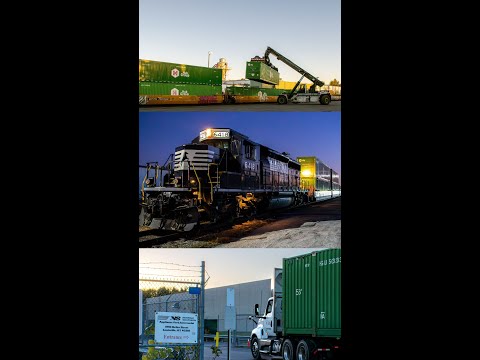
Norfolk Southern — Investor Video Playlist




Industry Resources
| Industrials Resources |
| IndustryWeek |
| Manufacturing.net |
| Aviation Week |
| Rail Transportation Resources |
| Railway Gazette International |
| Progressive Railroading |
| Railway Age |
External Quote Links
| Y Finance | Barrons |
| TradingView | Morningstar |
| SeekingAlpha | ValueLine |
| Motley Fool | Robinhood |
| CNBC | Etrade |
| MarketWatch | Unusual Whales |
| YCharts | Perplexity Finance |
| FinViz |
Prefer one of these to Trefis? Tell us why.