
Taiwan Semiconductor Manufacturing (TSM)
Market Price (6/11/2026): $422.25 | Market Cap: $2.2 TrilSector: Information Technology | Industry: Semiconductors
Taiwan Semiconductor Manufacturing (TSM)
Market Price (6/11/2026): $422.25Market Cap: $2.2 TrilSector: Information TechnologyIndustry: Semiconductors
Investment Highlights Why It Matters Detailed financial logic regarding cash flow yields vs trend-riding momentum.
Megatrend and thematic driversMegatrends include Artificial Intelligence, Autonomous Technologies, Electric Vehicles & Autonomous Driving, 5G & Advanced Connectivity, Show more. | Key risksTSM key risks include [1] profound geopolitical vulnerability due to the concentration of its advanced manufacturing in Taiwan, Show more. |
| Megatrend and thematic driversMegatrends include Artificial Intelligence, Autonomous Technologies, Electric Vehicles & Autonomous Driving, 5G & Advanced Connectivity, Show more. |
| Key risksTSM key risks include [1] profound geopolitical vulnerability due to the concentration of its advanced manufacturing in Taiwan, Show more. |
Qualitative Assessment
AI Analysis | Feedback
Taiwan Semiconductor Manufacturing (TSM) stock has gained about 10% since 2/28/2026 because of the following key factors:
1. Strong Fiscal Q1 2026 Earnings and Upbeat Guidance. Taiwan Semiconductor Manufacturing (TSM) reported robust fiscal Q1 2026 results on April 16, 2026, with revenue reaching US$35.90 billion, surpassing both previous company guidance and analyst estimates. Net income for the quarter surged by 58.3% year-over-year. Following this strong performance, TSM provided an optimistic outlook for fiscal Q2 2026, forecasting revenue between US$39.0 billion and US$40.2 billion, and raised its full-year fiscal 2026 revenue growth projection to over 30% in U.S. dollar terms.
2. Surging Demand for AI-Related Chips. The significant and increasing demand for artificial intelligence (AI) accelerator products notably boosted TSM's High-Performance Computing (HPC) segment, which became the largest revenue contributor in fiscal Q1 2026, accounting for 61% of total wafer revenue. This highlights TSM's critical role and benefit from the ongoing AI boom, with the broader semiconductor market also experiencing substantial growth driven by AI in fiscal Q1 2026.
Show more
Stock Movement Drivers
Fundamental Drivers
The 9.2% change in TSM stock from 2/28/2026 to 6/10/2026 was primarily driven by a 13.0% change in the company's Total Revenues ($ Mil).| (LTM values as of) | 2282026 | 6102026 | Change |
|---|---|---|---|
| Stock Price ($) | 373.53 | 407.79 | 9.2% |
| Change Contribution By: | |||
| Total Revenues ($ Mil) | 3,631,425 | 4,103,904 | 13.0% |
| Net Income Margin (%) | 43.3% | 46.5% | 7.4% |
| P/E Multiple | 1.2 | 1.1 | -10.1% |
| Shares Outstanding (Mil) | 5,186 | 5,186 | 0.0% |
| Cumulative Contribution | 9.2% |
Market Drivers
2/28/2026 to 6/10/2026| Return | Correlation | |
|---|---|---|
| TSM | 9.2% | |
| Market (SPY) | 6.0% | 77.2% |
| Sector (XLK) | 27.4% | 73.9% |
Fundamental Drivers
The 40.6% change in TSM stock from 11/30/2025 to 6/10/2026 was primarily driven by a 15.8% change in the company's P/E Multiple.| (LTM values as of) | 11302025 | 6102026 | Change |
|---|---|---|---|
| Stock Price ($) | 289.94 | 407.79 | 40.6% |
| Change Contribution By: | |||
| Total Revenues ($ Mil) | 3,631,425 | 4,103,904 | 13.0% |
| Net Income Margin (%) | 43.3% | 46.5% | 7.4% |
| P/E Multiple | 1.0 | 1.1 | 15.8% |
| Shares Outstanding (Mil) | 5,186 | 5,186 | 0.0% |
| Cumulative Contribution | 40.6% |
Market Drivers
11/30/2025 to 6/10/2026| Return | Correlation | |
|---|---|---|
| TSM | 40.6% | |
| Market (SPY) | 6.8% | 72.0% |
| Sector (XLK) | 23.8% | 71.4% |
Fundamental Drivers
The 113.5% change in TSM stock from 5/31/2025 to 6/10/2026 was primarily driven by a 44.8% change in the company's P/E Multiple.| (LTM values as of) | 5312025 | 6102026 | Change |
|---|---|---|---|
| Stock Price ($) | 190.98 | 407.79 | 113.5% |
| Change Contribution By: | |||
| Total Revenues ($ Mil) | 3,140,917 | 4,103,904 | 30.7% |
| Net Income Margin (%) | 41.2% | 46.5% | 12.8% |
| P/E Multiple | 0.8 | 1.1 | 44.8% |
| Shares Outstanding (Mil) | 5,185 | 5,186 | 0.0% |
| Cumulative Contribution | 113.5% |
Market Drivers
5/31/2025 to 6/10/2026| Return | Correlation | |
|---|---|---|
| TSM | 113.5% | |
| Market (SPY) | 24.5% | 67.7% |
| Sector (XLK) | 53.9% | 71.5% |
Fundamental Drivers
The 334.0% change in TSM stock from 5/31/2023 to 6/10/2026 was primarily driven by a 126.7% change in the company's P/E Multiple.| (LTM values as of) | 5312023 | 6102026 | Change |
|---|---|---|---|
| Stock Price ($) | 93.97 | 407.79 | 334.0% |
| Change Contribution By: | |||
| Total Revenues ($ Mil) | 2,281,448 | 4,103,904 | 79.9% |
| Net Income Margin (%) | 43.7% | 46.5% | 6.4% |
| P/E Multiple | 0.5 | 1.1 | 126.7% |
| Shares Outstanding (Mil) | 5,186 | 5,186 | 0.0% |
| Cumulative Contribution | 334.0% |
Market Drivers
5/31/2023 to 6/10/2026| Return | Correlation | |
|---|---|---|
| TSM | 334.0% | |
| Market (SPY) | 80.4% | 64.4% |
| Sector (XLK) | 119.5% | 73.8% |
Price Returns Compared
| 2021 | 2022 | 2023 | 2024 | 2025 | 2026 | Total [1] | |
|---|---|---|---|---|---|---|---|
| Returns | |||||||
| TSM Return | |||||||
| Peers Return | 29% | -27% | 58% | 7% | 70% | 124% | 508% |
| S&P 500 Return | 27% | -19% | 24% | 23% | 16% | 8% | 97% |
Monthly Win Rates [3] | |||||||
| TSM Win Rate | |||||||
| Peers Win Rate | 60% | 47% | 67% | 52% | 55% | 50% | |
| S&P 500 Win Rate | 75% | 42% | 67% | 75% | 67% | 50% | |
Max Drawdowns [4] | |||||||
| TSM Max Drawdown | |||||||
| Peers Max Drawdown | -21% | -42% | -20% | -38% | -36% | -22% | |
| S&P 500 Max Drawdown | -5% | -25% | -10% | -8% | -19% | -9% | |
[1] Cumulative total returns since the beginning of 2021
[2] Peers: INTC, GFS, MU, TXN, AVGO.
[3] Win Rate = % of calendar months in which monthly returns were positive
[4] Max drawdown represents maximum peak-to-trough decline within a year
[5] 2026 data is for the year up to 6/10/2026 (YTD)
How Low Can It Go
| Event | TSM | S&P 500 |
|---|---|---|
| 2025 US Tariff Shock | ||
| % Loss | -29.4% | -18.8% |
| % Gain to Breakeven | 41.6% | 23.1% |
| Time to Breakeven | 57 days | 79 days |
| 2024 Yen Carry Trade Unwind | ||
| % Loss | -22.6% | -7.8% |
| % Gain to Breakeven | 29.1% | 8.5% |
| Time to Breakeven | 67 days | 18 days |
| Summer-Fall 2023 Five Percent Yield Shock | ||
| % Loss | -15.5% | -9.5% |
| % Gain to Breakeven | 18.4% | 10.5% |
| Time to Breakeven | 55 days | 24 days |
| 2023 SVB Regional Banking Crisis | ||
| % Loss | -14.0% | -6.7% |
| % Gain to Breakeven | 16.2% | 7.1% |
| Time to Breakeven | 29 days | 31 days |
| 2022 Inflation Shock & Fed Tightening | ||
| % Loss | -52.0% | -24.5% |
| % Gain to Breakeven | 108.5% | 32.4% |
| Time to Breakeven | 469 days | 427 days |
| 2020 COVID-19 Crash | ||
| % Loss | -23.1% | -33.7% |
| % Gain to Breakeven | 30.1% | 50.9% |
| Time to Breakeven | 83 days | 140 days |
In The Past
Taiwan Semiconductor Manufacturing's stock fell -29.4% during the 2025 US Tariff Shock. Such a loss loss requires a 41.6% gain to breakeven.
Preserve Wealth
Limiting losses and compounding gains is essential to preserving wealth.
Asset Allocation
Actively managed asset allocation strategies protect wealth. Learn more.
| Event | TSM | S&P 500 |
|---|---|---|
| 2025 US Tariff Shock | ||
| % Loss | -29.4% | -18.8% |
| % Gain to Breakeven | 41.6% | 23.1% |
| Time to Breakeven | 57 days | 79 days |
| 2024 Yen Carry Trade Unwind | ||
| % Loss | -22.6% | -7.8% |
| % Gain to Breakeven | 29.1% | 8.5% |
| Time to Breakeven | 67 days | 18 days |
| 2022 Inflation Shock & Fed Tightening | ||
| % Loss | -52.0% | -24.5% |
| % Gain to Breakeven | 108.5% | 32.4% |
| Time to Breakeven | 469 days | 427 days |
| 2020 COVID-19 Crash | ||
| % Loss | -23.1% | -33.7% |
| % Gain to Breakeven | 30.1% | 50.9% |
| Time to Breakeven | 83 days | 140 days |
| Q4 2018 Fed Policy Error / Growth Scare | ||
| % Loss | -21.8% | -19.2% |
| % Gain to Breakeven | 27.9% | 23.8% |
| Time to Breakeven | 104 days | 105 days |
| 2008-2009 Global Financial Crisis | ||
| % Loss | -37.9% | -53.4% |
| % Gain to Breakeven | 60.9% | 114.4% |
| Time to Breakeven | 133 days | 1085 days |
| Summer 2007 Credit Crunch | ||
| % Loss | -22.1% | -8.6% |
| % Gain to Breakeven | 28.3% | 9.5% |
| Time to Breakeven | 294 days | 47 days |
In The Past
Taiwan Semiconductor Manufacturing's stock fell -29.4% during the 2025 US Tariff Shock. Such a loss loss requires a 41.6% gain to breakeven.
Preserve Wealth
Limiting losses and compounding gains is essential to preserving wealth.
Asset Allocation
Actively managed asset allocation strategies protect wealth. Learn more.
About Taiwan Semiconductor Manufacturing (TSM)
AI Analysis | Feedback
Here are 1-3 brief analogies for Taiwan Semiconductor Manufacturing (TSM):
- TSM is like Intel's factory, but for almost every other major chip designer like Apple, Nvidia, and Qualcomm, who rely on TSM to build their sophisticated chips.
- TSM is like the Amazon Web Services (AWS) for microchip manufacturing; it provides the essential, outsourced factory and technology that many tech companies use to produce their designed chips, rather than building their own multi-billion dollar fabrication plants.
AI Analysis | Feedback
- Integrated Circuits and Semiconductor Devices: These are various types of electronic components, including logic, mixed-signal, radio frequency, and embedded memory semiconductors, that TSM manufactures, packages, tests, and sells.
- CMOS Wafer Fabrication Processes: This refers to the specialized manufacturing services TSM provides for producing semiconductors on silicon wafers using complementary metal-oxide-semiconductor technology.
- Masks: TSM manufactures these essential patterned plates used as stencils to transfer circuit designs onto semiconductor wafers during the fabrication process.
- Customer Support, Account Management, and Engineering Services: These are the supporting services TSM offers to its clients, covering assistance, relationship management, and technical expertise related to their semiconductor products and processes.
AI Analysis | Feedback
Taiwan Semiconductor Manufacturing Company (TSM) primarily sells its semiconductor manufacturing services to other companies, which are typically fabless semiconductor design firms or integrated device manufacturers (IDMs) that outsource a portion of their production.
Its major customers include:
- Apple Inc. (AAPL)
- Qualcomm Inc. (QCOM)
- NVIDIA Corporation (NVDA)
- Advanced Micro Devices, Inc. (AMD)
- MediaTek Inc. (2454.TW)
AI Analysis | Feedback
- ASML Holding (ASML)
- Applied Materials (AMAT)
- Lam Research (LRCX)
- KLA Corporation (KLAC)
- Tokyo Electron Limited (8035.T)
- Shin-Etsu Chemical Co., Ltd. (4063.T)
- SUMCO Corporation (3436.T)
AI Analysis | Feedback
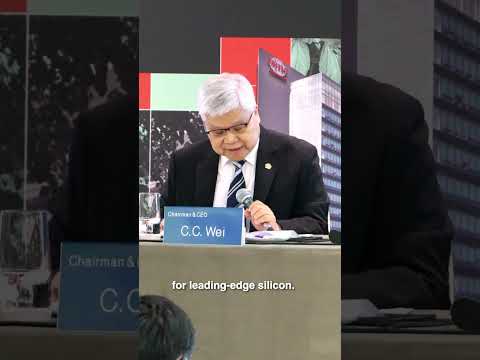
```html C. C. Wei, Chairman and Chief Executive OfficerDr. C. C. Wei became TSMC's Chief Executive Officer in 2018 and was appointed Chairman of the Board in June 2024, becoming the first individual to hold both roles simultaneously at the company. He joined TSMC in 1998 and has held various leadership positions, including Senior Vice President of Business Development, Co-Chief Operating Officer, and President and Co-CEO. Before joining TSMC, Dr. Wei served as a Member of Technical Staff at Texas Instruments, Senior Manager for logic and SRAM technology development at STMicroelectronics, and Senior Vice President of Technology at Charter Semiconductor Manufacturing Co.
Wendell Huang, Senior Vice President, Finance and Chief Financial Officer / SpokespersonMr. Wendell Huang joined TSMC in 1999 and is responsible for overseeing the company's financial operations and strategies. He has led numerous significant corporate-level finance projects, including the acquisitions of TASMC and WSMC, the sale of Philips' shares in TSMC to institutional investors, and a series of major bond issues. Prior to his tenure at TSMC, Mr. Huang worked for ING Barings, Chase Manhattan Bank, Bankers Trust Company, Chemical Bank, and Bank of Boston.
Y.P. Chyn, Executive Vice President and Co-Chief Operating OfficerMr. Y.P. Chyn joined TSMC when it was founded in 1987. He is responsible for the operation and management of all fabs in Taiwan and overseas, and co-leads TSMC's Overseas Operations Office. Mr. Chyn has made significant contributions to the company's product engineering capabilities and supported yield improvement in new generations of advanced technology, including the 28nm, 16nm, and 7nm nodes. He also pioneered the development of TSMC's Golden Spice Modeling methodology and Design for Manufacturing program.
Dr. Y.J. Mii, Executive Vice President and Co-Chief Operating OfficerDr. Y.J. Mii joined TSMC in 1994. He has contributed greatly to the development and manufacturing of advanced CMOS technologies in both Fab Operations and R&D. Dr. Mii successfully managed the development of 90nm, 40nm, and 28nm technologies and spearheaded the research and development of 16nm, 7nm, 5nm, and beyond, helping maintain TSMC's technology leadership.
Rick Cassidy, Senior Vice President, Corporate Strategy DevelopmentMr. Rick Cassidy plays a crucial role in shaping TSMC's long-term strategic initiatives and has been instrumental in expanding the company's global footprint, including leading the establishment of TSMC Arizona. He began his career at TSMC in 1997 as the Director of Account Management for North America and previously served as President and CEO of TSMC North America. Prior to joining TSMC, Mr. Cassidy was a marketing and sales executive at National Semiconductor.
```AI Analysis | Feedback
The key risks to Taiwan Semiconductor Manufacturing Company Limited (TSM) are primarily centered around geopolitical instability, intense competition and technological evolution, and vulnerabilities within its supply chain and operational environment.
-
Geopolitical Tensions
The most significant risk to TSMC stems from escalating geopolitical tensions, particularly concerning cross-Strait relations between Taiwan and China. TSMC's dominant position in advanced semiconductor manufacturing, with the vast majority of its most advanced chip production located in Taiwan, makes it highly vulnerable to any military conflict, blockade, or political pressure in the region. A disruption to TSMC's operations due to such events could have catastrophic global economic consequences, given its critical role in the world's technology supply chain.
-
Competition and Rapid Technological Change
TSMC faces formidable and intensifying competition from other major players, such as Intel and Samsung, who are aggressively investing in and developing their own advanced foundry capabilities. Large customers are also reportedly exploring alternative foundries to diversify their supply chains, potentially eroding TSMC's market share over time. The semiconductor industry is characterized by rapid technological advancements, requiring continuous and massive capital expenditures in research and development to maintain a leadership position in process nodes (e.g., 2nm, 3nm). Failure to keep pace with these innovations or to manage the high costs associated with new technology ramps could impact profitability and market standing.
-
Supply Chain and Operational Vulnerabilities
Beyond direct geopolitical conflict, TSMC's operations are exposed to several supply chain and environmental risks. Taiwan faces challenges related to water scarcity, power shortages, and the reliability of its electricity grid, which could disrupt highly resource-intensive semiconductor manufacturing processes. Furthermore, Taiwan's reliance on imported energy resources, such as Liquefied Natural Gas (LNG), particularly from regions with geopolitical instability like the Middle East, introduces additional energy security risks that could affect TSMC's production. Global trends toward "de-globalization," including export restrictions, tariffs, and protectionist policies in major economies, also disrupt established supply chains, increase production costs, and add operational complexities for TSMC as it attempts to localize or "friend-shore" production.
AI Analysis | Feedback
The clear emerging threat for Taiwan Semiconductor Manufacturing (TSM) is Intel Foundry Services (IFS). Intel, traditionally an integrated device manufacturer (IDM), is making a significant strategic pivot and massive investments to become a leading pure-play foundry. IFS directly competes with TSM by offering advanced wafer fabrication processes to external fabless customers. This initiative, backed by substantial capital and governmental support for onshoring semiconductor manufacturing, aims to challenge TSM's market leadership in process technology and capacity. Intel's stated goal to achieve process leadership and attract major customers represents a direct and potent challenge to TSM's core business model and market share.
AI Analysis | Feedback
Taiwan Semiconductor Manufacturing Company (TSM) is a leading pure-play semiconductor foundry. Its main products and services revolve around manufacturing integrated circuits and other semiconductor devices for various end markets. The addressable markets for TSM's key products and the industries they serve are substantial globally.
Semiconductor Foundry Services
- The global semiconductor foundry market was valued at approximately USD 175.1 billion in 2025 and is projected to reach USD 263.1 billion by 2034, growing at a compound annual growth rate (CAGR) of 3.40%. Other estimates place the market at USD 162.7 billion in 2025, with a projection to reach USD 508.7 billion by 2035 at a CAGR of 12.2%. The pure-play foundries segment is anticipated to constitute 51% of the global semiconductor foundry market share in 2026.
Main Products and Technologies
- Logic Semiconductors: The global logic semiconductor market was estimated at USD 155.25 billion in 2025 and is expected to grow to USD 254.34 billion by 2035, with a CAGR of 5.06%. Another report estimates the market at USD 147 billion in 2025, expanding to USD 225 billion by 2033.
- Mixed-Signal Integrated Circuits (ICs): The global mixed signal IC market size was valued at USD 135.17 billion in 2025 and is projected to reach USD 214.56 billion by 2034, with a CAGR of 5.27%. Another source indicates a market size of USD 120.05 billion in 2025, growing to USD 200.55 billion by 2034.
- Radio Frequency (RF) Semiconductors: The global RF semiconductor market was valued at USD 25.61 billion in 2025 and is projected to increase to USD 32.97 billion by 2034, exhibiting a CAGR of 13.10%. Another estimate places the market at USD 25.7 billion in 2024, projected to reach approximately USD 41.6 billion by 2030.
- Embedded Memory Semiconductors (part of the overall semiconductor memory market): The global semiconductor memory market was valued at USD 119.5 billion in 2025 and is expected to reach USD 360.1 billion in 2035. Another report states the market was valued at USD 171.31 billion in 2025 and is projected to grow to USD 447.93 billion by 2034.
End Markets
- Mobile Devices: The global mobile phone semiconductor market size was valued at USD 40.88 billion in 2025 and is projected to grow to USD 92.86 billion by 2034. Another report estimates the market at USD 37.67 billion in 2025, growing to USD 70.49 billion by 2031.
- High Performance Computing (HPC): The global HPC processor market size was valued at USD 6.84 billion in 2025 and is projected to grow to USD 15.39 billion by 2034. The broader HPC chipset market was valued at USD 5.68 billion in 2022 and is estimated to reach USD 29.36 billion by 2032.
- Automotive Electronics: The global automotive semiconductor market was valued at USD 79.7 billion in 2025 and is expected to grow to USD 180.2 billion by 2035. Another source indicates a market size of USD 56.28 billion in 2025, projected to reach USD 148.65 billion by 2035.
- Internet of Things (IoT): The global IoT semiconductor market is projected to reach USD 636.3 billion in 2025 and is expected to grow to USD 1,534.8 billion by 2034. Another report values the global IoT chips market at USD 685.88 billion in 2025, projected to reach USD 2,023.82 billion by 2034.
AI Analysis | Feedback
Taiwan Semiconductor Manufacturing Company (TSM) is expected to experience robust revenue growth over the next two to three years, driven by several key factors:
- Surging Demand for AI and High-Performance Computing (HPC) Chips: The explosive growth in artificial intelligence (AI) is a primary catalyst for TSMC's revenue. The company is a crucial manufacturer of advanced AI accelerators and high-performance computing (HPC) chips for major tech companies like Nvidia, AMD, Apple, Alphabet, Amazon, Meta, and Microsoft, which are significantly investing in AI data center infrastructure. This sustained demand keeps TSMC's advanced process node utilization rates elevated and is projected to drive substantial revenue growth for years to come.
- Leadership in Advanced Process Technologies (3nm, 2nm, and A16): TSMC's technological leadership in producing cutting-edge process nodes, such as 3-nanometer (3nm), the upcoming 2-nanometer (2nm), and A16, is a significant revenue driver. The 3nm process, which already accounts for a substantial portion of wafer revenue, is experiencing strong demand and contributing to significant profit growth. The 2nm node is on track for volume production, with a robust pipeline of customer designs and higher anticipated pricing, expected to provide a considerable tailwind for revenue and margins.
- Expansion of Advanced Packaging Capacity (CoWoS): Advanced packaging technologies, particularly Chip-on-Wafer-on-Substrate (CoWoS), are critical for integrating complex AI and HPC chips. TSMC is aggressively expanding its CoWoS production capacity to meet overwhelming customer demand, which currently exceeds available supply. This expansion is projected to generate substantial annual revenue, with advanced packaging representing a high-margin business segment for the company.
- Strategic Price Increases for Advanced Nodes: Due to the persistent high demand and ongoing supply shortages for its cutting-edge process technologies, especially the 3nm process, TSMC has indicated plans for potential price increases. These strategic price adjustments for its advanced chip manufacturing services are expected to bolster revenue growth and further improve the company's gross margins.
- Continued Growth from Structural Industry Megatrends: Beyond the immediate AI boom, TSMC benefits from long-term structural demand driven by industry megatrends such as 5G, the Internet of Things (IoT), and automotive electronics. The ongoing proliferation of these technologies continues to require advanced semiconductor devices, ensuring a broad and diversified customer base and consistent underlying demand for TSMC's foundry services.
AI Analysis | Feedback
Capital Expenditures
- Taiwan Semiconductor Manufacturing (TSMC) projects its capital expenditures for 2026 to be between $52 billion and $56 billion, with the company expecting to be at the higher end of this range. This represents a significant increase from approximately $40.9 billion spent in 2025 and $28.9 billion in 2024.
- A substantial portion of the 2026 capital budget, approximately 70% to 80%, is allocated to advanced process technologies, such as 3-nanometer and 2-nanometer nodes. The remaining capital is directed towards specialty processes (around 10%) and advanced packaging, testing, and mask making (10-20%).
- TSMC is undertaking a major expansion in the United States, with a planned investment of $165 billion over the next few years for five new fabrication facilities and two advanced packaging facilities in Arizona. The company is also expanding its fabrication facilities across Germany, Japan, and Taiwan.
Share Repurchases
- TSMC completed a share buyback program in June 2024.
- In February 2022, the company completed the buyback of 1,387,000 common shares to offset dilution from employee restricted stock awards.
- Taiwan Semiconductor Manufacturing's net common equity issued/repurchased for 2024 was -$0.094 billion, and for 2022 was -$0.028 billion, indicating minimal net repurchases.
Share Issuance
- In February 2022, TSMC's board approved the issuance of 1,387,000 common shares for 2021 Employee Restricted Stock Awards and authorized the issuance of up to 2,960,000 common shares of RSAs for 2022.
- As of March 31, 2026, Taiwan Semiconductor Manufacturing's shares outstanding were 5.186 billion, reflecting a 0.02% increase year-over-year.
Latest Trefis Analyses
| Title | Date | |
|---|---|---|
| ARTICLES | ||
| TSMC Stock: In the AI Arms Race, The Foundry Wins | 01/22/2026 | |
| TSMC Stock: Global Tech’s Most Critical Asset At A Discount | 08/28/2025 |
| Title | |
|---|---|
| DASHBOARDS |
Research & Analysis
Invest in Strategies
Wealth Management
Peer Comparisons
| Peers to compare with: |
Financials
| Median | |
|---|---|
| Name | |
| Mkt Price | 282.01 |
| Mkt Cap | 544.1 |
| Rev LTM | 53,763 |
| Op Inc LTM | 6,641 |
| FCF LTM | 3,721 |
| FCF 3Y Avg | 2,039 |
| CFO LTM | 9,980 |
| CFO 3Y Avg | 10,779 |
Growth & Margins
| Median | |
|---|---|
| Name | |
| Rev Chg LTM | 14.9% |
| Rev Chg 3Y Avg | -1.1% |
| Rev Chg Q | 18.6% |
| QoQ Delta Rev Chg LTM | 4.3% |
| Op Inc Chg LTM | 55.5% |
| Op Inc Chg 3Y Avg | -9.3% |
| Op Mgn LTM | 36.0% |
| Op Mgn 3Y Avg | 15.6% |
| QoQ Delta Op Mgn LTM | 2.0% |
| CFO/Rev LTM | 42.4% |
| CFO/Rev 3Y Avg | 36.8% |
| FCF/Rev LTM | 17.7% |
| FCF/Rev 3Y Avg | 11.6% |
Valuation
| Median | |
|---|---|
| Name | |
| Mkt Cap | 544.1 |
| P/S | 13.9 |
| P/Op Inc | 50.3 |
| P/EBIT | 38.2 |
| P/E | 47.8 |
| P/CFO | 32.8 |
| Total Yield | 2.3% |
| Dividend Yield | 0.1% |
| FCF Yield 3Y Avg | 1.2% |
| D/E | 0.0 |
| Net D/E | 0.0 |
Returns
| Median | |
|---|---|
| Name | |
| 1M Rtn | -5.3% |
| 3M Rtn | 69.7% |
| 6M Rtn | 85.1% |
| 12M Rtn | 89.6% |
| 3Y Rtn | 248.5% |
| 1M Excs Rtn | -3.3% |
| 3M Excs Rtn | 62.4% |
| 6M Excs Rtn | 81.3% |
| 12M Excs Rtn | 73.9% |
| 3Y Excs Rtn | 195.7% |
Price Behavior
| Market Price | $407.79 | |
| Market Cap ($ Bil) | 2,114.6 | |
| First Trading Date | 10/09/1997 | |
| Distance from 52W High | -8.7% | |
| 50 Days | 200 Days | |
| DMA Price | $394.89 | $328.26 |
| DMA Trend | up | up |
| Distance from DMA | 3.3% | 24.2% |
| 3M | 1YR | |
| Volatility | 44.6% | 36.7% |
| Downside Capture | 210.19 | 173.04 |
| Upside Capture | 206.63 | 213.30 |
| Correlation (SPY) | 74.4% | 67.5% |
| 1M | 2M | 3M | 6M | 1Y | 3Y | |
|---|---|---|---|---|---|---|
| Beta | 2.41 | 2.28 | 2.20 | 2.10 | 1.96 | 1.61 |
| Up Beta | 4.58 | 3.04 | 2.81 | 2.31 | 2.11 | 1.42 |
| Down Beta | 2.46 | 2.50 | 2.50 | 2.26 | 2.20 | 1.59 |
| Up Capture | 145% | 163% | 187% | 283% | 342% | 1065% |
| Bmk +ve Days | 13 | 28 | 36 | 67 | 141 | 432 |
| Stock +ve Days | 10 | 23 | 34 | 67 | 136 | 399 |
| Down Capture | 205% | 193% | 187% | 155% | 137% | 111% |
| Bmk -ve Days | 7 | 13 | 27 | 57 | 109 | 318 |
| Stock -ve Days | 10 | 18 | 29 | 57 | 114 | 351 |
[1] Upside and downside betas calculated using positive and negative benchmark daily returns respectively
Based On 1-Year Data
| Annualized Return | Annualized Volatility | Sharpe Ratio | Correlation with TSM | |
|---|---|---|---|---|
| TSM | 100.0% | 36.7% | 1.95 | - |
| Sector ETF (XLK) | 48.6% | 22.3% | 1.69 | 71.6% |
| Equity (SPY) | 22.5% | 12.2% | 1.37 | 68.0% |
| Gold (GLD) | 22.3% | 27.2% | 0.72 | 24.7% |
| Commodities (DBC) | 34.8% | 19.0% | 1.44 | -12.8% |
| Real Estate (VNQ) | 12.9% | 13.5% | 0.65 | 11.4% |
| Bitcoin (BTCUSD) | -44.1% | 42.1% | -1.26 | 33.0% |
Smart multi-asset allocation framework can stack odds in your favor. Learn How
Based On 5-Year Data
| Annualized Return | Annualized Volatility | Sharpe Ratio | Correlation with TSM | |
|---|---|---|---|---|
| TSM | 30.7% | 37.4% | 0.81 | - |
| Sector ETF (XLK) | 21.7% | 25.1% | 0.77 | 71.4% |
| Equity (SPY) | 13.2% | 17.1% | 0.60 | 62.8% |
| Gold (GLD) | 16.4% | 18.2% | 0.73 | 14.8% |
| Commodities (DBC) | 9.1% | 19.4% | 0.36 | 12.5% |
| Real Estate (VNQ) | 2.9% | 18.8% | 0.05 | 29.6% |
| Bitcoin (BTCUSD) | 9.5% | 54.6% | 0.37 | 26.0% |
Smart multi-asset allocation framework can stack odds in your favor. Learn How
Based On 10-Year Data
| Annualized Return | Annualized Volatility | Sharpe Ratio | Correlation with TSM | |
|---|---|---|---|---|
| TSM | 35.7% | 34.2% | 0.98 | - |
| Sector ETF (XLK) | 24.5% | 24.6% | 0.90 | 69.6% |
| Equity (SPY) | 15.0% | 17.9% | 0.72 | 62.2% |
| Gold (GLD) | 12.4% | 16.1% | 0.64 | 12.3% |
| Commodities (DBC) | 7.0% | 18.0% | 0.31 | 18.9% |
| Real Estate (VNQ) | 5.7% | 20.7% | 0.24 | 34.5% |
| Bitcoin (BTCUSD) | 60.8% | 66.8% | 1.00 | 16.5% |
Smart multi-asset allocation framework can stack odds in your favor. Learn How
Earnings Returns History
Updated 6/11/2026| Forward Returns | |||
|---|---|---|---|
| Earnings Date | 1D Returns | 5D Returns | 21D Returns |
| SUMMARY STATS | |||
| # Positive | 0 | 0 | 0 |
| # Negative | 0 | 0 | 0 |
| Median Positive | |||
| Median Negative | |||
| Max Positive | |||
| Max Negative | |||
SEC Filings
Expand for More| Report Date | Filing Date | Filing |
|---|---|---|
| 03/31/2026 | 05/12/2026 | 6-K |
| 12/31/2025 | 04/16/2026 | 20-F |
| 09/30/2025 | 11/14/2025 | 6-K |
| 06/30/2025 | 08/14/2025 | 6-K |
| 03/31/2025 | 05/15/2025 | 6-K |
| 12/31/2024 | 04/17/2025 | 20-F |
| 09/30/2024 | 11/14/2024 | 6-K |
| 06/30/2024 | 08/14/2024 | 6-K |
| 03/31/2024 | 05/15/2024 | 6-K |
| 12/31/2023 | 04/18/2024 | 20-F |
| 09/30/2023 | 11/14/2023 | 6-K |
| 06/30/2023 | 08/14/2023 | 6-K |
| 03/31/2023 | 05/12/2023 | 6-K |
| 12/31/2022 | 04/20/2023 | 20-F |
| 09/30/2022 | 11/14/2022 | 6-K |
| 06/30/2022 | 08/12/2022 | 6-K |
Taiwan Semiconductor Manufacturing — Investor Video Playlist




Industry Resources
| Information Technology Resources |
| TechCrunch |
| Wired |
| CIO |
| MIT Technology Review |
| Gartner Insights |
| Ars Technica |
| Semiconductors Resources |
| EE Times |
| Semiconductor Engineering |
| Semiconductor Digest |
External Quote Links
| Y Finance | Barrons |
| TradingView | Morningstar |
| SeekingAlpha | ValueLine |
| Motley Fool | Robinhood |
| CNBC | Etrade |
| MarketWatch | Unusual Whales |
| YCharts | Perplexity Finance |
| FinViz |
Prefer one of these to Trefis? Tell us why.