
Levi Strauss (LEVI)
Market Price (9/22/2026): $20.07 | Market Cap: $7.7 BilSector: Consumer Discretionary | Industry: Apparel, Accessories & Luxury Goods
Levi Strauss (LEVI)
Market Price (9/22/2026): $20.07Market Cap: $7.7 BilSector: Consumer DiscretionaryIndustry: Apparel, Accessories & Luxury Goods
Investment Highlights Why It Matters Detailed financial logic regarding cash flow yields vs trend-riding momentum.
Attractive yieldTotal YieldTotal Yield = Earnings Yield + Dividend Yield, Earnings Yield = Net Income / Market Cap Dividend Yield = Total Dividends / Market Cap is 11%, Dividend Yield is 2.8%, ERPEquity Risk Premium (ERP) = Total Yield - Risk Free Rate, Reflects the premium above risk free assets offered by the investment. is 7.2%, FCF Yield is 7.3% Attractive cash flow generationCFO/Rev LTMCash Flow from Operations / Revenue (Sales), Last Twelve Months (LTM) is 12% Low stock price volatilityVol 12M is 35% Megatrend and thematic driversMegatrends include E-commerce & Digital Retail, and Sustainable Consumption. Themes include Direct-to-Consumer Brands, Eco-friendly Products, Show more. | Weak multi-year price returns2Y Excs Rtn is -30%, 3Y Excs Rtn is -15% | Key risksLEVI key risks include [1] vulnerability to shifting fashion trends due to its heavy concentration in denim and [2] a significant dependency on the wholesale channel as consumers increasingly shift to direct-to-consumer platforms. |
| Attractive yieldTotal YieldTotal Yield = Earnings Yield + Dividend Yield, Earnings Yield = Net Income / Market Cap Dividend Yield = Total Dividends / Market Cap is 11%, Dividend Yield is 2.8%, ERPEquity Risk Premium (ERP) = Total Yield - Risk Free Rate, Reflects the premium above risk free assets offered by the investment. is 7.2%, FCF Yield is 7.3% |
| Attractive cash flow generationCFO/Rev LTMCash Flow from Operations / Revenue (Sales), Last Twelve Months (LTM) is 12% |
| Low stock price volatilityVol 12M is 35% |
| Megatrend and thematic driversMegatrends include E-commerce & Digital Retail, and Sustainable Consumption. Themes include Direct-to-Consumer Brands, Eco-friendly Products, Show more. |
| Weak multi-year price returns2Y Excs Rtn is -30%, 3Y Excs Rtn is -15% |
| Key risksLEVI key risks include [1] vulnerability to shifting fashion trends due to its heavy concentration in denim and [2] a significant dependency on the wholesale channel as consumers increasingly shift to direct-to-consumer platforms. |
Qualitative Assessment
AI Analysis | Feedback
Levi Strauss (LEVI) stock has lost about 15% since 5/31/2026 because of the following key factors:
1. Cautious Fiscal Q3 2026 and Second Half Outlook Undermined Strong Fiscal Q2 2026 Results.
Despite exceeding Wall Street expectations for its fiscal Q2 2026 (ended May 31, 2026) with adjusted earnings per share of $0.28 against a $0.24 forecast and revenue of $1.56 billion against a $1.52 billion estimate, Levi Strauss stock experienced a decline. The stock dropped 5.42% in after-hours trading following the earnings announcement on July 8, 2026. This downturn was primarily driven by investors reacting to a cautious outlook for the remainder of fiscal 2026, with management projecting slower reported and organic revenue growth of 4% to 5% for fiscal Q3 2026, a deceleration compared to the first-half performance.
2. Significant Insider Selling Activity Signaled Potential Concerns.
The stock movement was also influenced by notable insider selling activity by key stakeholders. Major shareholder Robert D. Haas executed substantial sales, including 488,851 shares on June 11, 2026, for approximately $11.79 million, and a separate "SELL-OPTIONS" transaction valued at $11.9 million on June 10, 2026. The aggregate net insider selling by key stakeholders over the ninety days prior to August 2026 amounted to approximately $44.9 million, indicating potential internal concerns to the market.
Show more
Levi Strauss (LEVI) stock has lost about 15% since 5/31/2026 because of the following key factors:
1. Cautious Fiscal Q3 2026 and Second Half Outlook Undermined Strong Fiscal Q2 2026 Results.
Despite exceeding Wall Street expectations for its fiscal Q2 2026 (ended May 31, 2026) with adjusted earnings per share of $0.28 against a $0.24 forecast and revenue of $1.56 billion against a $1.52 billion estimate, Levi Strauss stock experienced a decline. The stock dropped 5.42% in after-hours trading following the earnings announcement on July 8, 2026. This downturn was primarily driven by investors reacting to a cautious outlook for the remainder of fiscal 2026, with management projecting slower reported and organic revenue growth of 4% to 5% for fiscal Q3 2026, a deceleration compared to the first-half performance.
2. Significant Insider Selling Activity Signaled Potential Concerns.
The stock movement was also influenced by notable insider selling activity by key stakeholders. Major shareholder Robert D. Haas executed substantial sales, including 488,851 shares on June 11, 2026, for approximately $11.79 million, and a separate "SELL-OPTIONS" transaction valued at $11.9 million on June 10, 2026. The aggregate net insider selling by key stakeholders over the ninety days prior to August 2026 amounted to approximately $44.9 million, indicating potential internal concerns to the market.
3. Broader Retail Sector Caution and Macroeconomic Headwinds Contributed to Investor Hesitation.
While Levi Strauss achieved gross margin expansion in fiscal Q2 2026, it acknowledged ongoing macroeconomic challenges, specifically noting tariffs and foreign exchange as headwinds. The company's conservative guidance for slower growth in the latter half of fiscal 2026, set against a backdrop of a challenging general retail environment, likely amplified investor caution regarding the sustainability of its financial performance amidst these persistent economic pressures.
Show less
Stock Movement Drivers
Fundamental Drivers
The -14.0% change in LEVI stock from 5/31/2026 to 9/21/2026 was primarily driven by a -17.6% change in the company's P/E Multiple.| (LTM values as of) | 5312026 | 9212026 | Change |
|---|---|---|---|
| Stock Price ($) | 23.05 | 19.82 | -14.0% |
| Change Contribution By: | |||
| Total Revenues ($ Mil) | 6,498 | 6,614 | 1.8% |
| Net Income Margin (%) | 9.5% | 9.7% | 1.5% |
| P/E Multiple | 14.5 | 12.0 | -17.6% |
| Shares Outstanding (Mil) | 390 | 386 | 1.0% |
| Cumulative Contribution | -14.0% |
Market Drivers
5/31/2026 to 9/21/2026| Return | Correlation | |
|---|---|---|
| LEVI | -14.0% | |
| Market (SPY) | 2.5% | 34.2% |
| Sector (XLY) | -7.0% | 48.2% |
Fundamental Drivers
The -9.4% change in LEVI stock from 2/28/2026 to 9/21/2026 was primarily driven by a -19.4% change in the company's P/E Multiple.| (LTM values as of) | 2282026 | 9212026 | Change |
|---|---|---|---|
| Stock Price ($) | 21.88 | 19.82 | -9.4% |
| Change Contribution By: | |||
| Total Revenues ($ Mil) | 6,282 | 6,614 | 5.3% |
| Net Income Margin (%) | 9.2% | 9.7% | 5.0% |
| P/E Multiple | 14.9 | 12.0 | -19.4% |
| Shares Outstanding (Mil) | 392 | 386 | 1.7% |
| Cumulative Contribution | -9.4% |
Market Drivers
2/28/2026 to 9/21/2026| Return | Correlation | |
|---|---|---|
| LEVI | -9.4% | |
| Market (SPY) | 13.4% | 46.6% |
| Sector (XLY) | -3.6% | 54.2% |
Fundamental Drivers
The -9.1% change in LEVI stock from 8/31/2025 to 9/21/2026 was primarily driven by a -43.9% change in the company's P/E Multiple.| (LTM values as of) | 8312025 | 9212026 | Change |
|---|---|---|---|
| Stock Price ($) | 21.80 | 19.82 | -9.1% |
| Change Contribution By: | |||
| Total Revenues ($ Mil) | 6,166 | 6,614 | 7.3% |
| Net Income Margin (%) | 6.6% | 9.7% | 47.0% |
| P/E Multiple | 21.3 | 12.0 | -43.9% |
| Shares Outstanding (Mil) | 396 | 386 | 2.7% |
| Cumulative Contribution | -9.1% |
Market Drivers
8/31/2025 to 9/21/2026| Return | Correlation | |
|---|---|---|
| LEVI | -9.1% | |
| Market (SPY) | 21.2% | 48.0% |
| Sector (XLY) | -2.4% | 53.2% |
Fundamental Drivers
The 56.6% change in LEVI stock from 8/31/2023 to 9/21/2026 was primarily driven by a 35.7% change in the company's Net Income Margin (%).| (LTM values as of) | 8312023 | 9212026 | Change |
|---|---|---|---|
| Stock Price ($) | 12.66 | 19.82 | 56.6% |
| Change Contribution By: | |||
| Total Revenues ($ Mil) | 6,132 | 6,614 | 7.9% |
| Net Income Margin (%) | 7.1% | 9.7% | 35.7% |
| P/E Multiple | 11.5 | 12.0 | 3.9% |
| Shares Outstanding (Mil) | 397 | 386 | 3.0% |
| Cumulative Contribution | 56.6% |
Market Drivers
8/31/2023 to 9/21/2026| Return | Correlation | |
|---|---|---|
| LEVI | 56.6% | |
| Market (SPY) | 78.3% | 51.3% |
| Sector (XLY) | 34.7% | 53.3% |
Price Returns Compared
| 2021 | 2022 | 2023 | 2024 | 2025 | 2026 | Total [1] | |
|---|---|---|---|---|---|---|---|
| Returns | |||||||
| LEVI Return | 26% | -36% | 10% | 8% | 23% | -3% | 14% |
| Peers Return | 33% | -26% | 77% | 32% | 34% | -17% | 155% |
| S&P 500 Return | 27% | -19% | 24% | 23% | 16% | 12% | 104% |
Monthly Win Rates [3] | |||||||
| LEVI Win Rate | 42% | 42% | 58% | 58% | 67% | 44% | |
| Peers Win Rate | 55% | 38% | 62% | 53% | 58% | 44% | |
| S&P 500 Win Rate | 75% | 42% | 67% | 75% | 67% | 44% | |
Max Drawdowns [4] | |||||||
| LEVI Max Drawdown | -24% | -43% | -31% | -34% | -35% | -23% | |
| Peers Max Drawdown | -29% | -50% | -31% | -31% | -40% | -39% | |
| S&P 500 Max Drawdown | -5% | -25% | -10% | -8% | -19% | -9% | |
[1] Cumulative total returns since the beginning of 2021
[2] Peers: URBN, ANF, AEO, NKE, TPR. See LEVI Returns vs. Peers.
[3] Win Rate = % of calendar months in which monthly returns were positive
[4] Max drawdown represents maximum peak-to-trough decline within a year
[5] 2026 data is for the year up to 9/21/2026 (YTD)
How Low Can It Go
| Event | LEVI | S&P 500 |
|---|---|---|
| 2025 US Tariff Shock | ||
| % Loss | -31.8% | -18.8% |
| % Gain to Breakeven | 46.7% | 23.1% |
| Time to Breakeven | 49 days | 79 days |
| 2023 SVB Regional Banking Crisis | ||
| % Loss | -27.8% | -6.7% |
| % Gain to Breakeven | 38.4% | 7.1% |
| Time to Breakeven | 265 days | 31 days |
| 2022 Inflation Shock & Fed Tightening | ||
| % Loss | -42.0% | -24.5% |
| % Gain to Breakeven | 72.4% | 32.4% |
| Time to Breakeven | 601 days | 427 days |
| 2020 COVID-19 Crash | ||
| % Loss | -50.9% | -33.7% |
| % Gain to Breakeven | 103.8% | 50.9% |
| Time to Breakeven | 235 days | 140 days |
In The Past
Levi Strauss's stock fell -31.8% during the 2025 US Tariff Shock. Such a loss loss requires a 46.7% gain to breakeven.
Preserve Wealth
Limiting losses and compounding gains is essential to preserving wealth.
Asset Allocation
Actively managed asset allocation strategies protect wealth. Learn more.
| Event | LEVI | S&P 500 |
|---|---|---|
| 2025 US Tariff Shock | ||
| % Loss | -31.8% | -18.8% |
| % Gain to Breakeven | 46.7% | 23.1% |
| Time to Breakeven | 49 days | 79 days |
| 2023 SVB Regional Banking Crisis | ||
| % Loss | -27.8% | -6.7% |
| % Gain to Breakeven | 38.4% | 7.1% |
| Time to Breakeven | 265 days | 31 days |
| 2022 Inflation Shock & Fed Tightening | ||
| % Loss | -42.0% | -24.5% |
| % Gain to Breakeven | 72.4% | 32.4% |
| Time to Breakeven | 601 days | 427 days |
| 2020 COVID-19 Crash | ||
| % Loss | -50.9% | -33.7% |
| % Gain to Breakeven | 103.8% | 50.9% |
| Time to Breakeven | 235 days | 140 days |
In The Past
Levi Strauss's stock fell -31.8% during the 2025 US Tariff Shock. Such a loss loss requires a 46.7% gain to breakeven.
Preserve Wealth
Limiting losses and compounding gains is essential to preserving wealth.
Asset Allocation
Actively managed asset allocation strategies protect wealth. Learn more.
About Levi Strauss (LEVI)
Levi Strauss & Co. (LEVI) is a global apparel company primarily known for designing, marketing, and selling a wide range of clothing and related accessories. While famous for its iconic Levi's jeans, the company's product portfolio extends significantly beyond denim to include casual and dress pants, activewear, tops, shorts, skirts, dresses, jackets, and footwear. They also license their well-known Levi's and Dockers trademarks for various product categories such as belts, wallets, and kids wear, further expanding their brand presence.
The company manages a multi-brand strategy, selling products under its flagship Levi's brand, as well as Dockers, Signature by Levi Strauss & Co., and Denizen. Levi Strauss reaches its customers through a dual distribution model. They sell directly to consumers via company-operated mainline and outlet stores, their e-commerce sites, and shop-in-shops within department stores. Additionally, the company leverages an extensive network of third-party retailers, including department stores, specialty retailers, and franchisees who operate dedicated brand stores, totaling approximately 3,100 brand-dedicated stores and shop-in-shops globally.
Headquartered in San Francisco and founded in 1853, Levi Strauss serves a broad demographic, designing apparel for men, women, and children. Its market reach is truly global, with significant operations and sales across the Americas, Europe, and Asia. This extensive geographic footprint, combined with diverse product offerings and multiple sales channels, allows Levi Strauss to cater to a wide international consumer base.
```AI Analysis | Feedback
- The Coca-Cola of jeans.
- The Nike of denim.
AI Analysis | Feedback
- Jeans: The company's iconic denim trousers for men, women, and children.
- Pants: Includes both casual and dress pants.
- Tops: A category covering various upper body garments such as shirts, blouses, sweaters, and dress shirts.
- Shorts, Skirts, and Dresses: Apparel designed as bottom wear or one-piece garments.
- Activewear and Jackets: Clothing designed for sports or physical exercise, and outerwear.
- Footwear: Items worn on the feet, such as shoes and boots.
- Accessories: Complementary items including belts, wallets, bags, sleepwear, and hosiery.
AI Analysis | Feedback
Levi Strauss & Co. (symbol: LEVI) sells primarily to individuals through its extensive network of company-operated mainline and outlet stores, company-operated e-commerce sites, and select shop-in-shops. While it also sells through third-party retailers, its significant direct-to-consumer presence indicates a primary focus on the end consumer.
Its major customer categories are:
- Adult men: Individuals seeking durable and fashionable casual apparel, including jeans, casual pants, activewear, tops, shorts, jackets, footwear, and accessories, primarily under the Levi's and Dockers brands.
- Adult women: Individuals looking for a wide range of denim and casual wear, including jeans, casual and dress pants, skirts, dresses, activewear, tops, shorts, jackets, footwear, and accessories, primarily under the Levi's and Dockers brands.
- Children and teens: Consumers and their parents/guardians purchasing clothing, including jeans and casual wear, designed for younger demographics, under brands such as Levi's, Signature by Levi Strauss & Co., and Denizen.
AI Analysis | Feedback
AI Analysis | Feedback
Michelle Gass, President & Chief Executive Officer
Michelle Gass joined Levi Strauss & Co. in 2023 as president and was appointed CEO in January 2024. She has over 30 years of experience in the retail and consumer goods industries. Prior to LS&Co., Ms. Gass served as CEO of Kohl's for five years, where she led its transformation into a leading omnichannel retailer, building a multibillion-dollar e-commerce business and establishing innovative partnerships with Sephora and Amazon. Before Kohl's, she spent over 16 years in leadership roles at Starbucks, including president of Starbucks EMEA, and began her career at Procter & Gamble. Ms. Gass also serves on the Board of Directors for PepsiCo.
Harmit Singh, Executive Vice President & Chief Financial and Growth Officer
Harmit Singh has served as Executive Vice President and Chief Financial Officer of Levi Strauss & Co. since January 2013, with his role expanding to Chief Financial and Growth Officer. He is responsible for managing global finance, strategy, information technology, strategic sourcing, real estate, and global business services. With over 30 years of experience in driving growth for global consumer brands, Mr. Singh previously served as Executive Vice President and Chief Financial Officer of Hyatt Hotels Corporation from 2008 to 2012, where he established a global financial structure and took the company public. He also spent 14 years at Yum! Brands, Inc. in various global leadership roles, including senior vice president and chief financial officer of Yum Restaurants International. Earlier in his career, he worked at American Express India and Price Waterhouse in India. Mr. Singh has served on the board of directors and as Audit Committee chair of Buffalo Wild Wings Inc., and is a former owner, operator, and franchisor of Buffalo Wild Wings Restaurants. He also served on the board of OpenText Corporation and joined the board of The AZEK® Company in 2023.
Karyn Hillman, Chief Product Officer, Merchandising and Design
Karyn Hillman's role at Levi Strauss & Co. has expanded to Chief Product Officer, encompassing Merchandising and Design. She is responsible for the overall vision, priorities, and roadmap for Levi's products and the brand. Ms. Hillman is a veteran merchant with over three decades of design and merchandising experience, known for her track record in building global brands and optimizing go-to-market strategies.
Jason Gowans, Chief Digital and Technology Officer
Jason Gowans' role has expanded to Chief Digital and Technology Officer at Levi Strauss & Co. In this position, he oversees the company's digital and enterprise technology functions, with a focus on streamlining processes, unifying data, and enhancing digital capabilities and operations across all platforms.
Bernard Bedon, Chief Human Resources Officer
Bernard Bedon was appointed Chief Human Resources Officer for Levi Strauss & Co., effective March 3. He joined LS&Co. from Nike, where he most recently served as lead human resources business partner (HRBP) for the company, supporting over 81,000 employees. Mr. Bedon brings nearly 30 years of HR experience and is recognized for leading complex global change initiatives and building high-performing teams.
AI Analysis | Feedback
The key risks to Levi Strauss & Co.'s business include macroeconomic pressures and consumer discretionary spending, supply chain disruptions and commodity price volatility, and the challenge of maintaining brand relevance amidst evolving consumer preferences.
-
Macroeconomic Pressures and Consumer Discretionary Spending: Levi Strauss faces significant risks from global economic conditions, including inflation, fluctuations in foreign currency exchange rates, and reduced consumer discretionary spending. These factors can directly impact demand for its products, affecting revenue, operating margins, and net income.
-
Supply Chain Disruptions and Commodity Price Volatility: The company's global operations expose it to risks such as container shipping disruptions, volatility in the availability and prices of raw materials like cotton, and the broader impact of political and economic instability on production and distribution lead times. Climate change may also exacerbate these supply chain challenges.
-
Maintaining Brand Relevance and Adapting to Evolving Consumer Preferences: In the dynamic apparel market, Levi Strauss must continuously adapt to rapidly changing consumer preferences and media environments, including the increasing reliance on social media and digital marketing. The ability to forecast and respond timely to consumer demand and market conditions, while maintaining the value and reputation of its iconic brands, is crucial for sustained success.
AI Analysis | Feedback
AI Analysis | Feedback
Levi Strauss & Co. operates within several large addressable markets for its main products and services.
For Denim/Jeans, a core product for Levi Strauss:
- The global denim market was valued at USD 71.14 billion in 2024 and is projected to reach USD 119.51 billion by 2032.
- In North America, the denim market size was valued at USD 45.08 billion in 2024 and is expected to reach USD 70.24 billion by 2032. The U.S. denim market alone was valued at USD 21.96 billion in 2025.
- The Europe denim jeans market was valued at USD 22.65 billion in 2024 and is expected to reach USD 36.38 billion by 2032. Separately, the Europe jeans market size in 2026 is estimated at USD 28.73 billion.
- The Asia Pacific denim jeans market generated a revenue of USD 21,371.2 million in 2024 and is expected to reach USD 34,614.8 million by 2030.
In the broader Apparel Market, which encompasses various clothing items:
- The global apparel market size was valued at USD 1.8 trillion in 2024 and is expected to reach USD 2.5 trillion by 2034. Another estimate places the global apparel market at USD 1.84 trillion in 2025.
- The U.S. apparel market was valued at approximately USD 420 billion in 2024.
For Casual Wear, a significant category for Levi's and Dockers brands:
- The global casual wear market size was USD 637 billion in 2024 and is projected to reach USD 872.84 billion by 2033. Another source estimated the global casual wear market at USD 645.22 billion in 2025.
- North America is projected to dominate the regional casual wear market size by 2033. The U.S. accounted for approximately 84% of the North American market in 2024.
- Europe is identified as a fast-growing market, anticipated to reach USD 180.3 billion by 2033.
- Asia Pacific led the global casual wear market with a 41.51% share in 2024.
For Activewear, which includes athletic-inspired clothing:
- The global activewear market size was estimated at USD 440.39 billion in 2025 and is projected to reach USD 919.98 billion by 2033. Other estimates for the global activewear market size include USD 404 billion in 2024 and USD 406.83 billion in 2024.
- The North America activewear market accounted for a revenue share of 38.1% of the global market in 2025. The U.S. activewear market was valued at around USD 135.1 billion in 2024 and projected to be USD 147.9 billion in 2025.
In the Footwear Market:
- The global footwear market size was valued at USD 700.90 billion in 2024 and is expected to reach USD 1100.38 billion by 2032. Another report estimated the global footwear market size at USD 476.83 billion in 2025.
- North America dominated the global footwear market with a revenue share of 27.12% in 2024.
- Asia-Pacific is the fastest-growing footwear market globally.
For Fashion Accessories, including belts, wallets, and bags:
- The global fashion accessories market size was estimated at USD 798.81 billion in 2024 and is projected to reach USD 1259.43 billion by 2030. Another estimate valued the global market at USD 1,143.52 billion in 2025.
- North America fashion accessories market accounted for a revenue share of 35.5% in 2023.
- Asia Pacific region dominated the global market with a share of 38.14% in 2025.
AI Analysis | Feedback
Expected Drivers of Future Revenue Growth for Levi Strauss (LEVI) over the Next 2-3 Years:
- Direct-to-Consumer (DTC) and E-commerce Acceleration: Levi Strauss is prioritizing a DTC-first strategy, aiming to increase sales through its company-operated mainline and outlet stores, as well as its e-commerce sites. This channel has shown consistent double-digit growth and is expected to be the fastest-growing segment, significantly contributing to overall revenue and expanding gross margins. The company plans to open 50-60 net new system doors annually for the next 4-6 years.
- Global Expansion with a Focus on Asia: International markets have been a strong growth driver for Levi Strauss, with Asia specifically identified as a region with significant potential. The company expects mid to high single-digit growth in Asia for fiscal year 2026.
- Product Diversification and Evolution into a Denim Lifestyle Brand: Levi Strauss is expanding its product line beyond traditional denim bottoms to become a "head-to-toe denim lifestyle company." This includes growth in women's apparel (which grew 11% in fiscal 2025) and tops categories, as well as leveraging brands like Beyond Yoga. Tops, for example, delivered double-digit growth in Q4 2025 and contributed nearly half of the quarter's revenue growth.
- Strategic Pricing and Higher Full-Price Selling: The company plans to drive revenue growth and expand margins by implementing targeted price increases and focusing on a higher proportion of full-price sales. This strategy is also aimed at offsetting cost headwinds such as tariffs.
- Leveraging Digital and AI Capabilities: Investments in digital and AI technologies are expected to enhance customer loyalty, improve speed to market, optimize inventory management, and boost profitability through improved customer engagement and operational efficiency. This includes AI-powered retail tools and a new consumer-facing stylist chatbot.
AI Analysis | Feedback
Share Repurchases
- In 2025, Levi Strauss made $150 million in share repurchases, marking the highest annual buyback since its IPO.
- The company announced a new $200 million Accelerated Share Repurchase (ASR) program in early 2026, intended for completion within three to six months.
- As of November 30, 2025, Levi Strauss had $440 million remaining under its existing share repurchase authorization, which has no expiration date.
Share Issuance
- There is no readily available information indicating significant share issuances by Levi Strauss over the last 3-5 years.
Inbound Investments
- No information is available regarding large inbound investments made in Levi Strauss by third-parties, such as strategic partners or private equity firms, during the specified period.
Outbound Investments
- In August 2021, Levi Strauss acquired the athletic and lifestyle apparel brand Beyond Yoga for an undisclosed amount, to establish a presence in the activewear segment.
- Levi Strauss sold its Dockers brand to Authentic Brands Group for an initial transaction value of $311 million, with a potential to reach up to $391 million, which was completed on February 27, 2026.
- In the second quarter of 2024, Levi Strauss & Co. completed the acquisition of 40 Levi's brand stores and franchise associations from Expofaro S.A.S. for approximately $32 million.
Capital Expenditures
- Levi Strauss's capital expenditures were $221.4 million in 2025 and $227.5 million in 2024, after peaking at $313.6 million in 2023.
- The company's capital expenditures averaged $239.3 million for the fiscal years ending November 2021 to 2025.
- The primary focus of capital expenditures includes investments in direct-to-consumer channels, upgrading distribution networks with omnichannel capabilities, and improving supply chain operations, such as the opening of a 575,000-square-foot e-commerce fulfillment center in Kentucky in 2023.
Peer Outperformance in Apparel, Accessories & Luxury Goods
| Ticker | Name | Rev Growth 3Y Avg | P/E | 1Y | 3Y | 5Y | 5Y Gap |
|---|---|---|---|---|---|---|---|
| LEVI | Levi Strauss | 2.8% | 12.0x | -10.2% | 67.9% | -8.4% | — |
| TPR | Tapestry | 6.5% | 14.9x | 0.3% | 318.8% | 229.4% | +238pp |
| Industry | Names | 1Y med | 3Y med | 5Y med | Top 3 by 5Y |
|---|---|---|---|---|---|
| Education Services | 14 | -21.5% | 76.6% | 72.1% | LINC 311% · PRDO 230% · CVSA 229% |
| Homebuilding | 18 | -10.4% | 32.3% | 50.2% | GRBK 208% · PHM 160% · TOL 137% |
| Specialty Stores | 7 | 3.9% | 40.3% | 5.2% | SIG 30% · FIVE 23% · ASO 19% |
| Home Improvement Retail | 5 | -26.5% | -3.7% | 0.4% | HVT 14% · LOW 1% · HD 0% |
| Hotels, Resorts & Cruise Lines | 22 | 12.3% | 47.6% | -0.4% | RCL 203% · MAR 148% · HLT 141% |
| Automotive Retail | 18 | -21.4% | -1.1% | -1.5% | MUSA 222% · PAG 139% · ORLY 100% |
| Distributors | 4 | -12.8% | -26.5% | -13.9% | ARMK 157% · GPC 19% · LKQ -47% |
| Specialized Consumer Services | 10 | -17.8% | 16.6% | -17.5% | HRB 107% · FTDR 81% · SCI 37% |
| Restaurants | 35 | -4.6% | -16.7% | -18.0% | EAT 300% · CAKE 153% · RAVE 128% |
| Home Furnishings | 4 | -9.9% | 18.8% | -18.3% | SGI 35% · LZB 0% · MHK -36% |
| Footwear | 9 | 54.0% | 48.5% | -20.6% | WEYS 157% · SHOO 15% · DECK 13% |
| Leisure Products | 13 | -24.9% | -19.5% | -36.4% | GOLF 77% · HAS 14% · MCFT -21% |
| Apparel, Accessories & Luxury Goods ← | 27 | -11.3% | 16.9% | -37.8% | RL 232% · TPR 229% · ELA 217% |
| Automotive Parts & Equipment | 38 | -14.8% | -14.1% | -39.8% | MOD 1644% · GTX 306% · STRT 83% |
| Leisure Facilities | 11 | -0.3% | -1.7% | -40.1% | OSW 132% · JAKK 121% · ESCA 26% |
| Household Appliances | 18 | -6.7% | 5.7% | -42.9% | FLXS 171% · KEQU 163% · HBB 131% |
| Casinos & Gaming | 20 | -14.1% | -27.9% | -43.5% | MCRI 105% · RRR 28% · BYD 21% |
| Apparel Retail | 26 | -4.7% | 14.7% | -46.5% | ANF 252% · URBN 128% · ROST 114% |
| Computer & Electronics Retail | 3 | -12.7% | 32.5% | -52.1% | BBY 10% · GME -52% · UPBD -64% |
| Broadline Retail | 15 | -10.3% | 14.6% | -55.3% | DDS 292% · EBAY 62% · AMZN 53% |
| Automobile Manufacturers | 8 | -77.7% | -49.4% | -72.0% | GM 72% · TSLA 50% · F 36% |
| Consumer Electronics | 11 | -13.2% | -10.3% | -73.5% | AXIL 2486% · GRMN 83% · SONO -56% |
| Other Specialty Retail | 18 | -35.7% | -46.0% | -78.7% | TLF 108% · BBW 69% · WINA 55% |
Latest Trefis Analyses
Research & Analysis
Invest in Strategies
Wealth Management
Peer Comparisons
| Peers to compare with: |
Financials
| Median | |
|---|---|
| Name | |
| Mkt Price | 55.16 |
| Mkt Cap | 15.2 |
| Rev LTM | 7,309 |
| Op Inc LTM | 1,323 |
| FCF LTM | 1,189 |
| FCF 3Y Avg | 932 |
| CFO LTM | 1,399 |
| CFO 3Y Avg | 1,112 |
Growth & Margins
| Median | |
|---|---|
| Name | |
| Rev Chg LTM | 6.0% |
| Rev Chg 3Y Avg | 4.7% |
| Rev Chg Q | 6.4% |
| QoQ Delta Rev Chg LTM | 1.4% |
| Op Inc Chg LTM | 4.8% |
| Op Inc Chg 3Y Avg | 16.7% |
| Op Mgn LTM | 12.4% |
| Op Mgn 3Y Avg | 12.2% |
| QoQ Delta Op Mgn LTM | 1.2% |
| CFO/Rev LTM | 13.5% |
| CFO/Rev 3Y Avg | 13.0% |
| FCF/Rev LTM | 9.5% |
| FCF/Rev 3Y Avg | 9.1% |
Valuation
| Median | |
|---|---|
| Name | |
| Mkt Cap | 15.2 |
| P/S | 1.2 |
| P/Op Inc | 11.2 |
| P/EBIT | 11.0 |
| P/E | 13.4 |
| P/CFO | 10.7 |
| Total Yield | 9.6% |
| Dividend Yield | 2.1% |
| FCF Yield 3Y Avg | 7.1% |
| D/E | 0.2 |
| Net D/E | 0.1 |
Returns
| Median | |
|---|---|
| Name | |
| 1M Rtn | -6.1% |
| 3M Rtn | -14.0% |
| 6M Rtn | 0.4% |
| 12M Rtn | -5.0% |
| 3Y Rtn | 100.3% |
| 1M Excs Rtn | -6.6% |
| 3M Excs Rtn | -17.9% |
| 6M Excs Rtn | -17.8% |
| 12M Excs Rtn | -22.4% |
| 3Y Excs Rtn | 17.0% |
Comparison Analyses
Price Behavior
| Market Price | $19.82 | |
| Market Cap ($ Bil) | 7.7 | |
| First Trading Date | 03/21/2019 | |
| Distance from 52W High | -22.4% | |
| 50 Days | 200 Days | |
| DMA Price | $22.46 | $21.67 |
| DMA Trend | indeterminate | down |
| Distance from DMA | -11.7% | -8.5% |
| 3M | 1YR | |
| Volatility | 28.3% | 35.1% |
| Downside Capture | 161.50 | 133.96 |
| Upside Capture | 48.60 | 96.66 |
| Correlation (SPY) | 27.9% | 48.3% |
| 1M | 2M | 3M | 6M | 1Y | 3Y | |
|---|---|---|---|---|---|---|
| Beta | 0.73 | 0.73 | 0.72 | 1.15 | 1.31 | 1.27 |
| Up Beta | -0.03 | -0.70 | 0.15 | 1.35 | 1.42 | 1.61 |
| Down Beta | 2.62 | 1.76 | 0.75 | 0.67 | 1.68 | 1.13 |
| Up Capture | -45% | 30% | 61% | 102% | 95% | 132% |
| Bmk +ve Days | 10 | 21 | 32 | 68 | 138 | 427 |
| Stock +ve Days | 9 | 17 | 26 | 52 | 113 | 369 |
| Down Capture | 349% | 190% | 118% | 136% | 119% | 104% |
| Bmk -ve Days | 11 | 21 | 32 | 59 | 113 | 324 |
| Stock -ve Days | 12 | 25 | 37 | 73 | 135 | 377 |
[1] Upside and downside betas calculated using positive and negative benchmark daily returns respectively
Based On 1-Year Data
| Annualized Return | Annualized Volatility | Sharpe Ratio | Correlation with LEVI | |
|---|---|---|---|---|
| LEVI | -11.7% | 35.0% | -0.30 | - |
| Sector ETF (XLY) | -6.0% | 19.5% | -0.44 | 53.7% |
| Equity (SPY) | 18.2% | 13.0% | 1.01 | 48.0% |
| Gold (GLD) | 18.8% | 29.3% | 0.59 | 12.5% |
| Commodities (DBC) | 47.0% | 20.6% | 1.76 | -23.1% |
| Real Estate (VNQ) | 5.7% | 13.6% | 0.15 | 40.8% |
| Bitcoin (BTCUSD) | -31.0% | 44.4% | -0.71 | 23.9% |
Smart multi-asset allocation framework can stack odds in your favor. Learn How
Based On 5-Year Data
| Annualized Return | Annualized Volatility | Sharpe Ratio | Correlation with LEVI | |
|---|---|---|---|---|
| LEVI | -3.1% | 39.3% | 0.02 | - |
| Sector ETF (XLY) | 5.0% | 24.1% | 0.17 | 56.0% |
| Equity (SPY) | 13.1% | 17.2% | 0.58 | 55.8% |
| Gold (GLD) | 18.9% | 18.8% | 0.81 | 6.2% |
| Commodities (DBC) | 11.0% | 19.5% | 0.44 | 6.5% |
| Real Estate (VNQ) | 1.2% | 18.8% | -0.04 | 44.7% |
| Bitcoin (BTCUSD) | 12.5% | 52.6% | 0.42 | 23.6% |
Smart multi-asset allocation framework can stack odds in your favor. Learn How
Based On 10-Year Data
| Annualized Return | Annualized Volatility | Sharpe Ratio | Correlation with LEVI | |
|---|---|---|---|---|
| LEVI | 0.4% | 43.0% | 0.16 | - |
| Sector ETF (XLY) | 12.3% | 22.2% | 0.50 | 54.9% |
| Equity (SPY) | 15.6% | 17.9% | 0.74 | 54.2% |
| Gold (GLD) | 12.1% | 16.4% | 0.61 | 3.7% |
| Commodities (DBC) | 8.4% | 18.1% | 0.38 | 15.0% |
| Real Estate (VNQ) | 4.9% | 20.7% | 0.20 | 49.2% |
| Bitcoin (BTCUSD) | 62.7% | 66.2% | 1.03 | 17.0% |
Smart multi-asset allocation framework can stack odds in your favor. Learn How
Returns Analyses
Earnings Returns History
Updated 8/18/2026| Forward Returns | |||
|---|---|---|---|
| Earnings Date | 1D Returns | 5D Returns | 21D Returns |
| 7/8/2026 | -2.2% | -2.0% | 0.4% |
| 4/7/2026 | 10.7% | 13.6% | 17.5% |
| 1/28/2026 | 0.3% | -0.9% | 9.0% |
| 10/9/2025 | -12.6% | -13.8% | -17.0% |
| 7/10/2025 | 11.3% | 6.7% | 2.1% |
| 4/7/2025 | -8.0% | 10.8% | 23.6% |
| 1/29/2025 | 4.2% | 6.1% | 0.1% |
| 10/2/2024 | -7.7% | -10.3% | -18.2% |
| ... | |||
| SUMMARY STATS | |||
| # Positive | 13 | 14 | 17 |
| # Negative | 11 | 10 | 7 |
| Median Positive | 5.1% | 6.6% | 10.6% |
| Median Negative | -7.7% | -9.7% | -17.0% |
| Max Positive | 12.4% | 14.4% | 23.6% |
| Max Negative | -16.0% | -17.6% | -22.7% |
| Forward Returns | |||
|---|---|---|---|
| Earnings Date | 1D Returns | 5D Returns | 21D Returns |
| 7/8/2026 | -2.2% | -2.0% | 0.4% |
| 4/7/2026 | 10.7% | 13.6% | 17.5% |
| 1/28/2026 | 0.3% | -0.9% | 9.0% |
| 10/9/2025 | -12.6% | -13.8% | -17.0% |
| 7/10/2025 | 11.3% | 6.7% | 2.1% |
| 4/7/2025 | -8.0% | 10.8% | 23.6% |
| 1/29/2025 | 4.2% | 6.1% | 0.1% |
| 10/2/2024 | -7.7% | -10.3% | -18.2% |
| 6/26/2024 | -15.4% | -17.6% | -22.7% |
| 4/3/2024 | 12.4% | 7.7% | 17.5% |
| 1/25/2024 | 1.3% | 6.2% | 15.8% |
| 10/5/2023 | -0.8% | 6.4% | 10.6% |
| 7/6/2023 | -7.7% | -0.8% | 5.1% |
| 4/6/2023 | -16.0% | -15.6% | -20.7% |
| 1/25/2023 | 7.5% | 14.4% | 7.3% |
| 10/6/2022 | -11.7% | -9.1% | -3.4% |
| 7/7/2022 | 1.0% | 4.0% | 17.0% |
| 4/6/2022 | -0.7% | -1.8% | -7.8% |
| 1/26/2022 | 8.4% | 14.1% | 12.9% |
| 10/6/2021 | 8.5% | 1.9% | 11.6% |
| 7/8/2021 | 1.4% | 1.5% | -2.6% |
| 4/8/2021 | 2.6% | 10.2% | 20.7% |
| 1/27/2021 | -5.7% | -10.3% | 5.9% |
| 10/6/2020 | 5.1% | 6.1% | 6.1% |
| SUMMARY STATS | |||
| # Positive | 13 | 14 | 17 |
| # Negative | 11 | 10 | 7 |
| Median Positive | 5.1% | 6.6% | 10.6% |
| Median Negative | -7.7% | -9.7% | -17.0% |
| Max Positive | 12.4% | 14.4% | 23.6% |
| Max Negative | -16.0% | -17.6% | -22.7% |
SEC Filings
Expand for More| Report Date | Filing Date | Filing |
|---|---|---|
| 05/31/2026 | 07/08/2026 | 10-Q |
| 02/28/2026 | 04/07/2026 | 10-Q |
| 11/30/2025 | 01/28/2026 | 10-K |
| 08/31/2025 | 10/09/2025 | 10-Q |
| 05/31/2025 | 07/10/2025 | 10-Q |
| 02/28/2025 | 04/07/2025 | 10-Q |
| 11/30/2024 | 01/29/2025 | 10-K |
| 08/31/2024 | 10/02/2024 | 10-Q |
| 05/31/2024 | 06/26/2024 | 10-Q |
| 02/29/2024 | 04/03/2024 | 10-Q |
| 11/30/2023 | 01/25/2024 | 10-K |
| 08/31/2023 | 10/05/2023 | 10-Q |
| 05/31/2023 | 07/06/2023 | 10-Q |
| 02/28/2023 | 04/06/2023 | 10-Q |
| 11/30/2022 | 01/25/2023 | 10-K |
| 08/31/2022 | 10/06/2022 | 10-Q |
| Report Date | Filing Date | Filing |
|---|---|---|
| 05/31/2026 | 07/08/2026 | 10-Q |
| 02/28/2026 | 04/07/2026 | 10-Q |
| 11/30/2025 | 01/28/2026 | 10-K |
| 08/31/2025 | 10/09/2025 | 10-Q |
| 05/31/2025 | 07/10/2025 | 10-Q |
| 02/28/2025 | 04/07/2025 | 10-Q |
| 11/30/2024 | 01/29/2025 | 10-K |
| 08/31/2024 | 10/02/2024 | 10-Q |
| 05/31/2024 | 06/26/2024 | 10-Q |
| 02/29/2024 | 04/03/2024 | 10-Q |
| 11/30/2023 | 01/25/2024 | 10-K |
| 08/31/2023 | 10/05/2023 | 10-Q |
| 05/31/2023 | 07/06/2023 | 10-Q |
| 02/28/2023 | 04/06/2023 | 10-Q |
| 11/30/2022 | 01/25/2023 | 10-K |
| 08/31/2022 | 10/06/2022 | 10-Q |
| 05/31/2022 | 07/07/2022 | 10-Q |
| 02/28/2022 | 04/06/2022 | 10-Q |
| 11/30/2021 | 01/26/2022 | 10-K |
| 08/31/2021 | 10/06/2021 | 10-Q |
| 05/31/2021 | 07/08/2021 | 10-Q |
| 02/28/2021 | 04/08/2021 | 10-Q |
| 11/30/2020 | 01/27/2021 | 10-K |
| 08/31/2020 | 10/06/2020 | 10-Q |
| 05/31/2020 | 07/07/2020 | 10-Q |
| 02/29/2020 | 04/07/2020 | 10-Q |
| 11/30/2019 | 01/30/2020 | 10-K |
| 08/31/2019 | 10/08/2019 | 10-Q |
Recent Forward Guidance
Updated 7/9/2026Latest: Q2 2026 Earnings Reported 7/8/2026
| Forward Guidance | Guidance Change | |||||||
|---|---|---|---|---|---|---|---|---|
| Metric | Source | Low | Mid | High | % Chg | % Delta | Change | Prior |
| 2026 Adjusted EBIT margin | Reported | 12.0% | 0.0% | Affirmed | Guidance: 12.0% for 2026 | |||
| 2026 Reported net revenues growth | Reported | 7.0% | 7.25% | 7.5% | 1.2% | Raised | Guidance: 6.0% for 2026 | |
| 2026 Organic net revenues growth | Reported | 5.5% | 5.75% | 6.0% | 0.8% | Raised | Guidance: 5.0% for 2026 | |
| 2026 Gross margin | Reported | Raised | ||||||
| 2026 Tax rate | Reported | 23.0% | ||||||
| 2026 Adjusted diluted EPS | Reported | 1.46 | 1.49 | 1.52 | 2.8% | Raised | Guidance: 1.45 for 2026 | |
Prior: Q1 2026 Earnings Reported 4/7/2026
| Forward Guidance | Guidance Change | |||||||
|---|---|---|---|---|---|---|---|---|
| Metric | Source | Low | Mid | High | % Chg | % Delta | Change | Prior |
| 2026 Adjusted EBIT margin | Reported | 12.0% | 0.1% | Raised | Guidance: 11.9% for 2026 | |||
| 2026 Reported net revenues growth | Reported | 5.5% | 6.0% | 6.5% | 0.5% | Raised | Guidance: 5.5% for 2026 | |
| 2026 Organic net revenues growth | Reported | 4.5% | 5.0% | 5.5% | 0.5% | Raised | Guidance: 4.5% for 2026 | |
| 2026 Adjusted diluted EPS | Reported | 1.42 | 1.45 | 1.48 | 1.4% | Raised | Guidance: 1.43 for 2026 | |
Q4 2025 Earnings Reported 1/28/2026
| Forward Guidance | Guidance Change | |||||||
|---|---|---|---|---|---|---|---|---|
| Metric | Source | Low | Mid | High | % Chg | % Delta | Change | Prior |
| 2026 Adjusted EBIT margin | Reported | 11.8% | 11.9% | 12.0% | 0.4% | Higher New | Actual: 11.5% for 2025 | |
| 2026 Reported net revenues growth | Reported | 5.0% | 5.5% | 6.0% | 2.5% | Higher New | Actual: 3.0% for 2025 | |
| 2026 Organic net revenues growth | Reported | 4.0% | 4.5% | 5.0% | -1.5% | Lower New | Actual: 6.0% for 2025 | |
| 2026 Adjusted diluted EPS | Reported | 1.4 | 1.43 | 1.46 | 10.4% | Higher New | Actual: 1.29 for 2025 | |
Q3 2025 Earnings Reported 10/9/2025
| Forward Guidance | Guidance Change | |||||||
|---|---|---|---|---|---|---|---|---|
| Metric | Source | Low | Mid | High | % Chg | % Delta | Change | Prior |
| 2025 Adjusted EBIT margin | Reported | 11.4% | 11.5% | 0 | Affirmed | Guidance: 11.5% for 2025 | ||
| 2025 Reported net revenue growth | Reported | 3.0% | 1.5% | Raised | Guidance: 1.5% for 2025 | |||
| 2025 Organic net revenue growth | Reported | 6.0% | 1.0% | Raised | Guidance: 5.0% for 2025 | |||
| 2025 Gross margin | Reported | 1.0% | ||||||
| 2025 Tax rate | Reported | 23.0% | ||||||
| 2025 Adjusted diluted EPS | Reported | 1.27 | 1.29 | 1.6% | Raised | Guidance: 1.27 for 2025 | ||
Insider Activity
Updated 8/7/2026| # | Owner | Title | Holding | Action | Filing Date | Price | Shares | Transacted Value | Value of Held Shares | Form |
|---|---|---|---|---|---|---|---|---|---|---|
| 1 | Singh, Harmit J | EVP & Chief Fin. & Growth Ofc. | Direct | Sell | 7242026 | 24.22 | 98,144 | 2,377,048 | 2,391,652 | Form |
| 2 | Haas, Robert D | As trustee | Sell | 6152026 | 24.02 | 202,135 | Form | |||
| 3 | Haas, Robert D | As trustee | Sell | 6112026 | 24.11 | 488,851 | Form | |||
| 4 | Haas, Robert D | As trustee | Sell | 6112026 | 24.00 | 3,182 | Form | |||
| 5 | Jedrzejek, David | SVP and General Counsel | Direct | Sell | 6032026 | 22.82 | 336 | 7,668 | 2,421,156 | Form |
| # | Owner | Title | Holding | Action | Filing Date | Price | Shares | Transacted Value | Value of Held Shares | Form |
|---|---|---|---|---|---|---|---|---|---|---|
| 1 | Singh, Harmit J | EVP & Chief Fin. & Growth Ofc. | Direct | Sell | 7242026 | 24.22 | 98,144 | 2,377,048 | 2,391,652 | Form |
| 2 | Haas, Robert D | As trustee | Sell | 6152026 | 24.02 | 202,135 | Form | |||
| 3 | Haas, Robert D | As trustee | Sell | 6112026 | 24.11 | 488,851 | Form | |||
| 4 | Haas, Robert D | As trustee | Sell | 6112026 | 24.00 | 3,182 | Form | |||
| 5 | Jedrzejek, David | SVP and General Counsel | Direct | Sell | 6032026 | 22.82 | 336 | 7,668 | 2,421,156 | Form |
| 6 | Haas, Margaret E | See Footnote | Sell | 5282026 | 24.01 | 2,279 | Form | |||
| 7 | Peter, E. Haas JR Family Fund | Direct | Sell | 5282026 | 24.00 | 4,338 | Form | |||
| 8 | Haas, Robert D | As trustee | Sell | 5282026 | 24.00 | 5,832 | Form | |||
| 9 | Haas, Robert D | As trustee | Sell | 5282026 | 22.68 | 192,451 | Form | |||
| 10 | Haas, Robert D | As trustee | Sell | 5262026 | 22.01 | 176,549 | Form | |||
| 11 | Haas, Robert D | As trustee | Sell | 5262026 | 22.00 | 31,000 | Form | |||
| 12 | Haas, Robert D | As trustee | Sell | 5192026 | 21.13 | 100,000 | Form | |||
| 13 | Hillman, Karyn | EVP and Chief Product Officer | Direct | Sell | 5082026 | 22.91 | 38,938 | 892,112 | 2,096,870 | Form |
| 14 | Singh, Harmit J | EVP & Chief Fin. & Growth Ofc. | Direct | Sell | 4222026 | 23.52 | 121,767 | 2,864,325 | 3,499,211 | Form |
| 15 | Singh, Harmit J | EVP & Chief Fin. & Growth Ofc. | Direct | Sell | 4222026 | 23.00 | 110,000 | 2,530,000 | 6,221,822 | Form |
| 16 | Gowans, Jason | EVP and CDTO | Direct | Sell | 2132026 | 21.83 | 40,000 | 873,324 | 2,012,990 | Form |
| 17 | Jedrzejek, David | SVP and General Counsel | Direct | Sell | 2032026 | 19.60 | 2,248 | 44,061 | 2,093,633 | Form |
| 18 | Jedrzejek, David | SVP and General Counsel | Direct | Sell | 1292026 | 21.38 | 7,093 | 151,648 | 2,099,366 | Form |
| 19 | Jedrzejek, David | SVP and General Counsel | Direct | Sell | 11102025 | 20.60 | 4,341 | 89,425 | 1,927,563 | Form |
| 20 | Haas, Margaret E | See Footnote | Sell | 10032025 | 24.14 | 50,000 | Form | |||
| 21 | Peter, E. Haas JR Family Fund | Direct | Sell | 10032025 | 24.19 | 150,000 | Form |
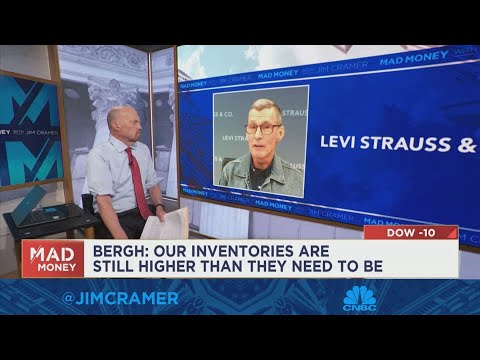
Levi Strauss — Investor Video Playlist



Industry Resources
| Consumer Discretionary Resources |
| Retail Dive |
| Business of Fashion (BoF) |
| WWD (Women's Wear Daily) |
| National Retail Federation (NRF) |
| McKinsey & Company - Consumer |
| Mintel Consumer Trends |
| Apparel, Accessories & Luxury Goods Resources |
| Vogue Business |
| Jing Daily |
| Luxury Daily |
External Quote Links
| Y Finance | Barrons |
| TradingView | Morningstar |
| SeekingAlpha | ValueLine |
| Motley Fool | Robinhood |
| CNBC | Etrade |
| MarketWatch | Unusual Whales |
| YCharts | Perplexity Finance |
| FinViz |
Prefer one of these to Trefis? Tell us why.