
Why U.S. Stocks Aren’t Crashing With Iran War

A major U.S. strike on Iran has ignited an open war, immediately threatening the Strait of Hormuz – the vital chokepoint for roughly a fifth of the world’s oil. Historically, a sudden shock to global energy supplies of this magnitude is the textbook trigger for a severe market downturn. During the 1973 Arab Oil Embargo, surging energy prices led to stagflation that wiped out approximately 48% of the S&P 500’s value. Similarly, when Iraq invaded Kuwait in 1990 and abruptly choked off 20% of the global oil supply, the S&P 500 plummeted roughly 20% into a bear market. Yet, in the immediate days following the February 28 strikes, U.S. markets have displayed truly unexpected resilience.
While oil price spikes and war fears caused sharp drops at the open, no massive sell-off materialized. Instead, buyers consistently stepped in, with the S&P 500 bouncing back to often close flat, slightly down, or even in positive territory. Why is Wall Street remaining so calm while a global energy artery is under fire? The answer lies in a paradigm-shifting change in America’s own financial landscape.
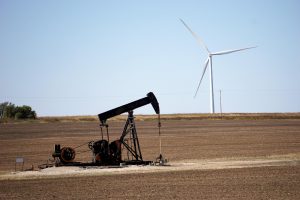
The U.S. is the world’s top producer of oil and natural gas in early 2026, averaging about 13.6 million barrels per day (mb/d). It exports more energy than it imports, creating a natural buffer when global supply shocks hit.
This energy advantage is creating a clear divergence in global markets. While South Korea’s KOSPI has fallen sharply—dropping as much as 12% in one day—and Japan’s Nikkei is down almost 6% over the last five trading days, the S&P 500 has stayed resilient. Roughly 70% to 80% of the oil and LNG destined for Japan and South Korea must pass through the Strait of Hormuz.
Global investors are likely shifting money away from Asia and Europe, which rely heavily on imported energy, and moving it into U.S. large-cap stocks. This “safe haven” move into U.S. equities is new in 2026. Many see the S&P 500 as a steadier option than U.S. Treasuries right now, since bond yields are pressured by inflation worries from higher oil prices. U.S. energy names such as Exxon, EOG and Chevron benefit from higher oil prices.
As a major swing producer, the U.S. can ramp up output if needed. A conflict in Iran can also support a stronger U.S. dollar, as global investors move capital toward the one large economy capable of sustaining its own energy supply during a disruption. That flow of capital is helping the S&P 500 pull away from deeper declines seen in Europe and Asia. Financial stocks such as JPMorgan, Goldman Sachs and Bank Of America could be tracked as higher rates, a stronger dollar flows, and energy-sector lending drive earnings.
Is the Market Completely Immune to the Fallout?
The energy independence does not make the U.S. immune to the conflict.
A full closure lasting more than 30 days could disrupt global supply chains badly, turning an energy shock into a potential manufacturing crisis. It’s not just oil. The strait handles one-third of the world’s urea (a key fertilizer). If it stays closed into spring 2026, that could drive up global food prices by summer harvest time through higher fertilizer costs. That kind of shock would likely push global inflation higher and make central banks slower to cut interest rates, hurting markets.
Overall, in the U.S., the main risk isn’t fuel shortages but a slowdown in global trade, which drives roughly 40% of S&P 500 revenues. If shipping lanes choke and supply chains tighten, the earnings hit could arrive even if America’s energy advantage holds.
Historical Playbook: Markets Bottom Before The Ceasefire
The most counter-intuitive trend for the 30-day outlook is that the S&P 500 rarely waits for a ceasefire to rally. The markets often experience short-lived pullbacks. Historically, the market prices in the worst-case scenario during the lead-up to war, meaning the actual commencement of hostilities, often acts as a “clearing event” for uncertainty. (see Market Crashes Compared)
- Iraq War (2003): The market didn’t wait for the invasion to begin on March 20. It bottomed out 7 days before the first strike. The uncertainty was priced in during the buildup, and the S&P 500 rallied 8% in the following month, eventually gaining 30% over the next year.
- Israel-Hamas (2023): Following the October 7 attack, the market dipped as escalation fears mounted. Yet, it bottomed in late October—roughly 2 to 3 weeks later—before soaring into the record-breaking bull market of 2024.
How Should You Protect Your Wealth From Geopolitical Shock?
While the S&P 500’s resilience is a testament to U.S. energy independence, the tail risks of global inflation and supply chain disruptions are very real. In an unpredictable geopolitical environment, letting panic dictate your trades or relying solely on a vulnerable mix of a few stocks leaves your capital exposed. This is where a professional wealth framework helps you stay disciplined.
Are you positioned to outperform over the next 1-3 years if the Gulf conflict drags on? When navigating supply chain threats and potential energy shocks, the data points heavily toward diversification. We analyzed if adding allocations like 10% commodities and 10% gold to a standard stock-bond portfolio boosts returns during inflationary periods. The results are clear: when geopolitical tensions rise, real assets matter.
Our wealth management partner builds rule-based robust portfolios to capture and protect wealth while leveraging the Trefis High Quality Portfolio, which has returned > 105% since inception.