
Would Greenland Say Yes For $2 Million Per Person?
Imagine the United States makes a direct offer to the people of Greenland. Every resident is promised $2 million in cash if Greenland votes to realign its future through independence followed by a formal security and funding compact with the U.S. The condition is strict. The offer is executed only if at least 60% of voters approve. If support comes in at 59%, nobody gets anything.
This matters because Greenland is not a sovereign nation. It is an autonomous territory within the Kingdom of Denmark. While Greenland controls its domestic affairs, Copenhagen retains authority over foreign policy and defense. Any change in status must therefore begin with Greenlanders themselves choosing independence through a referendum. There is no legal shortcut. Related Trump And Greenland: Three Outcomes.
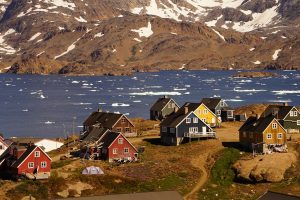
Image by Bernd Hildebrandt from Pixabay
Policy has become the dominant driver of markets. Government action, including foreign policy, tariffs, and immigration controls, is now moving assets and portfolios faster than earnings or fundamentals. From the tariff shocks of 2025 to attempts to influence the Fed and the arrest of Venezuela’s leader last month, political decisions increasingly dictate market outcomes. This shift is perhaps most visible in gold – Gold At $4,500 Doesn’t Feel Like a Top — And That’s the Problem.
Run the Numbers
At first glance, the $2 million number sounds extreme. But run the math.
Greenland’s population is about 57,000. At $2 million per person, the total cost is a little over $110 billion.
Sure, that’s not small money. But it is also not extraordinary in the context of the U.S. capital markets and state power. Nvidia or Alphabet routinely see their market capitalizations move by more than $100 billion on ordinary trading days. The U.S. defense budget exceeds $800 billion annually. Washington has spent trillions on wars, stimulus programs, and bailouts that delivered far less strategic clarity than this would.
The real question is not whether the $110 billion is affordable. It is what the United States gets in return, and what Greenlanders give up.
The U.S. Perspective: Strategic Value
From Washington’s perspective, the value is clear. Greenland provides unmatched strategic depth in the Arctic, permanent control over a critical early warning and missile defense node, leverage over emerging polar trade routes, and long term access to rare earth and critical mineral deposits essential to advanced weapons systems, EVs, and energy infrastructure. Unlike tariffs, gray zone pressure, or diplomatic coercion, a supermajority referendum backed by direct economic consent would deliver something far more valuable than leverage. It delivers legitimacy.
This would not be a territorial purchase in the traditional sense. It would be a one-time transfer of wealth in exchange for a binding political decision made by the people who live there.
The Greenlander Perspective: Wealth and Choice
For Greenlanders, the calculus is more personal and more complex.
Two million dollars per person is not just compensation. It is generational wealth. It would permanently eliminate dependence on Danish block grants, insulate households from economic shocks, and give the island the financial capacity to set its own priorities. Even if structured over time or partially taxed, the payout would fundamentally alter Greenland’s economic trajectory.
The 60% threshold is central. It ensures this is not a narrow outcome driven by slim margins or elite pressure. A supermajority requirement means the deal only happens if there is a clear and durable consensus. If Greenlanders are genuinely divided, nothing changes. Denmark remains the backstop. The United States walks away empty handed. That asymmetry protects the voters.
Is it worth it?
That answer depends on Greenlanders. There is no objective answer. What matters is this. Greenland does not belong to Denmark. It does not belong to the United States. It does not belong to NATO, China, or global markets.
It belongs to the people who live there.
If Greenland’s future is to change, it should not be shaped by tariffs, threats, or proxy pressure. It should be decided by Greenlanders, voting freely, with full knowledge of the tradeoffs, and with the economic means to choose their future without fear.
Global events impact global markets. The Trefis High Quality (HQ) Portfolio, with a collection of 30 stocks, has a track record of comfortably outperforming its benchmark that includes all three – the S&P 500, S&P mid-cap, and Russell 2000 indices. Why is that? As a group, HQ Portfolio stocks provided better returns with less risk versus the benchmark index; less of a roller-coaster ride, as evident in HQ Portfolio performance metrics.
Invest with Trefis Market-Beating Portfolios
See all Trefis Price Estimates