
Oracle Is Burning Billions: Is IBM Stock The Smarter Cloud Play?

Oracle’s (ORCL) stock is up by over 120% since the beginning of 2023. That is great for Oracle. But wait a minute, IBM’s (IBM) stock is up a comparatively lower 91% during the same period. Hard to believe, but Oracle’s stock appreciation is well ahead of IBM’s stock. This is despite the stark contrast in how both companies generate cash. Over the trailing twelve months, IBM consistently generated massive free cash flow, pulling in a highly robust $12.2 billion. Oracle, over its most recently reported twelve-month period, recorded a staggering negative $23.7 billion in free cash flow as infrastructure spending wiped out its operating cash. Does that make sense? We do not think it does, and believe IBM presents a compelling valuation at current levels.
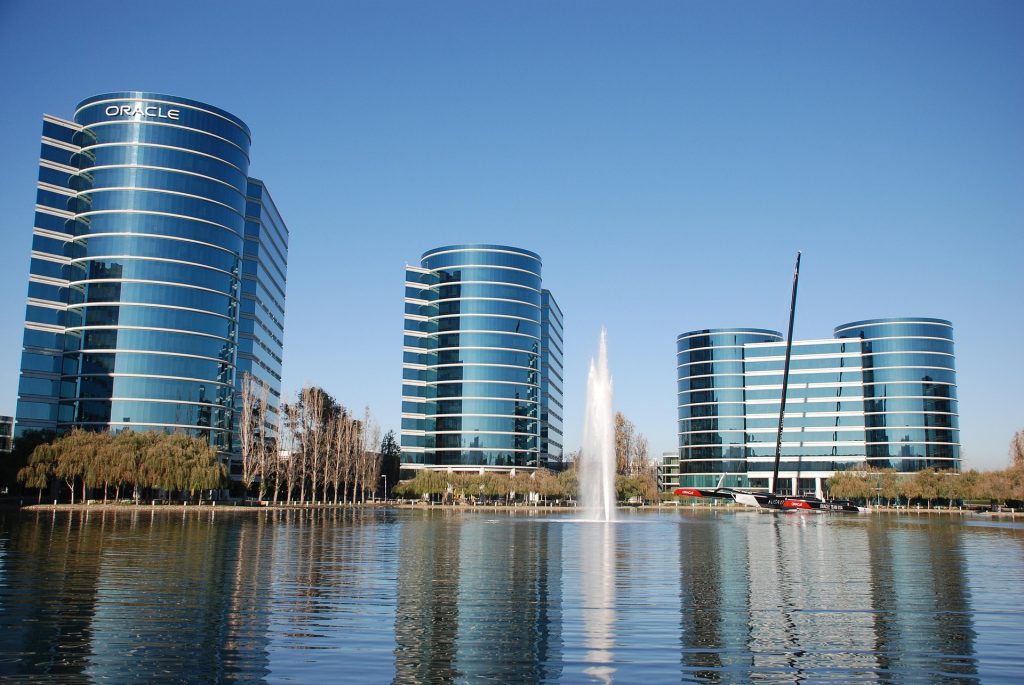
Image by JJ from Pixabay
The Cost Of Scaling: Oracle’s CapEx vs. IBM’s Free Cash Flow
Let us look at the core business prospects a bit more closely. Oracle has massive exposure to cloud services, bringing in $9.9 billion in total cloud revenue in its most recent quarter. Within this, its Cloud Infrastructure segment grew 93% to hit $5.8 billion. However, this growth requires monumental capital expenditures. To sustain this momentum, Oracle recently announced it expects to raise approximately $40 billion through a combination of debt and equity financing to fund its physical data center buildouts for AI workloads. This highly capital-intensive approach creates structural exposure for Oracle if broader enterprise spending on AI hardware infrastructure were to cool down, or if macroeconomic liquidity tightens, an outcome that could mirror shifts in digital asset markets where investors are weighing if Kevin Warsh will trigger a Bitcoin selloff.
Operational Efficiency: IBM’s Enterprise Utility Model
On the flip side, businesses of all stripes are heavily focused on operational efficiency right now. Because of this, IBM’s enterprise software services, which companies rely on to maintain and scale their core digital infrastructure, hold up much stronger than the broader market realizes. In its latest quarter, IBM reported $15.92 billion in total revenue, driven by an 8% growth in its software division and a robust 48% surge in its Z mainframe infrastructure segment. This sustained software and infrastructure momentum is precisely what we detail in our separate analysis: Is the Turnaround at IBM Stock Finally Here to Stay?
- The Number That Puts Oracle Stock To The Test
- Oracle Stock’s High Stakes Gamble
- The Price of Ambition: Is Oracle Stock’s Dip a Warning or a Welcome Mat?
- Oracle Just Showed Wall Street the AI Boom, Then Handed It The Bill
- Did The Market Panic On Oracle’s Best Signal?
- How Much Upside Can ORCL Stock Deliver?
The Shift From Infrastructure To Software Workflows
Every major technology wave begins with heavy infrastructure buildouts, but value ultimately concentrates on the software workflows where daily businesses actually operate. While Oracle looks formidable with its rapid infrastructure scale, IBM appears highly resilient with its heavy focus on hybrid cloud and AI platforms, along with Red Hat enterprise integration and data security applications that serve as essential enterprise “utilities.”
IBM is successfully capturing this workflow value, expanding its operating pre-tax margins by 140 basis points in a single quarter. IBM’s robust strategy focuses heavily on integrating AI into existing corporate data environments without requiring massive hardware overhauls.
Valuation Floor
With Oracle burning billions in free cash flow to build out physical data centers, it is difficult to justify the massive valuation gap when compared to IBM’s steady, cash-rich hybrid cloud profitability. Oracle’s valuation remains noticeably higher with a forward P/E of approximately 23x based on its current market price and fiscal 2027 consensus earnings estimates, while IBM trades at a more attractive 19.6x forward multiple for the same period.
Furthermore, IBM offers a highly compelling dividend yield of 2.5%, supported by an impressive 31-year streak of consecutive dividend increases. This provides a tangible, predictable return to shareholders regardless of broader macroeconomic market volatility, an environment where policy shifts are raising questions about whether the Fed will kill the S&P 500’s relief rally. Oracle simply cannot match this reliable payout with its expected dividend yield of roughly 1.0%.
In fact, with an expanding presence across enterprise AI, pushing total IBM free cash flow to its highest level in a decade, and establishing massive structural AI integrations across major global corporations, IBM holds a distinct structural advantage. We believe that while Oracle’s offerings make significant money, IBM’s deeply entrenched enterprise dominance and superior valuation multiple provide a promising floor to our belief that IBM is undervalued versus Oracle.
IBM’s structural enterprise advantages and AI momentum make it a compelling pick over Oracle, but picking the right tech winners still carries risk. If you want to deploy high-conviction, data-backed strategies across your entire portfolio without managing the day-to-day execution yourself, we can help. Our Trefis High Quality Portfolio (HQ) strategy has outperformed its market benchmark (a combination of the S&P 500, S&P mid-cap, and Russell 2000) to produce over 105% cumulative returns since inception.