
Is Microsoft Stock A Trap Or A Missed Opportunity?

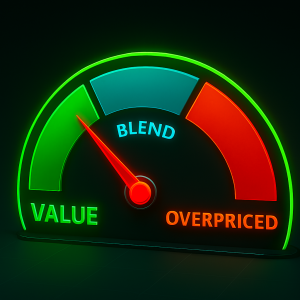
Microsoft (MSFT) stock is at an interesting point right now. It is trading cheap, and if you bet on it, you are betting on a company that’s growing reasonably, is sustaining good cash flow and margin, has a low-debt capital structure, and is relatively cheaply valued. But is that enough?
Why Bet On MSFT Now?
The investment thesis is centered on Microsoft’s unique ability to monetize generative AI by leveraging its two primary strategic assets: its exclusive cloud partnership with OpenAI and its massive, embedded enterprise distribution channel via Microsoft 365. This allows Microsoft to both capture new AI workloads in Azure and drive significant Average Revenue Per User (ARPU) uplift from its existing 450 million+ commercial seats.
- Azure revenue growth came in at +39% YoY in Q2 FY26, driven by AI services.
- Commercial Remaining Performance Obligation (RPO) surged 110% YoY to $625B, indicating a massive pipeline of future revenue.
- The addressable market for the Copilot upsell is over 450 million commercial paid seats, representing a substantial, high-margin revenue opportunity.
How Do The Fundamentals Look?
- Revenue Growth: 16.7% LTM and 14.4% last 3-year average.
- Operating Margin: Nearly 45.3% 3-year average operating margin.
- No Margin Shock: Microsoft has improved in the last 12 months.
- Modest Valuation: Despite these fundamentals, MSFT stock trades at a PE multiple of 23.3
Below is a quick comparison of MSFT fundamentals with S&P medians.
| MSFT | S&P Median | |
|---|---|---|
| Sector | Information Technology | – |
| Industry | Systems Software | – |
| PE Ratio | 23.3 | 24.0 |
|
|
||
| LTM* Revenue Growth | 16.7% | 6.8% |
| 3Y Average Annual Revenue Growth | 14.4% | 5.5% |
| LTM Operating Margin Change | 1.7% | 0.2% |
|
|
||
| LTM* Operating Margin | 46.7% | 18.6% |
| 3Y Average Operating Margin | 45.3% | 18.1% |
| LTM* Free Cash Flow Margin | 25.3% | 14.2% |
*LTM: Last Twelve Months
The Bear View & The Current Investment Debate
The current investment debate on MSFT is centered around the following: Bulls see massive AI capex as necessary to capture a generational opportunity, while bears fear diminishing returns, margin pressure, and that demand won’t justify the $100 billion+ annual spend.
The prevailing sentiment is neutral. The massive AI-driven backlog is being directly offset by concerns around the immense capex spend and slight deceleration in core Azure growth. Investors are weighing the long-term AI prize against near-term margin pressure and execution risk.
| Bull View | Bear View |
|---|---|
| Demand is supply-constrained. The $625B RPO and growth in AI services prove that every dollar spent on GPUs will be monetized, securing a decade of growth. | Massive capex ($37.5B in Q2), slight Azure deceleration (40% to 39%), and high RPO concentration in OpenAI signal unsustainable, inefficient growth with significant execution risk. |
You can evaluate more on which view to bet on by visiting MSFT Investment Highlights & Full Analysis
MSFT Is Just One of Several Such Stocks
Not ready to act on MSFT? Consider these alternatives:
These stocks have strong operating margins and are trading meaningfully below their 1Y high with a P/E below S&P 500 median and P/S below the historical average.
A portfolio that was built starting 12/31/2016 with stocks that fulfill the criteria above would have resulted in average 6-month and 12-month forward returns of 12.7% and 25.8% respectively, with a win rate (percentage of picks returning positive) of above 70%.
Portfolios Are The Smarter Way To Invest
Stocks soar and sink – the key is staying invested. A balanced portfolio helps you ride market volatility, boosts gains, and reduces single stock risk.
Why settle for average market returns? The Trefis High Quality (HQ) Portfolio invests in a diverse group of 30 stocks that have collectively delivered stronger upside with reduced volatility compared to the broader indices. Discover the methodology behind these smoother, higher returns by checking the HQ Portfolio performance data.