
Should You Buy Microsoft Stock?

Microsoft stock (NASDAQ: MSFT) is currently trading around $470, which appears expensive relative to its fundamentals. While the company demonstrates strong operational performance and financial health, its valuation metrics suggest that investors should wait for a pullback before buying.
That being said, if you seek an upside with less volatility than holding an individual stock like MSFT, consider the High Quality Portfolio. It has comfortably outperformed its benchmark—a combination of the S&P 500, Russell, and S&P MidCap indexes—and has achieved returns exceeding 105% since its inception. Why is that? As a group, HQ Portfolio stocks provided better returns with less risk versus the benchmark index; less of a roller-coaster ride, as evident in HQ Portfolio performance metrics.
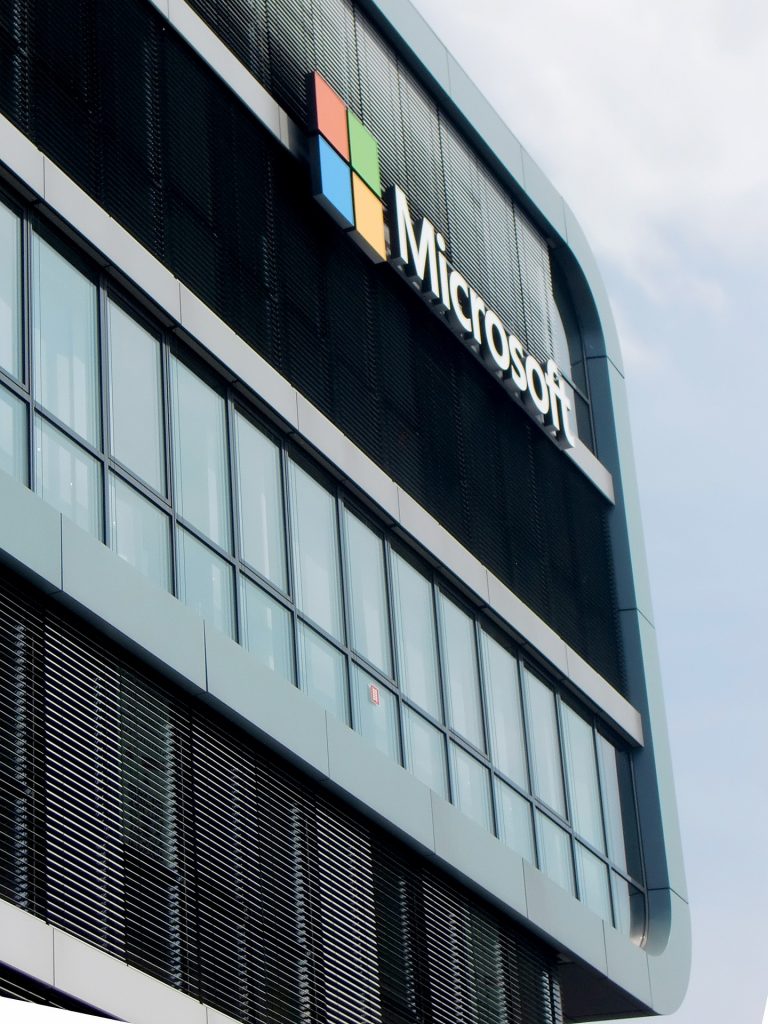
Image by efes from Pixabay
Valuation Analysis
Microsoft trades at a significant premium compared to the S&P 500:
- Price-to-Sales ratio: 12.0x (vs. 3.3x for S&P 500)
- Price-to-Free Cash Flow ratio: 45.1x (vs. 20.8x for S&P 500)
- Price-to-Earnings ratio: 33.5x (vs. 23.7x for S&P 500)
Look at Microsoft’s Valuation Ratios dashboard for more details.
Strong Revenue Growth
The company has delivered impressive revenue expansion:
- 3-year average growth rate of 13.2% (vs. 5.6% for S&P 500)
- Last 12 months: revenues grew 15.6% from $254B to $294B (vs. 6.2% for S&P 500)
- Most recent quarter: 18.4% growth to $78B (vs. 7.3% for S&P 500)
Exceptional Profitability
Microsoft’s profit margins significantly exceed market averages:
- Operating margin of 46.3% on $136B operating income (vs. 18.8% for S&P 500)
- Operating cash flow margin of 50.0% on $147B OCF (vs. 20.5% for S&P 500)
- Net income margin of 35.7% on $105B net income (vs. 13.1% for S&P 500)
Solid Financial Position
The balance sheet reflects financial strength:
- Debt-to-Equity ratio of just 1.7% with $61B in debt against $3.5T market cap (vs. 20.4% for S&P 500)
- Cash-to-Assets ratio of 16.0% with $102B cash of $636B total assets (vs. 7.2% for S&P 500)
Historical Downturn Performance
Microsoft has shown moderate resilience during market crises:
- 2022 Inflation Shock: Declined 37.6% (peak to trough) vs. 25.4% for S&P 500; recovered by June 2023 and later reached $542.07 in October 2025
- 2020 COVID Pandemic: Declined 28.2% vs. 33.9% for S&P 500; recovered by June 2020
- 2008 Financial Crisis: Declined 59.1% vs. 56.8% for S&P 500; took until November 2013 to fully recover
Our dashboard on How Low Can Microsoft Stock Really Go offers more details.
Investment Conclusion
Microsoft scores as follows across key metrics:
- Growth: Strong
- Profitability: Very Strong
- Financial Stability: Very Strong
- Downturn Resilience: Moderate
- Overall: Strong
Despite these strong fundamentals, the stock’s elevated valuation limits near-term upside potential. Surely, we could be wrong in our assessment, and investors may continue to pay a higher premium for MSFT stock. In fact, some factors could drive the stock even higher this year, as discussed in our separate analysis on – What To Expect From Microsoft Stock? That said, purely from a valuation perspective, MSFT stock looks expensive at current levels.
Now, investors seeking exposure to quality companies may want to wait for a more attractive entry point or consider diversified alternatives like the Trefis portfolios. Consider the Trefis Reinforced Value (RV) Portfolio, which has outperformed its all-cap stocks benchmark (combination of the S&P 500, S&P mid-cap, and Russell 2000 benchmark indices) to produce strong returns for investors. Why is that? The quarterly rebalanced mix of large-, mid-, and small-cap RV Portfolio stocks provided a responsive way to make the most of upbeat market conditions while limiting losses when markets head south, as detailed in RV Portfolio performance metrics.
Invest with Trefis Market-Beating Portfolios
See all Trefis Price Estimates