
What’s Happening With IREN Stock?
IREN stock (NASDAQ: IREN), one of the largest publicly traded Bitcoin miners which pivoted toward AI cloud compute, has been one of 2025’s hottest stocks, soaring over four fold year-to-date to around $51. IREN has a quite a bit going for it, including solid growth, cost advantages, and a large stock of high-end GPUs which are becoming crucial in the AI age. So where does the stock go from here?
Stock picking can fail no matter how good the strategy is. High Quality Portfolio turns single-stock insights into a robust market beating portfolio strategy.
Competitive Advantages: Ownership of Land, Power, and Data Centers
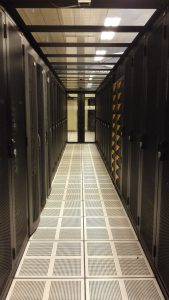
Based in Australia, IREN operates as a vertically integrated data center company with facilities in Canada and Texas. Unlike many rivals that lease power or infrastructure, IREN owns its land, energy sources, and data centers outright. This complete ownership delivers long-term cost control, greater scalability, and significantly lower execution risk compared to competitors dependent on external partners. The company controls approximately 3 GW of secured low-cost power capacity and maintains a substantial land bank for future expansion.
This combination of owned power and land is a critical differentiator—some newly built data centers equipped with the latest GPUs sit idle or severely underutilized simply because they lack sufficient power. IREN’s secured energy and real estate eliminate this bottleneck, giving it a structural edge in both Bitcoin mining and the fast-growing AI cloud infrastructure market. Energy costs are critical in both Bitcoin mining and AI cloud computing. IREN enjoys some of the lowest power costs among peers at roughly U.S. $0.033 per kWh, with all operations powered entirely by renewable energy from British Columbia hydropower and wind-heavy Texas.
Growing Interest In Infrastructure As A Service
There has been a growing trend toward infrastructure as a service (IAAS), as companies look for scalable data centers to meet the growing demand for artificial intelligence compute capacity. In October, Microsoft and IREN announced a $9.7 billion partnership which runs through 2031 and gives Microsoft access to Nvidia’s G8300 GPUs. These deals could become more prevalent going forward for a couple of reasons. Investors in big tech companies are getting concerned about returns on investments on the massive capex these companies have been carrying out, considering that building data centers from the ground up is extremely capital-intensive and has long lead times.
Via IaaS deals, companies will be able to add AI-ready compute capacity quickly and efficiently. By shifting to IaaS deals, companies avoid tying up balance-sheet capital in fixed assets and instead treat compute as an operating expense, preserving cash for share buybacks, R&D, or dividends while still meeting explosive AI demand. Second, IaaS enables rapid, flexible scaling. Partners like IREN already own low-cost power, land, and liquid-cooled facilities, so they can potentially deploy tens of thousands of GPUs in months rather than years. This is valuable in a fast growing, unpredictable market.
High Growth Justifies Valuation?
The stock currently trades at roughly 57x forward earnings and about 14x forward sales. These multiples reflect IREN’s robust growth prospects, but they also underscore that investors are paying a premium for future expansion. For more details see: IREN Valuation Ratios
Growth has accelerated dramatically. Revenues rose from just $60 million in FY’22 to around $501 million in fiscal FY’25. Q1 FY26 results, reported in October 2025, exceeded expectations with revenue surging 355 percent year-over-year to $240.3 million and net income reaching $384.6 million, driven by some gains on financial instruments. Consensus estimates project more than 125 percent growth over fiscal 2026 and about 95 percent in 2027, taking sales to over $2.3 billion by FY’27. This level of acceleration provides important support for the elevated valuation.
This growth is being supported by a quick scale up of the company’s GPU infrastructure. As of Q1 FY26, the company had roughly 23,000 GPUs in operation and plans to scale this fleet to approximately 140,000 GPUs by the end of 2026 as part of its aggressive AI Cloud growth strategy. The company also has ample power capacity to feed its data centers. As of the last fiscal year, its data centers required about 810 MW of power, versus its control of about 3 GW (3,000 MW) of supply.
The combination of GPU buildup and secured power capacity positions IREN to continue ramping cloud compute without running into supply constraints. The company ended the quarter with $1.8 billion in cash and equivalents, bolstered by a $1 billion zero-coupon convertible note issued last month and $400 million in GPU financing. This strong capital position provides flexibility as the company executes on its large-scale expansion.
Management now guides to $3.4 billion in AI Cloud annualized recurring revenue by the end of 2026 – a significant ramp from $500 million plus in run-rate cloud revenues seen in Q1 FY26.
Despite many strengths, risks remain. The sector is highly competitive, with established cloud providers and other crypto miners vying for market share. Execution risks are also notable. While IREN has big contracts with big names and a large power portfolio, there’s a lot more to building out big data centers, including navigating construction delays, obtaining local permits, ensuring sufficient cooling capacity, and integrating thousands of GPUs into stable, high-availability clusters.
Moreover, the generative AI market may be in a “fear-of-missing-out” phase, where demand for compute is temporarily elevated. Over time, as investors in AI companies increasingly prioritize returns on investment and cost efficiencies, compute demand growth could level off, potentially putting pressure on margins and limiting upside for companies like IREN.
The Trefis High Quality (HQ) Portfolio, with a collection of 30 stocks, has a track record of comfortably outperforming its benchmark that includes all 3 – the S&P 500, S&P mid-cap, and Russell 2000 indices. Why is that? As a group, HQ Portfolio stocks provided better returns with less risk versus the benchmark index; less of a roller-coaster ride, as evident in HQ Portfolio performance metrics.
Invest with Trefis Market-Beating Portfolios
See all Trefis Price Estimates