
Where Is GE Vernova Stock Headed?
GE Vernova (NYSE: GEV), the newly independent energy and electrification giant spun out of General Electric, has quickly become one of the market’s hottest industrial stories. Shares now trade around $640, up sharply since the April 2024 listing, as investors pour into plays tied to the global energy transition and AI-driven power demand. But with valuations running hot, many are asking: can GE Vernova still power higher—or is it already fully priced?
But if you seek an upside with less volatility than holding an individual stock, consider the High Quality Portfolio. It has comfortably outperformed its benchmark—a combination of the S&P 500, Russell, and S&P MidCap indexes—and has achieved returns exceeding 105% since its inception. As a group, HQ Portfolio stocks provided better returns with less risk versus the benchmark index; less of a roller-coaster ride, as evident in HQ Portfolio performance metrics. Separately see, Can PayPal Stock Fall To $50?
Revenue Growth & Valuation Setup
For GE Vernova’s share price to approach the $1,000 mark, investors would need to see a combination of strong revenue growth, meaningful margin expansion, and sustained confidence in its long-term earnings power. The company is expected to generate about $37 billion in revenue in 2025, but if management executes on its strategy across gas power, grid, and electrification, total revenue could climb toward $55–60 billion by 2028. Assuming operating margins improve into the mid-teens, that would translate to net income of roughly $6–7 billion.
- Get Paid 8.7% to Buy WYNN at a 30% Discount – Here’s How
- What Could Go Wrong With PepsiCo Stock?
- Cash Rich, Low Price – Coursera Stock to Break Out?
- Momentum Meets Value: Sterling Infrastructure Stock Could Be A Good Buy
- Adobe Stock Pullback: A Chance to Ride the Uptrend
- Is Lululemon Athletica Stock Poised for a Rally?
If investors continue valuing the business as a high-growth energy transition leader rather than a traditional industrial name, a forward P/E multiple of 50×—similar to today’s premium valuation—would imply an equity value near $900–1,000 per share.
In other words, reaching $1,000 isn’t impossible, but it assumes that GE Vernova sustains rapid top-line growth, lifts profitability toward best-in-class levels, and holds on to its growth-stock valuation multiple. Any slip in execution or compression of that multiple would make the target far harder to achieve.
Key Growth Drivers
- Global Electrification Boom – Governments and corporations worldwide are investing heavily in grid resilience, renewables, and transmission infrastructure. GEV’s scale and technology give it a front-row seat to this multi-decade build out.
- AI & Data Center Power Demand – The surge in hyperscale data centers has accelerated demand for stable, high-efficiency power systems—an area where GE Vernova’s gas turbines and grid balancing solutions play a crucial role.
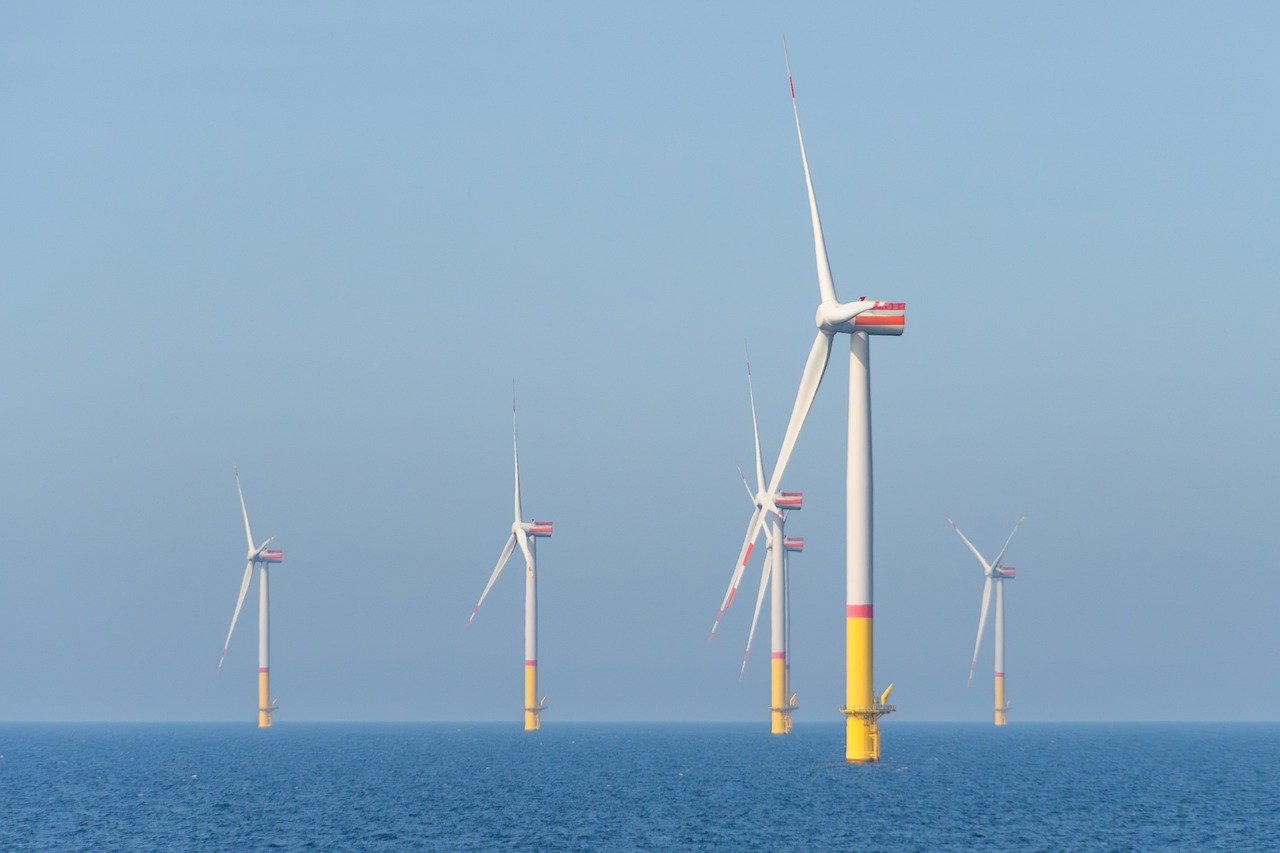
- Renewables Turnaround – After years of losses, the onshore wind business is finally improving through pricing discipline and better cost control, with offshore wind potentially adding another growth leg by 2027.
- Margin Expansion – Operational streamlining, project discipline, and supply-chain normalization are driving meaningful improvement in profitability and cash generation.
- Policy Tailwinds – The U.S. Inflation Reduction Act and European green transition programs provide visibility for renewable and grid investment through the late 2020s.
But the Risks Are Real
- Valuation Stretch: With a forward P/E near 50× and EV/EBITDA around 90×, GEV is priced for perfection. Any earnings miss, order delay, or margin shortfall could spark a sharp pullback.
- Execution Risk: The company must deliver consistent margin expansion across wind, grid, and gas divisions—no small feat given project complexity and cost volatility.
- Capital Intensity: Renewables and grid projects demand significant upfront investment. Delays or overruns could pressure free cash flow.
- Cyclicality & Rates: Higher interest rates and slowing industrial spending could weigh on infrastructure orders and earnings growth.
- Competitive Landscape: Siemens Energy, Hitachi Energy, and others are ramping up offerings in the same electrification segments, potentially squeezing margins and market share.
The Verdict
At $640 per share, GE Vernova is priced like an energy transformation leader—not a turnaround story. The company’s fundamentals are improving, and its exposure to electrification, grid modernization, and AI-driven power demand makes the long-term story compelling.
If management can execute on its growth plan—then valuations in the $900–1,000 range are mathematically possible. But with forward multiples already near 50× earnings and 90× EV/EBITDA, the margin for error is razor-thin.
For investors confident in GE Vernova’s execution and the global power demand cycle, the stock still offers meaningful long-term potential. For others, it may be time to wait for a pullback before recharging.
Now, we apply a risk assessment framework while constructing the Trefis High Quality (HQ) Portfolio, which, with a collection of 30 stocks, has a track record of comfortably outperforming the S&P 500 over the last 4-year period —and has achieved returns exceeding 105% since its inception. . Why is that? As a group, HQ Portfolio stocks provided better returns with less risk versus the benchmark index; less of a roller-coaster ride as evident in HQ Portfolio performance metrics.
Invest with Trefis Market-Beating Portfolios
See all Trefis Price Estimates