
Why Ericsson Stock Dropped Despite Beating Earnings Expectations?
Ericsson stock (NASDAQ: ERIC) fell nearly 10% over the past five trading days, underperforming the broader market despite delivering a stronger-than-expected Q2 earnings report. The drop likely reflects a mix of macroeconomic concerns, regional weakness, and cautious guidance, which overshadowed solid margin gains and a notable swing back to profitability. That said, if you want upside with a smoother ride than an individual stock, consider the High Quality portfolio, which has outperformed the S&P and clocked >91% returns since inception.
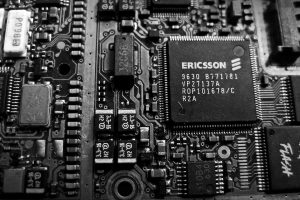
Image by Kurniadi Ilham from Pixabay
Earnings Beat, But Revenue Underwhelms
Ericsson reported an adjusted operating profit of SEK 7.0 billion (~$728 million), beating consensus estimates of SEK 6.1 billion and marking a strong reversal from a SEK 11.9 billion loss a year earlier. Gross margin expanded to 47.5%, and EBITDA margin hit a three-year high of 13.2%, signaling improving operational efficiency.
However, revenue declined 6% year-over-year to SEK 56.1 billion, hurt by a SEK 4.7 billion currency headwind. Organic growth came in at just 2%, driven by modest gains in North America. Meanwhile, India and Southeast Asia saw sharp declines, as telecom operators like Reliance Jio and Bharti Airtel pulled back on spending following an aggressive 5G rollout.
Tariffs and Guidance Add Pressure
Despite efforts to localize U.S. production, tariffs continue to pressure margins, and management warned they may worsen. Q3 guidance disappointed, reflecting typical seasonality but no acceleration in demand, while the unchanged full-year outlook likely reinforced investor skepticism. For Q3, it expects Networks sales to lag seasonal norms, while Cloud Software and Services should align with historical trends. Gross margin is projected at 48%–50%.
Valuation
The stock trades at a trailing P/E of roughly 14.5x, well below the S&P 500’s 26.9x, and a forward P/E of 15–16x, slightly above its 10-year average of around 13x, but still far under the market benchmark. Its price-to-sales ratio sits at 1.0x, in line with its historical range of 0.9x to 1.2x, while its price-to-free cash flow is just 0.6, compared to 20.9 for the S&P 500. While the modest premium on forward earnings may reflect expectations for margin expansion, the overall valuation profile suggests the stock remains inexpensive, particularly if Ericsson can deliver improved profitability despite near-term headwinds like weak growth and tariff uncertainty.
While Ericsson’s operational turnaround is encouraging, sustained investor enthusiasm will likely depend on: clear growth in underperforming regions, stabilization of tariff headwinds, and margin expansion beyond cost cuts.
Invest with Trefis Market-Beating Portfolios