
Westport Fuel Systems (WPRT)
Market Price (7/26/2026): $1.92 | Market Cap: $33.4 MilSector: Consumer Discretionary | Industry: Automotive Parts & Equipment
Westport Fuel Systems (WPRT)
Market Price (7/26/2026): $1.92Market Cap: $33.4 MilSector: Consumer DiscretionaryIndustry: Automotive Parts & Equipment
Investment Highlights Why It Matters Detailed financial logic regarding cash flow yields vs trend-riding momentum.
Cash is significant % of market capNet D/ENet Debt/Equity. Debt net of cash. Negative indicates net cash. Equity is taken as the Market Capitalization is -62% Megatrend and thematic driversMegatrends include Hydrogen Economy, and Electrification of Everything. Themes include Fuel Cell Technology, Hydrogen Infrastructure, Show more. | Weak multi-year price returns2Y Excs Rtn is -102%, 3Y Excs Rtn is -146% | Not profitable at operating income levelOp Inc LTMOperating Income, Last Twelve Months is -20 Mil, Op Mgn LTMOperating Margin = Operating Income / Revenue Reflects profitability before taxes and before impact of capital structure (interest payments). is -109% Weak revenue growthRev Chg LTMRevenue Change % Last Twelve Months (LTM) is -46%, Rev Chg 3Y AvgRevenue Change % averaged over trailing 3 years is -57%, Rev Chg QQuarterly Revenue Change % is -69% Not cash flow generativeCFO/Rev LTMCash Flow from Operations / Revenue (Sales), Last Twelve Months (LTM) is -49%, FCF/Rev LTMFree Cash Flow / Revenue (Sales), Last Twelve Months (LTM) is -63% Yield minus risk free rate is negativeERPEquity Risk Premium (ERP) = Total Yield - Risk Free Rate, Reflects the premium above risk free assets offered by the investment. is -199% Key risksWPRT key risks include [1] the failure to achieve profitability through its critical strategic pivot to heavy-duty HPDI technology and the Cespira joint venture, Show more. |
| Cash is significant % of market capNet D/ENet Debt/Equity. Debt net of cash. Negative indicates net cash. Equity is taken as the Market Capitalization is -62% |
| Megatrend and thematic driversMegatrends include Hydrogen Economy, and Electrification of Everything. Themes include Fuel Cell Technology, Hydrogen Infrastructure, Show more. |
| Weak multi-year price returns2Y Excs Rtn is -102%, 3Y Excs Rtn is -146% |
| Not profitable at operating income levelOp Inc LTMOperating Income, Last Twelve Months is -20 Mil, Op Mgn LTMOperating Margin = Operating Income / Revenue Reflects profitability before taxes and before impact of capital structure (interest payments). is -109% |
| Weak revenue growthRev Chg LTMRevenue Change % Last Twelve Months (LTM) is -46%, Rev Chg 3Y AvgRevenue Change % averaged over trailing 3 years is -57%, Rev Chg QQuarterly Revenue Change % is -69% |
| Not cash flow generativeCFO/Rev LTMCash Flow from Operations / Revenue (Sales), Last Twelve Months (LTM) is -49%, FCF/Rev LTMFree Cash Flow / Revenue (Sales), Last Twelve Months (LTM) is -63% |
| Yield minus risk free rate is negativeERPEquity Risk Premium (ERP) = Total Yield - Risk Free Rate, Reflects the premium above risk free assets offered by the investment. is -199% |
| Key risksWPRT key risks include [1] the failure to achieve profitability through its critical strategic pivot to heavy-duty HPDI technology and the Cespira joint venture, Show more. |
Qualitative Assessment
AI Analysis | Feedback
Westport Fuel Systems (WPRT) stock has gained about 5% since 3/31/2026 because of the following key factors:
1. Strategic Shift Towards Advanced Clean Fuel Technologies.
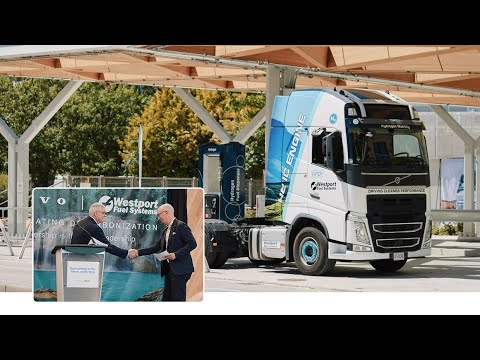
Westport Fuel Systems has advanced its strategic pivot by planning the divestiture of its Light-Duty business to concentrate on high-pressure direct injection (HPDI) for LNG/CNG and hydrogen solutions. A key development was the agreement signed on June 18, 2026, by Cespira, the joint venture between Westport and Volvo Group, to complete hydrogen-fueled engine development, which was a catalyst for positive stock movement.
2. Improved Financial Health in Fiscal Q1 2026.
The company demonstrated enhanced financial stability by reporting a 60.5% year-over-year improvement in operating cash flow and reducing its total debt to $1.9 million from $2.9 million at the end of fiscal year 2025. These results for fiscal Q1 2026, which ended March 31, 2026, were reported on May 14, 2026.
Show more
Westport Fuel Systems (WPRT) stock has gained about 5% since 3/31/2026 because of the following key factors:
1. Strategic Shift Towards Advanced Clean Fuel Technologies.
Westport Fuel Systems has advanced its strategic pivot by planning the divestiture of its Light-Duty business to concentrate on high-pressure direct injection (HPDI) for LNG/CNG and hydrogen solutions. A key development was the agreement signed on June 18, 2026, by Cespira, the joint venture between Westport and Volvo Group, to complete hydrogen-fueled engine development, which was a catalyst for positive stock movement.
2. Improved Financial Health in Fiscal Q1 2026.
The company demonstrated enhanced financial stability by reporting a 60.5% year-over-year improvement in operating cash flow and reducing its total debt to $1.9 million from $2.9 million at the end of fiscal year 2025. These results for fiscal Q1 2026, which ended March 31, 2026, were reported on May 14, 2026.
3. Positive Analyst Sentiment and Price Targets.
Analysts maintained a generally bullish outlook on Westport Fuel Systems, with a consensus "Buy" or "Strong Buy" rating. As of July 13, 2026, the median 12-month price target stood at $5.50, implying a substantial 164.4% upside from the current trading price.
4. Successful Capital Raise.
On June 23, 2026, Westport successfully closed a US$10 million registered direct offering and concurrent private placement. These gross proceeds are intended to bolster working capital and support general corporate purposes, providing essential funding for ongoing operations and strategic initiatives.
Show less
Stock Movement Drivers
Fundamental Drivers
The 5.2% change in WPRT stock from 3/31/2026 to 7/25/2026 was primarily driven by a 65.7% change in the company's P/S Multiple.| (LTM values as of) | 3312026 | 7252026 | Change |
|---|---|---|---|
| Stock Price ($) | 1.82 | 1.92 | 5.2% |
| Change Contribution By: | |||
| Total Revenues ($ Mil) | 29 | 18 | -36.4% |
| P/S Multiple | 1.1 | 1.8 | 65.7% |
| Shares Outstanding (Mil) | 17 | 17 | -0.3% |
| Cumulative Contribution | 5.2% |
Market Drivers
3/31/2026 to 7/25/2026| Return | Correlation | |
|---|---|---|
| WPRT | 5.2% | |
| Market (SPY) | 13.6% | 19.9% |
| Sector (XLY) | 0.4% | 25.6% |
Fundamental Drivers
The 22.0% change in WPRT stock from 12/31/2025 to 7/25/2026 was primarily driven by a 92.1% change in the company's P/S Multiple.| (LTM values as of) | 12312025 | 7252026 | Change |
|---|---|---|---|
| Stock Price ($) | 1.57 | 1.92 | 22.0% |
| Change Contribution By: | |||
| Total Revenues ($ Mil) | 29 | 18 | -36.4% |
| P/S Multiple | 0.9 | 1.8 | 92.1% |
| Shares Outstanding (Mil) | 17 | 17 | -0.3% |
| Cumulative Contribution | 22.0% |
Market Drivers
12/31/2025 to 7/25/2026| Return | Correlation | |
|---|---|---|
| WPRT | 22.0% | |
| Market (SPY) | 8.7% | 15.9% |
| Sector (XLY) | -8.2% | 18.8% |
Fundamental Drivers
The -39.0% change in WPRT stock from 6/30/2025 to 7/25/2026 was primarily driven by a -45.6% change in the company's Total Revenues ($ Mil).| (LTM values as of) | 6302025 | 7252026 | Change |
|---|---|---|---|
| Stock Price ($) | 3.14 | 1.92 | -39.0% |
| Change Contribution By: | |||
| Total Revenues ($ Mil) | 34 | 18 | -45.6% |
| P/S Multiple | 1.6 | 1.8 | 12.6% |
| Shares Outstanding (Mil) | 17 | 17 | -0.4% |
| Cumulative Contribution | -39.0% |
Market Drivers
6/30/2025 to 7/25/2026| Return | Correlation | |
|---|---|---|
| WPRT | -39.0% | |
| Market (SPY) | 20.6% | 16.2% |
| Sector (XLY) | 1.3% | 16.9% |
Fundamental Drivers
The -75.0% change in WPRT stock from 6/30/2023 to 7/25/2026 was primarily driven by a -94.1% change in the company's Total Revenues ($ Mil).| (LTM values as of) | 6302023 | 7252026 | Change |
|---|---|---|---|
| Stock Price ($) | 7.67 | 1.92 | -75.0% |
| Change Contribution By: | |||
| Total Revenues ($ Mil) | 311 | 18 | -94.1% |
| P/S Multiple | 0.4 | 1.8 | 330.9% |
| Shares Outstanding (Mil) | 17 | 17 | -1.3% |
| Cumulative Contribution | -75.0% |
Market Drivers
6/30/2023 to 7/25/2026| Return | Correlation | |
|---|---|---|
| WPRT | -75.0% | |
| Market (SPY) | 72.6% | 29.0% |
| Sector (XLY) | 31.8% | 28.4% |
Price Returns Compared
| 2021 | 2022 | 2023 | 2024 | 2025 | 2026 | Total [1] | |
|---|---|---|---|---|---|---|---|
| Returns | |||||||
| WPRT Return | -56% | -67% | -15% | -46% | -56% | 20% | -96% |
| Peers Return | -10% | -29% | -19% | -11% | 17% | 12% | -39% |
| S&P 500 Return | 27% | -19% | 24% | 23% | 16% | 8% | 97% |
Monthly Win Rates [3] | |||||||
| WPRT Win Rate | 17% | 33% | 42% | 33% | 25% | 57% | |
| Peers Win Rate | 50% | 42% | 40% | 43% | 62% | 57% | |
| S&P 500 Win Rate | 75% | 42% | 67% | 75% | 67% | 43% | |
Max Drawdowns [4] | |||||||
| WPRT Max Drawdown | -82% | -68% | -61% | -53% | -67% | -24% | |
| Peers Max Drawdown | -52% | -51% | -48% | -44% | -53% | -32% | |
| S&P 500 Max Drawdown | -5% | -25% | -10% | -8% | -19% | -9% | |
[1] Cumulative total returns since the beginning of 2021
[2] Peers: CMI, CLNE, GTLS, BLDP, PLUG.
[3] Win Rate = % of calendar months in which monthly returns were positive
[4] Max drawdown represents maximum peak-to-trough decline within a year
[5] 2026 data is for the year up to 7/24/2026 (YTD)
How Low Can It Go
| Event | WPRT | S&P 500 |
|---|---|---|
| 2023 SVB Regional Banking Crisis | ||
| % Loss | -40.8% | -6.7% |
| % Gain to Breakeven | 68.8% | 7.1% |
| Time to Breakeven | 56 days | 31 days |
| 2020 COVID-19 Crash | ||
| % Loss | -71.3% | -33.7% |
| % Gain to Breakeven | 249.0% | 50.9% |
| Time to Breakeven | 235 days | 140 days |
| Q4 2018 Fed Policy Error / Growth Scare | ||
| % Loss | -60.3% | -19.2% |
| % Gain to Breakeven | 152.0% | 23.8% |
| Time to Breakeven | 228 days | 105 days |
| 2016-2017 Trump Reflation Bond Selloff | ||
| % Loss | -49.8% | -3.7% |
| % Gain to Breakeven | 99.4% | 3.9% |
| Time to Breakeven | 74 days | 6 days |
| 2015-2016 China Devaluation / Global Growth Scare | ||
| % Loss | -64.7% | -12.2% |
| % Gain to Breakeven | 182.9% | 13.9% |
| Time to Breakeven | 633 days | 62 days |
| 2011 US Debt Ceiling Crisis & European Contagion | ||
| % Loss | -24.0% | -17.9% |
| % Gain to Breakeven | 31.6% | 21.8% |
| Time to Breakeven | 30 days | 123 days |
In The Past
Westport Fuel Systems's stock fell -7.3% during the 2024 Yen Carry Trade Unwind. Such a loss loss requires a 7.8% gain to breakeven.
Preserve Wealth
Limiting losses and compounding gains is essential to preserving wealth.
Asset Allocation
Actively managed asset allocation strategies protect wealth. Learn more.
| Event | WPRT | S&P 500 |
|---|---|---|
| 2023 SVB Regional Banking Crisis | ||
| % Loss | -40.8% | -6.7% |
| % Gain to Breakeven | 68.8% | 7.1% |
| Time to Breakeven | 56 days | 31 days |
| 2020 COVID-19 Crash | ||
| % Loss | -71.3% | -33.7% |
| % Gain to Breakeven | 249.0% | 50.9% |
| Time to Breakeven | 235 days | 140 days |
| Q4 2018 Fed Policy Error / Growth Scare | ||
| % Loss | -60.3% | -19.2% |
| % Gain to Breakeven | 152.0% | 23.8% |
| Time to Breakeven | 228 days | 105 days |
| 2016-2017 Trump Reflation Bond Selloff | ||
| % Loss | -49.8% | -3.7% |
| % Gain to Breakeven | 99.4% | 3.9% |
| Time to Breakeven | 74 days | 6 days |
| 2015-2016 China Devaluation / Global Growth Scare | ||
| % Loss | -64.7% | -12.2% |
| % Gain to Breakeven | 182.9% | 13.9% |
| Time to Breakeven | 633 days | 62 days |
| 2011 US Debt Ceiling Crisis & European Contagion | ||
| % Loss | -24.0% | -17.9% |
| % Gain to Breakeven | 31.6% | 21.8% |
| Time to Breakeven | 30 days | 123 days |
| 2010 Eurozone Sovereign Debt Crisis / Flash Crash | ||
| % Loss | -25.1% | -15.4% |
| % Gain to Breakeven | 33.5% | 18.2% |
| Time to Breakeven | 21 days | 125 days |
| 2008-2009 Global Financial Crisis | ||
| % Loss | -74.8% | -53.4% |
| % Gain to Breakeven | 296.7% | 114.4% |
| Time to Breakeven | 203 days | 1085 days |
In The Past
Westport Fuel Systems's stock fell -7.3% during the 2024 Yen Carry Trade Unwind. Such a loss loss requires a 7.8% gain to breakeven.
Preserve Wealth
Limiting losses and compounding gains is essential to preserving wealth.
Asset Allocation
Actively managed asset allocation strategies protect wealth. Learn more.
About Westport Fuel Systems (WPRT)
Westport Fuel Systems Inc. (WPRT) is a global company specializing in the engineering, manufacturing, and supply of advanced alternative fuel systems and components for various transportation applications. The company focuses on developing solutions that allow vehicles to operate on cleaner-burning fuels such as liquefied petroleum gas (LPG), compressed natural gas (CNG), liquefied natural gas (LNG), renewable natural gas, and hydrogen.
The company's primary products and services include complete alternative fuel systems and a range of components designed for integration into vehicle engines. A notable offering is the Westport High Pressure Direct Injection (HPDI) 2.0 system, an integrated fuel system that enables diesel engines to primarily run on natural gas. This technology allows these engines to match the performance, torque, and fuel economy of traditional diesel engines while significantly reducing greenhouse gas emissions.
Westport Fuel Systems serves a broad customer base, including Original Equipment Manufacturers (OEMs), delayed OEMs, and the independent aftermarket. Their products are utilized across a wide array of vehicles, including passenger cars, light-duty trucks, medium-duty trucks, and heavy-duty trucks. Additionally, they cater to markets involved in cryogenics and hydrogen applications globally, operating under various well-known brands such as Cummins Westport, BRC Gas Equipment, and Prins.
AI Analysis | Feedback
Here are 1-3 brief analogies for Westport Fuel Systems:
- The Bosch or Delphi Technologies of natural gas and hydrogen fuel systems. (Westport engineers and supplies specialized components and systems for alternative fuels, much like these major automotive suppliers do for broader vehicle systems.)
- Like Cummins, but solely focused on equipping engines to run on cleaner fuels such as natural gas and hydrogen. (Westport has a joint venture with engine giant Cummins, and its core business is enabling engines to use alternative fuels, similar to how Cummins manufactures engines, but with a specific clean-fuel focus.)
AI Analysis | Feedback
- Alternative Fuel Systems and Components: The company engineers, manufactures, and supplies a wide range of systems and components for vehicles to operate on alternative fuels such as LPG, CNG, LNG, renewable natural gas, and hydrogen.
- Westport High Pressure Direct Injection 2.0 (HPDI 2.0): A proprietary, fully integrated fuel system that enables diesel engines to primarily use natural gas fuel, matching traditional diesel engine performance while reducing greenhouse gas emissions.
AI Analysis | Feedback
Westport Fuel Systems primarily sells its alternative fuel systems and components to other companies, operating mainly in the business-to-business (B2B) space. Its major customers fall into the following categories:
- Original Equipment Manufacturers (OEMs): Westport Fuel Systems supplies its technologies and components directly to manufacturers of vehicles (passenger cars, light-, medium-, and heavy-duty trucks) who integrate these systems into their new vehicles. A particularly prominent customer and partner is:
- Cummins Inc. (Symbol: CMI): Westport has a long-standing joint venture, Cummins Westport, which develops and sells natural gas engines for commercial transportation applications. This makes Cummins a significant customer and collaborator for Westport's engine technologies.
- Independent Aftermarket Distributors and Installers: Through its various brands (such as BRC Gas Equipment, OMVL, Prins, Emer, Zavoli, etc.), Westport provides alternative fuel systems and components to the independent aftermarket. These customers are typically distributors, specialized installers, or fleet operators who convert existing vehicles or service natural gas and other alternative fuel vehicles.
AI Analysis | Feedback
AI Analysis | Feedback
Dan Sceli, Chief Executive Officer
Dan Sceli was appointed Chief Executive Officer in January 2024. He brings 37 years of experience in the global manufacturing sector. Previously, Mr. Sceli served as Board Member and CEO of Cadillac Products Automotive Company, an international leader in the plastics converting industry, where he demonstrated visionary leadership and expanded into new markets. Before that, he spent 12 years as CEO at Peterson American Corporation, the largest privately held spring manufacturer in North America, leading the company through strategic overhauls that resulted in significant growth. He also held various leadership roles for 22 years at The Woodbridge Group, a material technologies provider, including managing their European business. Mr. Sceli has also served as past chairman and member of industry supplier associations.
Elizabeth Owens, Chief Financial Officer
Elizabeth Owens was appointed Chief Financial Officer of Westport Fuel Systems on August 26, 2025. Prior to her appointment as CFO, Ms. Owens served as the Vice President of Finance and Tax at Westport Fuel Systems.
AI Analysis | Feedback
The key risks to Westport Fuel Systems (WPRT) primarily stem from its ongoing strategic transformation, the rapidly evolving landscape of vehicle propulsion technologies, and its reliance on supportive market and regulatory conditions for alternative fuels.
- Execution Risk of Strategic Transformation and Financial Viability: Westport Fuel Systems is undergoing a significant strategic pivot, including the divestiture of its Light-Duty business to focus on higher-margin heavy-duty applications like High-Pressure Direct Injection (HPDI) systems. This transformation has led to high financial risks, including substantial revenue decline in the short term and significant net losses from continuing operations. The company faces uncertainties regarding its ability to successfully execute this strategic shift, reinvigorate growth, and achieve sustained profitability and positive free cash flows in its newly focused business. Concerns about financial health and the capacity to fund future operations have been noted.
- Disruption from Electrification and Evolving Alternative Fuel Market: The automotive industry is experiencing a fundamental shift towards electrification, with the accelerating adoption of battery electric vehicles (BEVs) and the development of fuel cell electric vehicles (FCEVs). This global trend poses a significant long-term competitive threat to companies focused on internal combustion engines, even those utilizing alternative fuels like natural gas, LPG, or hydrogen in combustion engines. While Westport offers hydrogen solutions, the broader shift towards electric propulsion (both battery and fuel cell) could reduce the overall market for internal combustion engine components, regardless of fuel type, leading to potential technological obsolescence and market share erosion. Additionally, the general alternative fuel sector faces market volatility and competition.
- Dependence on Favorable Regulatory Environment and Fuel Price Dynamics: The demand for Westport's alternative fuel systems is heavily influenced by government environmental regulations aimed at reducing emissions and by the economic competitiveness of alternative fuels. Changes in these regulatory frameworks, such as the enforcement or relaxation of emissions standards, or shifts in fuel price differentials (e.g., between natural gas/hydrogen and traditional diesel/gasoline), could significantly impact the market demand for the company's products and its profitability.
AI Analysis | Feedback
The global automotive industry's accelerating transition towards battery-electric vehicles (BEVs) and hydrogen fuel cell electric vehicles (FCEVs) for various transportation applications.
AI Analysis | Feedback
Addressable Markets for Westport Fuel Systems' Products and Services
Westport Fuel Systems Inc. (WPRT) engages in the engineering, manufacturing, and supplying of alternative fuel systems and components for global transportation applications, encompassing liquefied petroleum gas (LPG), compressed natural gas (CNG), liquefied natural gas (LNG), renewable natural gas (RNG), and hydrogen. The company also offers its Westport High Pressure Direct Injection (HPDI) 2.0 technology. The addressable markets for these products and services are substantial and growing. **Global Market Sizes for Key Products and Services:** * **Alternative Fuel Injection Systems:** The global market for alternative fuel injection systems was valued at approximately USD 10.7 billion in 2024. This market is projected to reach USD 18 billion by 2034, demonstrating a compound annual growth rate (CAGR) of 5.5% between 2025 and 2034. This market specifically includes systems designed for natural gas and hydrogen combustion. * **CNG and LPG Vehicle Market:** The global market for CNG and LPG vehicles has several reported valuations. * One estimate places the global CNG and LPG vehicle market size at USD 14.09 billion in 2025, with a projection to grow to USD 27.35 billion by 2034, exhibiting a CAGR of 7.65% during that period. * Another source indicates the global CNG and LPG vehicle market size was USD 72.01 billion in 2024 and is projected to grow to USD 122.94 billion by 2035, with a CAGR of 4.98% from 2025 to 2035. * The automotive natural gas vehicle market, which includes CNG and LNG vehicles, was valued at USD 15.6 billion in 2025 and is expected to reach USD 33.3 billion by 2036, growing at a CAGR of 7.1% during the forecast period. * **Renewable Natural Gas (RNG) Vehicle Market:** The global renewable natural gas vehicle market reached USD 4.2 billion in 2024. It is projected to expand significantly to USD 12.4 billion by 2033, with a robust CAGR of 12.7% from 2025 to 2033. Furthermore, the broader global renewable natural gas market was estimated at USD 15.17 billion in 2024 and is projected to reach USD 30.13 billion by 2033. The transportation fuel segment alone constituted approximately 56% of this larger RNG market in 2024. * **Hydrogen Fuel Systems for Transportation:** * The global hydrogen powered transport market was valued at USD 20.49 billion in 2025 and is projected to experience substantial growth, reaching USD 204.9 billion by 2030, at a remarkable CAGR of 58.5%. This market segment includes various vehicle types such as cars, buses, and trucks. * The global hydrogen fuel cells market, integral to hydrogen transportation, reached USD 3.64 billion in 2024 and is projected to grow to USD 5.9 billion by 2030, with an 8.3% CAGR from 2024 to 2031. Proton Exchange Membrane Fuel Cells (PEMFCs), commonly used in transportation, accounted for 52% of this market in 2024. * The hydrogen fueling station market, crucial for infrastructure, was estimated at USD 1.00 billion in 2025 and is projected to reach USD 4.35 billion by 2033, growing at a CAGR of 19.8% from 2026 to 2033. Commercial vehicles represented the largest end-user segment for hydrogen fueling stations in 2025, holding over 43% of the revenue share. * The global hydrogen storage tanks and transportation market was valued at USD 1.3 billion in 2024 and is estimated to grow at a CAGR of 28% from 2025 to 2034, reaching USD 16.2 billion by 2034. The U.S. market for hydrogen storage tanks and transportation alone is projected to exceed USD 1.8 billion by 2034. * **Westport High Pressure Direct Injection (HPDI) 2.0:** While a specific standalone market size for "Westport HPDI 2.0" is not explicitly provided, its addressable market is embedded within the heavy-duty natural gas and hydrogen vehicle sectors. Westport's HPDI fuel systems are currently deployed in approximately 10,000 LNG heavy-duty trucks across more than 30 countries and are commercially viable in regions such as Europe, India, South America, Africa, and East Asia. The global heavy-duty truck market is a significant addressable market, expected to reach 1.95 million units in 2025.AI Analysis | Feedback
Westport Fuel Systems (WPRT) anticipates several key drivers for future revenue growth over the next two to three years:
- Accelerated Commercialization and Global Adoption of HPDI Technology through the Volvo Joint Venture: The joint venture with Volvo, known as Cespira, which commenced in June 2024, is specifically designed to expedite the commercialization and worldwide acceptance of Westport's High-Pressure Direct Injection (HPDI) technology for heavy-duty and off-road applications. This collaboration aims to deliver sustainable solutions using internal combustion engines that operate on renewable fuels and, in the future, hydrogen. Westport's HPDI platform is versatile, capable of running on hydrogen, compressed natural gas (CNG), liquefied natural gas (LNG), and renewable natural gas (RNG).
- Expansion in the Global Hydrogen Market, particularly in China: Westport is strategically focusing on the burgeoning hydrogen market, with a strong emphasis on China. The company plans to inaugurate a hydrogen innovation and manufacturing center in China in late 2025, with production capacity expected to ramp up through the first quarter of 2026. China's government-backed initiatives are fostering rapid hydrogen development, making it a pivotal market for Westport's high-pressure controls and systems, which already derive over 50% of their revenue from hydrogen components in this region. Westport's H2 HPDI fuel system is designed to provide near-zero CO2 emissions for heavy-duty hydrogen engines.
- Growth in Independent Aftermarket (IAM) Sales in Key Regions: Westport has observed an increase in independent aftermarket sales, particularly in North American, Western European, and South American markets. This trend indicates a continued potential for revenue growth as the company expands its presence and offerings in these established and emerging markets.
- New and Expanded LPG Fuel System Agreements for Euro 7 Platforms: Westport secured an additional production supply agreement to provide Euro 7 liquefied petroleum gas (LPG) fuel systems to a prominent global OEM. This agreement is projected to generate approximately €63 million in revenue between 2025 and 2028. This new contract complements existing Euro 6 programs, increasing the total anticipated revenue from these LPG supply agreements to an estimated €255 million. LPG represents a cost-effective alternative fuel solution, particularly appealing in European markets where refueling infrastructure is well-established.
AI Analysis | Feedback
Capital Allocation Decisions (Last 3-5 Years)
Share Repurchases
- Westport Fuel Systems did not report any share repurchases in Q3 2025.
- The number of shares outstanding has remained consistent at approximately 17 million for several years, including 2022, 2023, 2024, and Q1-Q3 2025, indicating no significant share repurchase activity.
Share Issuance
- Westport Fuel Systems has maintained a consistent number of shares outstanding at approximately 17 million from 2022 through Q3 2025, suggesting no significant share issuances during this period.
Inbound Investments
- In Q2 2025, Westport Fuel Systems completed the sale of its Light-Duty segment, generating $62.5 million in net proceeds.
- The divestiture of the Light-Duty segment to Heliaca Investments, a Netherlands-based investment firm, had a base purchase price of $73.1 million (€67.7 million), with potential earnouts of up to an estimated $6.5 million (€6.0 million).
- The company announced a $6.5 million milestone payment from the Light-Duty divestiture on February 4, 2026.
Outbound Investments
- In June 2024, Westport Fuel Systems formed Cespira, a joint venture with Volvo Group, which involved the transition of Westport's Heavy-Duty OEM business.
- The formation of the Cespira joint venture resulted in a $15.2 million gain on the deconsolidation of the HPDI business for Westport.
Capital Expenditures
- Westport Fuel Systems invested $514,000 in capital expenditures in Q3 2025, a 37.5% decrease from the previous quarter.
- Management has announced planned reductions of 60% in capital expenditures for 2026 as part of a cost-cutting strategy.
- In December 2025, the company began production at its expanded product development and manufacturing facility in Cambridge, Ontario, and a new China Hydrogen Innovation Center and Manufacturing facility in Changzhou, China, indicating a focus on expanding hydrogen and alternative fuel system manufacturing capacity.
Latest Trefis Analyses
| Title | Date | |
|---|---|---|
| DASHBOARDS | ||
| How Low Can Westport Fuel Systems Stock Really Go? | 10/17/2025 |
| Title | |
|---|---|
| ARTICLES |
Research & Analysis
Invest in Strategies
Wealth Management
Peer Comparisons
| Peers to compare with: |
Financials
| Median | |
|---|---|
| Name | |
| Mkt Price | 2.09 |
| Mkt Cap | 0.9 |
| Rev LTM | 439 |
| Op Inc LTM | -36 |
| FCF LTM | -12 |
| FCF 3Y Avg | -25 |
| CFO LTM | -9 |
| CFO 3Y Avg | -17 |
Growth & Margins
| Median | |
|---|---|
| Name | |
| Rev Chg LTM | 5.5% |
| Rev Chg 3Y Avg | -0.2% |
| Rev Chg Q | 13.3% |
| QoQ Delta Rev Chg LTM | 3.2% |
| Op Inc Chg LTM | 38.1% |
| Op Inc Chg 3Y Avg | 15.7% |
| Op Mgn LTM | -61.9% |
| Op Mgn 3Y Avg | -81.0% |
| QoQ Delta Op Mgn LTM | 13.1% |
| CFO/Rev LTM | -38.3% |
| CFO/Rev 3Y Avg | -43.0% |
| FCF/Rev LTM | -46.1% |
| FCF/Rev 3Y Avg | -60.4% |
Segment Financials
Revenue by Segment| $ Mil | 2024 | 2023 | 2022 | 2021 | 2020 |
|---|---|---|---|---|---|
| Light-Duty | 262 | ||||
| Heavy-Duty original equipment manufacturer (OEM) | 31 | ||||
| High-Pressure Controls & Systems | 9 | ||||
| Cespira | 0 | ||||
| Corporate and unallocated | 0 | ||||
| Independent Aftermarket (IAM) | 109 | 108 | 117 | 103 | |
| Original Equipment Manufacturer (OEM) | 223 | 198 | 195 | 150 | |
| Total | 302 | 332 | 306 | 312 | 252 |
| $ Mil | 2023 | 2022 | 2021 | 2020 | 2019 |
|---|---|---|---|---|---|
| Independent Aftermarket (IAM) | 3 | 2 | 2 | 7 | 12 |
| Corporate and unallocated | -17 | -21 | -10 | -7 | -21 |
| Original Equipment Manufacturer (OEM) | -31 | -32 | -22 | -21 | -13 |
| Total | -46 | -50 | -31 | -22 | -21 |
| $ Mil | 2024 | 2023 | 2022 | 2021 | 2020 |
|---|---|---|---|---|---|
| Light-Duty | 203 | ||||
| Corporate and unallocated | 71 | 9 | 20 | 129 | 40 |
| Heavy-Duty original equipment manufacturer (OEM) | 9 | ||||
| High-Pressure Controls & Systems | 8 | ||||
| Independent Aftermarket (IAM) | 146 | 145 | 149 | 157 | |
| Original Equipment Manufacturer (OEM) | 201 | 242 | 194 | 149 | |
| Total | 292 | 356 | 407 | 471 | 346 |
Price Behavior
| Market Price | $1.92 | |
| Market Cap ($ Bil) | 0.0 | |
| First Trading Date | 08/15/2008 | |
| Distance from 52W High | -52.4% | |
| 50 Days | 200 Days | |
| DMA Price | $2.03 | $1.96 |
| DMA Trend | down | up |
| Distance from DMA | -5.5% | -2.4% |
| 3M | 1YR | |
| Volatility | 65.4% | 54.6% |
| Downside Capture | 174.81 | 147.22 |
| Upside Capture | 131.21 | 31.35 |
| Correlation (SPY) | 13.4% | 17.7% |
| 1M | 2M | 3M | 6M | 1Y | 3Y | |
|---|---|---|---|---|---|---|
| Beta | 0.34 | 0.36 | 0.53 | 0.57 | 0.66 | 1.07 |
| Up Beta | -2.81 | -1.31 | 0.01 | -0.11 | 0.87 | 1.08 |
| Down Beta | 0.11 | 0.02 | 0.20 | -0.51 | 0.31 | 0.89 |
| Up Capture | 216% | 121% | 100% | 165% | 34% | 51% |
| Bmk +ve Days | 11 | 24 | 40 | 67 | 140 | 429 |
| Stock +ve Days | 9 | 18 | 29 | 54 | 99 | 299 |
| Down Capture | 47% | 71% | 75% | 89% | 101% | 109% |
| Bmk -ve Days | 10 | 17 | 23 | 58 | 112 | 321 |
| Stock -ve Days | 11 | 22 | 31 | 64 | 140 | 421 |
[1] Upside and downside betas calculated using positive and negative benchmark daily returns respectively
Based On 1-Year Data
| Annualized Return | Annualized Volatility | Sharpe Ratio | Correlation with WPRT | |
|---|---|---|---|---|
| WPRT | -52.4% | 54.4% | -1.17 | - |
| Sector ETF (XLY) | -2.9% | 19.3% | -0.27 | 19.7% |
| Equity (SPY) | 17.6% | 12.7% | 1.00 | 18.0% |
| Gold (GLD) | 19.2% | 28.1% | 0.61 | 18.9% |
| Commodities (DBC) | 34.7% | 19.1% | 1.42 | 2.3% |
| Real Estate (VNQ) | 13.8% | 14.1% | 0.69 | 10.3% |
| Bitcoin (BTCUSD) | -46.2% | 42.9% | -1.32 | 15.4% |
Smart multi-asset allocation framework can stack odds in your favor. Learn How
Based On 5-Year Data
| Annualized Return | Annualized Volatility | Sharpe Ratio | Correlation with WPRT | |
|---|---|---|---|---|
| WPRT | -45.8% | 69.8% | -0.59 | - |
| Sector ETF (XLY) | 5.0% | 24.0% | 0.17 | 33.9% |
| Equity (SPY) | 12.8% | 17.1% | 0.58 | 30.7% |
| Gold (GLD) | 17.0% | 18.4% | 0.75 | 10.4% |
| Commodities (DBC) | 9.6% | 19.5% | 0.38 | 15.5% |
| Real Estate (VNQ) | 3.0% | 18.9% | 0.06 | 23.8% |
| Bitcoin (BTCUSD) | 15.3% | 53.4% | 0.47 | 19.7% |
Smart multi-asset allocation framework can stack odds in your favor. Learn How
Based On 10-Year Data
| Annualized Return | Annualized Volatility | Sharpe Ratio | Correlation with WPRT | |
|---|---|---|---|---|
| WPRT | -17.7% | 79.3% | 0.10 | - |
| Sector ETF (XLY) | 11.5% | 22.1% | 0.48 | 35.8% |
| Equity (SPY) | 14.9% | 17.9% | 0.71 | 34.8% |
| Gold (GLD) | 11.3% | 16.1% | 0.57 | 7.1% |
| Commodities (DBC) | 7.2% | 17.9% | 0.32 | 19.7% |
| Real Estate (VNQ) | 5.2% | 20.7% | 0.21 | 28.0% |
| Bitcoin (BTCUSD) | 58.1% | 66.2% | 0.98 | 16.3% |
Smart multi-asset allocation framework can stack odds in your favor. Learn How
Returns Analyses
Earnings Returns History
Updated 6/2/2026| Forward Returns | |||
|---|---|---|---|
| Earnings Date | 1D Returns | 5D Returns | 21D Returns |
| SUMMARY STATS | |||
| # Positive | 0 | 0 | 0 |
| # Negative | 0 | 0 | 0 |
| Median Positive | |||
| Median Negative | |||
| Max Positive | |||
| Max Negative | |||
| Forward Returns | |||
|---|---|---|---|
| Earnings Date | 1D Returns | 5D Returns | 21D Returns |
| SUMMARY STATS | |||
| # Positive | 0 | 0 | 0 |
| # Negative | 0 | 0 | 0 |
| Median Positive | |||
| Median Negative | |||
| Max Positive | |||
| Max Negative | |||
SEC Filings
Expand for More| Report Date | Filing Date | Filing |
|---|---|---|
| 03/31/2026 | 05/14/2026 | 6-K |
| 12/31/2025 | 04/23/2026 | 20-F |
| 09/30/2025 | 11/12/2025 | 6-K |
| 06/30/2025 | 08/11/2025 | 6-K |
| 03/31/2025 | 05/13/2025 | 6-K |
| 12/31/2024 | 03/31/2025 | 40-F |
| 09/30/2024 | 11/12/2024 | 6-K |
| 06/30/2024 | 08/13/2024 | 6-K |
| 03/31/2024 | 05/08/2024 | 6-K |
| 12/31/2023 | 03/25/2024 | 40-F |
| 09/30/2023 | 11/07/2023 | 6-K |
| 06/30/2023 | 08/09/2023 | 6-K |
| 03/31/2023 | 05/08/2023 | 6-K |
| 12/31/2022 | 03/13/2023 | 40-F |
| 09/30/2022 | 11/07/2022 | 6-K |
| 06/30/2022 | 08/08/2022 | 6-K |
| Report Date | Filing Date | Filing |
|---|---|---|
| 03/31/2026 | 05/14/2026 | 6-K |
| 12/31/2025 | 04/23/2026 | 20-F |
| 09/30/2025 | 11/12/2025 | 6-K |
| 06/30/2025 | 08/11/2025 | 6-K |
| 03/31/2025 | 05/13/2025 | 6-K |
| 12/31/2024 | 03/31/2025 | 40-F |
| 09/30/2024 | 11/12/2024 | 6-K |
| 06/30/2024 | 08/13/2024 | 6-K |
| 03/31/2024 | 05/08/2024 | 6-K |
| 12/31/2023 | 03/25/2024 | 40-F |
| 09/30/2023 | 11/07/2023 | 6-K |
| 06/30/2023 | 08/09/2023 | 6-K |
| 03/31/2023 | 05/08/2023 | 6-K |
| 12/31/2022 | 03/13/2023 | 40-F |
| 09/30/2022 | 11/07/2022 | 6-K |
| 06/30/2022 | 08/08/2022 | 6-K |
| 03/31/2022 | 05/06/2022 | 6-K |
| 12/31/2021 | 03/14/2022 | 40-F |
| 09/30/2021 | 11/08/2021 | 6-K |
| 06/30/2021 | 08/05/2021 | 6-K |
| 03/31/2021 | 05/06/2021 | 6-K |
| 12/31/2020 | 03/15/2021 | 40-F |
| 09/30/2020 | 11/09/2020 | 6-K |
| 06/30/2020 | 08/06/2020 | 6-K |
| 03/31/2020 | 06/04/2020 | 6-K |
| 12/31/2019 | 03/17/2020 | 40-F |
| 09/30/2019 | 11/07/2019 | 6-K |
| 06/30/2019 | 08/08/2019 | 6-K |
Industry Resources
| Consumer Discretionary Resources |
| Retail Dive |
| Business of Fashion (BoF) |
| WWD (Women's Wear Daily) |
| National Retail Federation (NRF) |
| McKinsey & Company - Consumer |
| Mintel Consumer Trends |
| Automotive Parts & Equipment Resources |
| AftermarketNews |
| Tire Review |
| Motor Age |
External Quote Links
| Y Finance | Barrons |
| TradingView | Morningstar |
| SeekingAlpha | ValueLine |
| Motley Fool | Robinhood |
| CNBC | Etrade |
| MarketWatch | Unusual Whales |
| YCharts | Perplexity Finance |
| FinViz |
Prefer one of these to Trefis? Tell us why.