
Warner Bros. Discovery (WBD)
Market Price (9/23/2026): $30.8 | Market Cap: $77.3 BilInvestor Relations Sector: Communication Services | Industry: Broadcasting
Warner Bros. Discovery (WBD)
Market Price (9/23/2026): $30.8Market Cap: $77.3 BilSector: Communication ServicesIndustry: Broadcasting
Investment Highlights Why It Matters Detailed financial logic regarding cash flow yields vs trend-riding momentum.
Attractive cash flow generationCFO LTM is 3.4 Bil, FCF LTM is 2.2 Bil Low stock price volatilityVol 12M is 28% Megatrend and thematic driversMegatrends include Digital Content & Streaming. Themes include Video Streaming, and Gaming Content & Platforms. | Trading close to highsDist 52W High is 0.0%, Dist 3Y High is 0.0% | Weak revenue growthRev Chg LTMRevenue Change % Last Twelve Months (LTM) is -6.1%, Rev Chg 3Y AvgRevenue Change % averaged over trailing 3 years is -4.8%, Rev Chg QQuarterly Revenue Change % is -11% Yield minus risk free rate is negativeERPEquity Risk Premium (ERP) = Total Yield - Risk Free Rate, Reflects the premium above risk free assets offered by the investment. is -8.2% Key risksWBD key risks include [1] significant uncertainty from a proposed asset sale to Netflix while navigating a competing hostile takeover bid, Show more. |
| Attractive cash flow generationCFO LTM is 3.4 Bil, FCF LTM is 2.2 Bil |
| Low stock price volatilityVol 12M is 28% |
| Megatrend and thematic driversMegatrends include Digital Content & Streaming. Themes include Video Streaming, and Gaming Content & Platforms. |
| Trading close to highsDist 52W High is 0.0%, Dist 3Y High is 0.0% |
| Weak revenue growthRev Chg LTMRevenue Change % Last Twelve Months (LTM) is -6.1%, Rev Chg 3Y AvgRevenue Change % averaged over trailing 3 years is -4.8%, Rev Chg QQuarterly Revenue Change % is -11% |
| Yield minus risk free rate is negativeERPEquity Risk Premium (ERP) = Total Yield - Risk Free Rate, Reflects the premium above risk free assets offered by the investment. is -8.2% |
| Key risksWBD key risks include [1] significant uncertainty from a proposed asset sale to Netflix while navigating a competing hostile takeover bid, Show more. |
Qualitative Assessment
AI Analysis | Feedback
Warner Bros. Discovery (WBD) stock has gained about 15% since 5/31/2026 because of the following key factors:
1. Advancement of Paramount Skydance Merger
The most significant factor driving Warner Bros. Discovery (WBD) stock was the progress toward the $110-$111 billion acquisition by Paramount Skydance. A multi-state antitrust settlement, announced on September 21, 2026, removed a major legal obstacle to the deal. This increased deal certainty, leading WBD shares to surge 10.8% to $30.80 on September 21, 2026, nearing the $31-per-share cash consideration shareholders are expected to receive. The agreement also includes a "ticking fee" of approximately $7 million daily, payable to WBD shareholders if the merger does not close after September 30, 2026, further incentivizing a timely completion.
2. Strong Fiscal Q2 2026 Earnings Beat
Warner Bros. Discovery reported its fiscal Q2 2026 earnings on August 6, 2026, exceeding analyst expectations. The company announced earnings per share (EPS) of $0.06, significantly beating the consensus estimate of ($0.14) by $0.20, representing a positive earnings surprise of 146.15%. The streaming segment achieved over $3 billion in quarterly revenue, marking its first time at this level, with subscriber-related revenue growing 10% (excluding foreign exchange impacts) and adjusted EBITDA increasing more than 60% year-over-year to $512 million.
Show more
Warner Bros. Discovery (WBD) stock has gained about 15% since 5/31/2026 because of the following key factors:
1. Advancement of Paramount Skydance Merger
The most significant factor driving Warner Bros. Discovery (WBD) stock was the progress toward the $110-$111 billion acquisition by Paramount Skydance. A multi-state antitrust settlement, announced on September 21, 2026, removed a major legal obstacle to the deal. This increased deal certainty, leading WBD shares to surge 10.8% to $30.80 on September 21, 2026, nearing the $31-per-share cash consideration shareholders are expected to receive. The agreement also includes a "ticking fee" of approximately $7 million daily, payable to WBD shareholders if the merger does not close after September 30, 2026, further incentivizing a timely completion.
2. Strong Fiscal Q2 2026 Earnings Beat
Warner Bros. Discovery reported its fiscal Q2 2026 earnings on August 6, 2026, exceeding analyst expectations. The company announced earnings per share (EPS) of $0.06, significantly beating the consensus estimate of ($0.14) by $0.20, representing a positive earnings surprise of 146.15%. The streaming segment achieved over $3 billion in quarterly revenue, marking its first time at this level, with subscriber-related revenue growing 10% (excluding foreign exchange impacts) and adjusted EBITDA increasing more than 60% year-over-year to $512 million.
3. Positive Analyst Sentiment and Price Target Revisions
During this period, several investment analysts increased their price targets for WBD, contributing to positive market sentiment. For example, Morgan Stanley raised its price target for WBD from $29.00 to $31.00 on September 22, 2026. Additionally, Huber Research upgraded the stock from an "underweight" to an "overweight" rating on June 1, 2026. While the overall consensus rating remained "Hold" by most analysts, these positive adjustments and upgrades indicated growing confidence in the company's outlook, particularly in light of the merger developments.
4. Significant Insider Selling Activity
Despite the stock's upward trend, there was notable insider selling during the specified period, with several transactions exceeding USD 5 million. Director Anton Levy sold 340,000 shares for approximately $9,652,600 on September 3, 2026. Kenneth W. Lowe, a Director, sold 200,000 shares for $5,646,000 on September 10, 2026. Additionally, Insider Amy Girdwood sold 262,285 shares for $7,338,734.30 on September 9, 2026. Overall, insider selling amounted to over $141 million in the three months leading up to September 21, 2026, with CEO David Zaslav alone selling over $86 million worth of shares.
Show less
Stock Movement Drivers
Fundamental Drivers
The 14.1% change in WBD stock from 5/31/2026 to 9/22/2026 was primarily driven by a 18.5% change in the company's P/S Multiple.| (LTM values as of) | 5312026 | 9222026 | Change |
|---|---|---|---|
| Stock Price ($) | 27.01 | 30.83 | 14.1% |
| Change Contribution By: | |||
| Total Revenues ($ Mil) | 37,210 | 36,115 | -2.9% |
| P/S Multiple | 1.8 | 2.1 | 18.5% |
| Shares Outstanding (Mil) | 2,492 | 2,511 | -0.8% |
| Cumulative Contribution | 14.1% |
Market Drivers
5/31/2026 to 9/22/2026| Return | Correlation | |
|---|---|---|
| WBD | 14.1% | |
| Market (SPY) | 2.5% | 30.7% |
| Sector (XLC) | -1.6% | 33.1% |
Fundamental Drivers
The 9.4% change in WBD stock from 2/28/2026 to 9/22/2026 was primarily driven by a 14.4% change in the company's P/S Multiple.| (LTM values as of) | 2282026 | 9222026 | Change |
|---|---|---|---|
| Stock Price ($) | 28.17 | 30.83 | 9.4% |
| Change Contribution By: | |||
| Total Revenues ($ Mil) | 37,296 | 36,115 | -3.2% |
| P/S Multiple | 1.9 | 2.1 | 14.4% |
| Shares Outstanding (Mil) | 2,481 | 2,511 | -1.2% |
| Cumulative Contribution | 9.4% |
Market Drivers
2/28/2026 to 9/22/2026| Return | Correlation | |
|---|---|---|
| WBD | 9.4% | |
| Market (SPY) | 13.3% | 30.2% |
| Sector (XLC) | -3.3% | 32.1% |
Fundamental Drivers
The 164.9% change in WBD stock from 8/31/2025 to 9/22/2026 was primarily driven by a 185.8% change in the company's P/S Multiple.| (LTM values as of) | 8312025 | 9222026 | Change |
|---|---|---|---|
| Stock Price ($) | 11.64 | 30.83 | 164.9% |
| Change Contribution By: | |||
| Total Revenues ($ Mil) | 38,441 | 36,115 | -6.1% |
| P/S Multiple | 0.8 | 2.1 | 185.8% |
| Shares Outstanding (Mil) | 2,477 | 2,511 | -1.4% |
| Cumulative Contribution | 164.9% |
Market Drivers
8/31/2025 to 9/22/2026| Return | Correlation | |
|---|---|---|
| WBD | 164.9% | |
| Market (SPY) | 21.2% | 19.0% |
| Sector (XLC) | 3.2% | 23.9% |
Fundamental Drivers
The 134.6% change in WBD stock from 8/31/2023 to 9/22/2026 was primarily driven by a 180.4% change in the company's P/S Multiple.| (LTM values as of) | 8312023 | 9222026 | Change |
|---|---|---|---|
| Stock Price ($) | 13.14 | 30.83 | 134.6% |
| Change Contribution By: | |||
| Total Revenues ($ Mil) | 41,889 | 36,115 | -13.8% |
| P/S Multiple | 0.8 | 2.1 | 180.4% |
| Shares Outstanding (Mil) | 2,437 | 2,511 | -2.9% |
| Cumulative Contribution | 134.6% |
Market Drivers
8/31/2023 to 9/22/2026| Return | Correlation | |
|---|---|---|
| WBD | 134.6% | |
| Market (SPY) | 78.3% | 40.5% |
| Sector (XLC) | 73.4% | 44.7% |
Price Returns Compared
| 2021 | 2022 | 2023 | 2024 | 2025 | 2026 | Total [1] | |
|---|---|---|---|---|---|---|---|
| Returns | |||||||
| WBD Return | -22% | -60% | 20% | -7% | 173% | 7% | 2% |
| Peers Return | -1% | -43% | 45% | 35% | -1% | -16% | -8% |
| S&P 500 Return | 27% | -19% | 24% | 23% | 16% | 13% | 107% |
Monthly Win Rates [3] | |||||||
| WBD Win Rate | 25% | 42% | 58% | 42% | 67% | 33% | |
| Peers Win Rate | 48% | 33% | 65% | 65% | 46% | 27% | |
| S&P 500 Win Rate | 75% | 42% | 67% | 75% | 67% | 56% | |
Max Drawdowns [4] | |||||||
| WBD Max Drawdown | -71% | -72% | -41% | -42% | -33% | -13% | |
| Peers Max Drawdown | -21% | -54% | -23% | -21% | -30% | -27% | |
| S&P 500 Max Drawdown | -5% | -25% | -10% | -8% | -19% | -9% | |
[1] Cumulative total returns since the beginning of 2021
[2] Peers: DIS, NFLX, CMCSA, PARA, AMZN.
[3] Win Rate = % of calendar months in which monthly returns were positive
[4] Max drawdown represents maximum peak-to-trough decline within a year
[5] 2026 data is for the year up to 9/22/2026 (YTD)
How Low Can It Go
| Event | WBD | S&P 500 |
|---|---|---|
| 2025 US Tariff Shock | ||
| % Loss | -29.4% | -18.8% |
| % Gain to Breakeven | 41.6% | 23.1% |
| Time to Breakeven | 77 days | 79 days |
| Summer-Fall 2023 Five Percent Yield Shock | ||
| % Loss | -25.0% | -9.5% |
| % Gain to Breakeven | 33.3% | 10.5% |
| Time to Breakeven | 616 days | 24 days |
| 2023 SVB Regional Banking Crisis | ||
| % Loss | -25.7% | -6.7% |
| % Gain to Breakeven | 34.5% | 7.1% |
| Time to Breakeven | 840 days | 31 days |
| 2022 Inflation Shock & Fed Tightening | ||
| % Loss | -55.3% | -24.5% |
| % Gain to Breakeven | 123.8% | 32.4% |
| Time to Breakeven | 1165 days | 427 days |
| 2020 COVID-19 Crash | ||
| % Loss | -39.8% | -33.7% |
| % Gain to Breakeven | 66.0% | 50.9% |
| Time to Breakeven | 276 days | 140 days |
| Q4 2018 Fed Policy Error / Growth Scare | ||
| % Loss | -26.6% | -19.2% |
| % Gain to Breakeven | 36.2% | 23.8% |
| Time to Breakeven | 337 days | 105 days |
In The Past
Warner Bros. Discovery's stock fell -29.4% during the 2025 US Tariff Shock. Such a loss loss requires a 41.6% gain to breakeven.
Preserve Wealth
Limiting losses and compounding gains is essential to preserving wealth.
Asset Allocation
Actively managed asset allocation strategies protect wealth. Learn more.
| Event | WBD | S&P 500 |
|---|---|---|
| 2025 US Tariff Shock | ||
| % Loss | -29.4% | -18.8% |
| % Gain to Breakeven | 41.6% | 23.1% |
| Time to Breakeven | 77 days | 79 days |
| Summer-Fall 2023 Five Percent Yield Shock | ||
| % Loss | -25.0% | -9.5% |
| % Gain to Breakeven | 33.3% | 10.5% |
| Time to Breakeven | 616 days | 24 days |
| 2023 SVB Regional Banking Crisis | ||
| % Loss | -25.7% | -6.7% |
| % Gain to Breakeven | 34.5% | 7.1% |
| Time to Breakeven | 840 days | 31 days |
| 2022 Inflation Shock & Fed Tightening | ||
| % Loss | -55.3% | -24.5% |
| % Gain to Breakeven | 123.8% | 32.4% |
| Time to Breakeven | 1165 days | 427 days |
| 2020 COVID-19 Crash | ||
| % Loss | -39.8% | -33.7% |
| % Gain to Breakeven | 66.0% | 50.9% |
| Time to Breakeven | 276 days | 140 days |
| Q4 2018 Fed Policy Error / Growth Scare | ||
| % Loss | -26.6% | -19.2% |
| % Gain to Breakeven | 36.2% | 23.8% |
| Time to Breakeven | 337 days | 105 days |
| 2014-2016 Oil Price Collapse | ||
| % Loss | -44.4% | -6.8% |
| % Gain to Breakeven | 79.7% | 7.3% |
| Time to Breakeven | 1812 days | 15 days |
| 2008-2009 Global Financial Crisis | ||
| % Loss | -80.0% | -53.4% |
| % Gain to Breakeven | 400.7% | 114.4% |
| Time to Breakeven | 1259 days | 1085 days |
In The Past
Warner Bros. Discovery's stock fell -29.4% during the 2025 US Tariff Shock. Such a loss loss requires a 41.6% gain to breakeven.
Preserve Wealth
Limiting losses and compounding gains is essential to preserving wealth.
Asset Allocation
Actively managed asset allocation strategies protect wealth. Learn more.
About Warner Bros. Discovery (WBD)
Warner Bros. Discovery (WBD) operates as a prominent global media company, specializing in the creation and distribution of diverse content across numerous platforms worldwide. The company is structured into U.S. Networks and International Networks segments, producing and delivering content in approximately 50 languages.
At its core, WBD's main products are a vast portfolio of well-known television networks, including Discovery Channel, HGTV, Food Network, TLC, Animal Planet, and Eurosport, among many others. These brands offer a wide array of genres such as natural history, survival, home improvement, culinary arts, sports, crime investigation, and kids' programming. The company also operates production studios to develop content and maintains various digital products and and websites.
WBD reaches its global audience through a multifaceted distribution strategy, utilizing pay-television, free-to-air broadcasts, authenticated streaming applications, digital distribution partnerships, and direct-to-consumer subscription services. Its content is accessible across diverse platforms, including brand-aligned websites, online streaming, mobile devices, and video-on-demand, serving consumers globally.
```AI Analysis | Feedback
Here are 1-3 brief analogies to describe Warner Bros. Discovery (WBD), based on the provided description of Discovery, Inc.:
- It's like a global version of Paramount Global (formerly ViacomCBS), but with its extensive portfolio of TV channels and content primarily focused on factual, lifestyle, and sports programming.
- Think of it as a Disney specializing in unscripted shows, nature, home, food, and sports across a vast network of global TV channels and streaming services.
- Imagine a company like a super-sized A+E Networks (History Channel, A&E, Lifetime), owning a much broader array of top lifestyle, factual, and sports channels worldwide.
AI Analysis | Feedback
- Television Networks: Operates a vast portfolio of television networks globally, such as Discovery Channel, HGTV, Food Network, and TLC, providing diverse content across various genres.
- Content Production: Develops and produces original programming through its production studios, spanning genres from natural history and sports to home and food.
- Digital Distribution & Streaming Services: Delivers content through authenticated GO applications, brand-aligned websites, online streaming, mobile devices, video on demand, and direct-to-consumer subscriptions.
- Content Licensing: Enters into agreements to license its extensive content library to various distribution partners worldwide.
AI Analysis | Feedback
Warner Bros. Discovery (WBD) sells its content and linear television channels primarily to other companies that then distribute this content to end-users. Its major customers, which purchase carriage rights and content licensing, include:
-
Cable, Satellite, and Telecommunications Providers: These companies pay Warner Bros. Discovery carriage fees to include its extensive portfolio of linear television channels (such as Discovery Channel, HGTV, Food Network, TLC, Animal Planet, etc.) in their subscription packages for consumers. Key customers in this category include:
- Comcast Corporation (CMCSA)
- Charter Communications, Inc. (CHTR)
- DISH Network Corporation (DISH)
- Verizon Communications Inc. (VZ)
- AT&T Inc. (T)
-
Virtual Multichannel Video Programming Distributors (vMVPDs) and Digital Distribution Platforms: These streaming services and digital platforms bundle and distribute Warner Bros. Discovery's linear channels and/or license its content to their subscribers, or include its "GO" applications. Major customers in this category include:
- Alphabet Inc. (GOOGL) (for YouTube TV)
- Hulu LLC (owned by The Walt Disney Company (DIS) and Comcast Corporation (CMCSA)) (for Hulu + Live TV)
- Sling TV (owned by DISH Network Corporation (DISH))
- FuboTV Inc. (FUBO)
AI Analysis | Feedback
- Amazon (Symbol: AMZN)
AI Analysis | Feedback
David Zaslav, President and Chief Executive Officer
David Zaslav has served as the President and Chief Executive Officer of Warner Bros. Discovery since the company's formation in April 2022. Prior to this, he was the President and CEO of Discovery, Inc. starting in 2006, where he significantly grew the organization, initiated its shift to direct-to-consumer services, and oversaw the acquisition of Scripps Networks Interactive in 2018. He also led the transaction that combined AT&T's WarnerMedia and Discovery's assets to create Warner Bros. Discovery. Before his tenure at Discovery, Mr. Zaslav had an 18-year career at NBCUniversal, where he was instrumental in developing and launching cable networks such as CNBC and MSNBC.
Gunnar Wiedenfels, Chief Financial Officer
Gunnar Wiedenfels serves as the Chief Financial Officer of Warner Bros. Discovery, overseeing the company's global financial functions and strategies. Before the Discovery-WarnerMedia merger in April 2022, he was the Chief Financial Officer of Discovery, Inc., playing a key role in the agreement to establish Warner Bros. Discovery. Prior to joining Discovery in 2017, Mr. Wiedenfels spent seven years in executive management roles at ProSiebenSat.1 Media SE in Munich, Germany, where he served as CFO.
JB Perrette, CEO and President, Global Streaming and Games
JB Perrette is the CEO and President of Global Streaming and Games for Warner Bros. Discovery, leading the global rollout of the company's unified streaming platform, Max, and overseeing the gaming and interactive entertainment business. Before this role, he was President and CEO of Discovery Streaming and International. Prior to joining Discovery in 2011 as Chief Digital Officer, Mr. Perrette spent 11 years with NBCUniversal, ultimately serving as President, Digital and Affiliate Distribution, where he played a leadership role in creating and developing Hulu and served on its Board for several years.
Bruce Campbell, Chief Revenue and Strategy Officer
Bruce Campbell holds the position of Chief Revenue and Strategy Officer at Warner Bros. Discovery. In this role, he is responsible for U.S. advertising sales, distribution revenue, content licensing, global corporate development and strategy, global streaming platform agreements, and the company's legal affairs. He previously served as Discovery's Chief Development, Distribution and Legal Officer.
Kathleen Finch, Chairman and Chief Content Officer, US Networks Group
Kathleen Finch is the Chairman and Chief Content Officer, US Networks Group, at Warner Bros. Discovery. She joined Scripps Networks in 1999 as a programmer for the nascent Food Network, where she developed popular long-running series. Subsequently, she served as President of HGTV, DIY Network, and Great American Country, then as Chief Programming, Content & Brand Officer for Scripps Networks' linear and digital brands. Following Discovery's acquisition of Scripps, she served as Chief Lifestyle Brands Officer, leading networks such as HGTV, Food Network, TLC, ID, and Travel Channel, before assuming her current role at Warner Bros. Discovery.
AI Analysis | Feedback
Key Risks to Warner Bros. Discovery (WBD)
- High Debt Load and Deleveraging Challenges: Warner Bros. Discovery is burdened with a substantial amount of debt, which poses a significant financial risk and makes deleveraging a primary challenge for the company. The company's debt-to-equity ratio indicates meaningful financial leverage, and its interest payments are barely covered by earnings before interest and taxes. Credit rating agencies have expressed concerns and placed the company under review for potential downgrades. The collapse of proposed deals that could have alleviated some of this debt has further intensified this risk.
- Declining Linear Networks and Advertising Revenue Fluctuations: The company faces a structural and ongoing decline in its linear television networks segment, which historically has been a major source of revenue. This decline is driven by ongoing "cord-cutting" (subscribers shifting from traditional pay-TV to streaming services) and a slump in advertising revenues as audiences shrink. Warner Bros. Discovery is significantly exposed to the advertising cycle, meaning economic downturns can lead to substantial contractions in advertising demand and overall revenues.
- Intense Competition and Content Strategy Risks in Streaming: Warner Bros. Discovery operates within a highly competitive media industry, facing strong pressure from both traditional media companies and new digital entrants, particularly in the streaming sector. The need to invest heavily in high-quality content to attract and retain subscribers in this environment is a continuous and costly endeavor. Strategic decisions regarding content production, licensing, and overall streaming strategy are critical, and missteps or an inability to consistently deliver popular content can impact subscription growth and profitability.
AI Analysis | Feedback
- The ongoing and accelerating decline of traditional linear pay-television subscriptions (cord-cutting), which erodes the core revenue base (carriage fees and linear advertising) for Warner Bros. Discovery's extensive portfolio of television networks. Consumers are increasingly opting for direct-to-consumer streaming services and other digital entertainment options, forcing the company to pivot its business model while its legacy revenue streams decline.
- The intense saturation and escalating competition within the direct-to-consumer (DTC) streaming market, where Warner Bros. Discovery operates its own subscription services. With numerous well-funded players vying for subscribers, content acquisition costs are rising, subscriber churn is high, and achieving profitable scale is increasingly challenging.
AI Analysis | Feedback
For Warner Bros. Discovery (WBD), the addressable markets for its main products and services are substantial and span several key areas of the media and entertainment industry:
- Overall Entertainment Segment (within Communication Services Sector): Warner Bros. Discovery operates within the broader entertainment segment of the communication services sector, which is projected to reach an addressable market size of $2.5 trillion globally by 2027.
- Video Streaming Market (Direct-to-Consumer): This market includes WBD's streaming services like Max and Discovery+. The global video streaming market was estimated at $129.26 billion in 2024 and is projected to grow to $416.8 billion by 2030, with a compound annual growth rate (CAGR) of 21.5% from 2025 to 2030. Another source valued the global video streaming market at $106.82 billion in 2023 and projected it to reach $195.85 billion by 2026, growing to $873.21 billion by 2035 at a CAGR of 18.5% from 2026 to 2035. North America held the largest share of the global video streaming market in 2024 (31.3%) and 2025 (33%). The U.S. video streaming market alone is valued at $47.62 billion in 2025 and is expected to reach approximately $253.94 billion by 2035, with a CAGR of 18.22% from 2026 to 2035. Warner Bros. Discovery aims to exceed 150 million global streaming subscribers by the end of 2026.
- Pay TV Market (U.S. and International Networks): The global pay TV market size was estimated at $235,293.4 million in 2021 and is projected to reach $265,436.1 million by 2028, growing at a CAGR of 1.7% from 2022 to 2028. North America was the largest revenue-generating market for pay TV in 2021, and the U.S. is expected to register the highest CAGR from 2022 to 2028. The U.S. is projected to reach $63,756.6 million by 2028.
- Content Licensing and Distribution Market: The global content licensing and distribution market size was valued at $200 billion in 2025 and is projected to expand at a CAGR of 10% during the forecast period, reaching $430 billion by 2033. Warner Bros. Discovery's film and TV libraries have historically generated approximately $5 billion in annual revenue through licensing. The broader content market, encompassing various content types and formats, was valued at $1.60 trillion globally in 2024 and is poised to grow to $5.72 trillion by 2033, at a CAGR of 15.2% during the forecast period (2026-2033). Additionally, the global brand licensing market was estimated at $276,514.2 million in 2024, with North America holding over 40% of this revenue.
AI Analysis | Feedback
For Warner Bros. Discovery (WBD), the following are expected drivers of future revenue growth over the next 2-3 years:
- Global Expansion and Subscriber Growth of Max Streaming Service: Warner Bros. Discovery is prioritizing the international rollout of its Max streaming service, with plans to expand to 29 countries across Europe, following successful launches in other international markets like Australia. The company aims to drive profitable top-line growth in streaming, targeting 150 million global streaming subscribers by 2026 and $1 billion in EBITDA from this segment in 2025.
- Enhanced Content Monetization Across Film, TV, and Gaming: The company plans to leverage its extensive library of content and major franchises (such as Lord of the Rings, Harry Potter, and DC) through a robust creative pipeline across its film and television studios. This includes strategic content licensing, often on a co-exclusive basis to keep content on Max, as well as the release of theatrical films and video games, which have demonstrated significant revenue potential.
- Growth in Streaming Advertising Revenue: Warner Bros. Discovery has noted an acceleration in streaming advertising. The company is focused on enhancing advertising sales across its digital platforms and aims to integrate cross-channel sales opportunities between its linear networks and streaming services to further boost ad-related revenue.
- Strategic Sports Rights Acquisitions and Programming: Strengthening its global sports portfolio is another key initiative. Recent moves, such as the extension of U.K. Premier League rights for TNT Sports and a seven-year agreement with NASCAR in the U.S. starting in 2025, indicate a strategy to attract and retain audiences through premium live sports content, thereby driving subscription and advertising revenue.
AI Analysis | Feedback
Share Repurchases
- Discovery, Inc. authorized common stock repurchases of up to $2 billion in February 2020, repurchasing $965 million of Series C common shares during the full year 2020, with $1.4 billion remaining under the authorization at year-end.
- Warner Bros. Discovery (WBD) did not make any common stock repurchases in 2024 or 2025.
Share Issuance
- The formation of Warner Bros. Discovery on April 8, 2022, involved the issuance of WBD common stock to AT&T stockholders, who received shares in the new company as a result of the WarnerMedia spin-off and merger with Discovery.
- WBD's shares outstanding significantly increased by 378.9% in 2022 to 2.42 billion, following the merger.
- Shares outstanding continued to increase, reaching 2.436 billion in 2023 and 2.53 billion in 2025.
Outbound Investments
- In December 2023, Warner Bros. Discovery acquired the Turkish streaming platform BluTV.
- Discovery, Inc. recognized a gain of $126 million in 2020 from a minority investment in fuboTV Inc. after it was listed on the New York Stock Exchange.
Capital Expenditures
- Warner Bros. Discovery's capital expenditures averaged $971 million annually from fiscal years 2021 to 2025.
- Capital expenditures were $1.316 billion in 2023, $948 million in 2024, and $1.231 billion in 2025.
- The company plans to continue investing significantly in new content creation and acquisition, as well as sports rights.
Peer Outperformance in Broadcasting
| Industry | Names | 1Y med | 3Y med | 5Y med | Top 3 by 5Y |
|---|---|---|---|---|---|
| Wireless Telecommunication Services | 3 | -9.7% | 22.6% | 30.5% | ECHO 266% · TMUS 30% · SHEN -58% |
| Publishing | 5 | 14.6% | 23.8% | 17.0% | NYT 35% · NWSA 27% · SCHL 17% |
| Integrated Telecommunication Services | 23 | -9.1% | 8.5% | -26.2% | IQST 1507% · TIGO 293% · GSAT 209% |
| Movies & Entertainment | 25 | 0.9% | 63.6% | -37.9% | IMAX 200% · MSGS 117% · BATRA 113% |
| Alternative Carriers | 4 | 24.9% | 20.5% | -42.6% | IRDM 21% · UNIT -40% · LUMN -45% |
| Advertising | 20 | -16.3% | 5.6% | -66.0% | APP 322% · EVC 45% · OMC 21% |
| Broadcasting ← | 15 | -11.2% | -20.1% | -68.6% | FOXA 78% · NXST 29% · WBD 21% |
| Interactive Media & Services | 33 | -35.5% | -20.1% | -68.9% | GOOGL 151% · META 115% · SPOT 113% |
| Interactive Home Entertainment | 8 | -50.6% | -48.2% | -86.8% | TTWO 40% · RBLX -39% · PINS -66% |
Latest Trefis Analyses
Research & Analysis
Invest in Strategies
Wealth Management
Peer Comparisons
| Peers to compare with: |
Financials
| Median | |
|---|---|
| Name | |
| Mkt Price | 51.49 |
| Mkt Cap | 180.4 |
| Rev LTM | 73,616 |
| Op Inc LTM | 14,691 |
| FCF LTM | 5,236 |
| FCF 3Y Avg | 9,045 |
| CFO LTM | 14,480 |
| CFO 3Y Avg | 12,931 |
Growth & Margins
| Median | |
|---|---|
| Name | |
| Rev Chg LTM | 10.2% |
| Rev Chg 3Y Avg | 4.0% |
| Rev Chg Q | 2.8% |
| QoQ Delta Rev Chg LTM | 0.7% |
| Op Inc Chg LTM | 12.1% |
| Op Inc Chg 3Y Avg | 37.6% |
| Op Mgn LTM | 13.4% |
| Op Mgn 3Y Avg | 12.5% |
| QoQ Delta Op Mgn LTM | 0.3% |
| CFO/Rev LTM | 19.0% |
| CFO/Rev 3Y Avg | 18.2% |
| FCF/Rev LTM | 7.2% |
| FCF/Rev 3Y Avg | 10.5% |
Segment Financials
Revenue by Segment| $ Mil | 2025 | 2024 | 2023 | 2022 | 2021 |
|---|---|---|---|---|---|
| Global Linear Networks | 17,656 | 20,175 | 21,244 | ||
| Studios | 12,619 | 11,607 | 12,192 | 9,731 | 20 |
| Streaming | 10,876 | 10,313 | 10,154 | ||
| Corporate | 2 | 8 | 0 | 30 | 0 |
| Inter-segment eliminations | -3,857 | -2,782 | -2,269 | -2,566 | 0 |
| Direct-to-consumer (DTC) | 7,274 | 860 | |||
| Networks | 19,348 | 11,311 | |||
| Total | 37,296 | 39,321 | 41,321 | 33,817 | 12,191 |
| $ Mil | 2025 | 2024 | 2023 | 2022 | 2021 |
|---|---|---|---|---|---|
| Global Linear Networks | 6,412 | 8,149 | 9,063 | ||
| Studios | 2,545 | 1,652 | 2,183 | 1,772 | 14 |
| Streaming | 1,370 | 677 | 103 | ||
| Facility consolidation costs | -10 | -4 | -32 | 0 | 0 |
| Amortization of capitalized interest for content | -40 | -46 | -46 | 0 | 0 |
| Transaction and integration costs | -166 | -242 | -162 | -1,195 | -95 |
| Impairments and loss on dispositions | -172 | -9,603 | -77 | -117 | 71 |
| Restructuring and other charges | -399 | -447 | -585 | -3,757 | -32 |
| Inter-segment eliminations | -487 | -186 | 93 | 17 | 0 |
| Employee share-based compensation | -751 | -546 | -488 | -410 | -167 |
| Impairment and amortization of fair value step-up for content | -784 | -1,139 | -2,373 | -2,416 | 0 |
| Corporate | -1,096 | -1,260 | -1,242 | -1,200 | -385 |
| Depreciation and amortization | -5,684 | -7,037 | -7,985 | -7,193 | -1,582 |
| Direct-to-consumer (DTC) | -1,596 | -1,345 | |||
| Networks | 8,725 | 5,533 | |||
| Total | 738 | -10,032 | -1,548 | -7,370 | 2,012 |
| $ Mil | 2019 | 2018 | 2017 | 2016 | 2015 |
|---|---|---|---|---|---|
| U.S. Networks | 18,156 | 18,683 | 4,127 | 3,412 | 3,295 |
| International Networks | 8,145 | 7,208 | 5,187 | 4,946 | 5,151 |
| Corporate, inter-segment eliminations, and other | 7,230 | 6,432 | 12,847 | 7,001 | |
| Other | 204 | 227 | 394 | 399 | |
| Corporate and inter-segment eliminations | 6,898 | ||||
| Education and Other | 520 | ||||
| Total | 33,735 | 32,550 | 22,555 | 15,758 | 15,864 |
Price Behavior
| Market Price | $30.83 | |
| Market Cap ($ Bil) | 77.4 | |
| First Trading Date | 12/29/2006 | |
| Distance from 52W High | 0.0% | |
| 50 Days | 200 Days | |
| DMA Price | $27.53 | $27.47 |
| DMA Trend | up | up |
| Distance from DMA | 12.0% | 12.2% |
| 3M | 1YR | |
| Volatility | 28.2% | 27.7% |
| Downside Capture | 10.52 | 6.75 |
| Upside Capture | 74.96 | 57.92 |
| Correlation (SPY) | 23.5% | 23.7% |
| 1M | 2M | 3M | 6M | 1Y | 3Y | |
|---|---|---|---|---|---|---|
| Beta | -0.31 | -0.00 | 0.36 | 0.33 | 0.57 | 1.33 |
| Up Beta | -1.07 | -0.48 | 0.01 | 0.22 | 0.39 | 1.48 |
| Down Beta | 0.83 | -0.21 | 0.90 | 0.74 | 1.09 | 1.73 |
| Up Capture | 60% | 45% | 37% | 19% | 92% | 116% |
| Bmk +ve Days | 10 | 21 | 32 | 68 | 138 | 427 |
| Stock +ve Days | 14 | 24 | 33 | 57 | 119 | 381 |
| Down Capture | -119% | -3% | 16% | 30% | -17% | 99% |
| Bmk -ve Days | 11 | 21 | 32 | 59 | 113 | 324 |
| Stock -ve Days | 7 | 17 | 29 | 66 | 128 | 363 |
[1] Upside and downside betas calculated using positive and negative benchmark daily returns respectively
Based On 1-Year Data
| Annualized Return | Annualized Volatility | Sharpe Ratio | Correlation with WBD | |
|---|---|---|---|---|
| WBD | 59.8% | 27.6% | 1.67 | - |
| Sector ETF (XLC) | -3.7% | 15.8% | -0.43 | 23.5% |
| Equity (SPY) | 17.6% | 13.0% | 0.98 | 23.5% |
| Gold (GLD) | 18.0% | 29.3% | 0.56 | -7.3% |
| Commodities (DBC) | 46.6% | 20.7% | 1.75 | -1.7% |
| Real Estate (VNQ) | 5.2% | 13.6% | 0.12 | 16.4% |
| Bitcoin (BTCUSD) | -26.0% | 44.9% | -0.54 | 14.0% |
Smart multi-asset allocation framework can stack odds in your favor. Learn How
Based On 5-Year Data
| Annualized Return | Annualized Volatility | Sharpe Ratio | Correlation with WBD | |
|---|---|---|---|---|
| WBD | 3.7% | 52.6% | 0.26 | - |
| Sector ETF (XLC) | 7.4% | 21.0% | 0.26 | 49.7% |
| Equity (SPY) | 13.3% | 17.2% | 0.59 | 44.5% |
| Gold (GLD) | 18.9% | 18.8% | 0.81 | 4.3% |
| Commodities (DBC) | 10.8% | 19.6% | 0.43 | 10.7% |
| Real Estate (VNQ) | 1.0% | 18.9% | -0.05 | 39.2% |
| Bitcoin (BTCUSD) | 12.7% | 52.6% | 0.42 | 16.3% |
Smart multi-asset allocation framework can stack odds in your favor. Learn How
Based On 10-Year Data
| Annualized Return | Annualized Volatility | Sharpe Ratio | Correlation with WBD | |
|---|---|---|---|---|
| WBD | 2.2% | 47.1% | 0.22 | - |
| Sector ETF (XLC) | 9.4% | 22.1% | 0.47 | 46.7% |
| Equity (SPY) | 15.4% | 17.9% | 0.73 | 41.6% |
| Gold (GLD) | 12.2% | 16.4% | 0.61 | 1.7% |
| Commodities (DBC) | 8.3% | 18.1% | 0.37 | 13.6% |
| Real Estate (VNQ) | 4.7% | 20.7% | 0.19 | 35.5% |
| Bitcoin (BTCUSD) | 64.0% | 66.2% | 1.04 | 10.6% |
Smart multi-asset allocation framework can stack odds in your favor. Learn How
Earnings Returns History
Updated 9/9/2026| Forward Returns | |||
|---|---|---|---|
| Earnings Date | 1D Returns | 5D Returns | 21D Returns |
| 8/6/2026 | 1.7% | 6.5% | 9.2% |
| 5/6/2026 | -0.3% | 0.2% | -3.5% |
| 2/26/2026 | -0.3% | -3.3% | -6.3% |
| 11/6/2025 | -1.5% | -2.5% | 19.6% |
| 8/7/2025 | -7.3% | -5.8% | -5.3% |
| 5/8/2025 | 5.3% | 7.6% | 14.7% |
| 2/27/2025 | 4.8% | 8.9% | 4.9% |
| 11/7/2024 | 11.8% | 16.0% | 27.2% |
| ... | |||
| SUMMARY STATS | |||
| # Positive | 10 | 13 | 9 |
| # Negative | 14 | 11 | 15 |
| Median Positive | 4.5% | 6.5% | 14.7% |
| Median Negative | -5.7% | -8.1% | -6.4% |
| Max Positive | 11.8% | 16.0% | 47.0% |
| Max Negative | -19.0% | -21.7% | -25.3% |
| Forward Returns | |||
|---|---|---|---|
| Earnings Date | 1D Returns | 5D Returns | 21D Returns |
| 8/6/2026 | 1.7% | 6.5% | 9.2% |
| 5/6/2026 | -0.3% | 0.2% | -3.5% |
| 2/26/2026 | -0.3% | -3.3% | -6.3% |
| 11/6/2025 | -1.5% | -2.5% | 19.6% |
| 8/7/2025 | -7.3% | -5.8% | -5.3% |
| 5/8/2025 | 5.3% | 7.6% | 14.7% |
| 2/27/2025 | 4.8% | 8.9% | 4.9% |
| 11/7/2024 | 11.8% | 16.0% | 27.2% |
| 8/7/2024 | -8.9% | -9.7% | -6.4% |
| 5/9/2024 | 3.1% | 5.1% | 6.0% |
| 2/23/2024 | -9.9% | -8.1% | -11.7% |
| 11/8/2023 | -19.0% | -10.1% | -6.8% |
| 8/3/2023 | 2.7% | 12.4% | 4.7% |
| 5/5/2023 | 4.5% | 0.4% | -5.7% |
| 2/23/2023 | -1.1% | -3.1% | -11.0% |
| 11/3/2022 | -12.9% | -9.8% | -6.9% |
| 8/4/2022 | -16.5% | -21.7% | -25.3% |
| 4/26/2022 | -7.8% | -10.5% | -21.6% |
| 2/24/2022 | -1.7% | 3.7% | -3.9% |
| 11/3/2021 | 4.3% | 8.6% | -5.3% |
| 8/3/2021 | -4.2% | 0.5% | -0.9% |
| 4/28/2021 | -3.9% | -6.4% | -18.4% |
| 2/22/2021 | 8.9% | 4.4% | 47.0% |
| 11/5/2020 | 4.4% | 9.3% | 38.7% |
| SUMMARY STATS | |||
| # Positive | 10 | 13 | 9 |
| # Negative | 14 | 11 | 15 |
| Median Positive | 4.5% | 6.5% | 14.7% |
| Median Negative | -5.7% | -8.1% | -6.4% |
| Max Positive | 11.8% | 16.0% | 47.0% |
| Max Negative | -19.0% | -21.7% | -25.3% |
SEC Filings
Expand for More| Report Date | Filing Date | Filing |
|---|---|---|
| 06/30/2026 | 08/06/2026 | 10-Q |
| 03/31/2026 | 05/06/2026 | 10-Q |
| 12/31/2025 | 02/27/2026 | 10-K |
| 09/30/2025 | 11/06/2025 | 10-Q |
| 06/30/2025 | 08/07/2025 | 10-Q |
| 03/31/2025 | 05/08/2025 | 10-Q |
| 12/31/2024 | 02/27/2025 | 10-K |
| 09/30/2024 | 11/07/2024 | 10-Q |
| 06/30/2024 | 08/07/2024 | 10-Q |
| 03/31/2024 | 05/09/2024 | 10-Q |
| 12/31/2023 | 02/23/2024 | 10-K |
| 09/30/2023 | 11/08/2023 | 10-Q |
| 06/30/2023 | 08/03/2023 | 10-Q |
| 03/31/2023 | 05/05/2023 | 10-Q |
| 12/31/2022 | 02/24/2023 | 10-K |
| 09/30/2022 | 11/04/2022 | 10-Q |
| Report Date | Filing Date | Filing |
|---|---|---|
| 06/30/2026 | 08/06/2026 | 10-Q |
| 03/31/2026 | 05/06/2026 | 10-Q |
| 12/31/2025 | 02/27/2026 | 10-K |
| 09/30/2025 | 11/06/2025 | 10-Q |
| 06/30/2025 | 08/07/2025 | 10-Q |
| 03/31/2025 | 05/08/2025 | 10-Q |
| 12/31/2024 | 02/27/2025 | 10-K |
| 09/30/2024 | 11/07/2024 | 10-Q |
| 06/30/2024 | 08/07/2024 | 10-Q |
| 03/31/2024 | 05/09/2024 | 10-Q |
| 12/31/2023 | 02/23/2024 | 10-K |
| 09/30/2023 | 11/08/2023 | 10-Q |
| 06/30/2023 | 08/03/2023 | 10-Q |
| 03/31/2023 | 05/05/2023 | 10-Q |
| 12/31/2022 | 02/24/2023 | 10-K |
| 09/30/2022 | 11/04/2022 | 10-Q |
| 06/30/2022 | 08/05/2022 | 10-Q |
| 03/31/2022 | 04/26/2022 | 10-Q |
| 12/31/2021 | 02/24/2022 | 10-K |
| 09/30/2021 | 11/03/2021 | 10-Q |
| 06/30/2021 | 08/03/2021 | 10-Q |
| 03/31/2021 | 04/29/2021 | 10-Q |
| 12/31/2020 | 02/22/2021 | 10-K |
| 09/30/2020 | 11/06/2020 | 10-Q |
| 06/30/2020 | 08/05/2020 | 10-Q |
| 03/31/2020 | 05/06/2020 | 10-Q |
| 12/31/2019 | 02/27/2020 | 10-K |
| 09/30/2019 | 11/07/2019 | 10-Q |
Insider Activity
Updated 9/16/2026| # | Owner | Title | Holding | Action | Filing Date | Price | Shares | Transacted Value | Value of Held Shares | Form |
|---|---|---|---|---|---|---|---|---|---|---|
| 1 | Locke, Lori C | Chief Accounting Officer | Direct | Sell | 9162026 | 28.13 | 29,115 | 819,005 | 2,444,666 | Form |
| 2 | Fisher, Richard W | Direct | Sell | 9142026 | 28.06 | 6,700 | 188,002 | 1,482,859 | Form | |
| 3 | Lowe, Kenneth W | Direct | Sell | 9112026 | 28.23 | 200,000 | 5,646,000 | 16,658,749 | Form | |
| 4 | Girdwood, Amy | Chief People & Culture Officer | Direct | Sell | 9102026 | 27.98 | 262,285 | 7,338,734 | 15,091,685 | Form |
| 5 | Levy, Anton J | Direct | Sell | 9082026 | 28.39 | 340,000 | 9,652,600 | 17,546,922 | Form |
| # | Owner | Title | Holding | Action | Filing Date | Price | Shares | Transacted Value | Value of Held Shares | Form |
|---|---|---|---|---|---|---|---|---|---|---|
| 1 | Locke, Lori C | Chief Accounting Officer | Direct | Sell | 9162026 | 28.13 | 29,115 | 819,005 | 2,444,666 | Form |
| 2 | Fisher, Richard W | Direct | Sell | 9142026 | 28.06 | 6,700 | 188,002 | 1,482,859 | Form | |
| 3 | Lowe, Kenneth W | Direct | Sell | 9112026 | 28.23 | 200,000 | 5,646,000 | 16,658,749 | Form | |
| 4 | Girdwood, Amy | Chief People & Culture Officer | Direct | Sell | 9102026 | 27.98 | 262,285 | 7,338,734 | 15,091,685 | Form |
| 5 | Levy, Anton J | Direct | Sell | 9082026 | 28.39 | 340,000 | 9,652,600 | 17,546,922 | Form | |
| 6 | Lowe, Kenneth W | Direct | Sell | 9042026 | 28.35 | 200,000 | 5,670,000 | 22,399,562 | Form | |
| 7 | Perrette, Jean-Briac | Pres.&CEO, Global Streaming | Direct | Sell | 8312026 | 28.96 | 126,707 | 3,669,435 | 30,321,583 | Form |
| 8 | Zaslav, David | Chief Executive Officer & Pres | Direct | Sell | 8142026 | 28.02 | 194,999 | 5,463,872 | 190,758,311 | Form |
| 9 | Merchant, Fazal F | Direct | Sell | 8142026 | 27.75 | 71,539 | 1,985,207 | 917,609 | Form | |
| 10 | Zaslav, David | Chief Executive Officer & Pres | Direct | Sell | 8142026 | 28.01 | 773,173 | 21,655,627 | 190,681,875 | Form |
| 11 | Fisher, Richard W | Direct | Sell | 8142026 | 27.46 | 20,000 | 549,200 | 1,635,133 | Form | |
| 12 | Lowe, Kenneth W | Direct | Sell | 8122026 | 26.97 | 120,000 | 3,236,400 | 26,703,213 | Form | |
| 13 | Zeiler, Gerhard | President, International | Direct | Sell | 8122026 | 27.05 | 591,038 | 15,987,863 | 14,537,903 | Form |
| 14 | Zaslav, David | Chief Executive Officer & Pres | Spouse | Sell | 8122026 | 7.55 | 153 | Form | ||
| 15 | Zaslav, David | Chief Executive Officer & Pres | Direct | Sell | 7152026 | 27.22 | 2,184,782 | 59,469,766 | 187,895,305 | Form |
| 16 | Perrette, Jean-Briac | Pres.&CEO, Global Streaming | Direct | Sell | 3182026 | 27.42 | 659,120 | 18,073,070 | 32,183,485 | Form |
| 17 | Gould, Paul A | Direct | Sell | 3162026 | 27.35 | 600,000 | 16,410,000 | 6,683,164 | Form | |
| 18 | Merchant, Fazal F | Direct | Sell | 3162026 | 27.48 | 35,000 | 961,800 | 2,625,412 | Form | |
| 19 | Aiyar, Priya | Chief Legal Officer | Direct | Sell | 3102026 | 27.85 | 98,651 | 2,747,430 | 25,004,955 | Form |
| 20 | Campbell, Bruce | Chief Rev & Strategy Officer | Direct | Sell | 3102026 | 27.82 | 41,784 | 1,162,431 | 16,821,808 | Form |
| 21 | Campbell, Bruce | Chief Rev & Strategy Officer | Direct | Sell | 3052026 | 28.00 | 1,580,331 | 44,249,268 | 19,320,784 | Form |
| 22 | Campbell, Bruce | Chief Rev & Strategy Officer | spouse as trustee for children | Sell | 3052026 | 28.00 | 53,795 | Form | ||
| 23 | Campbell, Bruce | Chief Rev & Strategy Officer | LLC through grantor retained annuity trust | Sell | 3052026 | 28.00 | 1,323 | Form | ||
| 24 | Wiedenfels, Gunnar | Chief Financial Officer | Direct | Sell | 3052026 | 28.05 | 374,323 | 10,499,760 | 18,607,809 | Form |
| 25 | Zeiler, Gerhard | President, International | Direct | Sell | 3052026 | 28.02 | 600,000 | 16,812,000 | 18,847,625 | Form |
| 26 | Fisher, Richard W | Direct | Sell | 3052026 | 28.31 | 16,345 | 462,727 | 1,995,260 | Form | |
| 27 | Girdwood, Amy | Chief People & Culture Officer | Direct | Sell | 3052026 | 28.25 | 75,030 | 2,119,598 | 29,020,745 | Form |
| 28 | Aiyar, Priya | Chief Legal Officer | Direct | Sell | 3052026 | 28.24 | 223,512 | 6,311,979 | 25,959,676 | Form |
| 29 | Zaslav, David | Chief Executive Officer & Pres | Direct | Sell | 3052026 | 28.26 | 4,004,149 | 113,157,251 | 203,489,719 | Form |
| 30 | Wiedenfels, Gunnar | Chief Financial Officer | Direct | Sell | 3052026 | 28.25 | 617,580 | 17,446,635 | 19,536,852 | Form |
| 31 | Wiedenfels, Gunnar | Chief Financial Officer | Direct | Sell | 12122025 | 29.50 | 242,994 | 7,168,323 | 27,108,730 | Form |
| 32 | Locke, Lori C | Chief Accounting Officer | Direct | Sell | 12102025 | 28.92 | 4,122 | 119,208 | 2,919,821 | Form |
| 33 | Locke, Lori C | Chief Accounting Officer | Direct | Sell | 12102025 | 27.45 | 5,000 | 137,250 | 2,884,556 | Form |
| 34 | Locke, Lori C | Chief Accounting Officer | Direct | Sell | 12102025 | 27.62 | 5,000 | 138,100 | 3,040,520 | Form |
| 35 | Locke, Lori C | Chief Accounting Officer | Direct | Sell | 12052025 | 25.42 | 5,000 | 127,100 | 2,925,435 | Form |
| 36 | Locke, Lori C | Chief Accounting Officer | Direct | Sell | 12052025 | 24.14 | 5,000 | 120,700 | 2,898,828 | Form |
| 37 | Locke, Lori C | Chief Accounting Officer | Direct | Sell | 12032025 | 24.18 | 5,000 | 120,900 | 3,024,531 | Form |
| 38 | Locke, Lori C | Chief Accounting Officer | Direct | Sell | 12032025 | 24.25 | 5,000 | 121,250 | 3,154,537 | Form |
| 39 | Locke, Lori C | Chief Accounting Officer | Direct | Sell | 12032025 | 23.74 | 5,000 | 118,700 | 3,206,894 | Form |
| 40 | Locke, Lori C | Chief Accounting Officer | Direct | Sell | 11282025 | 23.83 | 5,000 | 119,150 | 3,338,202 | Form |
| 41 | Locke, Lori C | Chief Accounting Officer | Direct | Sell | 11282025 | 23.25 | 5,000 | 116,250 | 3,373,203 | Form |
| 42 | Wiedenfels, Gunnar | Chief Financial Officer | Direct | Sell | 11032025 | 22.50 | 222,210 | 4,999,725 | 20,676,150 | Form |
| 43 | Wiedenfels, Gunnar | Chief Financial Officer | Direct | Sell | 9162025 | 19.50 | 530,793 | 10,350,464 | 22,252,425 | Form |
| 44 | Campbell, Bruce | Chief Rev & Strategy Officer | Direct | Sell | 9122025 | 18.00 | 150,000 | 2,700,000 | 4,544,352 | Form |
| 45 | Campbell, Bruce | Chief Rev & Strategy Officer | Direct | Sell | 9122025 | 16.48 | 289,322 | 4,768,474 | 6,633,229 | Form |
Investor Activity (13F)
Updated Sep 23, 2026Active managers (13F portfolio over $250M, at least 3 holdings) with a position over $5M that is either over 10% of their portfolio or held in a concentrated book of 50 or fewer total positions. Index/ETF, sovereign, bank, community-bank and charitable/donor-advised filers are excluded.
| Active Manager | Value | % of Portfolio | Total Positions | QoQ | Filing |
|---|---|---|---|---|---|
| Sessa Capital IM, L.P. | $877.8 Mil | 16.7% | 31 | TRIM -29.8% | 13F |
| PSquared Asset Management AG | $45.7 Mil | 15.9% | 15 | ADD +7.9% | 13F |
| Caxton Associates LLP | $450.1 Mil | 10.4% | 752 | New | 13F |
| Harbor Island Capital LLC | $26.7 Mil | 9.9% | 16 | Hold | 13F |
| Sand Grove Capital Management LLP | $39.7 Mil | 9.3% | 18 | ADD +42.2% | 13F |
| Birnam Oak Advisors, LP | $33.7 Mil | 9.3% | 43 | New | 13F |
| One Fin Capital Management LP | $20.9 Mil | 8.0% | 19 | ADD +21.6% | 13F |
| TOMS Capital Investment Management LP | $107.1 Mil | 7.0% | 14 | New | 13F |
| Melqart Asset Management (UK) Ltd | $55.7 Mil | 5.5% | 41 | TRIM -20.9% | 13F |
| Tetragon Partners GP Ltd | $25.4 Mil | 5.0% | 38 | New | 13F |
| Slotnik Capital, LLC | $16.2 Mil | 4.8% | 24 | TRIM -32.0% | 13F |
| Canyon Capital Advisors LLC | $24.7 Mil | 3.2% | 19 | New | 13F |
| Dendur Capital LP | $36.5 Mil | 2.7% | 21 | New | 13F |
| Contrarius Group Holdings Ltd | $41.1 Mil | 2.3% | 47 | New | 13F |
| Summit Street Capital Management, LLC | $16.4 Mil | 2.3% | 31 | TRIM -38.5% | 13F |
| Kapitalo Investimentos Ltda | $11.9 Mil | 2.2% | 48 | New | 13F |
| XN LP | $58.7 Mil | 2.2% | 23 | TRIM -30.7% | 13F |
| Independent Franchise Partners LLP | $238.8 Mil | 1.7% | 26 | TRIM -31.5% | 13F |
| TSP Capital Management Group, LLC | $5.9 Mil | 1.4% | 45 | TRIM -31.3% | 13F |
| Petrus Trust Company, LTA | $12.5 Mil | 1.4% | 27 | New | 13F |
| Troluce Capital Advisors LLC | $10.6 Mil | 1.1% | 46 | New | 13F |
| Active Manager | Value | % of Portfolio | Total Positions | QoQ | Filing |
|---|---|---|---|---|---|
| Caxton Associates LLP | $450.1 Mil | 10.4% | 752 | New | 13F |
| TOMS Capital Investment Management LP | $107.1 Mil | 7.0% | 14 | New | 13F |
| Contrarius Group Holdings Ltd | $41.1 Mil | 2.3% | 47 | New | 13F |
| Dendur Capital LP | $36.5 Mil | 2.7% | 21 | New | 13F |
| Birnam Oak Advisors, LP | $33.7 Mil | 9.3% | 43 | New | 13F |
| Tetragon Partners GP Ltd | $25.4 Mil | 5.0% | 38 | New | 13F |
| Canyon Capital Advisors LLC | $24.7 Mil | 3.2% | 19 | New | 13F |
| Petrus Trust Company, LTA | $12.5 Mil | 1.4% | 27 | New | 13F |
| Kapitalo Investimentos Ltda | $11.9 Mil | 2.2% | 48 | New | 13F |
| Troluce Capital Advisors LLC | $10.6 Mil | 1.1% | 46 | New | 13F |
| Sand Grove Capital Management LLP | $39.7 Mil | 9.3% | 18 | ADD +42.2% | 13F |
| One Fin Capital Management LP | $20.9 Mil | 8.0% | 19 | ADD +21.6% | 13F |
| PSquared Asset Management AG | $45.7 Mil | 15.9% | 15 | ADD +7.9% | 13F |
| Active Manager | Value | % of Portfolio | Total Positions | QoQ | As Of | Filing |
|---|---|---|---|---|---|---|
| Sachem Head Capital Management LP | $230.4 Mil | 5.4% | 20 | Exited | Dec 31, 2025 | 13F |
| CRCM LP | $43.2 Mil | 14.6% | 30 | Exited | Dec 31, 2025 | 13F |
| Sound Shore Management Inc /CT/ | $28.5 Mil | 0.9% | 37 | Exited | Dec 31, 2025 | 13F |
| Scoggin Management LP | $24.5 Mil | 9.1% | 37 | Exited | Dec 31, 2025 | 13F |
| KRYGER CAPITAL Ltd | $18.6 Mil | 1.4% | 50 | Exited | Dec 31, 2025 | 13F |
| Angelo Gordon & Co., L.P. | $6.6 Mil | 0.6% | 46 | Exited | Dec 31, 2025 | 13F |
| Clifford Capital Partners LLC | $6.5 Mil | 1.1% | 42 | Exited | Dec 31, 2025 | 13F |
| Absolute Gestao de Investimentos Ltda. | $5.2 Mil | 0.5% | 41 | Exited | Dec 31, 2025 | 13F |
| Summit Street Capital Management, LLC | $16.4 Mil | 2.3% | 31 | TRIM -38.5% | Mar 31, 2026 | 13F |
| Slotnik Capital, LLC | $16.2 Mil | 4.8% | 24 | TRIM -32.0% | Mar 31, 2026 | 13F |
| Independent Franchise Partners LLP | $238.8 Mil | 1.7% | 26 | TRIM -31.5% | Mar 31, 2026 | 13F |
| TSP Capital Management Group, LLC | $5.9 Mil | 1.4% | 45 | TRIM -31.3% | Mar 31, 2026 | 13F |
| XN LP | $58.7 Mil | 2.2% | 23 | TRIM -30.7% | Mar 31, 2026 | 13F |
| Sessa Capital IM, L.P. | $877.8 Mil | 16.7% | 31 | TRIM -29.8% | Mar 31, 2026 | 13F |
| Melqart Asset Management (UK) Ltd | $55.7 Mil | 5.5% | 41 | TRIM -20.9% | Mar 31, 2026 | 13F |
| Active Manager | Value | % of Portfolio | Total Positions | QoQ | Filing |
|---|---|---|---|---|---|
| Sessa Capital IM, L.P. | $877.8 Mil | 16.7% | 31 | TRIM -29.8% | 13F |
| Caxton Associates LLP | $450.1 Mil | 10.4% | 752 | New | 13F |
| Independent Franchise Partners LLP | $238.8 Mil | 1.7% | 26 | TRIM -31.5% | 13F |
| TOMS Capital Investment Management LP | $107.1 Mil | 7.0% | 14 | New | 13F |
| XN LP | $58.7 Mil | 2.2% | 23 | TRIM -30.7% | 13F |
| Melqart Asset Management (UK) Ltd | $55.7 Mil | 5.5% | 41 | TRIM -20.9% | 13F |
| PSquared Asset Management AG | $45.7 Mil | 15.9% | 15 | ADD +7.9% | 13F |
| Contrarius Group Holdings Ltd | $41.1 Mil | 2.3% | 47 | New | 13F |
| Sand Grove Capital Management LLP | $39.7 Mil | 9.3% | 18 | ADD +42.2% | 13F |
| Dendur Capital LP | $36.5 Mil | 2.7% | 21 | New | 13F |
| Birnam Oak Advisors, LP | $33.7 Mil | 9.3% | 43 | New | 13F |
| Harbor Island Capital LLC | $26.7 Mil | 9.9% | 16 | Hold | 13F |
| Tetragon Partners GP Ltd | $25.4 Mil | 5.0% | 38 | New | 13F |
| Canyon Capital Advisors LLC | $24.7 Mil | 3.2% | 19 | New | 13F |
| One Fin Capital Management LP | $20.9 Mil | 8.0% | 19 | ADD +21.6% | 13F |
| Summit Street Capital Management, LLC | $16.4 Mil | 2.3% | 31 | TRIM -38.5% | 13F |
| Slotnik Capital, LLC | $16.2 Mil | 4.8% | 24 | TRIM -32.0% | 13F |
| Petrus Trust Company, LTA | $12.5 Mil | 1.4% | 27 | New | 13F |
| Kapitalo Investimentos Ltda | $11.9 Mil | 2.2% | 48 | New | 13F |
| Troluce Capital Advisors LLC | $10.6 Mil | 1.1% | 46 | New | 13F |
| TSP Capital Management Group, LLC | $5.9 Mil | 1.4% | 45 | TRIM -31.3% | 13F |
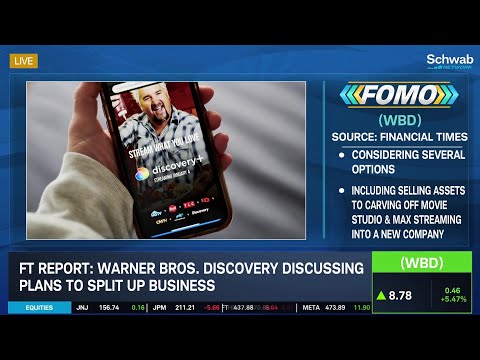
Warner Bros. Discovery — Investor Video Playlist







Industry Resources
| Communication Services Resources |
| Variety |
| The Hollywood Reporter |
| Adweek |
| Broadcasting Resources |
| Broadcasting & Cable |
| TV Technology |
| Radio Ink |
External Quote Links
| Y Finance | Barrons |
| TradingView | Morningstar |
| SeekingAlpha | ValueLine |
| Motley Fool | Robinhood |
| CNBC | Etrade |
| MarketWatch | Unusual Whales |
| YCharts | Perplexity Finance |
| FinViz |
Prefer one of these to Trefis? Tell us why.