
Navitas Semiconductor (NVTS)
Market Price (10/18/2026): $8.36 | Market Cap: $2.0 BilSector: Information Technology | Industry: Semiconductors
Navitas Semiconductor (NVTS)
Market Price (10/18/2026): $8.36Market Cap: $2.0 BilSector: Information TechnologyIndustry: Semiconductors
Investment Highlights Why It Matters Detailed financial logic regarding cash flow yields vs trend-riding momentum.
Cash is significant % of market capNet D/ENet Debt/Equity. Debt net of cash. Negative indicates net cash. Equity is taken as the Market Capitalization is -28% Megatrend and thematic driversMegatrends include Electric Vehicles & Autonomous Driving, and Renewable Energy Transition. Themes include EV Manufacturing, EV Charging Infrastructure, Show more. | Weak multi-year price returns3Y Excs Rtn is -46% Meaningful short interestShort Interest % of Basic SharesShort Interest % of Basic Shares = (Short Interest Quantity) / (Basic Shares Outstanding). A high fraction of short interest can indicate potential risk of a short squeeze. is 20% | Not profitable at operating income levelOp Inc LTMOperating Income, Last Twelve Months is -98 Mil, Op Mgn LTMOperating Margin = Operating Income / Revenue Reflects profitability before taxes and before impact of capital structure (interest payments). is -269% Expensive valuation multiplesP/SPrice/Sales ratio is 55x Weak revenue growthRev Chg LTMRevenue Change % Last Twelve Months (LTM) is -46%, Rev Chg 3Y AvgRevenue Change % averaged over trailing 3 years is -0.8%, Rev Chg QQuarterly Revenue Change % is -27% Significant share based compensationSBC/Rev LTMShare Based Compensation / Revenue (Sales), Last Twelve Months (LTM) is 74% Not cash flow generativeCFO/Rev LTMCash Flow from Operations / Revenue (Sales), Last Twelve Months (LTM) is -182%, FCF/Rev LTMFree Cash Flow / Revenue (Sales), Last Twelve Months (LTM) is -186% Yield minus risk free rate is negativeERPEquity Risk Premium (ERP) = Total Yield - Risk Free Rate, Reflects the premium above risk free assets offered by the investment. is -20% High stock price volatilityVol 12M is 120% Key risksNVTS key risks include [1] significant execution challenges in its strategic pivot to higher-power markets and [2] a precarious financial position marked by unprofitability and high cash burn. |
| Cash is significant % of market capNet D/ENet Debt/Equity. Debt net of cash. Negative indicates net cash. Equity is taken as the Market Capitalization is -28% |
| Megatrend and thematic driversMegatrends include Electric Vehicles & Autonomous Driving, and Renewable Energy Transition. Themes include EV Manufacturing, EV Charging Infrastructure, Show more. |
| Weak multi-year price returns3Y Excs Rtn is -46% |
| Meaningful short interestShort Interest % of Basic SharesShort Interest % of Basic Shares = (Short Interest Quantity) / (Basic Shares Outstanding). A high fraction of short interest can indicate potential risk of a short squeeze. is 20% |
| Not profitable at operating income levelOp Inc LTMOperating Income, Last Twelve Months is -98 Mil, Op Mgn LTMOperating Margin = Operating Income / Revenue Reflects profitability before taxes and before impact of capital structure (interest payments). is -269% |
| Expensive valuation multiplesP/SPrice/Sales ratio is 55x |
| Weak revenue growthRev Chg LTMRevenue Change % Last Twelve Months (LTM) is -46%, Rev Chg 3Y AvgRevenue Change % averaged over trailing 3 years is -0.8%, Rev Chg QQuarterly Revenue Change % is -27% |
| Significant share based compensationSBC/Rev LTMShare Based Compensation / Revenue (Sales), Last Twelve Months (LTM) is 74% |
| Not cash flow generativeCFO/Rev LTMCash Flow from Operations / Revenue (Sales), Last Twelve Months (LTM) is -182%, FCF/Rev LTMFree Cash Flow / Revenue (Sales), Last Twelve Months (LTM) is -186% |
| Yield minus risk free rate is negativeERPEquity Risk Premium (ERP) = Total Yield - Risk Free Rate, Reflects the premium above risk free assets offered by the investment. is -20% |
| High stock price volatilityVol 12M is 120% |
| Key risksNVTS key risks include [1] significant execution challenges in its strategic pivot to higher-power markets and [2] a precarious financial position marked by unprofitability and high cash burn. |
Qualitative Assessment
AI Analysis | Feedback
Navitas Semiconductor (NVTS) stock has lost about 55% since 6/30/2026 because of the following key factors:
1. Q2 2026 Financial Underperformance and Significant One-Time Charge.
Navitas Semiconductor's fiscal Q2 2026 results, reported on July 27, 2026, revealed a substantial GAAP net loss of $228.2 million, which included a $203.1 million non-cash charge stemming from the final re-measurement of earnout liabilities. Although total revenue of $10.5 million represented a 22% sequential increase, it marked a 27.3% year-over-year decrease compared to fiscal Q2 2025 revenue of $14.5 million, raising investor concerns. While non-GAAP earnings per share (EPS) of -$0.04 met consensus estimates, the significant GAAP loss and the year-over-year revenue contraction contributed to a negative market reaction.
2. Challenges and Uncertainty from "Navitas 2.0" Strategic Shift.
The company's ongoing "Navitas 2.0" strategic transition, a pivot away from lower-margin mobile and low-end consumer markets towards higher-power segments like AI data centers, electric vehicles, and grid infrastructure, introduced short-term financial headwinds and increased investor uncertainty. This strategic realignment contributed to the 27.3% year-over-year revenue decline in fiscal Q2 2026 and resulted in continued non-GAAP operating losses, recorded at $11.4 million in fiscal Q2 2026. The market perceived inherent execution risks and a prolonged timeline to achieving profitability during this transition period.
Show more
Navitas Semiconductor (NVTS) stock has lost about 55% since 6/30/2026 because of the following key factors:
1. Q2 2026 Financial Underperformance and Significant One-Time Charge.
Navitas Semiconductor's fiscal Q2 2026 results, reported on July 27, 2026, revealed a substantial GAAP net loss of $228.2 million, which included a $203.1 million non-cash charge stemming from the final re-measurement of earnout liabilities. Although total revenue of $10.5 million represented a 22% sequential increase, it marked a 27.3% year-over-year decrease compared to fiscal Q2 2025 revenue of $14.5 million, raising investor concerns. While non-GAAP earnings per share (EPS) of -$0.04 met consensus estimates, the significant GAAP loss and the year-over-year revenue contraction contributed to a negative market reaction.
2. Challenges and Uncertainty from "Navitas 2.0" Strategic Shift.
The company's ongoing "Navitas 2.0" strategic transition, a pivot away from lower-margin mobile and low-end consumer markets towards higher-power segments like AI data centers, electric vehicles, and grid infrastructure, introduced short-term financial headwinds and increased investor uncertainty. This strategic realignment contributed to the 27.3% year-over-year revenue decline in fiscal Q2 2026 and resulted in continued non-GAAP operating losses, recorded at $11.4 million in fiscal Q2 2026. The market perceived inherent execution risks and a prolonged timeline to achieving profitability during this transition period.
3. Persistent Valuation Concerns and Weak Profitability Metrics.
The stock experienced downward pressure due to persistent concerns regarding its valuation and underlying profitability. As of October 13, 2026, one analysis indicated Navitas Semiconductor was significantly overvalued by 247.2%, with a GF Value estimate of $3.01 against its market price of $10.45. These valuation concerns were compounded by the company's negative profitability metrics, including a negative return on equity of 13.13% and a negative net margin of 856.85% for the trailing twelve months, signaling ongoing struggles to generate sustainable profits.
Show less
Stock Movement Drivers
Fundamental Drivers
The -53.5% change in NVTS stock from 6/30/2026 to 10/17/2026 was primarily driven by a -46.0% change in the company's P/S Multiple.| (LTM values as of) | 6302026 | 10172026 | Change |
|---|---|---|---|
| Stock Price ($) | 17.92 | 8.34 | -53.5% |
| Change Contribution By: | |||
| Total Revenues ($ Mil) | 40 | 37 | -9.8% |
| P/S Multiple | 101.8 | 54.9 | -46.0% |
| Shares Outstanding (Mil) | 230 | 241 | -4.4% |
| Cumulative Contribution | -53.5% |
Market Drivers
6/30/2026 to 10/17/2026| Return | Correlation | |
|---|---|---|
| NVTS | -53.5% | |
| Market (SPY) | 2.2% | 59.5% |
| Sector (XLK) | -3.7% | 80.8% |
Fundamental Drivers
The -4.9% change in NVTS stock from 3/31/2026 to 10/17/2026 was primarily driven by a -20.4% change in the company's Total Revenues ($ Mil).| (LTM values as of) | 3312026 | 10172026 | Change |
|---|---|---|---|
| Stock Price ($) | 8.77 | 8.34 | -4.9% |
| Change Contribution By: | |||
| Total Revenues ($ Mil) | 46 | 37 | -20.4% |
| P/S Multiple | 42.5 | 54.9 | 29.3% |
| Shares Outstanding (Mil) | 222 | 241 | -7.5% |
| Cumulative Contribution | -4.9% |
Market Drivers
3/31/2026 to 10/17/2026| Return | Correlation | |
|---|---|---|
| NVTS | -4.9% | |
| Market (SPY) | 17.7% | 48.7% |
| Sector (XLK) | 38.2% | 62.1% |
Fundamental Drivers
The 15.5% change in NVTS stock from 9/30/2025 to 10/17/2026 was primarily driven by a 160.7% change in the company's P/S Multiple.| (LTM values as of) | 9302025 | 10172026 | Change |
|---|---|---|---|
| Stock Price ($) | 7.22 | 8.34 | 15.5% |
| Change Contribution By: | |||
| Total Revenues ($ Mil) | 68 | 37 | -46.4% |
| P/S Multiple | 21.1 | 54.9 | 160.7% |
| Shares Outstanding (Mil) | 199 | 241 | -17.3% |
| Cumulative Contribution | 15.5% |
Market Drivers
9/30/2025 to 10/17/2026| Return | Correlation | |
|---|---|---|
| NVTS | 15.5% | |
| Market (SPY) | 15.5% | 48.6% |
| Sector (XLK) | 30.7% | 57.2% |
Fundamental Drivers
The 20.0% change in NVTS stock from 9/30/2023 to 10/17/2026 was primarily driven by a 157.8% change in the company's P/S Multiple.| (LTM values as of) | 9302023 | 10172026 | Change |
|---|---|---|---|
| Stock Price ($) | 6.95 | 8.34 | 20.0% |
| Change Contribution By: | |||
| Total Revenues ($ Mil) | 54 | 37 | -32.4% |
| P/S Multiple | 21.3 | 54.9 | 157.8% |
| Shares Outstanding (Mil) | 166 | 241 | -31.2% |
| Cumulative Contribution | 20.0% |
Market Drivers
9/30/2023 to 10/17/2026| Return | Correlation | |
|---|---|---|
| NVTS | 20.0% | |
| Market (SPY) | 84.7% | 31.1% |
| Sector (XLK) | 127.8% | 36.1% |
Price Returns Compared
| 2021 | 2022 | 2023 | 2024 | 2025 | 2026 | Total [1] | |
|---|---|---|---|---|---|---|---|
| Returns | |||||||
| NVTS Return | 56% | -79% | 130% | -56% | 100% | 29% | -15% |
| Peers Return | 52% | -19% | 43% | -18% | -6% | 38% | 88% |
| S&P 500 Return | 27% | -19% | 24% | 23% | 16% | 14% | 108% |
Monthly Win Rates [3] | |||||||
| NVTS Win Rate | 50% | 42% | 67% | 42% | 42% | 60% | |
| Peers Win Rate | 61% | 44% | 64% | 39% | 44% | 52% | |
| S&P 500 Win Rate | 75% | 42% | 67% | 75% | 67% | 50% | |
Max Drawdowns [4] | |||||||
| NVTS Max Drawdown | - | -81% | -55% | -78% | -62% | -71% | |
| Peers Max Drawdown | -23% | -38% | -35% | -32% | -47% | -51% | |
| S&P 500 Max Drawdown | -5% | -25% | -10% | -8% | -19% | -9% | |
[1] Cumulative total returns since the beginning of 2021
[2] Peers: WOLF, ON, POWI, MPWR.
[3] Win Rate = % of calendar months in which monthly returns were positive
[4] Max drawdown represents maximum peak-to-trough decline within a year
[5] 2026 data is for the year up to 10/16/2026 (YTD)
How Low Can It Go
| Event | NVTS | S&P 500 |
|---|---|---|
| 2025 US Tariff Shock | ||
| % Loss | -53.3% | -18.8% |
| % Gain to Breakeven | 114.3% | 23.1% |
| Time to Breakeven | 49 days | 79 days |
| 2024 Yen Carry Trade Unwind | ||
| % Loss | -35.8% | -7.8% |
| % Gain to Breakeven | 55.7% | 8.5% |
| Time to Breakeven | 283 days | 18 days |
| Summer-Fall 2023 Five Percent Yield Shock | ||
| % Loss | -51.7% | -9.5% |
| % Gain to Breakeven | 107.2% | 10.5% |
| Time to Breakeven | 715 days | 24 days |
| 2022 Inflation Shock & Fed Tightening | ||
| % Loss | -77.9% | -24.5% |
| % Gain to Breakeven | 351.7% | 32.4% |
| Time to Breakeven | 1202 days | 427 days |
In The Past
Navitas Semiconductor's stock fell -53.3% during the 2025 US Tariff Shock. Such a loss loss requires a 114.3% gain to breakeven.
Preserve Wealth
Limiting losses and compounding gains is essential to preserving wealth.
Asset Allocation
Actively managed asset allocation strategies protect wealth. Learn more.
| Event | NVTS | S&P 500 |
|---|---|---|
| 2025 US Tariff Shock | ||
| % Loss | -53.3% | -18.8% |
| % Gain to Breakeven | 114.3% | 23.1% |
| Time to Breakeven | 49 days | 79 days |
| 2024 Yen Carry Trade Unwind | ||
| % Loss | -35.8% | -7.8% |
| % Gain to Breakeven | 55.7% | 8.5% |
| Time to Breakeven | 283 days | 18 days |
| Summer-Fall 2023 Five Percent Yield Shock | ||
| % Loss | -51.7% | -9.5% |
| % Gain to Breakeven | 107.2% | 10.5% |
| Time to Breakeven | 715 days | 24 days |
| 2022 Inflation Shock & Fed Tightening | ||
| % Loss | -77.9% | -24.5% |
| % Gain to Breakeven | 351.7% | 32.4% |
| Time to Breakeven | 1202 days | 427 days |
In The Past
Navitas Semiconductor's stock fell -53.3% during the 2025 US Tariff Shock. Such a loss loss requires a 114.3% gain to breakeven.
Preserve Wealth
Limiting losses and compounding gains is essential to preserving wealth.
Asset Allocation
Actively managed asset allocation strategies protect wealth. Learn more.
About Navitas Semiconductor (NVTS)
Navitas Semiconductor (NVTS) is a technology company that specializes in the design, development, and sale of advanced gallium nitride (GaN) power integrated circuits (ICs). GaN is a cutting-edge semiconductor material that offers superior performance compared to traditional silicon, enabling power electronics to be significantly smaller, lighter, faster-charging, and more energy-efficient. Navitas positions itself at the forefront of this material innovation, creating solutions that improve power conversion across a wide range of applications.
The company's main products are its GaNFast™ power ICs, which integrate GaN power devices along with their drive, control, sensing, and protection circuitry onto a single chip. These highly integrated solutions are designed to simplify power system design, reduce component count, and enhance performance. Their technology is particularly beneficial for applications requiring high power density and efficiency.
Navitas serves a diverse and global customer base across several key markets, including China, the United States, Taiwan, and Korea, with international reach. Its GaN power ICs are primarily adopted by manufacturers in consumer electronics (such as fast chargers for smartphones, laptops, and tablets), enterprise power (e.g., data centers), and emerging markets like electric vehicles (EVs) and solar energy. The company caters to the growing demand for more efficient and compact power solutions in these high-volume and high-growth sectors.
```AI Analysis | Feedback
- The 'Tesla' of power chips, using next-generation Gallium Nitride (GaN) for superior efficiency.
- Wolfspeed (formerly Cree) for Gallium Nitride (GaN) power semiconductors.
AI Analysis | Feedback
- GaNFast™ Power ICs: These integrated circuits leverage Gallium Nitride (GaN) technology to deliver high-speed, high-efficiency power conversion for a wide range of applications including mobile chargers, consumer electronics, and data centers.
- GeneSiC™ Silicon Carbide (SiC) Devices: These high-power, high-voltage devices, including MOSFETs and diodes, utilize Silicon Carbide (SiC) technology for demanding applications such as electric vehicles, solar inverters, and industrial power supplies.
AI Analysis | Feedback
Navitas Semiconductor (NVTS) primarily sells its gallium nitride (GaN) power integrated circuits to other companies (B2B) that integrate these components into their end products across various sectors such as consumer electronics, data centers, and electric vehicles. Major customers include:
- Anker Innovations (private company) - A leading global brand for fast chargers and power accessories.
- Xiaomi (HKEX: 1810) - A global technology company known for smartphones and smart hardware.
- Dell Technologies (NYSE: DELL) - A multinational technology company that develops, sells, repairs, and supports computers and related products and services.
- Lenovo Group (HKEX: 0992) - A global technology company specializing in designing, manufacturing, and marketing consumer electronics, personal computers, software, business solutions, and related services.
- Samsung Electronics (KRX: 005930) - A global leader in consumer electronics, mobile communications, and device solutions.
- Harley-Davidson (NYSE: HOG) - Specifically for its electric motorcycle brand, LiveWire, utilizing Navitas GaN in EV powertrains.
- BYD (SZSE: 002594, HKEX: 1211) - A leading multinational high-tech company known for automobiles, rail transit, new energy, and electronics.
AI Analysis | Feedback
- Taiwan Semiconductor Manufacturing Company Limited (TSM)
- Amkor Technology, Inc. (AMKR)
- ASE Technology Holding Co., Ltd. (ASX)
AI Analysis | Feedback
Chris Allexandre President & Chief Executive Officer
Appointed CEO effective September 1, 2025, Chris Allexandre has over 25 years of experience in the semiconductor industry. Before joining Navitas, he held senior executive operating and sales roles at Renesas Electronics Corporation, including Senior Vice President and General Manager of the Power Division and Chief Sales and Marketing Officer. He also held executive positions at Integrated Device Technology, Inc. (acquired by Renesas in 2019), NXP Corporation, and Fairchild Semiconductor, and began his career at Texas Instruments.
Todd Glickman Chief Financial Officer & Treasurer
Todd Glickman has served as Senior Vice President, Interim Chief Financial Officer, and Treasurer since Navitas' business combination in October 2021. He joined Navitas in 2015, initially as Senior Vice President, Finance. Prior to Navitas, he evaluated early-stage technology investments for MalibuIQ, LLC, a venture capital firm and original investor in Navitas. His background also includes corporate development at Activision Blizzard, private equity roles at Vance Street Capital, and investment banking at Lehman Brothers.
Dan Kinzer CTO & COO
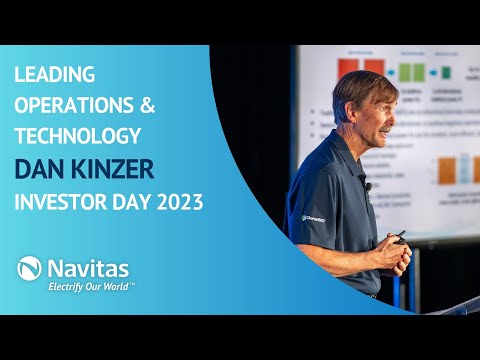
A co-founder of Navitas Semiconductor in 2014, Dan Kinzer brings over 30 years of experience leading research and development in semiconductor and power electronics companies. He is recognized for developing advanced power device and IC platforms, including wide bandgap GaN and SiC device design. Before co-founding Navitas, he served as VP R&D, VP Advanced Product Development, and Chief Technologist at International Rectifier (acquired by Infineon for $3 billion). He was also SVP Product & Technology Development & CTO at Fairchild Semiconductor (acquired by onsemi for $2.4 billion). He holds over 180 U.S. patents.
Gene Sheridan Co-founder, (Former President & Chief Executive Officer)
Gene Sheridan co-founded Navitas Semiconductor in 2014 and served as its President and Chief Executive Officer until stepping down on August 31, 2025. He has over 25 years of experience in power management and semiconductors. Prior to Navitas, he was CEO of the venture capital-backed semiconductor startup BridgeCo, Inc. from 2006 to 2011. He also had a successful career at International Rectifier. Navitas went public in 2021 through a SPAC merger.
Siddarth Sundaresan, PhD Senior Vice President, Technology
Dr. Siddarth Sundaresan is the Senior Vice President of Technology, and SVP of SiC Technology & Operations, at Navitas Semiconductor. He joined Navitas in 2022 through the acquisition of GeneSiC Semiconductor. He possesses over 15 years of experience in SiC and GaN power device and process technologies. As a critical innovator at GeneSiC Semiconductor, he contributed to over 20 patents and 60 peer-reviewed technical papers, helping to establish GeneSiC as a leader in high voltage, high-temperature SiC technology.
AI Analysis | Feedback
- Execution Risk of Strategic Pivot to High-Power Markets: Navitas is undergoing a significant strategic shift, known as "Navitas 2.0," to de-emphasize its traditional lower-margin mobile and consumer products and instead focus on higher-growth, higher-power applications like AI data centers, electric vehicles (EVs), solar energy, and industrial electrification. This transition entails substantial operational, technical, and market risks. The company's current financial performance shows declining revenue and profitability margins, and there is a risk that this pivot may not achieve the anticipated revenue growth or margin improvements. Success hinges on Navitas's ability to develop and scale semiconductor solutions for these demanding new markets, effectively compete against established players, anticipate evolving customer needs, and secure crucial design wins.
- Intense Competition and Market Adoption Challenges for GaN Technology: Navitas operates in the highly competitive power semiconductor industry. While its gallium nitride (GaN) technology offers efficiency advantages, the company faces strong competition from established incumbents, including larger manufacturers with significant scale and resources. The pace of adoption for new technologies like GaN and silicon carbide (SiC), especially in emerging high-power applications, can be unpredictable and slower than projected. If the growth of the GaN market disappoints or proves less lucrative than expected, it could have a substantial adverse impact on Navitas.
- Cyclicality of the Semiconductor Industry and Macroeconomic Factors: The semiconductor industry is inherently cyclical and prone to significant volatility. Navitas's revenue and growth are tied to demand in volatile end markets, including fast-charging adapters, AI data centers, solar micro-inverters, and electric vehicles. Economic slowdowns, such as recessions, in these sectors or generally, could directly reduce demand for Navitas's products. Furthermore, geopolitical factors, including tariffs and trade tensions, particularly between the United States and China, pose risks to international revenues and supply chain stability. The company's stock price has also demonstrated significant volatility.
AI Analysis | Feedback
The clear emerging threat for Navitas Semiconductor is the consolidation of the gallium nitride (GaN) power semiconductor market by large, established industry players. Specifically, the acquisition of former competitor GaN Systems by Infineon, a major global power semiconductor company, poses a significant threat. This consolidation allows a highly resourced competitor like Infineon to leverage its existing scale, manufacturing capabilities, and extensive customer relationships to aggressively compete in the GaN market, potentially challenging Navitas's market share and growth opportunities.
AI Analysis | Feedback
Navitas Semiconductor (NVTS) operates in the Gallium Nitride (GaN) power integrated circuit (IC) and high-voltage Silicon Carbide (SiC) markets. The company is strategically focusing on high-power segments, including AI data centers, grid and energy infrastructure, performance computing, and industrial electrification.
Navitas Semiconductor estimates its serviceable available market (SAM) for its GaN and high-voltage SiC solutions in these targeted high-power segments to be approximately $3.5 billion globally by 2030.
More broadly, the global GaN Power ICs market was valued at USD 2.1 billion in 2023 and is projected to reach approximately USD 5.64 billion by 2030, with a Compound Annual Growth Rate (CAGR) of 15.16% from 2024 to 2030. North America leads the GaN Power ICs market, holding about 45% of the global share, followed by Europe with approximately 30%, and Asia-Pacific with around 20%.
The overall global GaN Power Device market, which encompasses GaN power ICs, was valued at USD 451.0 million in 2024 and is expected to grow to USD 4,706.2 million by 2033, exhibiting a CAGR of 28.28% from 2025 to 2033. Another report indicates a market size of USD 378.43 million in 2024, projected to reach USD 3562.68 million by 2032, at a CAGR of 32.35%. In 2024, North America dominated the GaN Power Device Market with the largest revenue share of 32.77%, with the U.S. alone accounting for 81% of North America's share. The Asia-Pacific GaN Power Device Market is anticipated to experience the fastest CAGR of 19.33% between 2025 and 2032.
The broader global GaN and SiC Power Semiconductor market was valued at $3.6 billion in 2024 and is projected to reach $16 billion by 2034, growing at a CAGR of 24.3%.
```AI Analysis | Feedback
- Strategic Pivot to High-Power Markets: Navitas is undergoing a significant business transformation, shifting its focus from lower-margin mobile and consumer segments to high-power applications. This strategic pivot targets high-growth markets such as AI data centers, grid infrastructure, electric vehicles (EVs), and industrial electrification. The company anticipates these sectors to be primary growth drivers.
- Increasing Adoption of Gallium Nitride (GaN) and Silicon Carbide (SiC) Technologies: As a pure-play GaN and SiC semiconductor company, Navitas is well-positioned to benefit from the secular technology transition in power electronics from traditional silicon to more efficient GaN and SiC solutions. These advanced technologies are seen as both displacement technologies in traditional markets and enabling technologies in new energy markets.
- Launch of New Products and Design Wins in High-Power Applications: Continuous innovation and securing new design wins are crucial for revenue growth. Navitas is actively developing and sampling new high-voltage GaN and SiC modules, including 2.3kV and 3.3kV SiC modules for energy storage and grid infrastructure, and 100V GaN FETs for AI power applications. The company has reported significant design wins, particularly in data centers and EVs, with a substantial customer pipeline.
- Expansion of Customer Pipeline: Navitas has demonstrated a growing customer pipeline, indicating future revenue potential. The total customer pipeline nearly doubled from $1.25 billion at the end of 2023 to $2.4 billion at the end of 2024. This includes numerous customer projects in GaNSafe ICs, Gen-3 Fast silicon carbide technology, and the electric vehicle segment.
- Anticipated Market Recovery and Secular Tailwinds: Despite facing some near-term market headwinds, Navitas expects a market recovery and anticipates sequential growth throughout 2026. The company also benefits from long-term secular tailwinds such as energy source conversion to renewables, the transition to electric transportation, and the rapidly accelerating power demands of AI and edge computing.
AI Analysis | Feedback
Share Issuance
- Navitas Semiconductor completed a private placement in November 2025, raising $100 million in fresh capital by issuing 14.8 million new shares at $6.75 per share.
- In fiscal year 2025, the company strengthened its financial position through successful capital raises, including a $100 million PIPE offering and $100 million ATM offerings.
- The number of shares outstanding for Navitas Semiconductor significantly increased from approximately 39 million in 2021 to 212.7 million as of March 2026.
Inbound Investments
- In November 2025, Navitas Semiconductor raised $100 million through a private placement by issuing 14.8 million new shares.
- The company executed successful capital raises in fiscal year 2025, including a $100 million PIPE (Private Investment in Public Equity) offering and $100 million ATM (At-The-Market) offerings.
Capital Expenditures
- Navitas Semiconductor's capital expenditures were $4.78 million in 2023, $6.77 million in 2024, and $1.39 million in 2025.
- In the fourth quarter of 2025, the company invested $48,000 in capital expenditures, which was directed towards funding long-term assets and infrastructure.
Peer Outperformance in Semiconductors
| Ticker | Name | Rev Growth 3Y Avg | P/E | 1Y | 3Y | 5Y | 5Y Gap |
|---|---|---|---|---|---|---|---|
| NVTS | Navitas Semiconductor | -0.8% | -6.4x | -43.1% | 44.3% | -32.9% | — |
| AMKR | Amkor Technology | 3.1% | 18.7x | 34.6% | 90.6% | 101.7% | +135pp |
| INTC | Intel | 1.9% | -40.6x | 142.8% | 156.3% | 79.1% | +112pp |
| TXN | Texas Instruments | 1.9% | 41.7x | 60.6% | 98.4% | 63.8% | +97pp |
| LSCC | Lattice Semiconductor | -0.7% | 391.1x | 47.7% | 38.1% | 56.8% | +90pp |
| SLAB | Silicon Laboratories | 1.5% | -187.6x | 62.4% | 112.5% | 50.7% | +84pp |
| Industry | Names | 1Y med | 3Y med | 5Y med | Top 3 by 5Y |
|---|---|---|---|---|---|
| Electronic Manufacturing Services | 9 | 36.8% | 145.7% | 270.2% | TTMI 595% · FLEX 547% · JBL 353% |
| Communications Equipment | 35 | 4.8% | 104.4% | 87.4% | AAOI 947% · LITE 867% · ANET 626% |
| Technology Distributors | 9 | 48.0% | 84.8% | 82.0% | AVT 172% · SNX 149% · CNXN 114% |
| Semiconductor Materials & Equipment | 27 | 53.9% | 60.1% | 72.9% | AXTI 530% · KLAC 429% · LRCX 392% |
| Electronic Components | 26 | 3.0% | 76.8% | 49.9% | CLS 3160% · BELFA 1172% · APH 331% |
| Semiconductors ← | 54 | 8.8% | 32.6% | 30.2% | MU 1230% · NVDA 884% · AVGO 614% |
| Technology Hardware, Storage & Peripherals | 21 | 14.9% | 55.2% | 10.8% | DELL 816% · STX 798% · SMCI 792% |
| Internet Services & Infrastructure | 6 | -1.0% | 42.0% | -3.3% | GDDY 52% · VRSN 44% · DOCN 11% |
| Electronic Equipment & Instruments | 26 | -16.9% | 22.5% | -8.0% | PI 233% · OSIS 105% · KEYS 96% |
| IT Consulting & Other Services | 28 | -28.2% | -10.8% | -19.6% | CHRN 396742% · APLD 464% · ADEA 135% |
| Application Software | 125 | -22.1% | -15.7% | -47.7% | PLTR 675% · FROG 148% · AGYS 106% |
| Systems Software | 69 | -15.6% | 13.9% | -54.1% | ZETA 301% · CRWD 233% · FTNT 168% |
Latest Trefis Analyses
Research & Analysis
Invest in Strategies
Wealth Management
Peer Comparisons
| Peers to compare with: |
Financials
| Median | |
|---|---|
| Name | |
| Mkt Price | 44.52 |
| Mkt Cap | 2.5 |
| Rev LTM | 665 |
| Op Inc LTM | 21 |
| FCF LTM | 79 |
| FCF 3Y Avg | 353 |
| CFO LTM | 98 |
| CFO 3Y Avg | 452 |
Growth & Margins
| Median | |
|---|---|
| Name | |
| Rev Chg LTM | -0.8% |
| Rev Chg 3Y Avg | -2.2% |
| Rev Chg Q | 2.7% |
| QoQ Delta Rev Chg LTM | 0.7% |
| Op Inc Chg LTM | 7.4% |
| Op Inc Chg 3Y Avg | -6.5% |
| Op Mgn LTM | 4.8% |
| Op Mgn 3Y Avg | 13.2% |
| QoQ Delta Op Mgn LTM | 0.5% |
| CFO/Rev LTM | 21.8% |
| CFO/Rev 3Y Avg | 24.2% |
| FCF/Rev LTM | 17.6% |
| FCF/Rev 3Y Avg | 17.5% |
Segment Financials
Revenue by Segment| $ Mil | 2025 | 2024 | 2023 | 2022 | 2021 |
|---|---|---|---|---|---|
| Design, development, manufacture and marketing of integrated circuits and related components | 46 | 83 | 79 | 38 | 24 |
| Total | 46 | 83 | 79 | 38 | 24 |
| $ Mil | 2024 | 2023 |
|---|---|---|
| Design, development, manufacture and marketing of integrated circuits and related components | -131 | -118 |
| Total | -131 | -118 |
| $ Mil | 2024 | 2023 |
|---|---|---|
| Design, development, manufacture and marketing of integrated circuits and related components | -85 | -145 |
| Total | -85 | -145 |
Price Behavior
| Market Price | $8.34 | |
| Market Cap ($ Bil) | 2.0 | |
| First Trading Date | 01/25/2021 | |
| Distance from 52W High | -73.8% | |
| 50 Days | 200 Days | |
| DMA Price | $11.86 | $13.35 |
| DMA Trend | down | up |
| Distance from DMA | -29.7% | -37.5% |
| 3M | 1YR | |
| Volatility | 86.4% | 120.4% |
| Downside Capture | 483.64 | 526.90 |
| Upside Capture | 293.13 | 388.28 |
| Correlation (S&P 500) | 53.8% | 50.5% |
| 1M | 2M | 3M | 6M | 1Y | 3Y | |
|---|---|---|---|---|---|---|
| Beta | 4.01 | 4.28 | 4.79 | 4.75 | 4.68 | 2.89 |
| Up Beta | 2.95 | 4.47 | 7.21 | 3.47 | 5.20 | 2.11 |
| Down Beta | 9.24 | 5.37 | 2.29 | 2.87 | 3.23 | 1.73 |
| Up Capture | 409% | 487% | 409% | 1596% | 4686% | 114225% |
| Bmk +ve Days | 6 | 16 | 27 | 66 | 132 | 424 |
| Stock +ve Days | 10 | 21 | 29 | 63 | 124 | 334 |
| Down Capture | 291% | 361% | 429% | 333% | 191% | 113% |
| Bmk -ve Days | 16 | 26 | 37 | 60 | 120 | 328 |
| Stock -ve Days | 10 | 18 | 32 | 60 | 124 | 399 |
[1] Upside and downside betas calculated using positive and negative benchmark daily returns respectively
Based On 1-Year Data
| Annualized Return | Annualized Volatility | Sharpe Ratio | Correlation with NVTS | |
|---|---|---|---|---|
| NVTS | -45.1% | 120.4% | 0.05 | - |
| Sector ETF (XLK) | 29.7% | 26.4% | 0.95 | 60.9% |
| Equity (SPY) | 15.8% | 12.7% | 0.86 | 51.2% |
| Gold (GLD) | -1.4% | 29.4% | -0.05 | 30.3% |
| Commodities (DBC) | 52.4% | 20.7% | 1.92 | 2.2% |
| Real Estate (VNQ) | 4.8% | 13.7% | 0.09 | -0.2% |
| Bitcoin (BTCUSD) | -26.5% | 43.6% | -0.59 | 36.2% |
Smart multi-asset allocation framework can stack odds in your favor. Learn How
Based On 5-Year Data
| Annualized Return | Annualized Volatility | Sharpe Ratio | Correlation with NVTS | |
|---|---|---|---|---|
| NVTS | -3.0% | 124.1% | 0.44 | - |
| Sector ETF (XLK) | 20.2% | 26.0% | 0.69 | 40.9% |
| Equity (SPY) | 13.2% | 17.1% | 0.59 | 36.0% |
| Gold (GLD) | 18.4% | 18.9% | 0.79 | 11.2% |
| Commodities (DBC) | 9.9% | 19.5% | 0.39 | 2.8% |
| Real Estate (VNQ) | 1.6% | 18.8% | -0.02 | 18.9% |
| Bitcoin (BTCUSD) | 8.6% | 51.8% | 0.34 | 21.9% |
Smart multi-asset allocation framework can stack odds in your favor. Learn How
Based On 10-Year Data
| Annualized Return | Annualized Volatility | Sharpe Ratio | Correlation with NVTS | |
|---|---|---|---|---|
| NVTS | -2.4% | 116.2% | 0.40 | - |
| Sector ETF (XLK) | 23.9% | 25.0% | 0.86 | 39.7% |
| Equity (SPY) | 15.2% | 17.9% | 0.72 | 35.1% |
| Gold (GLD) | 12.3% | 16.4% | 0.61 | 11.0% |
| Commodities (DBC) | 8.3% | 18.1% | 0.37 | 2.6% |
| Real Estate (VNQ) | 5.2% | 20.7% | 0.21 | 18.4% |
| Bitcoin (BTCUSD) | 63.1% | 66.2% | 1.03 | 19.5% |
Smart multi-asset allocation framework can stack odds in your favor. Learn How
Earnings Returns History
Updated 8/27/2026| Forward Returns | |||
|---|---|---|---|
| Earnings Date | 1D Returns | 5D Returns | 21D Returns |
| 7/27/2026 | -12.3% | 1.0% | 9.0% |
| 5/5/2026 | -5.0% | 9.7% | 74.8% |
| 2/24/2026 | 19.6% | 7.7% | 14.8% |
| 8/4/2025 | -15.9% | -18.0% | -28.8% |
| 5/5/2025 | -4.7% | 3.5% | 239.0% |
| 2/24/2025 | -17.3% | -20.8% | -23.5% |
| 11/4/2024 | -9.6% | -21.8% | 23.0% |
| 8/5/2024 | 5.2% | -5.9% | -17.4% |
| ... | |||
| SUMMARY STATS | |||
| # Positive | 10 | 10 | 10 |
| # Negative | 9 | 9 | 9 |
| Median Positive | 10.0% | 14.1% | 18.9% |
| Median Negative | -12.3% | -16.6% | -17.4% |
| Max Positive | 26.0% | 38.0% | 239.0% |
| Max Negative | -18.4% | -23.5% | -28.8% |
| Forward Returns | |||
|---|---|---|---|
| Earnings Date | 1D Returns | 5D Returns | 21D Returns |
| 7/27/2026 | -12.3% | 1.0% | 9.0% |
| 5/5/2026 | -5.0% | 9.7% | 74.8% |
| 2/24/2026 | 19.6% | 7.7% | 14.8% |
| 8/4/2025 | -15.9% | -18.0% | -28.8% |
| 5/5/2025 | -4.7% | 3.5% | 239.0% |
| 2/24/2025 | -17.3% | -20.8% | -23.5% |
| 11/4/2024 | -9.6% | -21.8% | 23.0% |
| 8/5/2024 | 5.2% | -5.9% | -17.4% |
| 5/9/2024 | -12.6% | -16.6% | -3.0% |
| 2/29/2024 | -7.8% | -12.4% | -20.8% |
| 11/9/2023 | 10.0% | 18.5% | 32.7% |
| 8/14/2023 | 4.6% | -2.3% | -10.0% |
| 5/15/2023 | 20.3% | 38.0% | 50.6% |
| 2/23/2023 | 6.2% | 5.2% | 12.7% |
| 11/9/2022 | 10.0% | 25.0% | 9.0% |
| 8/15/2022 | 26.0% | -9.9% | -7.1% |
| 5/12/2022 | 14.8% | 28.2% | -8.6% |
| 2/15/2022 | -18.4% | -23.5% | -18.6% |
| 11/9/2021 | 5.1% | 25.8% | 8.1% |
| SUMMARY STATS | |||
| # Positive | 10 | 10 | 10 |
| # Negative | 9 | 9 | 9 |
| Median Positive | 10.0% | 14.1% | 18.9% |
| Median Negative | -12.3% | -16.6% | -17.4% |
| Max Positive | 26.0% | 38.0% | 239.0% |
| Max Negative | -18.4% | -23.5% | -28.8% |
SEC Filings
Expand for More| Report Date | Filing Date | Filing |
|---|---|---|
| 06/30/2026 | 07/27/2026 | 10-Q |
| 03/31/2026 | 05/05/2026 | 10-Q |
| 12/31/2025 | 02/27/2026 | 10-K |
| 09/30/2025 | 11/03/2025 | 10-Q |
| 06/30/2025 | 08/04/2025 | 10-Q |
| 03/31/2025 | 05/09/2025 | 10-Q |
| 12/31/2024 | 03/19/2025 | 10-K |
| 09/30/2024 | 11/05/2024 | 10-Q |
| 06/30/2024 | 08/05/2024 | 10-Q |
| 03/31/2024 | 05/15/2024 | 10-Q |
| 12/31/2023 | 03/06/2024 | 10-K |
| 09/30/2023 | 11/09/2023 | 10-Q |
| 06/30/2023 | 08/14/2023 | 10-Q |
| 03/31/2023 | 05/15/2023 | 10-Q |
| 12/31/2022 | 04/03/2023 | 10-K |
| 09/30/2022 | 11/14/2022 | 10-Q |
| Report Date | Filing Date | Filing |
|---|---|---|
| 06/30/2026 | 07/27/2026 | 10-Q |
| 03/31/2026 | 05/05/2026 | 10-Q |
| 12/31/2025 | 02/27/2026 | 10-K |
| 09/30/2025 | 11/03/2025 | 10-Q |
| 06/30/2025 | 08/04/2025 | 10-Q |
| 03/31/2025 | 05/09/2025 | 10-Q |
| 12/31/2024 | 03/19/2025 | 10-K |
| 09/30/2024 | 11/05/2024 | 10-Q |
| 06/30/2024 | 08/05/2024 | 10-Q |
| 03/31/2024 | 05/15/2024 | 10-Q |
| 12/31/2023 | 03/06/2024 | 10-K |
| 09/30/2023 | 11/09/2023 | 10-Q |
| 06/30/2023 | 08/14/2023 | 10-Q |
| 03/31/2023 | 05/15/2023 | 10-Q |
| 12/31/2022 | 04/03/2023 | 10-K |
| 09/30/2022 | 11/14/2022 | 10-Q |
| 06/30/2022 | 08/15/2022 | 10-Q |
| 03/31/2022 | 05/16/2022 | 10-Q |
| 12/31/2021 | 03/31/2022 | 10-K |
Recent Forward Guidance
Updated 10/4/2026Latest: Q2 2026 Earnings Reported 7/27/2026
| Forward Guidance | Guidance Change | |||||||
|---|---|---|---|---|---|---|---|---|
| Metric | Source | Low | Mid | High | % Chg | % Delta | Change | Prior |
| Q3 2026 Revenue | Reported | 13.00 Mil | 13.50 Mil | 14.00 Mil | 35.0% | Higher New | Guidance: 10.00 Mil for Q2 2026 | |
| Q3 2026 Gross Profit | Calculated | 5.03 Mil | 5.36 Mil | 5.70 Mil | Rev x Gross Margin | |||
| Q3 2026 Non-GAAP Gross Margin | Reported | 38.7% | 39.7% | 40.7% | 0.4% | Higher New | Guidance: 39.25% for Q2 2026 | |
| Q3 2026 Non-GAAP Operating Expenses | Reported | 15.50 Mil | 16.50 Mil | 17.50 Mil | 10.0% | Higher New | Guidance: 15.00 Mil for Q2 2026 | |
| 2026 Revenue Growth | Reported | 5.0% | ||||||
Prior: Q1 2026 Earnings Reported 5/5/2026
| Forward Guidance | Guidance Change | |||||||
|---|---|---|---|---|---|---|---|---|
| Metric | Source | Low | Mid | High | % Chg | % Delta | Change | Prior |
| Q2 2026 Revenue | Reported | 9.50 Mil | 10.00 Mil | 10.50 Mil | 21.2% | Higher New | Guidance: 8.25 Mil for Q1 2026 | |
| Q2 2026 Gross Profit | Calculated | 3.66 Mil | 3.92 Mil | 4.20 Mil | Rev x Gross Margin | |||
| Q2 2026 Non-GAAP Gross Margin | Reported | 38.5% | 39.25% | 40.0% | 0.6% | Higher New | Guidance: 38.7% for Q1 2026 | |
| Q2 2026 Non-GAAP Operating Expenses | Reported | 14.50 Mil | 15.00 Mil | 15.50 Mil | 0 | Same New | Guidance: 15.00 Mil for Q1 2026 | |
Q4 2025 Earnings Reported 2/24/2026
| Forward Guidance | Guidance Change | |||||||
|---|---|---|---|---|---|---|---|---|
| Metric | Source | Low | Mid | High | % Chg | % Delta | Change | Prior |
| Q1 2026 Revenue | Reported | 8.00 Mil | 8.25 Mil | 8.50 Mil | -17.5% | Lower New | Guidance: 10.00 Mil for Q3 2025 | |
| Q1 2026 Non-GAAP Gross Margin | Reported | 38.45% | 38.7% | 38.95% | 0.2% | Higher New | Guidance: 38.5% for Q3 2025 | |
| Q1 2026 Non-GAAP Operating Expenses | Reported | 15.00 Mil | -3.2% | Lower New | Guidance: 15.50 Mil for Q3 2025 | |||
Insider Activity
Updated 8/3/2026| # | Owner | Title | Holding | Action | Filing Date | Price | Shares | Transacted Value | Value of Held Shares | Form |
|---|---|---|---|---|---|---|---|---|---|---|
| 1 | Singh, Ranbir | Direct | Sell | 5292026 | 28.72 | 664,058 | 19,071,746 | 429,176,602 | Form | |
| 2 | Wunderlich, Gary Kent JR | Live Oak Sponsor Partners II, LLC | Sell | 5292026 | 28.14 | 35,165 | 989,543 | 66,834,188 | Form | |
| 3 | Wunderlich, Gary Kent JR | Direct | Sell | 5292026 | 28.11 | 73,000 | 2,052,030 | 392,528 | Form | |
| 4 | Hendrix, Richard J | Live Oak Sponsor Partners II, LLC | Sell | 5292026 | 28.14 | 35,165 | 989,543 | 66,834,188 | Form | |
| 5 | Hendrix, Richard J | RJH Management Co., LLC | Sell | 5292026 | 29.34 | 75,000 | 2,200,500 | 2,984,142 | Form |
| # | Owner | Title | Holding | Action | Filing Date | Price | Shares | Transacted Value | Value of Held Shares | Form |
|---|---|---|---|---|---|---|---|---|---|---|
| 1 | Singh, Ranbir | Direct | Sell | 5292026 | 28.72 | 664,058 | 19,071,746 | 429,176,602 | Form | |
| 2 | Wunderlich, Gary Kent JR | Live Oak Sponsor Partners II, LLC | Sell | 5292026 | 28.14 | 35,165 | 989,543 | 66,834,188 | Form | |
| 3 | Wunderlich, Gary Kent JR | Direct | Sell | 5292026 | 28.11 | 73,000 | 2,052,030 | 392,528 | Form | |
| 4 | Hendrix, Richard J | Live Oak Sponsor Partners II, LLC | Sell | 5292026 | 28.14 | 35,165 | 989,543 | 66,834,188 | Form | |
| 5 | Hendrix, Richard J | RJH Management Co., LLC | Sell | 5292026 | 29.34 | 75,000 | 2,200,500 | 2,984,142 | Form | |
| 6 | Allexandre, Chris | PRESIDENT AND CEO | Direct | Sell | 5292026 | 31.81 | 13,323 | 423,805 | 34,120,456 | Form |
| 7 | Singh, Ranbir | Direct | Sell | 5292026 | 29.29 | 3,060,118 | 89,630,856 | 457,144,642 | Form | |
| 8 | Hendrix, Richard J | Direct | Sell | 5292026 | 29.66 | 33,649 | 998,029 | 1,004,139 | Form | |
| 9 | Glickman, Todd | Sr. V.P., CFO & Treasurer | Direct | Sell | 3172026 | 10.78 | 98,152 | 1,058,079 | 7,925,790 | Form |
| 10 | Allexandre, Chris | PRESIDENT AND CEO | Direct | Sell | 3052026 | 8.93 | 9,236 | 82,477 | 7,262,974 | Form |
| 11 | Singh, Ranbir | SiCPower, LLC | Sell | 3022026 | 9.52 | 389,096 | Form | |||
| 12 | Glickman, Todd | Sr. V.P., CFO & Treasurer | Direct | Sell | 3022026 | 9.82 | 12,532 | 123,064 | 8,183,821 | Form |
| 13 | Saluja, Dipender | Capricorn-Libra Investment Group, LP | Sell | 12162025 | 8.10 | 873,488 | 7,075,253 | 38,519,842 | Form | |
| 14 | Singh, Ranbir | SiCPower, LLC | Sell | 12162025 | 8.68 | 179,354 | 1,556,829 | 3,377,431 | Form | |
| 15 | Saluja, Dipender | Capricorn-Libra Investment Group, LP | Sell | 12162025 | 8.65 | 315,396 | 2,728,175 | 48,691,058 | Form | |
| 16 | Wunderlich, Gary Kent JR | Direct | Sell | 12122025 | 9.31 | 49,651 | 462,251 | 809,635 | Form | |
| 17 | Wunderlich, Gary Kent JR | Direct | Sell | 12122025 | 9.25 | 78,649 | 727,503 | 1,263,689 | Form | |
| 18 | Wunderlich, Gary Kent JR | Direct | Sell | 12092025 | 9.25 | 50,000 | 462,500 | 1,991,192 | Form | |
| 19 | Glickman, Todd | Sr. V.P., CFO & Treasurer | Direct | Sell | 12082025 | 9.77 | 78,307 | 765,091 | 7,946,061 | Form |
| 20 | Long, Brian | Atlantic Bridge III LP | Sell | 12052025 | 8.50 | 48,165 | Form | |||
| 21 | Long, Brian | Atlantic Bridge III LP | Sell | 12032025 | 8.51 | 22,034 | 187,534 | 495,048 | Form | |
| 22 | Long, Brian | Atlantic Bridge III LP | Sell | 12032025 | 8.55 | 142,150 | 1,215,326 | 685,669 | Form | |
| 23 | Long, Brian | Atlantic Bridge III LP | Sell | 12012025 | 8.54 | 1,493,046 | 12,758,078 | 1,899,972 | Form | |
| 24 | Glickman, Todd | Sr. V.P., CFO & Treasurer | Direct | Sell | 11212025 | 7.41 | 345 | 2,556 | 6,606,652 | Form |
| 25 | Glickman, Todd | Sr. V.P., CFO & Treasurer | Direct | Sell | 11052025 | 10.56 | 96,313 | 1,017,065 | 9,411,790 | Form |
| 26 | Long, Brian | Atlantic Bridge III LP | Sell | 9162025 | 6.11 | 500,000 | 3,057,450 | 10,489,469 | Form | |
| 27 | Long, Brian | Atlantic Bridge III LP | Sell | 9152025 | 6.05 | 455,596 | 2,756,265 | 13,402,697 | Form | |
| 28 | Long, Brian | Atlantic Bridge III LP | Sell | 9112025 | 5.84 | 750,000 | 4,381,650 | 15,604,464 | Form | |
| 29 | Long, Brian | Atlantic Bridge III LP | Sell | 9112025 | 5.76 | 497,700 | 2,867,648 | 19,711,066 | Form | |
| 30 | Long, Brian | Atlantic Bridge III LP | Sell | 9092025 | 5.75 | 2,300 | 13,225 | 22,532,473 | Form | |
| 31 | Long, Brian | Atlantic Bridge III LP | Sell | 8292025 | 6.05 | 500,000 | 3,026,900 | 23,736,895 | Form |
Investor Activity (13F)
Updated Oct 18, 2026Active managers (13F portfolio over $250M, at least 3 holdings) with a position over $5M that is either over 10% of their portfolio or held in a concentrated book of 50 or fewer total positions. Index/ETF, sovereign, bank, community-bank and charitable/donor-advised filers are excluded.
Navitas Semiconductor — Investor Video Playlist




Industry Resources
| Information Technology Resources |
| TechCrunch |
| Wired |
| CIO |
| MIT Technology Review |
| Gartner Insights |
| Ars Technica |
| Semiconductors Resources |
| EE Times |
| Semiconductor Engineering |
| Semiconductor Digest |
External Quote Links
| Y Finance | Barrons |
| TradingView | Morningstar |
| SeekingAlpha | ValueLine |
| Motley Fool | Robinhood |
| CNBC | Etrade |
| MarketWatch | Unusual Whales |
| YCharts | Perplexity Finance |
| FinViz |
Prefer one of these to Trefis? Tell us why.