
Beta Bionics (BBNX)
Market Price (10/20/2026): $16.82 | Market Cap: $749.3 MilSector: Health Care | Industry: Life Sciences Tools & Services
Beta Bionics (BBNX)
Market Price (10/20/2026): $16.82Market Cap: $749.3 MilSector: Health CareIndustry: Life Sciences Tools & Services
Investment Highlights Why It Matters Detailed financial logic regarding cash flow yields vs trend-riding momentum.
Cash is significant % of market capNet D/ENet Debt/Equity. Debt net of cash. Negative indicates net cash. Equity is taken as the Market Capitalization is -23% Strong revenue growthRev Chg LTMRevenue Change % Last Twelve Months (LTM) is 53% Megatrend and thematic driversMegatrends include Aging Population & Chronic Disease, and Digital Health & Telemedicine. Themes include Diabetes Management, Remote Patient Monitoring, Show more. | Weak multi-year price returns2Y Excs Rtn is -59%, 3Y Excs Rtn is -105% Meaningful short interestShort Interest % of Basic SharesShort Interest % of Basic Shares = (Short Interest Quantity) / (Basic Shares Outstanding). A high fraction of short interest can indicate potential risk of a short squeeze. is 14% | Not profitable at operating income levelOp Inc LTMOperating Income, Last Twelve Months is -83 Mil, Op Mgn LTMOperating Margin = Operating Income / Revenue Reflects profitability before taxes and before impact of capital structure (interest payments). is -70% Significant share based compensationSBC/Rev LTMShare Based Compensation / Revenue (Sales), Last Twelve Months (LTM) is 18% Not cash flow generativeCFO/Rev LTMCash Flow from Operations / Revenue (Sales), Last Twelve Months (LTM) is -47%, FCF/Rev LTMFree Cash Flow / Revenue (Sales), Last Twelve Months (LTM) is -52% Yield minus risk free rate is negativeERPEquity Risk Premium (ERP) = Total Yield - Risk Free Rate, Reflects the premium above risk free assets offered by the investment. is -15% Key risksBBNX key risks include [1] its significant operating losses and reliance on partnerships for commercialization, Show more. |
| Cash is significant % of market capNet D/ENet Debt/Equity. Debt net of cash. Negative indicates net cash. Equity is taken as the Market Capitalization is -23% |
| Strong revenue growthRev Chg LTMRevenue Change % Last Twelve Months (LTM) is 53% |
| Megatrend and thematic driversMegatrends include Aging Population & Chronic Disease, and Digital Health & Telemedicine. Themes include Diabetes Management, Remote Patient Monitoring, Show more. |
| Weak multi-year price returns2Y Excs Rtn is -59%, 3Y Excs Rtn is -105% |
| Meaningful short interestShort Interest % of Basic SharesShort Interest % of Basic Shares = (Short Interest Quantity) / (Basic Shares Outstanding). A high fraction of short interest can indicate potential risk of a short squeeze. is 14% |
| Not profitable at operating income levelOp Inc LTMOperating Income, Last Twelve Months is -83 Mil, Op Mgn LTMOperating Margin = Operating Income / Revenue Reflects profitability before taxes and before impact of capital structure (interest payments). is -70% |
| Significant share based compensationSBC/Rev LTMShare Based Compensation / Revenue (Sales), Last Twelve Months (LTM) is 18% |
| Not cash flow generativeCFO/Rev LTMCash Flow from Operations / Revenue (Sales), Last Twelve Months (LTM) is -47%, FCF/Rev LTMFree Cash Flow / Revenue (Sales), Last Twelve Months (LTM) is -52% |
| Yield minus risk free rate is negativeERPEquity Risk Premium (ERP) = Total Yield - Risk Free Rate, Reflects the premium above risk free assets offered by the investment. is -15% |
| Key risksBBNX key risks include [1] its significant operating losses and reliance on partnerships for commercialization, Show more. |
Qualitative Assessment
AI Analysis | Feedback
Beta Bionics (BBNX) stock has gained about 5% since 6/30/2026 because of the following key factors:
1. FDA Clearance of Mint™ Patch Pump and 3D Intelligence™ Algorithm. Beta Bionics announced on September 14, 2026, that it received FDA clearance for its Mint™ transformative patch pump and unveiled 3D Intelligence™ as its next-generation insulin dosing algorithm. This significant regulatory and product development milestone likely fueled investor optimism regarding the company's market offerings and future revenue potential.
2. Successful Public Offering of Common Stock. In mid-September 2026, Beta Bionics announced a proposed public offering of $125.0 million of common stock, which was subsequently priced and closed, raising $172.5 million. This successful capital raise provided the company with substantial funds for operations and growth initiatives, bolstering its financial position.
Show more
Beta Bionics (BBNX) stock has gained about 5% since 6/30/2026 because of the following key factors:
1. FDA Clearance of Mint™ Patch Pump and 3D Intelligence™ Algorithm. Beta Bionics announced on September 14, 2026, that it received FDA clearance for its Mint™ transformative patch pump and unveiled 3D Intelligence™ as its next-generation insulin dosing algorithm. This significant regulatory and product development milestone likely fueled investor optimism regarding the company's market offerings and future revenue potential.
2. Successful Public Offering of Common Stock. In mid-September 2026, Beta Bionics announced a proposed public offering of $125.0 million of common stock, which was subsequently priced and closed, raising $172.5 million. This successful capital raise provided the company with substantial funds for operations and growth initiatives, bolstering its financial position.
3. Stronger-than-Expected Q2 Fiscal 2026 Earnings. Beta Bionics reported its second-quarter fiscal year 2026 earnings on July 29, 2026, with an earnings per share (EPS) loss of ($0.53), which exceeded analyst consensus estimates of ($0.62) by $0.09. The company also reported revenue of $32.01 million for the quarter. This performance, beating analyst expectations, indicated a better operational outcome than anticipated by the market.
4. Positive Analyst Sentiment and Favorable MedTech Sector Trends. Analyst coverage for BBNX reflected a positive outlook during the period. As of October 11, 2026, Beta Bionics held a "Buy" consensus rating among 11 analysts, with specific firms like Barclays initiating coverage with an "overweight" rating and a $30.00 price target in October 2026. This positive sentiment was reinforced by the broader MedTech sector, where high-growth companies experienced a 13.1% increase in the third quarter of fiscal year 2026 (ending September 30, 2026), providing a supportive market environment for BBNX's stock performance.
Show less
Stock Movement Drivers
Fundamental Drivers
The 7.5% change in BBNX stock from 6/30/2026 to 10/19/2026 was primarily driven by a 8.0% change in the company's Total Revenues ($ Mil).| (LTM values as of) | 6302026 | 10192026 | Change |
|---|---|---|---|
| Stock Price ($) | 15.67 | 16.84 | 7.5% |
| Change Contribution By: | |||
| Total Revenues ($ Mil) | 110 | 119 | 8.0% |
| P/S Multiple | 6.3 | 6.3 | -0.2% |
| Shares Outstanding (Mil) | 44 | 45 | -0.2% |
| Cumulative Contribution | 7.5% |
Market Drivers
6/30/2026 to 10/19/2026| Return | Correlation | |
|---|---|---|
| BBNX | 7.5% | |
| Market (SPY) | 2.6% | 14.8% |
| Sector (XLV) | 10.7% | 17.4% |
Fundamental Drivers
The 68.1% change in BBNX stock from 3/31/2026 to 10/19/2026 was primarily driven by a 42.6% change in the company's P/S Multiple.| (LTM values as of) | 3312026 | 10192026 | Change |
|---|---|---|---|
| Stock Price ($) | 10.02 | 16.84 | 68.1% |
| Change Contribution By: | |||
| Total Revenues ($ Mil) | 100 | 119 | 18.7% |
| P/S Multiple | 4.4 | 6.3 | 42.6% |
| Shares Outstanding (Mil) | 44 | 45 | -0.7% |
| Cumulative Contribution | 68.1% |
Market Drivers
3/31/2026 to 10/19/2026| Return | Correlation | |
|---|---|---|
| BBNX | 68.1% | |
| Market (SPY) | 18.2% | 23.0% |
| Sector (XLV) | 20.3% | 30.5% |
Fundamental Drivers
The -15.2% change in BBNX stock from 9/30/2025 to 10/19/2026 was primarily driven by a -3.8% change in the company's Shares Outstanding (Mil).| (LTM values as of) | 9302025 | 10192026 | Change |
|---|---|---|---|
| Stock Price ($) | 19.87 | 16.84 | -15.2% |
| Change Contribution By: | |||
| Total Revenues ($ Mil) | � | 119 | 0.0% |
| P/S Multiple | � | 6.3 | 0.0% |
| Shares Outstanding (Mil) | 43 | 45 | -3.8% |
| Cumulative Contribution | 0.0% |
Market Drivers
9/30/2025 to 10/19/2026| Return | Correlation | |
|---|---|---|
| BBNX | -15.2% | |
| Market (SPY) | 16.0% | 21.2% |
| Sector (XLV) | 27.8% | 24.9% |
Fundamental Drivers
nullnull
Market Drivers
9/30/2023 to 10/19/2026| Return | Correlation | |
|---|---|---|
| BBNX | ||
| Market (SPY) | 85.5% | 33.5% |
| Sector (XLV) | 42.9% | 30.1% |
Price Returns Compared
| 2021 | 2022 | 2023 | 2024 | 2025 | 2026 | Total [1] | |
|---|---|---|---|---|---|---|---|
| Returns | |||||||
| BBNX Return | - | - | - | - | 29% | -46% | -31% |
| Peers Return | 17% | -27% | -17% | 14% | -2% | -25% | -41% |
| S&P 500 Return | 27% | -19% | 24% | 23% | 16% | 12% | 104% |
Monthly Win Rates [3] | |||||||
| BBNX Win Rate | - | - | - | - | 58% | 40% | |
| Peers Win Rate | 56% | 47% | 36% | 53% | 47% | 40% | |
| S&P 500 Win Rate | 75% | 42% | 67% | 75% | 67% | 50% | |
Max Drawdowns [4] | |||||||
| BBNX Max Drawdown | - | - | - | - | - | -72% | |
| Peers Max Drawdown | -26% | -47% | -51% | -29% | -35% | -46% | |
| S&P 500 Max Drawdown | -5% | -25% | -10% | -8% | -19% | -9% | |
[1] Cumulative total returns since the beginning of 2021
[2] Peers: MDT, PODD, TNDM.
[3] Win Rate = % of calendar months in which monthly returns were positive
[4] Max drawdown represents maximum peak-to-trough decline within a year
[5] 2026 data is for the year up to 10/19/2026 (YTD)
How Low Can It Go
| Event | BBNX | S&P 500 |
|---|---|---|
| 2025 US Tariff Shock | ||
| % Loss | -55.5% | -18.8% |
| % Gain to Breakeven | 124.6% | 23.1% |
| Time to Breakeven | 153 days | 79 days |
In The Past
Beta Bionics's stock fell -55.5% during the 2025 US Tariff Shock. Such a loss loss requires a 124.6% gain to breakeven.
Preserve Wealth
Limiting losses and compounding gains is essential to preserving wealth.
Asset Allocation
Actively managed asset allocation strategies protect wealth. Learn more.
| Event | BBNX | S&P 500 |
|---|---|---|
| 2025 US Tariff Shock | ||
| % Loss | -55.5% | -18.8% |
| % Gain to Breakeven | 124.6% | 23.1% |
| Time to Breakeven | 153 days | 79 days |
In The Past
Beta Bionics's stock fell -55.5% during the 2025 US Tariff Shock. Such a loss loss requires a 124.6% gain to breakeven.
Preserve Wealth
Limiting losses and compounding gains is essential to preserving wealth.
Asset Allocation
Actively managed asset allocation strategies protect wealth. Learn more.
About Beta Bionics (BBNX)
Beta Bionics (BBNX) is a commercial-stage medical device company dedicated to enhancing the health and quality of life for individuals with insulin-requiring diabetes. The company addresses the significant unmet need in diabetes management, where a majority of patients struggle to effectively control their blood glucose levels despite available innovations. Beta Bionics develops and commercializes innovative solutions that leverage advanced adaptive closed-loop algorithms to simplify and improve the daily treatment regimen for people with diabetes.
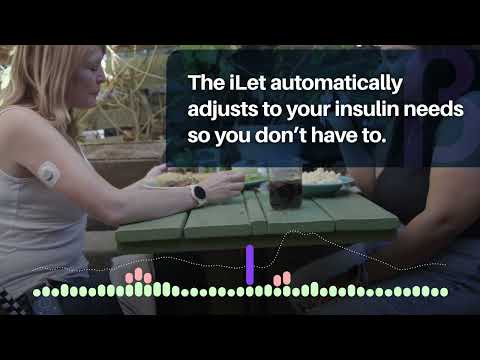
The company's flagship product is the iLet Bionic Pancreas, an FDA-cleared insulin delivery device. What sets the iLet apart is its adaptive closed-loop algorithms, which autonomously determine every insulin dose without requiring the user to count carbohydrates. Unlike other insulin pumps and hybrid closed-loop systems that demand complex parameter configuration, the iLet only requires the user's body weight for initialization. It continuously learns an individual's unique insulin requirements, delivering precise doses every five minutes, day and night, aiming for improved glycemic control with significantly reduced user complexity and burden.
Beta Bionics' primary market focuses on patients six years and older with Type 1 Diabetes (T1D) in the United States. This includes approximately 1.8 million people who require daily insulin. The iLet is particularly appealing to the substantial portion of the T1D population (estimated at 80%) who do not meet target HbA1c goals due to the complexity of existing insulin pump systems. The company has seen strong initial adoption from individuals previously using less complex, but often less effective, Multiple Daily Injection (MDI) therapy, with approximately 67% of iLet users transitioning from MDI.
AI Analysis | Feedback
Here are 1-2 brief analogies to describe Beta Bionics (BBNX):
It's like the Tesla for insulin delivery, offering an autonomous, AI-driven system that simplifies managing diabetes.
Think of it as the Apple of diabetes management devices, making complex insulin delivery intuitive and vastly easier for users.
AI Analysis | Feedback
- iLet Bionic Pancreas: An insulin delivery device that uses adaptive closed-loop algorithms to autonomously determine and deliver insulin doses, simplifying diabetes management by removing the need for carbohydrate counting or manual adjustments.
AI Analysis | Feedback
Beta Bionics (BBNX) sells its product, the iLet Bionic Pancreas, primarily to individuals. The company's major customer categories are:
- People with Type 1 Diabetes (T1D) currently using Multiple Daily Injections (MDI): A significant portion of the iLet's adoption (approximately 67%) has come from individuals who previously managed their diabetes with MDI, indicating a strong appeal for a simpler, yet more effective treatment option.
- People with Type 1 Diabetes (T1D) currently using existing insulin pumps or hybrid closed-loop systems: While a smaller percentage of initial adopters, the iLet aims to provide improved glycemic control and a simplified experience compared to more complex existing automated insulin delivery (AID) systems, attracting users seeking an easier way to manage their condition.
- Children and Adolescents (aged six and older) with Type 1 Diabetes (T1D): The iLet is cleared for patients six and older, and its simplified operation, requiring only body weight for initialization and no carbohydrate counting, is particularly beneficial for younger patients and their caregivers, making diabetes management less burdensome.
AI Analysis | Feedback
AI Analysis | Feedback
Sean Saint, President, CEO & Board Member
Sean Saint is an engineer, entrepreneur, diabetes technologist, and a person with type 1 diabetes. He founded Companion Medical, where he oversaw the development and launch of the InPen system, the first FDA-cleared smart pen, which was subsequently acquired by Medtronic in 2020. Prior to founding Companion Medical, he was an early employee at Dexcom and Tandem Diabetes Care, and also co-founded Alure Medical (now Refine Medical). He assumed the role of CEO at Beta Bionics in August 2022.
Stephen Feider, Chief Financial Officer
Stephen Feider is responsible for the finance, investor relations, human resources, customer service, and IT organizations at Beta Bionics. His experience in the diabetes medical device industry began as Vice President of Finance at Companion Medical, which Medtronic later acquired in 2020. Following the acquisition, he continued his career at Medtronic Diabetes as Finance Director. Earlier in his career, he worked as a CPA at PwC and as Corporate Controller at Marathon Health. He holds both Bachelor's and Master's degrees in Accountancy from Butler University.
Steven Russell, MD, PhD, Chief Medical Officer
Mike Mensinger, Chief Product Officer
Mark Hopman, R.Ph, MBA, Chief Commercial Officer
AI Analysis | Feedback
Key Risks to Beta Bionics (BBNX)
- Intense Competition and Difficulty in Gaining Market Share: Beta Bionics faces significant challenges in penetrating a market dominated by established players such as Medtronic, Tandem Diabetes Care, Inc., and Insulet Corporation, which collectively hold approximately 96% of the market share for insulin pumps and hybrid closed-loop systems.
- Heavy Reliance on the Commercial Success and Adoption of a Single Product: The company's business is currently centered on the iLet Bionic Pancreas. The failure of the iLet to achieve widespread adoption or to maintain its market differentiation could severely impact Beta Bionics' financial performance and viability.
- Challenges in Broad Market Adoption and Payer Reimbursement: Despite the iLet's simplified approach, Beta Bionics must overcome the historical low adoption rates of advanced insulin delivery systems among people with type 1 diabetes and secure favorable reimbursement policies from payers to achieve significant commercial success.
AI Analysis | Feedback
AI Analysis | Feedback
The addressable market for Beta Bionics' main product, the iLet Bionic Pancreas, is approximately 1.8 million people with Type 1 Diabetes (T1D) in the United States.
```AI Analysis | Feedback
Beta Bionics (NASDAQ: BBNX) anticipates several key drivers for its future revenue growth over the next 2-3 years, stemming from its innovative iLet Bionic Pancreas system and strategic commercial initiatives.
The expected drivers include:
- Increasing User Adoption and Expanding Installed Base: Beta Bionics has demonstrated strong traction with its iLet system, evidenced by a 54% year-over-year revenue growth in 2025, reaching $100.3 million, and an installed user base that more than doubled to over 35,000 by the end of 2025. New patient starts continue to grow, with a significant portion (approximately 69%) coming from individuals previously using multiple daily insulin injections (MDI), indicating strong resonance with this underserved market segment.
- Expansion of Sales Force and Commercial Footprint: To further penetrate the market, Beta Bionics plans to expand its field sales team by at least 20 new territories in 2026, building upon its existing 63 territories. This expansion is strategically aimed at achieving broader U.S. coverage across high-prescribing primary care physicians and endocrinology specialists, thereby increasing access to the iLet system.
- Growth through Pharmacy Channel Reimbursement: A significant contributor to revenue growth is the rapid expansion of sales through the Pharmacy Benefit Plan (PBP) channel. PBP channel net sales saw a remarkable 287% increase in 2025. The company projects that 36% to 38% of new patient starts in 2026 will be reimbursed via the pharmacy channel, which also contributes to higher-margin revenue.
- Product Innovation with Mint Patch Pump and Bihormonal System: Beta Bionics is investing in its product pipeline to introduce next-generation solutions. The company is advancing the development of its Mint patch pump, targeting an unconstrained commercial launch by 2027. Additionally, a Phase 2a feasibility trial for a bihormonal system, designed to deliver both insulin and glucagon for more comprehensive glucose management, has been completed. These innovations are expected to broaden the iLet's appeal by offering diverse form factors and enhanced capabilities.
- Entry into the Type 2 Diabetes Market: While initially focused on Type 1 diabetes, Beta Bionics has observed rising adoption of the iLet among people with Type 2 diabetes (T2D), with this group accounting for approximately 25% to 30% of new patient starts in Q4 2025. Expanding the iLet's reach into the significantly larger T2D population represents a substantial long-term growth opportunity.
AI Analysis | Feedback
Share Issuance
- Beta Bionics completed its initial public offering (IPO) on January 31, 2025, selling 13,800,000 shares of common stock at $17.00 per share.
- In conjunction with the IPO, Beta Bionics sold an additional 1,000,000 shares of common stock to an existing investor in a concurrent private placement at $17.00 per share.
- The aggregate gross proceeds to Beta Bionics from the IPO and the concurrent private placement totaled approximately $229.1 million.
Inbound Investments
- An existing investor made an inbound investment of $17.0 million by purchasing 1,000,000 shares of common stock in a concurrent private placement at the IPO price.
- The company received significant capital from its initial public offering, which closed on January 31, 2025.
Capital Expenditures
- Beta Bionics invested $1.9 million in capital expenditures during the fourth quarter of 2025.
- For the full year 2025, capital expenditures amounted to $5.3 million.
- The company expects operating expenses and capital expenditures to increase as a percentage of revenue in 2026, reflecting ongoing investments.
Peer Outperformance in Life Sciences Tools & Services
null| Industry | Names | 1Y med | 3Y med | 5Y med | Top 3 by 5Y |
|---|---|---|---|---|---|
| Health Care Distributors | 6 | 17.3% | 53.8% | 104.1% | CAH 475% · MCK 411% · COR 199% |
| Health Care Services | 20 | 17.9% | 38.1% | 10.3% | HIMS 241% · RDNT 138% · DGX 78% |
| Managed Health Care | 8 | 39.2% | -2.4% | 5.5% | OSCR 111% · HQY 42% · ELV 18% |
| Health Care Facilities | 24 | 2.2% | 14.6% | 2.5% | THC 313% · NHC 286% · EHC 137% |
| Health Care Equipment | 50 | -2.9% | 2.7% | -12.1% | UFPT 363% · GKOS 264% · TMDX 164% |
| Pharmaceuticals | 61 | -10.6% | 2.1% | -33.0% | LQDA 878% · KNSA 625% · CORT 471% |
| Health Care Supplies | 11 | 14.2% | -8.8% | -41.7% | LNTH 332% · HAE 71% · MMSI 29% |
| Life Sciences Tools & Services ← | 109 | -12.6% | -13.8% | -66.8% | NTRA 251% · MEDP 234% · IRTC 55% |
| Biotechnology | 364 | -24.5% | -25.6% | -81.9% | DNTH 1068% · ELVN 940% · ADMA 897% |
| Health Care Technology | 22 | -32.8% | -62.7% | -83.8% | VEEV -1% · DOCS -56% |
Latest Trefis Analyses
| Title | Date | |
|---|---|---|
| DASHBOARDS | ||
| Beta Bionics Stock (-37%): Patient Growth Miss Spooks Street | 01/10/2026 | |
| Beta Bionics Earnings Notes | 12/16/2025 | |
| Beta Bionics (BBNX) Operating Cash Flow Comparison | 02/17/2025 | |
| Beta Bionics (BBNX) Net Income Comparison | 02/15/2025 | |
| Beta Bionics (BBNX) Operating Income Comparison | 02/14/2025 | |
| Beta Bionics (BBNX) Revenue Comparison | 02/13/2025 |
| Title | |
|---|---|
| ARTICLES |
Research & Analysis
Invest in Strategies
Wealth Management
Peer Comparisons
| Peers to compare with: |
Financials
| Median | |
|---|---|
| Name | |
| Mkt Price | 54.89 |
| Mkt Cap | 5.5 |
| Rev LTM | 2,047 |
| Op Inc LTM | 235 |
| FCF LTM | 102 |
| FCF 3Y Avg | 277 |
| CFO LTM | 253 |
| CFO 3Y Avg | 434 |
Growth & Margins
| Median | |
|---|---|
| Name | |
| Rev Chg LTM | 19.6% |
| Rev Chg 3Y Avg | 10.2% |
| Rev Chg Q | 18.6% |
| QoQ Delta Rev Chg LTM | 4.2% |
| Op Inc Chg LTM | 17.1% |
| Op Inc Chg 3Y Avg | 28.5% |
| Op Mgn LTM | 6.2% |
| Op Mgn 3Y Avg | 16.2% |
| QoQ Delta Op Mgn LTM | 0.3% |
| CFO/Rev LTM | 8.1% |
| CFO/Rev 3Y Avg | 17.8% |
| FCF/Rev LTM | 1.4% |
| FCF/Rev 3Y Avg | 11.5% |
Price Behavior
| Market Price | $16.84 | |
| Market Cap ($ Bil) | 0.8 | |
| First Trading Date | 01/30/2025 | |
| Distance from 52W High | -47.4% | |
| 50 Days | 200 Days | |
| DMA Price | $18.99 | $15.10 |
| DMA Trend | up | down |
| Distance from DMA | -11.3% | 11.5% |
| 3M | 1YR | |
| Volatility | 78.9% | 82.4% |
| Downside Capture | 139.36 | 122.79 |
| Upside Capture | 81.92 | 74.40 |
| Correlation (S&P 500) | 17.3% | 20.6% |
| 1M | 2M | 3M | 6M | 1Y | 3Y | |
|---|---|---|---|---|---|---|
| Beta | 0.43 | 1.60 | 0.65 | 1.35 | 1.29 | -0.32 |
| Up Beta | -0.46 | 2.41 | 0.88 | 1.33 | 1.41 | -0.55 |
| Down Beta | 4.56 | 2.44 | 1.99 | 1.07 | 1.82 | -0.45 |
| Up Capture | 6% | 271% | 74% | 234% | 79% | 41% |
| Bmk +ve Days | 6 | 16 | 27 | 66 | 132 | 424 |
| Stock +ve Days | 9 | 21 | 30 | 56 | 118 | 200 |
| Down Capture | 65% | -109% | -36% | 79% | 106% | 100% |
| Bmk -ve Days | 16 | 26 | 37 | 60 | 120 | 328 |
| Stock -ve Days | 13 | 20 | 32 | 67 | 131 | 214 |
[1] Upside and downside betas calculated using positive and negative benchmark daily returns respectively
Based On 1-Year Data
| Annualized Return | Annualized Volatility | Sharpe Ratio | Correlation with BBNX | |
|---|---|---|---|---|
| BBNX | -18.4% | 82.4% | 0.13 | - |
| Sector ETF (XLV) | 25.1% | 16.1% | 1.19 | 24.2% |
| Equity (SPY) | 17.1% | 12.7% | 0.95 | 20.2% |
| Gold (GLD) | -4.2% | 29.3% | -0.15 | 8.5% |
| Commodities (DBC) | 52.6% | 20.7% | 1.93 | -16.2% |
| Real Estate (VNQ) | 3.9% | 13.7% | 0.03 | 19.0% |
| Bitcoin (BTCUSD) | -24.8% | 43.7% | -0.53 | 7.0% |
Smart multi-asset allocation framework can stack odds in your favor. Learn How
Based On 5-Year Data
| Annualized Return | Annualized Volatility | Sharpe Ratio | Correlation with BBNX | |
|---|---|---|---|---|
| BBNX | -5.5% | 84.6% | 0.18 | - |
| Sector ETF (XLV) | 8.6% | 15.2% | 0.36 | 30.0% |
| Equity (SPY) | 13.5% | 17.1% | 0.60 | 33.4% |
| Gold (GLD) | 18.3% | 18.9% | 0.78 | 5.2% |
| Commodities (DBC) | 9.8% | 19.5% | 0.38 | -3.0% |
| Real Estate (VNQ) | 1.3% | 18.8% | -0.04 | 25.6% |
| Bitcoin (BTCUSD) | 7.2% | 51.8% | 0.32 | 10.2% |
Smart multi-asset allocation framework can stack odds in your favor. Learn How
Based On 10-Year Data
| Annualized Return | Annualized Volatility | Sharpe Ratio | Correlation with BBNX | |
|---|---|---|---|---|
| BBNX | -2.8% | 84.6% | 0.18 | - |
| Sector ETF (XLV) | 11.2% | 16.7% | 0.55 | 30.0% |
| Equity (SPY) | 15.3% | 17.9% | 0.72 | 33.4% |
| Gold (GLD) | 12.2% | 16.4% | 0.61 | 5.2% |
| Commodities (DBC) | 8.3% | 18.1% | 0.37 | -3.0% |
| Real Estate (VNQ) | 5.1% | 20.7% | 0.21 | 25.6% |
| Bitcoin (BTCUSD) | 63.0% | 66.2% | 1.03 | 10.2% |
Smart multi-asset allocation framework can stack odds in your favor. Learn How
Earnings Returns History
Updated 8/31/2026| Forward Returns | |||
|---|---|---|---|
| Earnings Date | 1D Returns | 5D Returns | 21D Returns |
| 7/29/2026 | -5.9% | -8.3% | 28.8% |
| 4/21/2026 | -0.6% | -17.8% | -17.6% |
| 2/17/2026 | -2.6% | -4.2% | -23.9% |
| 10/28/2025 | 10.3% | 14.5% | 27.1% |
| 7/29/2025 | 14.3% | 7.8% | 29.4% |
| 5/6/2025 | 26.6% | 16.3% | 72.2% |
| SUMMARY STATS | |||
| # Positive | 3 | 3 | 4 |
| # Negative | 3 | 3 | 2 |
| Median Positive | 14.3% | 14.5% | 29.1% |
| Median Negative | -2.6% | -8.3% | -20.8% |
| Max Positive | 26.6% | 16.3% | 72.2% |
| Max Negative | -5.9% | -17.8% | -23.9% |
| Forward Returns | |||
|---|---|---|---|
| Earnings Date | 1D Returns | 5D Returns | 21D Returns |
| 7/29/2026 | -5.9% | -8.3% | 28.8% |
| 4/21/2026 | -0.6% | -17.8% | -17.6% |
| 2/17/2026 | -2.6% | -4.2% | -23.9% |
| 10/28/2025 | 10.3% | 14.5% | 27.1% |
| 7/29/2025 | 14.3% | 7.8% | 29.4% |
| 5/6/2025 | 26.6% | 16.3% | 72.2% |
| SUMMARY STATS | |||
| # Positive | 3 | 3 | 4 |
| # Negative | 3 | 3 | 2 |
| Median Positive | 14.3% | 14.5% | 29.1% |
| Median Negative | -2.6% | -8.3% | -20.8% |
| Max Positive | 26.6% | 16.3% | 72.2% |
| Max Negative | -5.9% | -17.8% | -23.9% |
Recent Forward Guidance
Updated 10/4/2026Latest: Q2 2026 Earnings Reported 7/29/2026
| Forward Guidance | Guidance Change | |||||||
|---|---|---|---|---|---|---|---|---|
| Metric | Source | Low | Mid | High | % Chg | % Delta | Change | Prior |
| 2026 New patient starts reimbursed through the PBP channel | Reported | 0.37 | 0.38 | 0.39 | 0 | Affirmed | Guidance: 0.38 for 2026 | |
| 2026 Revenue | Reported | 131.00 Mil | 133.50 Mil | 136.00 Mil | 0 | Affirmed | Guidance: 133.50 Mil for 2026 | |
| 2026 Gross Profit | Calculated | 76.64 Mil | 78.77 Mil | 80.92 Mil | Rev x Gross Margin | |||
| 2026 Gross margin | Reported | 58.5% | 59.0% | 59.5% | 0.5% | Raised | Guidance: 58.5% for 2026 | |
Prior: Q1 2026 Earnings Reported 4/21/2026
| Forward Guidance | Guidance Change | |||||||
|---|---|---|---|---|---|---|---|---|
| Metric | Source | Low | Mid | High | % Chg | % Delta | Change | Prior |
| 2026 New patient starts reimbursed through the PBP channel | Reported | 0.37 | 0.38 | 0.39 | 1.0% | Raised | Guidance: 0.37 for 2026 | |
| 2026 Total Revenue | Reported | 131.00 Mil | 133.50 Mil | 136.00 Mil | 0.8% | Raised | Guidance: 132.50 Mil for 2026 | |
| 2026 Gross Profit | Calculated | 75.33 Mil | 78.10 Mil | 80.92 Mil | Rev x Gross Margin | |||
| 2026 Gross Margin | Reported | 57.5% | 58.5% | 59.5% | 2.0% | Raised | Guidance: 56.5% for 2026 | |
Q4 2025 Earnings Reported 2/17/2026
| Forward Guidance | Guidance Change | |||||||
|---|---|---|---|---|---|---|---|---|
| Metric | Source | Low | Mid | High | % Chg | % Delta | Change | Prior |
| 2026 PBP channel reimbursement percentage | Reported | 0.36 | 0.37 | 0.38 | 9.0% | Higher New | Actual: 0.28 for 2025 | |
| 2026 Revenue | Reported | 130.00 Mil | 132.50 Mil | 135.00 Mil | 37.3% | Higher New | Actual: 96.50 Mil for 2025 | |
| 2026 Gross Profit | Calculated | 72.15 Mil | 74.86 Mil | 77.62 Mil | Rev x Gross Margin | |||
| 2026 Gross margin | Reported | 55.5% | 56.5% | 57.5% | 2.0% | Higher New | Actual: 54.5% for 2025 | |
Q3 2025 Earnings Reported 10/28/2025
| Forward Guidance | Guidance Change | |||||||
|---|---|---|---|---|---|---|---|---|
| Metric | Source | Low | Mid | High | % Chg | % Delta | Change | Prior |
| 2025 PBP Channel Reimbursement | Reported | 0.27 | 0.28 | 0.29 | 1.5% | Raised | Guidance: 0.27 for 2025 | |
| 2025 Revenue | Reported | 96.50 Mil | 6.6% | Raised | Guidance: 90.50 Mil for 2025 | |||
| 2025 Gross Margin | Reported | 54.0% | 54.5% | 55.0% | 1.0% | Raised | Guidance: 53.5% for 2025 | |
Insider Activity
Updated 10/16/2026| # | Owner | Title | Holding | Action | Filing Date | Price | Shares | Transacted Value | Value of Held Shares | Form |
|---|---|---|---|---|---|---|---|---|---|---|
| 1 | Hopman, Mark | Chief Commercial Officer | Direct | Sell | 10162026 | 17.35 | 775 | 13,446 | 960,045 | Form |
| 2 | Hopman, Mark | Chief Commercial Officer | Direct | Sell | 10052026 | 18.96 | 370 | 7,015 | 1,063,827 | Form |
| 3 | Jones, Christy | Direct | Sell | 9232026 | 23.00 | 6,430 | 147,890 | 449,972 | Form | |
| 4 | Hopman, Mark | Chief Commercial Officer | Direct | Sell | 9172026 | 20.13 | 30,779 | 619,640 | 1,137,030 | Form |
| 5 | Mensinger, Mike | Chief Product Officer | Direct | Sell | 9172026 | 22.00 | 2,650 | 58,300 | 3,902,580 | Form |
| # | Owner | Title | Holding | Action | Filing Date | Price | Shares | Transacted Value | Value of Held Shares | Form |
|---|---|---|---|---|---|---|---|---|---|---|
| 1 | Hopman, Mark | Chief Commercial Officer | Direct | Sell | 10162026 | 17.35 | 775 | 13,446 | 960,045 | Form |
| 2 | Hopman, Mark | Chief Commercial Officer | Direct | Sell | 10052026 | 18.96 | 370 | 7,015 | 1,063,827 | Form |
| 3 | Jones, Christy | Direct | Sell | 9232026 | 23.00 | 6,430 | 147,890 | 449,972 | Form | |
| 4 | Hopman, Mark | Chief Commercial Officer | Direct | Sell | 9172026 | 20.13 | 30,779 | 619,640 | 1,137,030 | Form |
| 5 | Mensinger, Mike | Chief Product Officer | Direct | Sell | 9172026 | 22.00 | 2,650 | 58,300 | 3,902,580 | Form |
| 6 | Hopman, Mark | Chief Commercial Officer | Direct | Sell | 9152026 | 15.52 | 775 | 12,028 | 1,340,649 | Form |
| 7 | Hopman, Mark | Chief Commercial Officer | Direct | Sell | 9102026 | 18.46 | 36,870 | 680,723 | 1,609,162 | Form |
| 8 | Saint, Sean | President & CEO | Direct | Sell | 9042026 | 20.08 | 5,641 | 113,259 | 7,999,578 | Form |
| 9 | Hopman, Mark | Chief Commercial Officer | Direct | Sell | 9032026 | 19.11 | 5,327 | 101,815 | 2,370,540 | Form |
| 10 | Russell, Steven Jon | Chief Medical Officer | Direct | Sell | 9032026 | 19.11 | 4,221 | 80,676 | 3,242,117 | Form |
| 11 | Mensinger, Mike | Chief Product Officer | Direct | Sell | 9032026 | 19.11 | 4,375 | 83,620 | 3,441,123 | Form |
| 12 | Feider, Stephen | Chief Financial Officer | Direct | Sell | 9032026 | 19.11 | 6,675 | 127,580 | 3,046,208 | Form |
| 13 | Saint, Sean | President & CEO | Direct | Sell | 9032026 | 19.11 | 16,867 | 322,381 | 7,723,030 | Form |
| 14 | Feider, Stephen | Chief Financial Officer | Direct | Sell | 6302026 | 17.03 | 4,896 | 83,381 | 2,825,871 | Form |
| 15 | Feider, Stephen | Chief Financial Officer | Direct | Sell | 6302026 | 17.05 | 5,104 | 87,006 | 2,828,576 | Form |
| 16 | Hopman, Mark | Chief Commercial Officer | Direct | Sell | 6252026 | 15.01 | 1,258 | 18,880 | 1,941,384 | Form |
| 17 | Jones, Christy | Direct | Sell | 6252026 | 15.00 | 1,406 | 21,090 | 389,910 | Form | |
| 18 | Hopman, Mark | Chief Commercial Officer | Direct | Sell | 6052026 | 12.31 | 275 | 3,385 | 1,607,834 | Form |
| 19 | Jones, Christy | Direct | Sell | 6052026 | 14.00 | 2,811 | 39,354 | 383,600 | Form | |
| 20 | Mensinger, Mike | Chief Product Officer | Direct | Sell | 6032026 | 12.61 | 4,378 | 55,194 | 2,324,938 | Form |
| 21 | Hopman, Mark | Chief Commercial Officer | Direct | Sell | 6032026 | 12.61 | 5,329 | 67,183 | 1,650,105 | Form |
| 22 | Russell, Steven Jon | Chief Medical Officer | Direct | Sell | 6032026 | 12.61 | 4,222 | 53,227 | 2,191,732 | Form |
| 23 | Feider, Stephen | Chief Financial Officer | Direct | Sell | 6032026 | 12.61 | 6,676 | 84,165 | 2,093,447 | Form |
| 24 | Saint, Sean | President & CEO | Direct | Sell | 6032026 | 12.61 | 16,872 | 212,707 | 5,306,795 | Form |
| 25 | Lezack, Adam | Direct | Sell | 5262026 | 11.21 | 998 | 11,188 | 307,143 | Form | |
| 26 | Jones, Christy | Direct | Sell | 5262026 | 9.95 | 1,998 | 19,880 | 131,798 | Form | |
| 27 | Lezack, Adam | Direct | Sell | 5262026 | 9.95 | 1,000 | 9,950 | 113,748 | Form | |
| 28 | Hopman, Mark | Chief Commercial Officer | Direct | Sell | 3162026 | 30.66 | 2,061 | 63,192 | 4,176,519 | Form |
| 29 | Hopman, Mark | Chief Commercial Officer | Direct | Sell | 3162026 | 29.34 | 856 | 25,112 | 4,056,480 | Form |
| 30 | Russell, Steven Jon | Chief Medical Officer | Direct | Sell | 3162026 | 29.34 | 1,025 | 30,069 | 5,223,873 | Form |
| 31 | Hopman, Mark | Chief Commercial Officer | Direct | Sell | 3052026 | 11.57 | 353 | 4,084 | 1,609,769 | Form |
| 32 | Russell, Steven Jon | Chief Medical Officer | Direct | Sell | 3032026 | 12.36 | 1,026 | 12,683 | 2,213,913 | Form |
| 33 | Hopman, Mark | Chief Commercial Officer | Direct | Sell | 3032026 | 12.36 | 834 | 10,310 | 1,724,270 | Form |
| 34 | Mensinger, Mike | Chief Product Officer | Direct | Sell | 3032026 | 12.36 | 1,064 | 13,153 | 2,333,784 | Form |
| 35 | Feider, Stephen | Chief Financial Officer | Direct | Sell | 3032026 | 12.36 | 1,428 | 17,652 | 2,135,207 | Form |
| 36 | Saint, Sean | President & CEO | Direct | Sell | 3032026 | 12.36 | 3,384 | 41,832 | 5,412,020 | Form |
| 37 | Mensinger, Mike | Chief Product Officer | Direct | Sell | 1052026 | 29.61 | 7,800 | 230,950 | 2,456,125 | Form |
| 38 | Feider, Stephen | Chief Financial Officer | Direct | Sell | 1052026 | 29.53 | 20,000 | 590,680 | 1,258,562 | Form |
| 39 | Mensinger, Mike | Chief Product Officer | Direct | Sell | 12042025 | 29.34 | 1,063 | 31,184 | 2,662,292 | Form |
| 40 | Feider, Stephen | Chief Financial Officer | Direct | Sell | 12042025 | 29.34 | 1,427 | 41,862 | 1,250,120 | Form |
| 41 | Saint, Sean | President & CEO | Direct | Sell | 12042025 | 29.34 | 3,278 | 96,163 | 2,872,689 | Form |
| 42 | Lezack, Adam | Direct | Sell | 12022025 | 29.55 | 1,406 | 41,543 | 249,227 | Form | |
| 43 | Palasis, Maria | Direct | Sell | 12022025 | 29.55 | 1,406 | 41,552 | 249,283 | Form | |
| 44 | Lezack, Adam | Direct | Sell | 11052025 | 26.87 | 1,406 | 37,780 | 264,432 | Form | |
| 45 | Palasis, Maria | Direct | Sell | 11052025 | 26.91 | 1,406 | 37,834 | 264,810 | Form | |
| 46 | Feider, Stephen | Chief Financial Officer | Direct | Sell | 10072025 | 21.69 | 4,982 | 108,076 | 955,398 | Form |
| 47 | Feider, Stephen | Chief Financial Officer | Direct | Sell | 10022025 | 20.76 | 15,018 | 311,806 | 914,385 | Form |
Investor Activity (13F)
Updated Oct 20, 2026Active managers (13F portfolio over $250M, at least 3 holdings) with a position over $5M that is either over 10% of their portfolio or held in a concentrated book of 50 or fewer total positions. Index/ETF, sovereign, bank, community-bank and charitable/donor-advised filers are excluded.


Industry Resources
| Health Care Resources |
| U.S. National Library of Medicine |
| ClinicalTrials.gov |
| Modern Healthcare |
| Healthcare Dive |
| Fierce Healthcare |
| Health Affairs |
| Health Data Management |
| FDA Tracker |
| Life Sciences Tools & Services Resources |
| GenomeWeb |
| BioSpace |
| The Scientist |
External Quote Links
| Y Finance | Barrons |
| TradingView | Morningstar |
| SeekingAlpha | ValueLine |
| Motley Fool | Robinhood |
| CNBC | Etrade |
| MarketWatch | Unusual Whales |
| YCharts | Perplexity Finance |
| FinViz |
Prefer one of these to Trefis? Tell us why.