
Alamar Biosciences (ALMR)
Market Price (9/22/2026): $34.51 | Market Cap: $2.0 BilSector: Health Care | Industry: Life Sciences Tools & Services
Alamar Biosciences (ALMR)
Market Price (9/22/2026): $34.51Market Cap: $2.0 BilSector: Health CareIndustry: Life Sciences Tools & Services
Investment Highlights Why It Matters Detailed financial logic regarding cash flow yields vs trend-riding momentum.
Megatrend and thematic driversMegatrends include Biotechnology & Genomics, and Precision Medicine. Themes include Advanced Diagnostics, Personalized Diagnostics, Show more. | Trading close to highsDist 52W High is -4.2%, Dist 3Y High is -4.2% Weak multi-year price returns3Y Excs Rtn is -13% | Not profitable at operating income levelOp Inc LTMOperating Income, Last Twelve Months is -42 Mil, Op Mgn LTMOperating Margin = Operating Income / Revenue Reflects profitability before taxes and before impact of capital structure (interest payments). is -50% Not cash flow generativeCFO/Rev LTMCash Flow from Operations / Revenue (Sales), Last Twelve Months (LTM) is -67%, FCF/Rev LTMFree Cash Flow / Revenue (Sales), Last Twelve Months (LTM) is -75% Yield minus risk free rate is negativeERPEquity Risk Premium (ERP) = Total Yield - Risk Free Rate, Reflects the premium above risk free assets offered by the investment. is -6.5% Key risksALMR key risks include [1] failure to obtain regulatory approval for its planned diagnostic IVD platform and [2] insufficient market adoption and revenue generation from its newly launched ARGO HT system. |
| Megatrend and thematic driversMegatrends include Biotechnology & Genomics, and Precision Medicine. Themes include Advanced Diagnostics, Personalized Diagnostics, Show more. |
| Trading close to highsDist 52W High is -4.2%, Dist 3Y High is -4.2% |
| Weak multi-year price returns3Y Excs Rtn is -13% |
| Not profitable at operating income levelOp Inc LTMOperating Income, Last Twelve Months is -42 Mil, Op Mgn LTMOperating Margin = Operating Income / Revenue Reflects profitability before taxes and before impact of capital structure (interest payments). is -50% |
| Not cash flow generativeCFO/Rev LTMCash Flow from Operations / Revenue (Sales), Last Twelve Months (LTM) is -67%, FCF/Rev LTMFree Cash Flow / Revenue (Sales), Last Twelve Months (LTM) is -75% |
| Yield minus risk free rate is negativeERPEquity Risk Premium (ERP) = Total Yield - Risk Free Rate, Reflects the premium above risk free assets offered by the investment. is -6.5% |
| Key risksALMR key risks include [1] failure to obtain regulatory approval for its planned diagnostic IVD platform and [2] insufficient market adoption and revenue generation from its newly launched ARGO HT system. |
Qualitative Assessment
AI Analysis | Feedback
Alamar Biosciences (ALMR) stock has gained about 70% since 5/31/2026 because of the following key factors:
1. Strong Fiscal Second Quarter 2026 Financial Results and Upbeat Full-Year Guidance.
Alamar Biosciences reported robust financial performance for its fiscal Q2 2026, which ended in June 2026. The company announced total revenue of $29.4 million, marking an 82% year-over-year increase compared to the same period in 2025. A significant driver was the consumables revenue, which surged 147% to $15.5 million, now representing 53% of total revenue. Additionally, Alamar achieved a record 60% gross margin for the first time. The company also provided strong full-year 2026 revenue guidance of $116 million to $120 million, indicating a 59% growth at the midpoint. This positive earnings report and outlook led to a substantial market reaction, with the stock gaining 30.65% on August 11, 2026, the day after the announcement.
2. Expanded Strategic Partnership with Alzheimer's Disease Data Initiative and Gates Ventures.
On August 10, 2026, Alamar Biosciences announced an expanded global partnership with the Alzheimer's Disease Data Initiative and Gates Ventures. This collaboration involves profiling an additional 86,000 plasma samples using the company's NULISAseq™ Neuro 220 panel, contributing to a combined dataset expected to exceed 140,000 samples by 2027. This high-profile partnership is crucial for advancing Alzheimer's disease research and was a key commercial catalyst, contributing to the significant stock price appreciation seen on August 11, 2026.
Show more
Alamar Biosciences (ALMR) stock has gained about 70% since 5/31/2026 because of the following key factors:
1. Strong Fiscal Second Quarter 2026 Financial Results and Upbeat Full-Year Guidance.
Alamar Biosciences reported robust financial performance for its fiscal Q2 2026, which ended in June 2026. The company announced total revenue of $29.4 million, marking an 82% year-over-year increase compared to the same period in 2025. A significant driver was the consumables revenue, which surged 147% to $15.5 million, now representing 53% of total revenue. Additionally, Alamar achieved a record 60% gross margin for the first time. The company also provided strong full-year 2026 revenue guidance of $116 million to $120 million, indicating a 59% growth at the midpoint. This positive earnings report and outlook led to a substantial market reaction, with the stock gaining 30.65% on August 11, 2026, the day after the announcement.
2. Expanded Strategic Partnership with Alzheimer's Disease Data Initiative and Gates Ventures.
On August 10, 2026, Alamar Biosciences announced an expanded global partnership with the Alzheimer's Disease Data Initiative and Gates Ventures. This collaboration involves profiling an additional 86,000 plasma samples using the company's NULISAseq™ Neuro 220 panel, contributing to a combined dataset expected to exceed 140,000 samples by 2027. This high-profile partnership is crucial for advancing Alzheimer's disease research and was a key commercial catalyst, contributing to the significant stock price appreciation seen on August 11, 2026.
3. Launch of New Assays and Widespread Scientific Validation.
Alamar Biosciences reinforced its leadership in precision proteomics with new product launches and significant scientific recognition. On July 7, 2026, the company launched the first commercial eMTBR-Tau immunoassay, which is incorporated into its NULISAseq™ Neuro 220 multiplexed panel kits, aimed at improving Alzheimer's disease research. Further demonstrating the adoption and utility of its technology, Alamar's NULISA™ platform was featured in over 140 scientific presentations at the Alzheimer's Association International Conference (AAIC) from July 12-15, 2026. Additionally, on July 28, 2026, the company expanded its offerings by launching the NULISAseq™ Immune 340 Panel for comprehensive profiling of the immune proteome.
Show less
Stock Movement Drivers
Fundamental Drivers
The 71.5% change in ALMR stock from 5/31/2026 to 9/21/2026 was primarily driven by a 0.0% change in the company's P/E Multiple.| (LTM values as of) | 5312026 | 9212026 | Change |
|---|---|---|---|
| Stock Price ($) | 20.44 | 35.05 | 71.5% |
| Change Contribution By: | |||
| Total Revenues ($ Mil) | � | � | 0.0% |
| Net Income Margin (%) | � | � | 0.0% |
| P/E Multiple | � | � | 0.0% |
| Shares Outstanding (Mil) | 67 | 67 | 0.0% |
| Cumulative Contribution | 0.0% |
Market Drivers
5/31/2026 to 9/21/2026| Return | Correlation | |
|---|---|---|
| ALMR | 71.5% | |
| Market (SPY) | 2.5% | 12.0% |
| Sector (XLV) | 13.1% | 10.1% |
Fundamental Drivers
nullnull
Market Drivers
2/28/2026 to 9/21/2026| Return | Correlation | |
|---|---|---|
| ALMR | ||
| Market (SPY) | 13.4% | 12.4% |
| Sector (XLV) | 5.9% | 7.8% |
Fundamental Drivers
nullnull
Market Drivers
8/31/2025 to 9/21/2026| Return | Correlation | |
|---|---|---|
| ALMR | ||
| Market (SPY) | 21.2% | 12.4% |
| Sector (XLV) | 24.6% | 7.8% |
Fundamental Drivers
nullnull
Market Drivers
8/31/2023 to 9/21/2026| Return | Correlation | |
|---|---|---|
| ALMR | ||
| Market (SPY) | 78.3% | 12.4% |
| Sector (XLV) | 32.8% | 7.8% |
Price Returns Compared
| 2021 | 2022 | 2023 | 2024 | 2025 | 2026 | Total [1] | |
|---|---|---|---|---|---|---|---|
| Returns | |||||||
| ALMR Return | - | - | - | - | - | 58% | 58% |
| Peers Return | 20% | -35% | -13% | 2% | 47% | 47% | 51% |
| S&P 500 Return | 27% | -19% | 24% | 23% | 16% | 12% | 104% |
Monthly Win Rates [3] | |||||||
| ALMR Win Rate | - | - | - | - | - | 67% | |
| Peers Win Rate | 70% | 37% | 45% | 45% | 50% | 62% | |
| S&P 500 Win Rate | 75% | 42% | 67% | 75% | 67% | 44% | |
Max Drawdowns [4] | |||||||
| ALMR Max Drawdown | - | - | - | - | - | - | |
| Peers Max Drawdown | -28% | -46% | -43% | -26% | -37% | -29% | |
| S&P 500 Max Drawdown | -5% | -25% | -10% | -8% | -19% | -9% | |
[1] Cumulative total returns since the beginning of 2021
[2] Peers: TMO, ILMN, A, RVTY, GH.
[3] Win Rate = % of calendar months in which monthly returns were positive
[4] Max drawdown represents maximum peak-to-trough decline within a year
[5] 2026 data is for the year up to 9/21/2026 (YTD)
How Low Can It Go
ALMR has limited trading history. Below is the Health Care sector ETF (XLV) in its place.
| Event | XLV | S&P 500 |
|---|---|---|
| 2025 US Tariff Shock | ||
| % Loss | -11.7% | -18.8% |
| % Gain to Breakeven | 13.3% | 23.1% |
| Time to Breakeven | 142 days | 79 days |
| 2022 Inflation Shock & Fed Tightening | ||
| % Loss | -13.8% | -24.5% |
| % Gain to Breakeven | 15.9% | 32.4% |
| Time to Breakeven | 166 days | 427 days |
| 2020 COVID-19 Crash | ||
| % Loss | -27.9% | -33.7% |
| % Gain to Breakeven | 38.8% | 50.9% |
| Time to Breakeven | 77 days | 140 days |
| Q4 2018 Fed Policy Error / Growth Scare | ||
| % Loss | -15.0% | -19.2% |
| % Gain to Breakeven | 17.6% | 23.8% |
| Time to Breakeven | 191 days | 105 days |
| 2015-2016 China Devaluation / Global Growth Scare | ||
| % Loss | -15.9% | -12.2% |
| % Gain to Breakeven | 18.9% | 13.9% |
| Time to Breakeven | 165 days | 62 days |
| 2011 US Debt Ceiling Crisis & European Contagion | ||
| % Loss | -15.8% | -17.9% |
| % Gain to Breakeven | 18.8% | 21.8% |
| Time to Breakeven | 153 days | 123 days |
In The Past
State Street Health Care Select Sector SPDR ETF's stock fell -11.7% during the 2025 US Tariff Shock. Such a loss loss requires a 13.3% gain to breakeven.
Preserve Wealth
Limiting losses and compounding gains is essential to preserving wealth.
Asset Allocation
Actively managed asset allocation strategies protect wealth. Learn more.
ALMR has limited trading history. Below is the Health Care sector ETF (XLV) in its place.
| Event | XLV | S&P 500 |
|---|---|---|
| 2020 COVID-19 Crash | ||
| % Loss | -27.9% | -33.7% |
| % Gain to Breakeven | 38.8% | 50.9% |
| Time to Breakeven | 77 days | 140 days |
| 2008-2009 Global Financial Crisis | ||
| % Loss | -37.9% | -53.4% |
| % Gain to Breakeven | 61.1% | 114.4% |
| Time to Breakeven | 767 days | 1085 days |
In The Past
State Street Health Care Select Sector SPDR ETF's stock fell -11.7% during the 2025 US Tariff Shock. Such a loss loss requires a 13.3% gain to breakeven.
Preserve Wealth
Limiting losses and compounding gains is essential to preserving wealth.
Asset Allocation
Actively managed asset allocation strategies protect wealth. Learn more.
About Alamar Biosciences (ALMR)
Alamar Biosciences (ALMR) is a commercial-stage proteomics company dedicated to advancing the earliest detection of disease through precision protein analysis. The company’s core offering is its proprietary NULISA technology, which is designed to overcome the limitations of existing proteomics tools. This technology enables the detection of protein biomarkers at extremely low concentrations in non-invasive biological fluids like blood, characterized by ultra-high sensitivity, high specificity, flexible multiplexing, a broad dynamic range, and seamless automation.
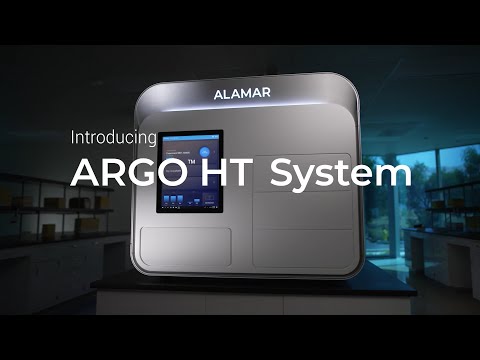
Alamar provides an integrated platform that includes proprietary instruments, consumables, and analytical software, offering scientists an end-to-end solution. Its flagship product, the ARGO High Throughput (HT) System, launched in January 2024, is an automated instrument primarily used for research applications (RUO) in high-sensitivity and high-plex proteomics analysis. The company has experienced rapid adoption, with over 100 instruments installed among more than 300 customers globally, including all top ten biopharmaceutical companies, major research institutions, and contract research organizations. Alamar’s assay menu currently focuses on neurology and immunology, including advanced panels for neurodegeneration and a non-invasive blood test for early Alzheimer’s disease research.
Looking ahead, Alamar is developing a second proprietary instrument, the ARGO HT/DX, specifically for in vitro diagnostic (IVD) applications, with an FDA submission planned for 2027. This initiative is supported by significant collaborations aimed at biomarker discovery in neurodegenerative diseases. By providing a reliable, user-friendly, and highly sensitive platform, Alamar aims to support the entire journey from discovery and translational research to clinical diagnostics, ultimately unlocking the full potential of precision medicine and early disease detection.
AI Analysis | Feedback
1. Illumina for proteomics: Like Illumina provides the advanced tools (sequencers, reagents) that unlocked genomics, Alamar Biosciences offers a proprietary platform (instruments, assays, software) for ultra-sensitive, high-plex protein detection that aims to be the gold standard for proteomics research and discovery.
2. Guardant Health for non-invasive protein diagnostics: Similar to how Guardant Health developed highly sensitive, blood-based liquid biopsies for cancer, Alamar Biosciences is developing technology to detect very low-abundance protein biomarkers in non-invasive blood samples, with a focus on early disease detection and a future path to clinical diagnostics.
AI Analysis | Feedback
- ARGO HT System: A proprietary, fully automated instrument for ultra-high sensitivity and multiplexed proteomics analysis, currently available for research use only.
- NULISA Assay Panels and Kits: Specialized assay panels, such as the CNS Disease Panel 120 and BD-pTau217 assay, along with kits that allow customers to develop their own custom assays.
- Consumables and Analytical Software: Proprietary consumables and analytical software that integrate with the ARGO HT System to provide an end-to-end solution for proteomic analysis.
- ARGO HT/DX Instrument: A second proprietary instrument currently under development for in vitro diagnostics (IVD) applications, intended for future clinical use.
AI Analysis | Feedback
Alamar Biosciences (ALMR) primarily sells its proprietary instruments, consumables, and analytical software to other companies and organizations, rather than individuals. The major customer categories include:
- Biopharmaceutical companies: This includes all ten of the top ten biopharma companies by 2024 revenue.
- Top global research and academic institutions: These are leading scientific and educational organizations.
- Contract research organizations (CROs) and service labs: Companies that provide research services and laboratory analysis.
While the company states that all ten of the top ten biopharma companies by 2024 revenue are customers, specific names of these companies are not provided in the background information.
AI Analysis | Feedback
AI Analysis | Feedback
Yuling Luo, Ph.D. Co-founder, CEO and Chairman
Dr. Yuling Luo is a serial entrepreneur who has dedicated his career to building life science startup companies. He founded Alamar Biosciences in 2018. Prior to Alamar, he was the founder and CEO of Advanced Cell Diagnostics (ACD), which was acquired by Bio-Techne in 2016 for $325 million. He also co-founded Panomics, which was later acquired by Affymetrix in 2008.
Justin McAnear Chief Financial Officer
Justin McAnear joined Alamar Biosciences as Chief Financial Officer on October 15, 2025, bringing over 25 years of operational and financial leadership experience. He played a key role in taking 10x Genomics public in 2019, where he served as CFO for over five years. Earlier in his career, he was the VP of Worldwide Finance and Operations at Tesla for over three years, supporting major initiatives including the Model X and Model 3 launches and the Solar City acquisition. He also held various positions at Apple and J&J.
Tod White, JD President
Tod White was promoted to President on October 15, 2025. Since joining Alamar, he has been central to the company's trajectory, leading across finance, HR, investor relations, fundraising, corporate development, and legal.
Steve Chen, Ph.D. Co-founder, COO and Director
Dr. Steve Chen is a co-founder of Alamar Biosciences.
Xiao-Jun Ma, Ph.D. Chief Technology Officer
Dr. Xiao-Jun Ma serves as the Chief Technology Officer at Alamar Biosciences.
AI Analysis | Feedback
-
Regulatory Approval for IVD Platform: Alamar Biosciences plans to submit its ARGO HT/DX instrument, intended for in vitro diagnostic (IVD) applications, for FDA marketing authorization in 2027. Failure to obtain timely or any regulatory approval would significantly impede the company's strategy to enter the clinical diagnostics market and fully realize its vision of supporting the customer journey from discovery to diagnostics. This is a critical future milestone with a high impact on the company's long-term growth and market expansion.
-
Intense Competition and Risk of Technological Obsolescence: Despite Alamar's assertion that its proprietary NULISA technology is currently the only platform enabling "Precision Proteomics," the proteomics market is highly dynamic and competitive. Existing competitors or new entrants may develop alternative, superior, or more cost-effective technologies that offer comparable or enhanced sensitivity, specificity, multiplexing, or automation. Such developments could erode Alamar's competitive advantage, impact market share, and potentially render aspects of its technology or platform less competitive over time.
-
Dependence on Market Adoption and Commercial Success of ARGO HT System and Assays: The ARGO HT System was commercially launched in January 2024, and while the company reports rapid initial adoption, its continued financial performance heavily relies on sustained market penetration, customer retention, and achieving the projected average annual pull-through of greater than $400,000 per instrument. The success of its initial assay menu, particularly in neurology and immunology, and its strategy of developing assays in partnership with customers, are crucial. Any slowdown in adoption rates, failure to meet pull-through targets, or limitations in the breadth and appeal of its assay menu could significantly impact revenue growth and profitability.
AI Analysis | Feedback
AI Analysis | Feedback
Alamar Biosciences (ALMR) operates in a significant addressable market spanning proteomics research and protein-based clinical diagnostics, which the company itself estimates to be nearly $50 billion globally today. This market is projected to grow to approximately $80 billion over the next decade.
A breakdown of this total addressable market, as estimated by Alamar Biosciences, includes:
- **Proteomics Research Markets:** Approximately $19 billion globally.
- **Immunoassay Markets:** Over $30 billion globally.
Within the broader proteomics landscape, the advanced proteomics segment, which Alamar's NULISA technology and ARGO HT System target, is estimated to be around $4.1 billion today and is expected to reach approximately $20 billion over the next decade globally.
For specific products like their BD-pTau217 assay, which is designed for early diagnosis of Alzheimer's disease using blood samples, the global blood-based biomarker for Alzheimer's disease diagnostics market was estimated at USD 169.22 million in 2025. This market is projected to reach between USD 529.90 million by 2033, growing at a CAGR of 17.37% from 2026 to 2033, and approximately USD 841.9 million by 2035 with a CAGR of 17.4% from 2026 to 2035. North America held a significant share of this market, accounting for 43.03% in 2025. The U.S. blood-based biomarker for Alzheimer's disease diagnostics market alone was estimated at USD 59.64 million in 2024 and is expected to grow at a CAGR of 14.60% from 2025 to 2033.
AI Analysis | Feedback
- Increased Adoption and Expanded Installed Base of the ARGO HT System: Alamar Biosciences anticipates continued growth from the sales of its ARGO High Throughput (HT) System and the associated recurring revenue from consumables and assays. The company experienced significant revenue growth from $25.1 million in 2024 to $74.2 million in 2025, representing a 195% year-over-year increase, with momentum continuing into 2026. This growth is driven by expanding its customer base and increasing the utilization of instruments, leading to higher pull-through of consumables and assays.
- Expansion of the Assay Menu into New Disease Areas and Broader Applications: The company plans to broaden its assay offerings beyond its initial focus on neurology and immunology. Recent product launches, such as the NULISAseq™ Neuro 220 Panel in March 2026 and the NULISAqpcr™ AD 5-plex Assay in January 2026, demonstrate this expansion in neurological disease research. Alamar Biosciences' growth strategy explicitly includes broadening its assay menu into new markets like oncology and cardiometabolic conditions, which is expected to increase revenue density per instrument.
- Advancement Towards and Eventual Commercialization of the ARGO HT/DX Instrument for the Clinical Diagnostics Market: Alamar Biosciences is developing the ARGO HT/DX instrument for its IVD (In Vitro Diagnostics) platform, with an FDA marketing authorization submission targeted for 2027. This move represents a significant expansion into the clinical diagnostics market, which is a substantial long-term revenue opportunity. The company's platform is strategically positioned to scale across various disease areas, including high-value applications like Alzheimer's biomarker detection, which could lead to significant clinical adoption.
AI Analysis | Feedback
Share Issuance
- Alamar Biosciences priced its upsized Initial Public Offering (IPO) on April 16, 2026, offering 11,250,000 shares of common stock at $17.00 per share.
- The gross proceeds from this IPO are expected to be approximately $191.3 million, before deducting underwriting discounts and commissions and other offering expenses.
- The company granted underwriters a 30-day option to purchase up to an additional 1,687,500 shares of common stock at the initial public offering price.
Inbound Investments
- Alamar Biosciences raised $128 million in an oversubscribed Series C funding round in February 2024.
- The company has raised over $300 million in total capital since its founding in 2018, with early investors including Illumina Ventures, Qiming Venture Partners, Morningside Ventures, Samsara BioCapital, and Sherpa Healthcare Partners.
- More recent institutional investors include T. Rowe Price, Braidwell LP, and Sands Capital.
Capital Expenditures
- Capital expenditures for the year ended December 31, 2025, were $6.4 million.
- The company plans to use the net proceeds from its IPO for general corporate purposes, including capital expenditures aimed at scaling the business, such as expanding commercial sales and support capabilities, increasing manufacturing capacity, and continued investment in research and development.
Peer Outperformance in Life Sciences Tools & Services
null| Industry | Names | 1Y med | 3Y med | 5Y med | Top 3 by 5Y |
|---|---|---|---|---|---|
| Health Care Distributors | 6 | 17.8% | 45.5% | 92.1% | CAH 393% · MCK 348% · COR 173% |
| Managed Health Care | 8 | 41.5% | -4.6% | 2.2% | OSCR 80% · HQY 52% · ELV 17% |
| Health Care Services | 20 | 21.2% | 36.3% | -1.7% | HIMS 256% · RDNT 156% · DGX 77% |
| Health Care Facilities | 24 | 6.4% | 8.0% | -5.7% | NHC 273% · THC 256% · ENSG 129% |
| Health Care Equipment | 50 | -0.5% | -1.0% | -21.7% | POCI 11025% · UFPT 345% · GKOS 215% |
| Pharmaceuticals | 62 | -10.5% | 12.0% | -36.3% | LQDA 2281% · INDV 1104% · ETON 1006% |
| Health Care Supplies | 12 | 14.9% | -9.0% | -39.5% | LNTH 282% · HAE 58% · MMSI 19% |
| Life Sciences Tools & Services ← | 109 | 6.3% | -9.6% | -67.8% | SNWV 1712% · MEDP 227% · NTRA 195% |
| Biotechnology | 367 | 0.0% | -22.7% | -79.2% | CELZ 1336% · DNTH 1214% · ELVN 1055% |
| Health Care Technology | 21 | -25.8% | -50.7% | -79.4% | SPOK 69% · HSTM 2% · VEEV -12% |
Latest Trefis Analyses
| Title | Date | |
|---|---|---|
| DASHBOARDS | ||
| Alamar Hits a High Note on Alzheimer's Buzz | 07/11/2026 |
| Title | |
|---|---|
| ARTICLES |
Research & Analysis
Invest in Strategies
Wealth Management
Peer Comparisons
| Peers to compare with: |
Financials
| Median | |
|---|---|
| Name | |
| Mkt Price | 167.91 |
| Mkt Cap | 29.6 |
| Rev LTM | 3,702 |
| Op Inc LTM | 625 |
| FCF LTM | 745 |
| FCF 3Y Avg | 773 |
| CFO LTM | 861 |
| CFO 3Y Avg | 923 |
Growth & Margins
| Median | |
|---|---|
| Name | |
| Rev Chg LTM | 7.2% |
| Rev Chg 3Y Avg | 2.0% |
| Rev Chg Q | 9.4% |
| QoQ Delta Rev Chg LTM | 2.3% |
| Op Inc Chg LTM | 7.8% |
| Op Inc Chg 3Y Avg | 5.3% |
| Op Mgn LTM | 15.3% |
| Op Mgn 3Y Avg | 13.4% |
| QoQ Delta Op Mgn LTM | 0.3% |
| CFO/Rev LTM | 20.5% |
| CFO/Rev 3Y Avg | 19.9% |
| FCF/Rev LTM | 16.5% |
| FCF/Rev 3Y Avg | 17.1% |
Price Behavior
| 1M | 2M | 3M | 6M | 1Y | 3Y | |
|---|---|---|---|---|---|---|
| Beta | -0.18 | 0.78 | 0.49 | 0.02 | -1.11 | 0.03 |
| Up Beta | 1.27 | 2.28 | 0.73 | 1.00 | -1.70 | 1.74 |
| Down Beta | 0.81 | -0.41 | 0.36 | -0.34 | 1.38 | -0.83 |
| Up Capture | 73% | 117% | 152% | 101% | 46% | 4% |
| Bmk +ve Days | 10 | 21 | 32 | 68 | 138 | 427 |
| Stock +ve Days | 10 | 19 | 33 | 46 | 46 | 46 |
| Down Capture | -407% | -8% | -56% | 47% | 29% | 16% |
| Bmk -ve Days | 11 | 21 | 32 | 59 | 113 | 324 |
| Stock -ve Days | 11 | 23 | 31 | 45 | 45 | 45 |
[1] Upside and downside betas calculated using positive and negative benchmark daily returns respectively
Based On 1-Year Data
| Annualized Return | Annualized Volatility | Sharpe Ratio | Correlation with ALMR | |
|---|---|---|---|---|
| ALMR | 59.6% | 81.1% | 1.68 | - |
| Sector ETF (XLV) | 24.6% | 16.1% | 1.17 | 7.8% |
| Equity (SPY) | 18.2% | 13.0% | 1.01 | 12.4% |
| Gold (GLD) | 18.8% | 29.3% | 0.59 | 12.5% |
| Commodities (DBC) | 47.0% | 20.6% | 1.76 | -6.0% |
| Real Estate (VNQ) | 5.7% | 13.6% | 0.15 | -2.2% |
| Bitcoin (BTCUSD) | -31.0% | 44.4% | -0.71 | 5.8% |
Smart multi-asset allocation framework can stack odds in your favor. Learn How
Based On 5-Year Data
| Annualized Return | Annualized Volatility | Sharpe Ratio | Correlation with ALMR | |
|---|---|---|---|---|
| ALMR | 9.8% | 81.1% | 1.68 | - |
| Sector ETF (XLV) | 6.6% | 15.2% | 0.25 | 7.8% |
| Equity (SPY) | 13.1% | 17.2% | 0.58 | 12.4% |
| Gold (GLD) | 18.9% | 18.8% | 0.81 | 12.5% |
| Commodities (DBC) | 11.0% | 19.5% | 0.44 | -6.0% |
| Real Estate (VNQ) | 1.2% | 18.8% | -0.04 | -2.2% |
| Bitcoin (BTCUSD) | 12.5% | 52.6% | 0.42 | 5.8% |
Smart multi-asset allocation framework can stack odds in your favor. Learn How
Based On 10-Year Data
| Annualized Return | Annualized Volatility | Sharpe Ratio | Correlation with ALMR | |
|---|---|---|---|---|
| ALMR | 4.8% | 81.1% | 1.68 | - |
| Sector ETF (XLV) | 10.8% | 16.7% | 0.53 | 7.8% |
| Equity (SPY) | 15.6% | 17.9% | 0.74 | 12.4% |
| Gold (GLD) | 12.1% | 16.4% | 0.61 | 12.5% |
| Commodities (DBC) | 8.4% | 18.1% | 0.38 | -6.0% |
| Real Estate (VNQ) | 4.9% | 20.7% | 0.20 | -2.2% |
| Bitcoin (BTCUSD) | 62.7% | 66.2% | 1.03 | 5.8% |
Smart multi-asset allocation framework can stack odds in your favor. Learn How
Alamar Biosciences — Investor Video Playlist


Industry Resources
| Health Care Resources |
| U.S. National Library of Medicine |
| ClinicalTrials.gov |
| Modern Healthcare |
| Healthcare Dive |
| Fierce Healthcare |
| Health Affairs |
| Health Data Management |
| FDA Tracker |
| Life Sciences Tools & Services Resources |
| GenomeWeb |
| BioSpace |
| The Scientist |
External Quote Links
| Y Finance | Barrons |
| TradingView | Morningstar |
| SeekingAlpha | ValueLine |
| Motley Fool | Robinhood |
| CNBC | Etrade |
| MarketWatch | Unusual Whales |
| YCharts | Perplexity Finance |
| FinViz |
Prefer one of these to Trefis? Tell us why.