
Can Sandisk Stock Drop 50%?

SanDisk (NASDAQ: SNDK), long recognized as a leader in flash memory and solid-state storage, enters 2026 in an uncomfortable position. The stock, now trading near $210, has surged 5x year to date, having benefited from a rebound in NAND pricing and optimism around AI-related storage demand. Yet investors are increasingly asking a sharper question: is SanDisk’s surge sustainable, or is the stock vulnerable to a deep reset—possibly falling 50% toward $110?
If you seek an upside with less volatility than holding an individual stock, consider the High Quality Portfolio. It has comfortably outperformed its benchmark—a combination of the S&P 500, Russell, and S&P MidCap indexes—and has achieved returns exceeding 105% since its inception. Separately, see –Navitas Crashes 55% In A Month: What’s Next?
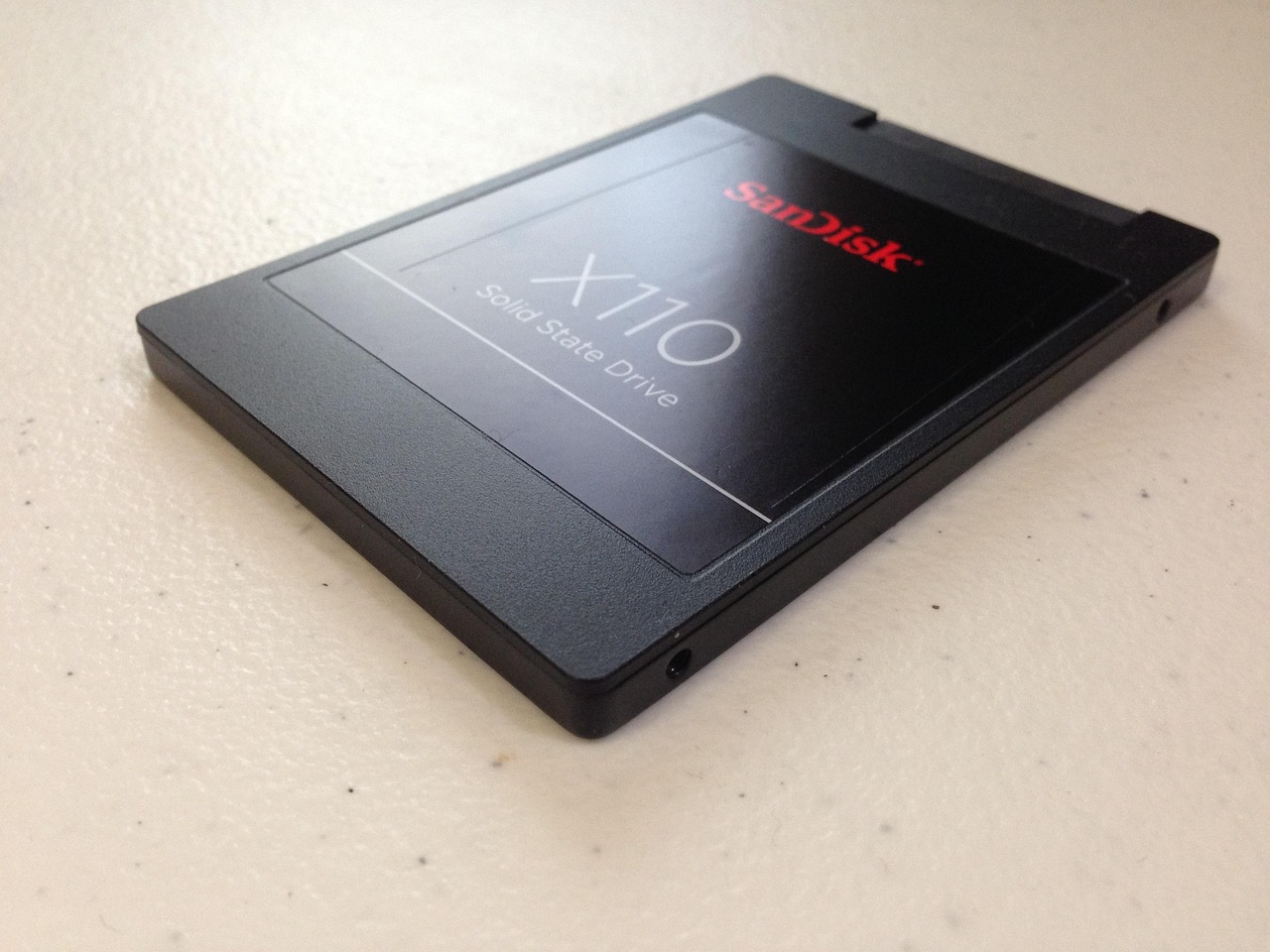
Core Thesis: The Path Back to $110
Growth Normalization & Valuation Risk
SanDisk generated roughly $7.4 billion in revenue in 2025, a year marked by stabilizing NAND prices but only modest 10% revenue growth. Total NAND shipments improved, but pricing remains fragile and heavily dependent on supply discipline industry-wide. Once supply ramps up again—as it always does in cyclical memory markets—SanDisk’s topline momentum could flatten quickly.
At $210, the stock trades around ~16x forward earnings, and ~4x forward sales, a premium multiple built on expectations that the storage cycle will strengthen into 2026. But if NAND pricing cools or growth stalls, even slightly, those multiples could compress fast. A valuation reset toward ~2x sales, more in line with historical memory-cycle trough levels, would place the stock near $110–120.
SanDisk doesn’t need a disaster for the stock to fall sharply. A mild slowdown in the storage cycle could trigger enough multiple compression to recreate a 50% downside.
Key Bearish Drivers
NAND Pricing Fragility – SanDisk’s business remains tied to some of the most volatile pricing in the semiconductor industry. As Samsung, SK Hynix, and Micron ramp higher-layer NAND production, the coming supply wave could quickly erase recent pricing gains.
Margin Pressure from High Costs – Gross margins have improved but remain structurally weaker than peers due to yield challenges and costlier transitions to 238-layer NAND. If prices soften, margin erosion could spread quickly.
Enterprise SSD Competition Intensifies – SanDisk’s enterprise SSD business is under pressure from both hyperscalers developing semi-custom solutions and cheaper Chinese ODM players grabbing share. This erodes a previously high-growth, high-margin segment.
Lack of AI Leverage – While storage demand rises with AI adoption, SanDisk lacks exposure to the highest-value materials (HBM, controllers, custom accelerators). AI growth helps indirectly, not directly—limiting the upside compared to competitors.
Of Course, There Are Bullish Offsets
Cyclical Tailwinds Can Continue – If NAND supply stays tight longer than expected, SanDisk’s pricing power could carry well into 2026.
Cost Optimization Efforts – The company has improved yields, consolidated fabs, and moved aggressively into higher-layer NAND—all of which could lift profitability if pricing holds.
Strong Consumer & OEM Presence – SanDisk remains a dominant brand in SSDs, cards, and embedded storage, retaining wide distribution and long-standing OEM relationships.
Cash Flow Stability in Up-Cycles – When pricing is favorable, SanDisk’s cash generation spikes quickly, enabling reinvestment and buybacks that support valuation.
The Verdict
SanDisk may be trading at $220, but the momentum behind the stock is fragile. If NAND pricing softens, if enterprise SSD share continues slipping, or if margins fail to expand, the stock could slide into a deep downcycle—potentially toward $110. The bear case doesn’t hinge on a collapse; it simply assumes a typical memory reset that compresses valuation multiples back toward historical norms.
Still, there is a long-term story here. If the storage cycle remains tight and SanDisk’s execution improves, today’s valuation could hold—or even set the stage for another leg higher.
Now, we apply a risk assessment framework while constructing the Trefis High Quality (HQ) Portfolio, which, with a collection of 30 stocks, has a track record of comfortably outperforming the S&P 500 over the last 4-year period — and has achieved returns exceeding 91% since its inception. Why is that? As a group, HQ Portfolio stocks provided better returns with less risk versus the benchmark index; less of a roller-coaster ride as evident in HQ Portfolio performance metrics.
Invest with Trefis Market-Beating Portfolios
See all Trefis Price Estimates