
How Micron Stock Surges To $700
The recent 10% plunge in Micron Technology (MU) to approximately $370 has triggered a fundamental debate: is this a prime entry point into an AI-driven supercycle or a structural breakdown in the face of stiff competition? While the broader semiconductor sell-off was sparked by a “momentum break” and technical exhaustion, Micron’s specific path forward is dictated by its battle for High-Bandwidth Memory (HBM) supremacy.
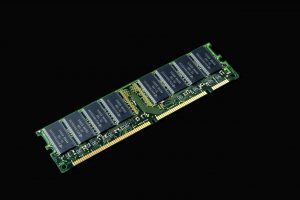
Why Did Micron Stock Fall 10%?
The sharp decline was a collision between extreme technical overextension and a shifting AI narrative. First off, AMD’s disappointing Q1 guidance also impacted the overall semiconductor sector. Besides this, Anthropic introduced new automation capabilities that materially expanded what autonomous AI agents can replace. Markets interpreted this not as incremental productivity but as potential seat and workflow destruction across SaaS. The result was a fast, global de-risking of software and AI-adjacent equities and a rotation into defensives. Before the drop, MU was trading far above its 200-day moving average following a 45% gain in January. This parabolic move made the stock highly vulnerable to any negative catalysts.
Current Investment Debate: Supercycle vs. Competitive Lock-Out
While the broader market sell-off impacted the stock, the core tension is whether a “rising tide” can overcome Micron’s secondary position to SK Hynix.
-
Bull View (The Rising Tide): The bull case says AI demand is so strong that supply cannot keep up. High-bandwidth memory is scarce, and customers need every chip they can get. In this situation, it matters less who is number one and more who can ship product. Micron Technology can sell all of its HBM output at very high prices, even if it is not the market leader. Management’s guidance for about 68% gross margin shows that pricing power is already extreme. As long as shortages continue, Micron earns record profits, and market share becomes a secondary issue. Related: Market Thinks Micron Stock Is Cyclical, HBM Says Otherwise.
-
Bear View (The Lock-Out): Skeptics counter that not all HBM demand is equal, and strategic platform wins matter more than headline industry growth. SK Hynix has established itself as the dominant HBM supplier for Nvidia’s Blackwell platform, embedding itself deeply into the highest-margin and fastest-growing AI systems. If these design wins persist, Micron risks being positioned as a second-source or overflow supplier, called upon primarily when lead vendors cannot meet demand. That status typically comes with lower pricing power, less predictable volumes, and weaker long-term multiples. Bears worry that once the supply crunch eases, Micron could be pushed back toward legacy DRAM and lower-margin memory products, limiting upside just as capex intensity peaks. For context, Micron has planned $20 billion in FY2026 capital expenditure.
What Next: The HBM4 Frontier and Nvidia’s “Rubin” Wins
Watch Out For These Events
- Nvidia Blackwell HBM allocation: Blackwell is among the most advanced AI platforms and requires large volumes of HBM. The key uncertainty is whether Micron secures a large allocation of Blackwell’s HBM slots versus South Korean rivals like SK Hynix. Confirmation via TrendForce or supply chain leaks would validate Micron as a Tier 1 supplier and could drive a sharp re-rating; exclusion would reinforce the lockout thesis and cap growth.
- Q2 2026 earnings divergence check (est. March 19, 2026) Micron is currently powered by two engines: a hot AI-driven memory cycle and a weak consumer PC and smartphone market. This call matters because ASP trends will show whether AI-driven shortages are lifting prices across standard memory as well. Broad ASP strength implies portfolio-wide leverage, while collapsing legacy prices would signal AI is not strong enough to offset consumer weakness.
- Supply discipline test from competitors (H2 2026): Memory cycles often break when profits lead to overbuilding. Watch capex and wafer-start commentary from Samsung and SK Hynix. Continued restraint would support sustained high pricing, but any signal of aggressive capacity expansion or a price-war strategy would likely mark the end of the supercycle.
- Policy wildcard: US–China semiconductor tensions (anytime): Micron remains exposed to geopolitical risk, as export controls or tariffs can change abruptly. A stable policy backdrop allows management to focus on execution, but new restrictions, especially a ban on HBM exports to China, would directly impair 2026–2027 revenue expectations and reset valuation assumptions.
See Micron Full Analysis.
12-Month Outlook Scenarios
-
Upside Scenario (+70% / $720): Based on achieving $48 EPS in FY27 by securing a leading design win for HBM4 with a major AI chipmaker and expanding the forward P/E to 15x.
-
Downside Scenario (-40% / $240): A “Cyclical Trough” where non-HBM demand falters and competitors flood the market, crashing ASPs and forcing a return to a 10x historical P/E on mid-cycle earnings.
Individual stocks can be volatile, but one thing matters: staying invested. The right portfolio can help you stay invested, capture upside, and mitigate the downside associated with any individual stock.
The Trefis High Quality (HQ) Portfolio, with a collection of 30 stocks, has a track record of comfortably outperforming its benchmark that includes all three – the S&P 500, S&P mid-cap, and Russell 2000 indices. Why is that? As a group, HQ Portfolio stocks provided better returns with less risk versus the benchmark index; less of a roller-coaster ride, as evident in HQ Portfolio performance metrics.