
Micron Stock: Up 170% And Still Cheap?

Micron Technology (NASDAQ:MU) has been on a tear, with the stock gaining about 170% year-to-date, making it a standout performer in the semiconductor space. The rally is driven largely by the Artificial Intelligence (AI) infrastructure boom and the spill-over effects it is having on the broader memory market. With the stock trading at a compelling valuation of around 13x estimated FY’26 earnings and a mere 11x projected FY’27 earnings, and consensus estimates projecting revenue growth of nearly 55% this fiscal year, the crucial question remains: Does the boom in demand for High-Bandwidth Memory (HBM) help to transition Micron from a traditional cyclical memory player to a more enduring AI growth story?
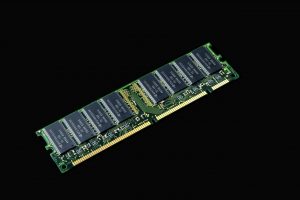
Image by Cliff Smith from Pixabay
You can’t predict what happens to individual stocks, but you can prepare. See how High Quality Portfolio helps you.
HBM and the AI Build Out: Micron’s Critical Edge
The catalyst is clear: AI infrastructure demand. This demand is creating an unprecedented premium for high-performance memory products, particularly HBM. While traditional DRAM provides the raw capacity, HBM delivers the immense bandwidth and ultra-low latency essential for training and running complex large language models (LLMs) at scale. There are several key drivers for HBM business.
-
Micron is a key supplier for the most advanced AI platforms, including NVIDIA’s Blackwell GB200 and AMD’s Instinct MI350 series. Its HBM3E solution offers an industry-leading advantage in power efficiency, consuming about 30% less power than competing offerings. This efficiency translates directly into operational savings for hyperscalers building massive data centers.
-
Memory content per AI system is rising dramatically. Nvidia’s latest Blackwell chips carry substantially more memory per node compared to previous generations, and this demand could potentially intensify as models expand beyond text into multimodal formats like video.
-
The HBM business has been surging. In Fiscal Q4 2025, HBM revenue grew to nearly $2 billion, implying an annualized run rate approaching $8 billion. The company’s focus on high-margin products is evident in its Cloud Memory Business Unit, which achieved a gross margin of 59% in the quarter, up from 49% in the year-ago quarter.
The Supply Crunch
The AI boom is colliding with a structural bottleneck in DRAM manufacturing. HBM is inherently more complex and wafer-intensive to produce compared to traditional DRAM. It requires intricate 3D stacking and advanced through-silicon via (TSV) technology, consuming approximately three times as many wafers as standard DRAM to produce the same number of bits.
This has resulted in a critical supply-demand imbalance:
-
Earlier in 2025, Micron noted that its entire HBM output for the calendar year was already sold out, with strong demand visibility stretching into 2026. This guarantees high-margin revenue for the foreseeable future.
-
The shift in capacity away from standard DRAM to HBM is constraining output for PCs and servers. This capacity squeeze is tightening the supply-demand balance across the entire memory market, supporting sharp increases in DRAM pricing and contributing to Micron’s overall gross margin expansion.
- December contract prices of some categories of DRAM as well as 3D NAND increased 80% to 100% month-on-month, per TeamGroup, a maker of memory modules.
-
Gross margin for Q4 FY’25 climbed to a robust 45.7% (Non-GAAP), driven largely by the favorable mix shift toward the high-value HBM segment. Things could get better still in the coming quarters.
Cyclical Headwind vs. Secular Tailwinds
So let’s come back to Micron’s valuation. Trading at about 13x FY’26 earnings, with close to 57% growth projected for the year, the stock looks cheap. But memory stocks are typically very cyclical, moving between boom and bust cycles. The markets are actually seeing an upcycle after a rough 2024. This cyclical nature means that memory stocks often trade at low earnings multiples when earnings are at a near-term high and this might well be the case for Micron at the moment. This is because markets anticipate that earnings will eventually decline in the coming periods as the cycle turns.
However, does HBM change the math for MU stock? We think that Micron’s pivot toward high-bandwidth memory (HBM) can reduce, but will not erase, the inherent cyclicality of its business. The traditional DRAM and NAND markets are likely to remain prone to sharp supply-demand swings and pricing volatility. That said, HBM’s demand appears to be driven by multi-year AI infrastructure build outs and long-term supply agreements with partners like Nvidia. This HBM business’ higher margins, stronger pricing power, and deeper order visibility provide a buffer against the typical boom-bust cycles of commodity memory. Still, as industry capacity eventually expands and AI demand growth normalizes, cyclical pressures could re-emerge, meaning the pivot is more likely to ease cyclicality a bit, rather than eliminate it entirely.
The Trefis High Quality (HQ) Portfolio, with a collection of 30 stocks, has a track record of comfortably outperforming its benchmark that includes all three – the S&P 500, S&P mid-cap, and Russell 2000 indices. Why is that? As a group, HQ Portfolio stocks provided better returns with less risk versus the benchmark index; less of a roller-coaster ride, as evident in HQ Portfolio performance metrics.
Invest with Trefis Market-Beating Portfolios
See all Trefis Price Estimates