
The AI Backbone: How Micron Stock Surged 85% This Year
As generative AI reshapes industries, one of the most critical – but often overlooked – components powering this revolution is memory. Memory maker Micron (NASDAQ:MU) is at the heart of this transformation, providing the high-bandwidth memory (HBM) and DRAM that keep massive AI models running at speed and scale. With AI workloads growing more complex every day, memory is becoming indispensable to hyperscalers and cloud providers. While GPUs and accelerators grab headlines, memory is the silent backbone that determines how fast and efficiently these systems can operate. Micron stock price does reflect this growing demand, surging by about 85% year-to-date in 2025. However, is the stock still worth a look at current levels?
But no matter how attractive, investing in a single stock carries high risk. Trefis High Quality Portfolio is designed to reduce stock-specific risk while giving upside exposure.
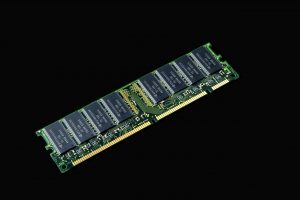
Image by Cliff Smith from Pixabay
Earnings And Outlook
The numbers are evident from Micron’s results. For the quarter ended August, Micron revenue reached $11.32 billion, up 46% year-over-year, while adjusted net income surged 157% to $3.47 billion ($3.03 per diluted share). Notably, sales in the cloud memory business more than tripled to $4.5 billion. CEO Sanjay Mehrotra told analysts that demand for Micron’s DRAM and NAND products was higher than previously expected, boosting the company’s outlook.
Strong DRAM shipments across all end markets, robust pricing due to limited supply and low inventory, and slower migration to newer process nodes that are restricting overall output are all contributing to the growth. Micron expects a favorable demand-supply environment for DRAM in 2026, supporting continued profitability. For Q1 2026, Micron expects revenue of $12.5 billion plus or minus $300 million, up about 61% year-over-year at the midpoint.
Strong HBM Memory Demand
HBM is ultra-fast, low-latency memory designed primarily for AI accelerators and GPUs to rapidly process massive model data, while DRAM offers larger-capacity, general-purpose memory that supports AI workloads by storing bulk data, albeit with slower transfer speeds than HBM. Micron is a primary memory and storage partner for Nvidia’s Blackwell GB200 and GB300 platforms, supplying both HBM3E and LPDDR5X solutions, and is also a key supplier for AMD’s Instinct MI350 GPUs. Nvidia’s latest systems feature 33% more memory per node than previous generations, while AI models are increasingly multimodal – incorporating text, video, and speech – further intensifying memory demand. See our note on how Micron Stock Surges 2x To $300
To illustrate the scale of the spending on AI, Amazon (NASDAQ:AMZN), Alphabet (NASDAQ:GOOG), Microsoft (NASDAQ:MSFT), and Meta (NASDAQ:META) have indicated that they could collectively invest $364 billion in capital expenditures for their respective current fiscal years. Oracle said earlier in September that it has signed hundreds of billions of dollars worth of contracts to provide cloud computing services to OpenAI as well as other large customers. While these infrastructure commitments will call for computing power – GPUs or custom ASICs, server and networking tools, memory will also be key and Micron could benefit considerably from this build out. As AI adoption spreads across the economy, Micron is positioned for a prolonged growth trajectory.
There are signs that the most compute-intensive phase of AI training may begin to level off, with the industry’s focus shifting toward inference – the application of trained models to new data in real time and at massive scale. Inference is lighter per task but occurs continuously across millions of users and applications. HBM is crucial for powering AI inference at scale due to its bandwidth and power efficiency advantages, complementing high-end GPUs primarily used for training. This trend indeed favors specialized, power-efficient vendors like Micron.
Supply Boost
The Trefis High Quality (HQ) Portfolio, with a collection of 30 stocks, has a track record of comfortably outperforming its benchmark that includes all 3 – S&P 500, Russell, and S&P midcap —and has achieved returns exceeding 91% since its inception. Why is that? As a group, HQ Portfolio stocks provided better returns with less risk versus the benchmark index; less of a roller-coaster ride, as evident in HQ Portfolio performance metrics.
Invest with Trefis Market-Beating Portfolios
See all Trefis Price Estimates