
What’s Behind ArcelorMittal’s 70% Surge?

ArcelorMittal (NYSE:MT) is up nearly 73% year-to-date, a remarkable run for one of the world’s largest steelmakers. The surge has been supported by stronger earnings, improving market conditions, and a clearer capital-return strategy — but also tempered by risks tied to demand, tariffs, and the steel cycle. Here’s what is powering the move, and what investors should watch going forward.
But if you seek an upside with less volatility than holding an individual stock, consider the High Quality Portfolio. It has comfortably outperformed its benchmark—a combination of the S&P 500, Russell 2000, and S&P MidCap indexes—and has achieved returns exceeding 105% since its inception. Also, see – What’s Next After Bloom Energy’s 5X Surge?
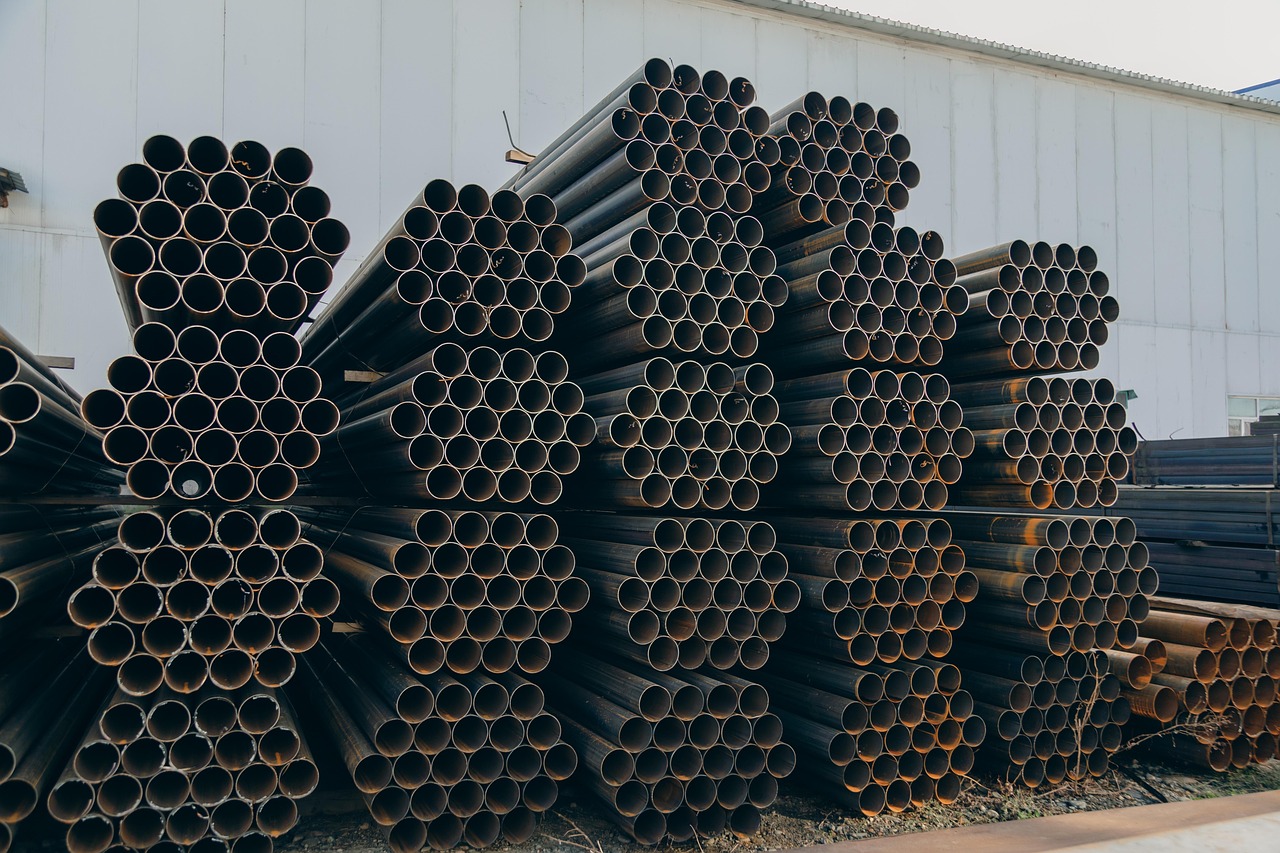
Photo by bakhrom_media on Pixabay
What’s Behind the Lift
Stronger earnings momentum and operational leverage.
ArcelorMittal’s Q3 2025 results beat expectations, with revenue at $15.66 billion, steel shipments of 13.6 Mt, and net income of $377 million, helped by firm iron-ore performance and higher spreads in Europe and Brazil. The company’s integrated mining operations — particularly Liberia — continued to provide cost support and volume stability, strengthening margins and giving the market confidence that MT is positioned better than most peers in a volatile steel cycle.
Robust balance sheet, rising cash flow and an aggressive capital-return policy.
The company maintained strong liquidity of around $11.2 billion, reaffirmed its commitment to return at least 50% of post-dividend free cash flow to shareholders, and continued buybacks through 2025. Capex guidance of $4.5–5.0 billion reflects a balanced focus on growth and modernization while still leaving room for healthy shareholder returns — a combination the market has rewarded heavily this year.
Policy support and structural demand tailwinds.
The EU’s strengthened CBAM (Carbon Border Adjustment Mechanism) framework and Steel & Metals Action Plan increased confidence in long-term European steel demand and pricing. ArcelorMittal is also aligned with multiyear secular demand tied to infrastructure, mobility, electrification, and defense — categories that remain resilient even as broader industrial demand slows. This policy backdrop, coupled with MT’s decarbonization investments and EAF ( Electric Arc Furnaces) expansion, has added a long-duration narrative beyond the usual steel-cycle trade.
Strategic position in green-steel transition and high-value assets.
ArcelorMittal continues advancing its green-steel roadmap, upgrading smelters and refining operations, and pushing forward with hydrogen-ready EAF projects. These investments are strengthening its long-term competitiveness and helping secure future demand from automakers and industrial customers seeking low-carbon steel — a differentiator as regulatory pressure intensifies globally.
What’s Next — Key Levers & Risks
Working-capital swing, free-cash-flow delivery and debt control.
Net debt rose to $9.1 billion due to working-capital buildup, and the company is relying on a meaningful unwind in Q4 to restore free cash flow. Hitting these targets is critical — any miss will pressure sentiment, given the size of this year’s stock rally.
Tariff, trade-flow and energy-cost uncertainty.
Global steel remains exposed to shifting trade policy. MT faces renewed Section 232 risk in the U.S., ongoing trade disputes in Europe, and currency-driven cost swings in Brazil and Eastern Europe. Energy prices — a major driver of steel margins — remain volatile, keeping cost pressure elevated.
Demand variability and rising global overcapacity.
ArcelorMittal recently trimmed its 2025 demand outlook outside China. Weakness in U.S. construction, slow auto recovery, and global oversupply — expected to rise again next year per OECD (Organization for Economic Co-operation and Development) projections — all pose risks to steel spreads. Even moderate demand softness could compress margins and stall the stock’s momentum.
Execution risk on decarbonization and large capital projects.
Many of MT’s green-steel and EAF expansion projects have long lead times and depend on supportive regulation and energy economics. Any delays, cost overruns, or policy reversals — especially in Europe — could impact returns and constrain capital allocation flexibility.
MT’s powerful 73% year-to-date rally is grounded in real fundamentals — stronger quarterly earnings, healthier spreads, disciplined capital returns, and long-term positioning in green steel and high-value mining assets. Still, the stock is far from risk-free. ArcelorMittal remains tied to volatile steel prices, shifting trade policy, energy-cost swings, and the execution demands of its massive decarbonization projects. If the company delivers on its shipment targets, reins in working capital, and manages tariffs and input costs effectively, there is room for further upside. But any stumble in demand, cost inflation, or project execution could quickly erase recent gains. At current levels, much of the optimism is reflected in the price, making MT increasingly dependent on flawless performance to sustain its rally. We value ArcelorMittal stock at $40, currently in line with the market price.
Now, we apply a risk assessment framework while constructing the Trefis High Quality (HQ) Portfolio, which, with a collection of 30 stocks, has a track record of comfortably outperforming the S&P 500 over the last 4-year period. Why is that? As a group, HQ Portfolio stocks provided better returns with less risk versus the benchmark index; less of a roller-coaster ride as evident in HQ Portfolio performance metrics.
Invest with Trefis Market-Beating Portfolios
See all Trefis Price Estimates