
Buy Or Fear Fermi Stock?
Fermi Inc., (NASDAQ: FRMI), a Texas-based AI infrastructure startup co-founded by former U.S. Energy Secretary Rick Perry, had a blockbuster IPO. Just months after its founding in January, the company went public last week, sparking strong investor demand despite its early-stage status and lack of revenue. Shares surged 55% on their first trading day to close at about $32.50 per share, well above their $21 initial offering price, although they have since declined to levels of about $28 per share currently. Fermi’s market reception highlights surging investor appetite for artificial intelligence infrastructure plays. For a company with no revenue and no operating history, the frenzy around its debut raises the question: what exactly are investors betting on?
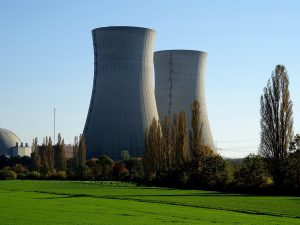
Image by Kurt Klement from Pixabay
Reinventing Data Center Power for the AI Era
At the core of Fermi’s strategy is Project Matador, also called the “HyperGrid,” a hyperscale data center campus in the Texas Panhandle. The company’s model revolves around leasing massive data center space and integrated computing infrastructure to customers such as AI developers, cloud providers, and semiconductor firms. Unlike traditional data centers that depend heavily on strained public utility grids, Fermi plans to embed its own private power supply.
It will operate a mix of natural gas plants, nuclear reactors, solar farms, and battery storage—creating a grid-independent, highly reliable system designed for energy-hungry AI workloads. Fermi brands this approach as HyperRedundant, promising uninterrupted delivery even if the public grid falters. Project Matador is expected to generate 1.1 gigawatts of power by 2026, with a long-term goal of 11 gigawatts and 18 million square feet of space by 2038. For context, CEO Toby Neugebauer claims the site could eventually produce twice as much electricity as all the power plants currently serving New York City.
This ambition reflects the massive energy demands of AI. Training a single large model can consume as much electricity as hundreds of U.S. households annually. As models grow larger and are retrained more often, data center infrastructure must scale dramatically and remain highly reliable, since even brief power interruptions can disrupt AI research and cloud services.
Considerable Risks
That said, the outlook comes with considerable risks. Fermi has no operating history and remains pre-revenue, with construction still in progress. Its plans require massive capital – an estimated $50 to $70 billion over time, including $30 to $35 billion just for nuclear capacity. Financing, construction, and regulatory hurdles remain considerable and a project of this scale could face supply chain bottlenecks, labor shortages, volatile debt markets, and lengthy approval processes for nuclear reactors. Besides this, customer risk adds another layer of uncertainty.
So far, Fermi has signed only nonbinding letters of intent, with no firm tenant contracts. Without binding agreements, demand and cash flows remain uncertain. Finally, demand risk lingers – data center leasing and power revenues depend on broader economic conditions and the pace of AI adoption. While demand appears very strong right now, a slowdown in the pace of advancement of AI tech could hurt long-term growth rates.
In summary, Fermi represents a highly speculative investment opportunity. Valued at approximately $17 billion, the company aims to address AI’s enormous power demands via one of the most ambitious private energy projects ever conceived. That said, the recent stock surge reflects strong investor enthusiasm for the potential of its vision, rather than demonstrated operational success. The company benefits from the credibility and strategic advantages offered by its founders, including former U.S. Energy Secretary Rick Perry, which may support regulatory, financing, and policy efforts. This makes the stock a very high risk, high reward type play at the moment.
The Trefis High Quality (HQ) Portfolio, with a collection of 30 stocks, has a track record of comfortably outperforming its benchmark that includes all 3 – S&P 500, Russell, and S&P midcap indexes—and has achieved returns exceeding 91% since its inception. Why is that? As a group, HQ Portfolio stocks provided better returns with less risk versus the benchmark index; less of a roller-coaster ride, as evident in HQ Portfolio performance metrics.
Invest with Trefis Market-Beating Portfolios
See all Trefis Price Estimates