
Credo Stock: $33 Billion Backbone Of AI Boom?

Credo Technology stock (NASDAQ:CRDO) has cemented itself as a critical enabler of the generative AI era. Following a sizable earnings beat that sent shares jumping nearly 10% on Tuesday, the company’s market cap has swelled to roughly $33 billion. With stock performance up over 2.5x year-to-date, Credo has emerged as one of the most direct beneficiaries of the global AI infrastructure build out. While NVIDIA builds the “brains” of the modern data center, Credo helps to build the “nervous system”—the essential high-speed connectivity that allows thousands of GPUs to function as a single supercomputer.
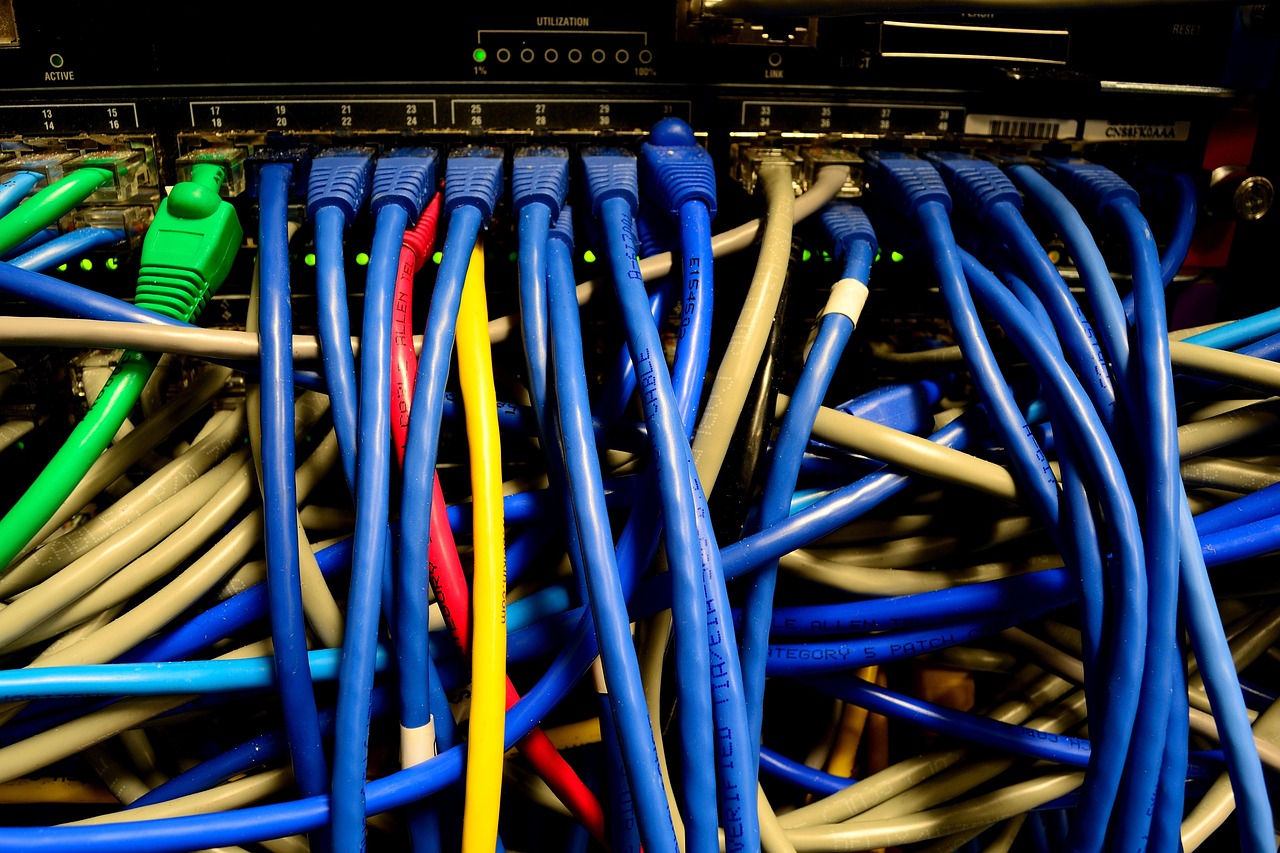
Image by ElasticComputeFarm from Pixabay
While a single stock can excite, it rarely sustains. Financial advisors who win long term use disciplined allocation – blending equities, gold, and alternatives through trusted partners like ours.
The Financials: A Revenue Explosion
The latest surge in share price follows a blockbuster Q2 FY’26 earnings report that underscores the voracious demand for AI connectivity. Revenue: Soared 272% year-over-year to $268 million, while adjusted net income rose more than 10x to $128 million ($0.67 per share). Guidance: The momentum is accelerating, with Q3 revenue projected to reach as high as $345 million – a 156% increase versus the prior year.
Credo Solves The “Interconnect Bottleneck”
To train frontier models like GPT-4 or Grok, data centers must link tens of thousands of GPUs. However, standard copper cables lose signal over short distances at high speeds, and optical cables are too expensive and hot for short-rack connections. Credo helps solves this physics problem with Active Electrical Cables (AECs) and Bluebird DSPs.
- AECs: These specialized cables contain Credo chips that “clean” and boost signals, allowing for thinner, longer, and faster copper connections (up to 1.6 Terabits per second) without the heat and cost of optics.
- Bluebird DSP: This technology specifically addresses power and efficiency challenges in optical transceivers. By cutting latency and power consumption in GPU communications, Credo removes the primary bottleneck in scaling next-generation AI workloads.
A “Leveraged Bet” on the Hyperscalers
Credo’s growth story is inextricably linked to the capital expenditure (capex) wars of the world’s largest tech companies. Amazon (NASDAQ:AMZN), Alphabet (NASDAQ:GOOG), Microsoft (NASDAQ:MSFT), and Meta (NASDAQ:META) have indicated they could spend a cumulative $364 billion in capex for their respective current fiscal years.
Credo acts as a proxy on this spending. The company’s revenue is highly concentrated among the “Big Four” racing to expand their GPU clusters. Per the company’s most recent earnings report
- Customer A: Accounted for 64% of quarterly revenue (widely believed to be Amazon/AWS).
- Customer B: Accounted for 16% of revenue.
- Overall In Q1 FY’26, three hyperscalers each contributed over 10% of revenue, with a fourth now ramping up.
This positions Credo not as a broad market play, but as a specific bet that these 3 or 4 tech giants will continue their arms race.
The Inference Opportunity
A fear in the AI compute space has been that once AI training slows, hardware demand will slow down considerably. However, the shift toward inference (using the models to generate answers) could actually emerge as a considerable tailwind for Credo. Why?
- Inference requires sizable rack density to be cost-effective. Operators pack as many GPUs as possible into servers, creating heat and space constraints that make thick, passive copper cables unusable.
- Credo’s thin, flexible, and low-power AECs are the perfect solution for these dense environments.
- Furthermore, because inference is latency-sensitive (users want answers instantly), Credo’s electrical connectivity—which is faster than converting data to light for optics—offers a distinct technical advantage.
Valuation: High Price, High Quality
Of course, investors cannot ignore valuation. Credo screens as pretty expensive — trading at about 26× trailing sales and more than 120× earnings — but we believe the valuation reflects the quality of its fundamentals. Revenue has surged 176% in the last year and 274% in the latest quarter, while three-year average growth sits above 74%. Profitability is solid with a 19% operating margin and 21% cash-flow margin, and the balance sheet too is almost debt-free with over half of assets held in cash.
When a business scales revenue from $218 million to $600 million in the span of a year, while maintaining strong margins and low leverage, the markets are likely willing to assign a premium. So overall, Credo is not a speculative cash-burning AI play, but a profitable, cash-generating growth company with minimal leverage. Its rapid customer adoption and strong operating profile help explain why investors are paying up despite the elevated multiples.
So, is it too late to buy? That comes down to your risk tolerance. The company’s high customer concentration risk remains a concern. For value-focused investors, Credo certainly looks expensive, and its history of sharp swings — including a 62% drawdown during 2022’s inflation shock — highlights the risks. That said, if adoption continues at the current pace, today’s rich multiples may be justified by the company’s outsized growth prospects.
The Trefis High Quality (HQ) Portfolio, with a collection of 30 stocks, has a track record of comfortably outperforming its benchmark that includes all 3 – the S&P 500, S&P mid-cap, and Russell 2000 indices. Why is that? As a group, HQ Portfolio stocks provided better returns with less risk versus the benchmark index; less of a roller-coaster ride, as evident in HQ Portfolio performance metrics.
Invest with Trefis Market-Beating Portfolios
See all Trefis Price Estimates