
Time To Buy Carnival Stock?

Carnival (NYSE:CCL) stock remains up by about 11% over the past month and by close to 40% over the past 12 months. The recent gains come as the cruise liner just posted a stronger than expected set of second-quarter results (November fiscal year). Revenue came in at about $6.33 billion, up about 9% compared to last year, while net income rose to $565 million, up from just $92 million a year ago. Carnival has also upped its full-year guidance, noting that adjusted net income would be 40% higher compared to 2024. Demand for leisure cruising has held up well following Covid-19, given the attractive pricing compared to land vacations, as well as a desire for an all-inclusive, packaged travel experience.
Cruise liners like Carnival have been benefiting from higher capacity, rising on board revenues, as well as some price increases in recent quarters. Carnival has also been focusing on optimizing its fleet, and this has translated into a strong operating performance and profitability. Carnival will also be opening up its Celebration Key destination located in the Bahamas on July 19, 2025. The new destination could help drive revenue and brand perception by offering a unique and fully controlled private island experience for customers. So is Carnival stock a buy following its current results?
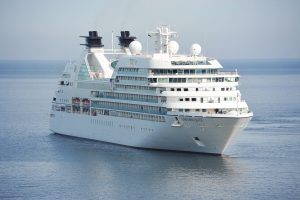
Image by Susann Mielke from Pixabay
Carnival’s recent performance and outlook are strong, and the company’s valuation is also reasonable. However, the stock is not a clear buy for a couple of reasons. We arrive at our conclusion by comparing the current valuation of CCL stock with its operating performance over the recent years, as well as its current and historical financial condition. Our analysis of Carnival along key parameters of Growth, Profitability, Financial Stability, and Downturn Resilience shows that the company has a weak operating performance and financial condition, as detailed below. However, for investors who seek lower volatility than individual stocks, the Trefis High Quality portfolio presents an alternative – having outperformed the S&P 500 and generated returns exceeding 91% since its inception.
How Does Carnival’s Valuation Look vs. The S&P 500?
Going by what you pay per dollar of sales or profit, CCL stock looks slightly cheap compared to the broader market.
• Carnival has a price-to-sales (P/S) ratio of 1.3 vs. a figure of 3.1 for the S&P 500
• Additionally, the company’s price-to-free cash flow (P/FCF) ratio is 17.0 compared to 20.9 for S&P 500
• And, it has a price-to-earnings (P/E) ratio of 16.4 vs. the benchmark’s 26.9
How Have Carnival’s Revenues Grown Over Recent Years?
Carnival’s Revenues have seen notable growth over recent years.
• Carnival has seen its top line grow at an average rate of 130.2% over the last 3 years (vs. increase of 5.5% for S&P 500)
• Its revenues have grown 12.7% from $23 Bil to $25 Bil in the last 12 months (vs. growth of 5.5% for S&P 500)
• Also, its quarterly revenues grew 7.5% to $5.8 Bil in the most recent quarter from $5.4 Bil a year ago (vs. 4.8% improvement for S&P 500)
How Profitable Is Carnival?
Carnival’s profit margins are around the median level for companies in the Trefis coverage universe.
• Carnival’s Operating Income over the last four quarters was $3.8 Bil, which represents a moderate Operating Margin of 15.1%
• Carnival’s Operating Cash Flow (OCF) over this period was $5.1 Bil, pointing to a moderate OCF Margin of 20.0% (vs. 14.9% for S&P 500)
• For the last four-quarter period, Carnival’s Net Income was $2.1 Bil – indicating a poor Net Income Margin of 8.1% (vs. 11.6% for S&P 500)
Does Carnival Look Financially Stable?
Carnival’s balance sheet looks very weak.
• Carnival’s Debt figure was $28 Bil at the end of the most recent quarter, while its market capitalization is $34 Bil (as of 6/26/2025). This implies a very poor Debt-to-Equity Ratio of 84.4% (vs. 19.4% for S&P 500). [Note: A low Debt-to-Equity Ratio is desirable]
• Cash (including cash equivalents) makes up $833 Mil of the $49 Bil in Total Assets for Carnival. This yields a poor Cash-to-Assets Ratio of 1.7%
How Resilient Is CCL Stock During A Downturn?
CCL stock has fared much worse than the benchmark S&P 500 index during some of the recent downturns. While investors have their fingers crossed for a soft landing by the U.S. economy, how bad can things get if there is another recession? Our dashboard How Low Can Stocks Go During A Market Crash captures how key stocks fared during and after the last six market crashes.
Inflation Shock (2022)
• CCL stock fell 79.6% from a high of $31.31 on 2 June 2021 to $6.38 on 10 October 2022, vs. a peak-to-trough decline of 25.4% for the S&P 500
• The stock is yet to recover to its pre-Crisis high
• The highest the stock has reached since then is 28.49 on 30 January 2025 and currently trades at around $26
Covid Pandemic (2020)
• CCL stock fell 84.6% from a high of $51.90 on 17 January 2020 to $7.97 on 2 April 2020, vs. a peak-to-trough decline of 33.9% for the S&P 500
• The stock is yet to recover to its pre-Crisis high
Global Financial Crisis (2008)
• CCL stock fell 70.7% from a high of $51.33 on 9 October 2007 to $15.02 on 20 November 2008, vs. a peak-to-trough decline of 56.8% for the S&P 500
• The stock fully recovered to its pre-Crisis peak by 13 July 2015
Hence, despite its moderate valuation, there are some concerns for Carnival stock, including its weak financial position and downturn resilience. Investing in a single stock can be risky. On the other hand, the Trefis High Quality (HQ) Portfolio, with a collection of 30 stocks, has a track record of comfortably outperforming the S&P 500 over the last 4-year period. Why is that? As a group, HQ Portfolio stocks provided better returns with less risk versus the benchmark index; less of a roller-coaster ride, as evident in HQ Portfolio performance metrics.
Invest with Trefis Market-Beating Portfolios
See all Trefis Price Estimates