
Caterpillar’s Margin Problem: Is the Core Business Losing Steam?

While investors focus on Caterpillar’s data center boom, a sharp profit decline in one of its core segments reveals a potential crack in the growth story.
With its stock trading near a 52-week high after a torrid run, it’s easy to get swept up in the excitement around Caterpillar (CAT). The company boasts a record backlog and a compelling narrative as a key supplier to the artificial intelligence buildout. But beneath the headline strength, one number from its most recent quarter should give any shareholder pause: the profitability of its Resource Industries segment.
A Deep Crack In A Foundational Segment
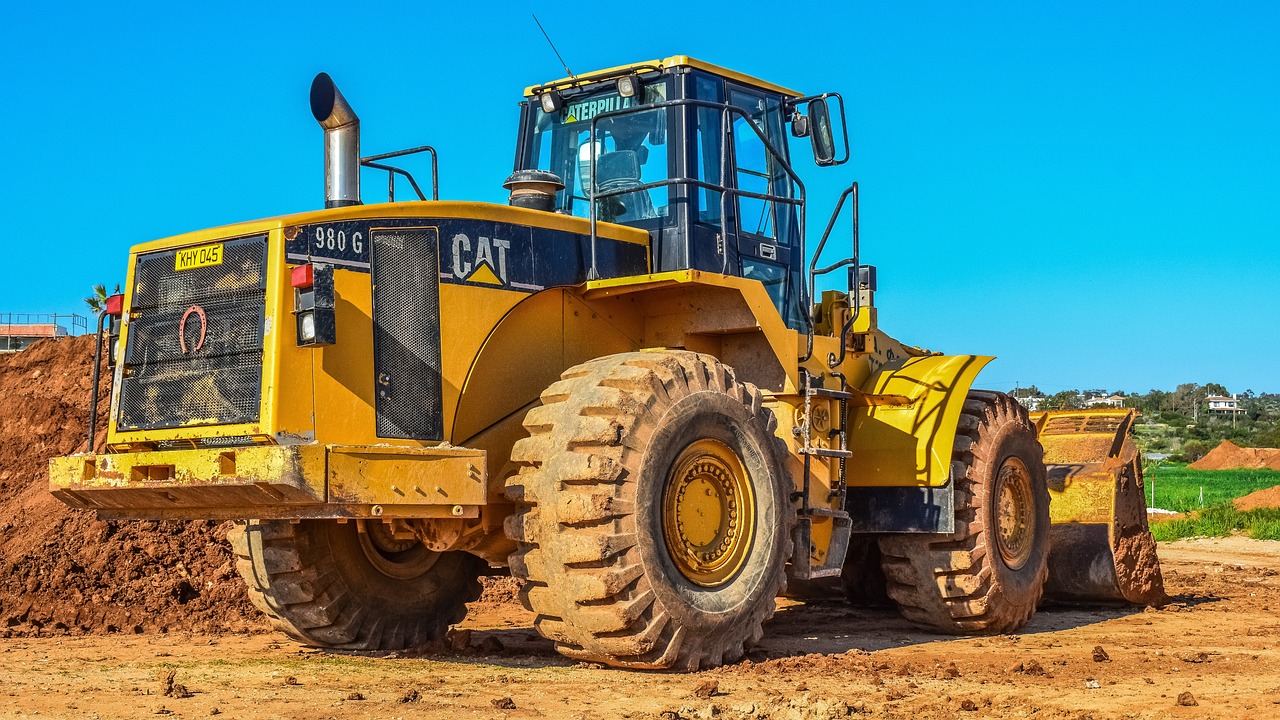
While the company’s total sales grew an impressive 22% in the first quarter, the performance in Resource Industries – the division that makes the iconic giant trucks for mining and quarries – told a starkly different story. Sales in this segment rose just 4% to $3.8 billion. More alarmingly, its profit declined sharply. First quarter profit for Resource Industries fell 39% from the prior year to just $378 million. That caused the segment’s margin to drop by 700 basis points, contracting to 10.0%, its lowest level in recent cycles.
How A Mining Slowdown Hits An AI Darling
This is far more than a minor hiccup in an obscure division. Resource Industries is a bellwether for the global industrial economy and a core part of Caterpillar’s identity. The dramatic profit decline reveals severe pressure from costs and tariffs, which management noted had about a 500 basis point impact on the segment’s margin. It demonstrates that even with slightly higher revenue, profitability can evaporate under current conditions. This puts immense pressure on the company’s other divisions, particularly the high-flying Power and Energy segment, to carry the full weight of investor expectations. If a foundational piece of the business is struggling this much to turn sales into profit, the overall earnings picture becomes more fragile.
- Does CAT Stock’s Surge Offer Your Portfolio Real Power Or Just More Market Risk?
- Large Cap Stocks Trading At 52-Week High
- How Did Wall Street Sleep Through CAT Stock’s 150% Surge?
- Could You Wait Years for Caterpillar Stock to Recover?
- How CAT Stock – An Old-School Industrial – Became An AI Darling
- Does Caterpillar Stock Still Have Room to Run?
What’s At Stake When A Stock Is Priced For Perfection
For a stock priced like Caterpillar, this kind of weakness matters. Its price-to-sales multiple of 6.7 sits well above its own 10-year high of 4.6, a valuation that appears to bake in strong performance across the entire business, extending well beyond its data center-related segments. While management rightly points to a surge in orders for the mining division, calling it the highest quarter for order intake since 2012, the current results show a worrying disconnect between that future demand and present-day profitability. The risk is that the market is rewarding Caterpillar for a tech-driven growth story while under-appreciating the margin pressure hitting its traditional industrial core.
The number to watch, then, is that Resource Industries margin. If it fails to rebound meaningfully in the coming quarters, it would suggest the segment’s profit problems are more than a temporary blip, potentially forcing a broader reassessment of the company’s earnings power.
Navigating Caterpillar’s Risk-Reward Profile
The point is not that Caterpillar’s macro story is broken; it is that a stock carrying a risk like this should not carry your whole outcome. The Trefis High Quality (HQ) Portfolio spreads your exposure across 30 high-quality names and re-balances them with discipline, so being wrong on any one of them barely dents the whole, and it has outpaced a benchmark that combines all major indices – the S&P 500, S&P Mid-cap, and Russell 2000. If the risk above is enough to make you uneasy, a steadier, diversified approach is worth a serious look.