
American Airlines: An Unattractive Investment Despite Low Valuation

American Airlines (NASDAQ:AAL) stock currently trades around $11.10, down 35% this year, and presenting itself as an unattractive investment despite its seemingly low valuation. A comprehensive analysis of American Airlines’ operating performance, financial condition, and historical resilience reveals several significant concerns that outweigh its discounted price. That said, if you seek upside with lower volatility than individual stocks, the Trefis High Quality portfolio presents an alternative — having outperformed the S&P 500 and generated returns exceeding 91% since its inception. Separately, see – Boeing Stock Faces Fresh Crisis After 787 Dreamliner Crash
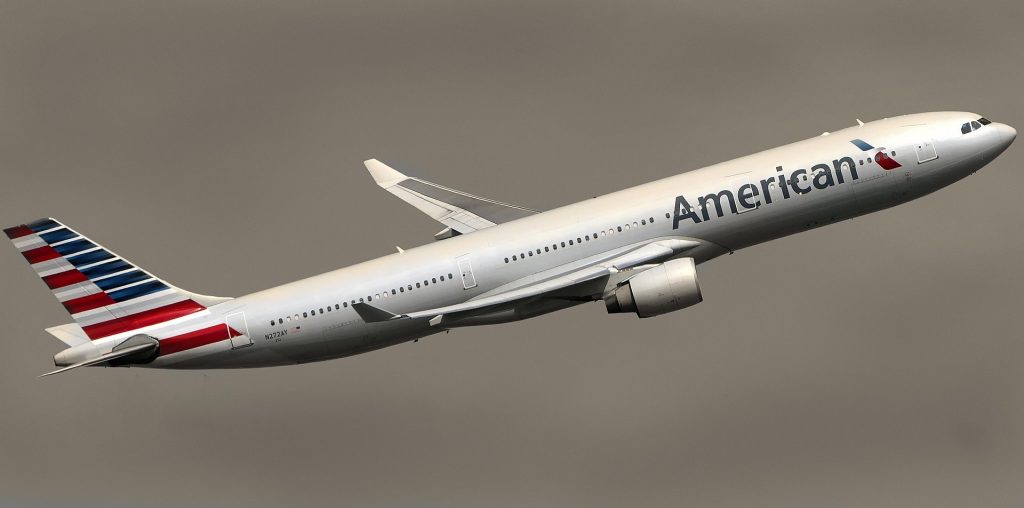
Image by Bilal EL-Daou from Pixabay
Valuation: A Deceptive Appearance
When comparing American Airlines’ valuation to the broader market, the stock appears cheap on a per-dollar-of-sales or profit basis. Its price-to-sales (P/S) ratio stands at 0.1, significantly lower than the S&P 500’s 3.0. Similarly, the company’s price-to-free cash flow (P/FCF) ratio is 1.8 compared to the S&P 500’s 20.5, and its price-to-earnings (P/E) ratio is 11.3 versus the benchmark’s 26.4. While these metrics suggest a bargain, a deeper dive into the company’s fundamentals reveals a more complex picture. Our dashboard on American Airlines Valuation Ratios has more details.
Revenue Growth: Some Gains, But Lagging
American Airlines revenue has experienced some growth in recent years. Over the last three years, its top line has grown at an average rate of 18.0%, outperforming the S&P 500’s 5.5% increase. In the past 12 months, revenues have increased by 1.9% from $53 billion to $54 billion, though this lags the S&P 500’s 5.5% growth. However, its most recent quarterly revenues saw a slight contraction of 0.2% to $13 billion from the prior year, contrasting with the S&P 500’s 4.8% improvement.
Profitability: A Significant Weakness
Despite some revenue growth, the company’s profitability remains a significant concern. American Airlines’ operating income over the last four quarters was $2.9 billion, resulting in a poor operating margin of 5.4%, substantially lower than the S&P 500’s 13.2%. Its operating cash flow (OCF) over the same period was $4.3 billion, yielding a poor OCF margin of 7.9% compared to the S&P 500’s 14.9%. Furthermore, American Airlines’ net income for the last four quarters was a mere $685 million — indicating a very poor net income margin of 1.3%, significantly below the S&P 500’s 11.6%.
Financial Stability: A Weak Balance Sheet
The financial stability of American Airlines also appears weak. As of the most recent quarter, the company’s debt stood at $37 billion, while its market capitalization was $7.3 billion (as of June 11, 2025). This translates to a very poor Debt-to-Equity Ratio of 474.3%, in stark contrast to the S&P 500’s 19.9%. A low Debt-to-Equity Ratio is generally more desirable. On a more positive note, cash and cash equivalents of $7.5 billion constitute 11.9% of American Airlines’ total assets of $63 billion, representing a good cash-to-assets ratio compared to the S&P 500’s 13.8%.
Downturn Resilience: A History of Underperformance
American Airlines’ resilience during economic downturns has historically been much worse than the S&P 500 index. During the Inflation Shock of 2022, AAL stock plummeted 57.7% from a high of $25.82 in June 2021 to $10.92 in October 2023, while the S&P 500 experienced a peak-to-trough decline of 25.4%. The stock has yet to recover to its pre-crisis high.
Similarly, during the Covid Pandemic in 2020, AAL stock fell 70.3% from a high of $30.47 in February 2020 to $9.04 in May 2020, significantly underperforming the S&P 500’s 33.9% decline. It has also not recovered its pre-crisis high from that period.
The Global Financial Crisis of 2008 saw an even more dramatic decline, with AAL stock plummeting 97.2% from a high of $61.96 in January 2007 to $1.76 in July 2008, compared to the S&P 500’s 56.8% decline. The stock has yet to recover its pre-crisis high from 2008 as well.
Conclusion: An Unattractive Outlook
In summary, while American Airlines demonstrates strong revenue growth, this positive aspect is overshadowed by significant financial challenges. The company struggles with poor profitability and limited financial stability, and its ability to withstand economic downturns is highly compromised. These combined factors lead to an overall “unfavorable” assessment for the stock. Therefore, despite its current very low valuation, American Airlines is considered a risky investment and an unappealing stock to buy at its present price.
While you would do well to avoid AAL stock for now, you could explore the Trefis Reinforced Value (RV) Portfolio, which has outperformed its all-cap stocks benchmark (combination of the S&P 500, S&P mid-cap, and Russell 2000 benchmark indices) to produce strong returns for investors. Why is that? The quarterly rebalanced mix of large-, mid- and small-cap RV Portfolio stocks provided a responsive way to make the most of upbeat market conditions while limiting losses when markets head south, as detailed in RV Portfolio performance metrics.
Invest with Trefis Market-Beating Portfolios
See all Trefis Price Estimates