
BitGo (BTGO)
Market Price (9/22/2026): $7.71 | Market Cap: $897.0 MilSector: Financials | Industry: Diversified Capital Markets
BitGo (BTGO)
Market Price (9/22/2026): $7.71Market Cap: $897.0 MilSector: FinancialsIndustry: Diversified Capital Markets
Investment Highlights Why It Matters Detailed financial logic regarding cash flow yields vs trend-riding momentum.
Strong revenue growthRev Chg LTMRevenue Change % Last Twelve Months (LTM) is 227% Megatrend and thematic driversMegatrends include Digital & Alternative Assets, and Crypto & Blockchain. Themes include Digital Asset Custody, and Blockchain Enterprise Solutions. | Weak multi-year price returns2Y Excs Rtn is -95%, 3Y Excs Rtn is -130% | Not profitable at operating income levelOp Inc LTMOperating Income, Last Twelve Months is -11 Mil, Op Mgn LTMOperating Margin = Operating Income / Revenue Reflects profitability before taxes and before impact of capital structure (interest payments). is -0.1% Expensive valuation multiplesP/CFOPrice/(Cash Flow from Operations). CFO is cash before capital expenditures. is 494x Yield minus risk free rate is negativeERPEquity Risk Premium (ERP) = Total Yield - Risk Free Rate, Reflects the premium above risk free assets offered by the investment. is -16% High stock price volatilityVol 12M is 102% Key risksBTGO key risks include [1] balance sheet exposure to digital asset volatility and credit risk from its client lending operations, Show more. |
| Strong revenue growthRev Chg LTMRevenue Change % Last Twelve Months (LTM) is 227% |
| Megatrend and thematic driversMegatrends include Digital & Alternative Assets, and Crypto & Blockchain. Themes include Digital Asset Custody, and Blockchain Enterprise Solutions. |
| Weak multi-year price returns2Y Excs Rtn is -95%, 3Y Excs Rtn is -130% |
| Not profitable at operating income levelOp Inc LTMOperating Income, Last Twelve Months is -11 Mil, Op Mgn LTMOperating Margin = Operating Income / Revenue Reflects profitability before taxes and before impact of capital structure (interest payments). is -0.1% |
| Expensive valuation multiplesP/CFOPrice/(Cash Flow from Operations). CFO is cash before capital expenditures. is 494x |
| Yield minus risk free rate is negativeERPEquity Risk Premium (ERP) = Total Yield - Risk Free Rate, Reflects the premium above risk free assets offered by the investment. is -16% |
| High stock price volatilityVol 12M is 102% |
| Key risksBTGO key risks include [1] balance sheet exposure to digital asset volatility and credit risk from its client lending operations, Show more. |
Qualitative Assessment
AI Analysis | Feedback
BitGo (BTGO) stock has gained about 30% since 5/31/2026 because of the following key factors:
1. Share Repurchase Program Instilled Investor Confidence.
BitGo's Board of Directors authorized a $50 million share repurchase program on June 17, 2026, signaling management's belief that the company's shares were undervalued. This announcement led to an immediate surge in the stock price, with BTGO closing up 13.97% to $6.20 on June 17, 2026.
2. Favorable Cryptocurrency Market Conditions Drove Sector-Wide Recovery.
The broader cryptocurrency market experienced a significant recovery during the period, transitioning from a deep correction. Bitcoin, a key indicator for the digital asset sector, rose 25% in August 2026, briefly exceeding $82,000 in early September. This upturn was further fueled by a reversal in crypto ETF flows, with August 2026 recording $3.52 billion in net inflows, the strongest monthly performance of the year. These macroeconomic tailwinds positively impacted digital asset infrastructure providers like BitGo.
Show more
BitGo (BTGO) stock has gained about 30% since 5/31/2026 because of the following key factors:
1. Share Repurchase Program Instilled Investor Confidence.
BitGo's Board of Directors authorized a $50 million share repurchase program on June 17, 2026, signaling management's belief that the company's shares were undervalued. This announcement led to an immediate surge in the stock price, with BTGO closing up 13.97% to $6.20 on June 17, 2026.
2. Favorable Cryptocurrency Market Conditions Drove Sector-Wide Recovery.
The broader cryptocurrency market experienced a significant recovery during the period, transitioning from a deep correction. Bitcoin, a key indicator for the digital asset sector, rose 25% in August 2026, briefly exceeding $82,000 in early September. This upturn was further fueled by a reversal in crypto ETF flows, with August 2026 recording $3.52 billion in net inflows, the strongest monthly performance of the year. These macroeconomic tailwinds positively impacted digital asset infrastructure providers like BitGo.
3. Strategic Expansions and Growing Institutional Adoption Bolstered Business Prospects.
BitGo continued to expand its institutional offerings and market reach. The company completed the acquisition of NYDIG's institutional trading business in August 2026 for up to $57.5 million, enhancing its derivatives and financing capabilities. Furthermore, BitGo launched support for Arc, Circle's EVM-compatible Layer-1 blockchain for stablecoin settlement, on September 16, 2026, and announced surpassing $2 billion in cleared volume with Crossover Markets by September 14, 2026, showcasing increasing institutional engagement with its infrastructure.
Show less
Stock Movement Drivers
Fundamental Drivers
The 30.8% change in BTGO stock from 5/31/2026 to 9/21/2026 was primarily driven by a 0.0% change in the company's Total Revenues ($ Mil).| (LTM values as of) | 5312026 | 9212026 | Change |
|---|---|---|---|
| Stock Price ($) | 6.01 | 7.86 | 30.8% |
| Change Contribution By: | |||
| Total Revenues ($ Mil) | � | 20,070 | 0.0% |
| P/S Multiple | � | 0.0 | 0.0% |
| Shares Outstanding (Mil) | 116 | 116 | -0.6% |
| Cumulative Contribution | 0.0% |
Market Drivers
5/31/2026 to 9/21/2026| Return | Correlation | |
|---|---|---|
| BTGO | 30.8% | |
| Market (SPY) | 2.5% | 47.2% |
| Sector (XLF) | 8.4% | 4.9% |
Fundamental Drivers
The -20.1% change in BTGO stock from 2/28/2026 to 9/21/2026 was primarily driven by a -0.6% change in the company's Shares Outstanding (Mil).| (LTM values as of) | 2282026 | 9212026 | Change |
|---|---|---|---|
| Stock Price ($) | 9.84 | 7.86 | -20.1% |
| Change Contribution By: | |||
| Total Revenues ($ Mil) | � | 20,070 | 0.0% |
| P/S Multiple | � | 0.0 | 0.0% |
| Shares Outstanding (Mil) | 116 | 116 | -0.6% |
| Cumulative Contribution | 0.0% |
Market Drivers
2/28/2026 to 9/21/2026| Return | Correlation | |
|---|---|---|
| BTGO | -20.1% | |
| Market (SPY) | 13.4% | 47.4% |
| Sector (XLF) | 9.3% | 17.9% |
Fundamental Drivers
nullnull
Market Drivers
8/31/2025 to 9/21/2026| Return | Correlation | |
|---|---|---|
| BTGO | ||
| Market (SPY) | 21.2% | 46.3% |
| Sector (XLF) | 4.8% | 25.2% |
Fundamental Drivers
nullnull
Market Drivers
8/31/2023 to 9/21/2026| Return | Correlation | |
|---|---|---|
| BTGO | ||
| Market (SPY) | 78.3% | 46.3% |
| Sector (XLF) | 69.9% | 25.2% |
Price Returns Compared
| 2021 | 2022 | 2023 | 2024 | 2025 | 2026 | Total [1] | |
|---|---|---|---|---|---|---|---|
| Returns | |||||||
| BTGO Return | - | - | - | - | - | -59% | -59% |
| Peers Return | -27% | -72% | 130% | 55% | 26% | -8% | -16% |
| S&P 500 Return | 27% | -19% | 24% | 23% | 16% | 12% | 104% |
Monthly Win Rates [3] | |||||||
| BTGO Win Rate | - | - | - | - | - | 33% | |
| Peers Win Rate | 40% | 33% | 56% | 48% | 52% | 47% | |
| S&P 500 Win Rate | 75% | 42% | 67% | 75% | 67% | 44% | |
Max Drawdowns [4] | |||||||
| BTGO Max Drawdown | - | - | - | - | - | - | |
| Peers Max Drawdown | -61% | -75% | -50% | -46% | -53% | -49% | |
| S&P 500 Max Drawdown | -5% | -25% | -10% | -8% | -19% | -9% | |
[1] Cumulative total returns since the beginning of 2021
[2] Peers: COIN, BKKT, PYPL, HOOD.
[3] Win Rate = % of calendar months in which monthly returns were positive
[4] Max drawdown represents maximum peak-to-trough decline within a year
[5] 2026 data is for the year up to 9/21/2026 (YTD)
How Low Can It Go
BTGO has limited trading history. Below is the Financials sector ETF (XLF) in its place.
| Event | XLF | S&P 500 |
|---|---|---|
| 2025 US Tariff Shock | ||
| % Loss | -15.5% | -18.8% |
| % Gain to Breakeven | 18.4% | 23.1% |
| Time to Breakeven | 80 days | 79 days |
| Summer-Fall 2023 Five Percent Yield Shock | ||
| % Loss | -10.7% | -9.5% |
| % Gain to Breakeven | 12.0% | 10.5% |
| Time to Breakeven | 26 days | 24 days |
| 2023 SVB Regional Banking Crisis | ||
| % Loss | -16.1% | -6.7% |
| % Gain to Breakeven | 19.1% | 7.1% |
| Time to Breakeven | 270 days | 31 days |
| 2022 Inflation Shock & Fed Tightening | ||
| % Loss | -22.3% | -24.5% |
| % Gain to Breakeven | 28.6% | 32.4% |
| Time to Breakeven | 467 days | 427 days |
| 2020 COVID-19 Crash | ||
| % Loss | -42.8% | -33.7% |
| % Gain to Breakeven | 74.8% | 50.9% |
| Time to Breakeven | 289 days | 140 days |
| Q4 2018 Fed Policy Error / Growth Scare | ||
| % Loss | -19.7% | -19.2% |
| % Gain to Breakeven | 24.5% | 23.8% |
| Time to Breakeven | 123 days | 105 days |
In The Past
State Street Financial Select Sector SPDR ETF's stock fell -15.5% during the 2025 US Tariff Shock. Such a loss loss requires a 18.4% gain to breakeven.
Preserve Wealth
Limiting losses and compounding gains is essential to preserving wealth.
Asset Allocation
Actively managed asset allocation strategies protect wealth. Learn more.
BTGO has limited trading history. Below is the Financials sector ETF (XLF) in its place.
| Event | XLF | S&P 500 |
|---|---|---|
| 2022 Inflation Shock & Fed Tightening | ||
| % Loss | -22.3% | -24.5% |
| % Gain to Breakeven | 28.6% | 32.4% |
| Time to Breakeven | 467 days | 427 days |
| 2020 COVID-19 Crash | ||
| % Loss | -42.8% | -33.7% |
| % Gain to Breakeven | 74.8% | 50.9% |
| Time to Breakeven | 289 days | 140 days |
| 2015-2016 China Devaluation / Global Growth Scare | ||
| % Loss | -21.4% | -12.2% |
| % Gain to Breakeven | 27.3% | 13.9% |
| Time to Breakeven | 272 days | 62 days |
| 2011 US Debt Ceiling Crisis & European Contagion | ||
| % Loss | -26.1% | -17.9% |
| % Gain to Breakeven | 35.3% | 21.8% |
| Time to Breakeven | 162 days | 123 days |
| 2008-2009 Global Financial Crisis | ||
| % Loss | -78.3% | -53.4% |
| % Gain to Breakeven | 359.8% | 114.4% |
| Time to Breakeven | 2329 days | 1085 days |
In The Past
State Street Financial Select Sector SPDR ETF's stock fell -15.5% during the 2025 US Tariff Shock. Such a loss loss requires a 18.4% gain to breakeven.
Preserve Wealth
Limiting losses and compounding gains is essential to preserving wealth.
Asset Allocation
Actively managed asset allocation strategies protect wealth. Learn more.
About BitGo (BTGO)
AI Analysis | Feedback
AI Analysis | Feedback
- Custody Services: Provides secure, institutional-grade storage solutions for digital assets, utilizing multi-signature security and cold storage.
- Wallet Services: Offers multi-signature hot and cold wallets designed for managing and transacting with a wide range of cryptocurrencies.
- Prime Brokerage: Delivers a comprehensive suite of services for institutional investors, including trading, lending, and borrowing of digital assets.
- Staking Services: Allows clients to earn rewards on their proof-of-stake digital assets securely held in custody.
AI Analysis | Feedback
- Galaxy Digital (GLXY.TO)
- Institutional Investors: This includes hedge funds, asset managers, and family offices that require secure and compliant solutions for investing in and managing digital assets.
- Cryptocurrency Exchanges: Exchanges utilize BitGo's custody and wallet services to securely store and manage the digital assets belonging to their users.
- Fintech Companies and Blockchain Startups: These firms integrate BitGo's infrastructure to build their own digital asset products and services, ensuring security and regulatory compliance.
AI Analysis | Feedback
AI Analysis | Feedback
Mike Belshe, Chief Executive Officer, Chief Technology Officer
Mike Belshe is the co-founder of BitGo, serving as CEO and CTO since 2013. He is recognized as a pioneer in web development, having been one of the first engineers at Google Chrome, co-creating the SPDY protocol, and serving as the lead author of HTTP/2.0. Prior to BitGo, he co-founded Lookout Software, an email search company that was acquired by Microsoft. His career also includes management positions at startups such as Good Technology and Critical Path, and software engineering roles at Netscape Communications Corporation and HP Inc. Belshe holds over 10 technology patents.
Edward Reginelli, Chief Financial Officer
Edward Reginelli has been the Chief Financial Officer of BitGo since May 2021. Before joining BitGo, he was the CFO of Cargomatic, Inc. from August 2018 to May 2021. Earlier in his career, Reginelli held various finance positions at companies including RhythmOne Plc, Purple Communications, Inc., Burke Industries, Inc., Compass Aerospace Corporation, PPG Industries, Inc., and Nestle S.A. He is a licensed CPA in Illinois.
Chen Fang, Chief Revenue Officer
Chen Fang has served as BitGo's Chief Revenue Officer since January 2025. He previously held the roles of Chief Operating Officer from August 2022 to March 2025 and Chief Product Officer from February 2020 to August 2022. Before BitGo, he co-founded and was the CEO of Lumina from January 2018 to February 2020, and served as Senior Director of Product Management at Zenefits from February 2015 to January 2018.
Jody Mettler, Chief Operating Officer
Jody Mettler has been the Chief Operating Officer of BitGo since September 2021 and President of BitGo Trust since August 2022. She brings over two decades of experience from Citibank, where her roles included Senior Vice President of Operations and Transformation and Director of Global Service and Operations Transformation.
Jeff Horowitz, Chief Compliance Officer
Jeff Horowitz has served as BitGo's Chief Compliance Officer since January 2021. Prior to BitGo, he was the CCO for Coinbase from July 2018 to December 2020, where he managed their global compliance program and regulatory relationships. He spent over 12 years at Pershing LLC in various compliance leadership roles, including Managing Director, Global Head of Compliance, CCO, and Chief AML and OFAC Officer. Horowitz also held compliance leadership positions at Citigroup, Goldman Sachs, and Salomon Brothers, and began his career as a regulator with the Federal Deposit Insurance Corporation (FDIC). He has been involved with industry organizations such as the Securities Industry and Financial Markets Association (SIFMA) Anti-Money Laundering Committee, FINRA's Large Firm Advisory Committee, and the U.S. Treasury's Bank Secrecy Act Advisory Group (BSAAG).
```AI Analysis | Feedback
1. Dependence on the Health and Adoption of the Broader Cryptocurrency Market
BitGo's business model, which revolves around digital asset custody, staking, and prime services, is significantly influenced by the overall health, sentiment, and institutional adoption of the cryptocurrency market. Fluctuations in the value of digital assets, market downturns, or a decrease in institutional participation can directly impact the demand for BitGo's services and the value of assets under its custody, thereby affecting its revenue streams.2. Evolving and Uncertain Regulatory Landscape
The digital asset industry operates within a rapidly evolving and often unpredictable regulatory environment. BitGo, as a federally chartered digital asset trust bank and a custodian of digital assets, is particularly susceptible to changes in regulations, compliance requirements, and governmental scrutiny. Adverse regulatory developments could lead to increased operational costs, limitations on service offerings, or even challenges to its operating model, potentially impacting its ability to serve clients or expand its business.3. Operational and Security Risks
As a provider of secure digital asset infrastructure and custody solutions, BitGo faces inherent operational and security risks. The threat of cyberattacks, system breaches, technological failures, or human error could lead to the loss, theft, or unauthorized access of client digital assets. Such incidents could result in severe financial losses, significant reputational damage, and a loss of client trust, thereby undermining its competitive position and long-term viability.AI Analysis | Feedback
AI Analysis | Feedback
BitGo (BTGO) operates in the digital asset infrastructure and financial services sector, primarily offering crypto custody, wallet services, staking, trading, financing, stablecoins, and settlement services to institutional clients.
The main addressable markets for BitGo's products and services are:
-
Digital Asset Custody Market: The global digital asset custody market size was estimated at USD 683.38 billion in 2024 and is projected to reach USD 4,378.84 billion by 2033, growing at a Compound Annual Growth Rate (CAGR) of 23.6% from 2025 to 2033. Another estimate places the global digital asset custody market at USD 1.047.02 billion in 2026, projected to reach USD 7.075.9 billion by 2035 at a CAGR of 23.65% from 2026 to 2035. The market is also expected to grow from USD 708.09 billion in 2025 to USD 834.29 billion in 2026 at a CAGR of 17.8%, and further to USD 1.59 trillion in 2030. North America held the largest share of the digital asset custody market in 2024, accounting for approximately 39.5%.
-
Staking Services: While a precise global addressable market size for staking services as a standalone market is not explicitly provided, BitGo's staking operations alone accounted for nearly USD 50 billion in locked value in February 2025. This represented roughly half of its total assets under custody at that time, indicating a substantial market within the broader digital asset ecosystem.
-
Tokenization of Real-World Assets: BitGo's financial and protocol solutions, including support for real-world assets and stablecoins, position it within the growing market for tokenized assets. The tokenization of real-world assets could represent a market of approximately USD 10.9 trillion globally by 2030.
AI Analysis | Feedback
Here are 3-5 expected drivers of future revenue growth for BitGo (BTGO) over the next 2-3 years:
- Increasing Institutional and Enterprise Adoption of Digital Assets: BitGo's core business revolves around providing the necessary trust, technology, and infrastructure for institutions and enterprises to confidently participate in the digital asset economy. With its federal charter allowing regulated custody, wallet infrastructure, settlement, and other digital asset services across all 50 U.S. states, BitGo is well-positioned to capitalize on the growing demand from financial institutions and corporations entering the digital asset space. This regulatory clarity is a significant catalyst for broader institutional engagement, which is expected to drive demand for BitGo's secure and compliant solutions.
- Expansion of Product and Service Offerings: BitGo is continuously investing in product expansion to support institutional and enterprise adoption. The company already offers a comprehensive platform including self-custody wallets, qualified custody, liquidity and prime services, and infrastructure-as-a-service. Future revenue growth will likely stem from enhancing these existing offerings and introducing new, innovative solutions that cater to the evolving needs of the digital asset ecosystem, such as supporting new digital assets, advanced trading features, or enhanced DeFi (Decentralized Finance) integration for institutional clients.
- Strategic Partnerships and Integrations: BitGo has demonstrated a strategy of forging partnerships with other companies in the digital asset and traditional finance sectors. Recent examples include collaborations with Canton Strategic Holdings, Stable Sea, and InvestiFi to expand digital asset custody, B2B stablecoin services, and digital asset trading infrastructure. These partnerships allow BitGo to extend its reach, integrate its services into new platforms, and access a broader client base, thereby driving revenue growth through ecosystem expansion and synergistic offerings.
- Global Market Expansion: The company has stated its intent to continue investing in global growth to further support institutional and enterprise adoption of digital assets worldwide. As the digital asset market matures and regulations evolve in different jurisdictions, BitGo's strategy to expand its international footprint and adapt its offerings to local market demands will be a key driver of revenue. This could involve entering new geographical markets directly or through strategic alliances, increasing its client base beyond its current operational regions.
AI Analysis | Feedback
Share Issuance
- BitGo completed its Initial Public Offering (IPO) in January 2026, issuing 11,026,365 Class A common shares at $18 per share.
- The IPO raised approximately $212.8 million for the company.
Inbound Investments
- In August 2023, BitGo raised $100 million in Series C funding from new strategic investors, achieving a $1.75 billion valuation.
- In 2022, BitGo raised $15 million in a strategic extension round.
- In May 2021, Galaxy Digital announced a proposed acquisition of BitGo for approximately $1.2 billion in cash and stock, though this deal was later terminated in August 2022.
Outbound Investments
- BitGo acquired Brassica, an API infrastructure for private securities and alternative investments, in February 2024.
- In January 2026, BitGo made an investment in Cork.
- In March 2026, BitGo made an investment in Ubyx and joined as a settlement agent.
Capital Expenditures
- BitGo reported capital expenditures of -$7.73 million in the last 12 months.
- The company anticipates an expected increase in capital expenditures and capitalized development costs in 2025.
Peer Outperformance in Diversified Capital Markets
null| Industry | Names | 1Y med | 3Y med | 5Y med | Top 3 by 5Y |
|---|---|---|---|---|---|
| Reinsurance | 6 | 23.3% | 69.0% | 130.6% | SPNT 170% · RGA 149% · RNR 140% |
| Investment Banking & Brokerage | 13 | -0.3% | 111.7% | 118.7% | IBKR 535% · SNEX 254% · GS 181% |
| Diversified Banks | 12 | 29.5% | 134.2% | 114.6% | CM 162% · JPM 156% · RY 149% |
| Life & Health Insurance | 20 | 7.1% | 55.5% | 103.2% | JXN 534% · UNM 361% · FG 204% |
| Multi-Sector Holdings | 4 | 4.1% | 48.9% | 84.6% | JONE 362% · VOYA 86% · BRK-B 83% |
| Property & Casualty Insurance | 42 | 7.9% | 66.0% | 66.2% | ASIC 2706900% · HRTG 404% · UVE 317% |
| Regional Banks | 265 | 24.0% | 91.9% | 64.7% | ESQ 367% · GCBC 309% · NBN 309% |
| Multi-line Insurance | 9 | 8.4% | 69.4% | 61.1% | GNW 194% · L 107% · SLF 102% |
| Financial Exchanges & Data | 15 | 0.0% | 17.3% | 31.2% | VIRT 185% · CBOE 134% · CME 80% |
| Diversified Financial Services | 4 | -6.0% | 23.2% | 30.6% | FRHC 177% · EQH 116% · TMS -55% |
| Consumer Finance | 30 | -0.1% | 90.1% | 25.6% | ENVA 427% · EZPW 312% · FCFS 164% |
| Insurance Brokers | 16 | -16.5% | -8.1% | 17.5% | LIFE 217% · ARX 88% · CRD-A 65% |
| Commercial & Residential Mortgage Finance | 15 | -46.0% | 25.3% | 12.1% | FNMA 446% · FMCC 415% · ACT 182% |
| Asset Management & Custody Banks | 85 | -11.3% | 16.4% | 11.7% | WT 351% · VCTR 281% · SII 278% |
| Specialized Finance | 3 | 11.2% | 42.6% | -5.7% | EFC 26% · CACC -6% · HASI -17% |
| Mortgage REITs | 33 | -12.6% | 7.5% | -20.2% | NREF 55% · RITM 42% · DX 33% |
| Diversified Capital Markets ← | 21 | -33.8% | 16.4% | -36.8% | OPY 204% · LPLA 131% · GOLD 82% |
| Transaction & Payment Processing Services | 16 | -0.2% | -6.9% | -45.5% | V 72% · MA 70% · CPAY 55% |
Research & Analysis
Invest in Strategies
Wealth Management
Peer Comparisons
| Peers to compare with: |
Financials
| Median | |
|---|---|
| Name | |
| Mkt Price | 52.62 |
| Mkt Cap | 46.1 |
| Rev LTM | 6,283 |
| Op Inc LTM | 734 |
| FCF LTM | 178 |
| FCF 3Y Avg | 1,667 |
| CFO LTM | 245 |
| CFO 3Y Avg | 1,699 |
Growth & Margins
| Median | |
|---|---|
| Name | |
| Rev Chg LTM | 5.7% |
| Rev Chg 3Y Avg | 40.8% |
| Rev Chg Q | 4.8% |
| QoQ Delta Rev Chg LTM | 1.2% |
| Op Inc Chg LTM | -61.3% |
| Op Inc Chg 3Y Avg | 40.4% |
| Op Mgn LTM | 11.7% |
| Op Mgn 3Y Avg | 19.4% |
| QoQ Delta Op Mgn LTM | -0.3% |
| CFO/Rev LTM | 5.0% |
| CFO/Rev 3Y Avg | 26.5% |
| FCF/Rev LTM | 3.6% |
| FCF/Rev 3Y Avg | 25.2% |
Price Behavior
| 1M | 2M | 3M | 6M | 1Y | 3Y | |
|---|---|---|---|---|---|---|
| Beta | 1.48 | 3.09 | 3.24 | 3.29 | -0.39 | 0.20 |
| Up Beta | -2.34 | 1.25 | 2.61 | 3.22 | 0.32 | 1.80 |
| Down Beta | -2.29 | 3.42 | 3.66 | 4.47 | -1.07 | 0.12 |
| Up Capture | 708% | 577% | 473% | 296% | 109% | 10% |
| Bmk +ve Days | 10 | 21 | 32 | 68 | 138 | 427 |
| Stock +ve Days | 12 | 19 | 27 | 54 | 62 | 62 |
| Down Capture | 2% | 236% | 245% | 242% | 172% | 95% |
| Bmk -ve Days | 11 | 21 | 32 | 59 | 113 | 324 |
| Stock -ve Days | 9 | 23 | 36 | 72 | 89 | 89 |
[1] Upside and downside betas calculated using positive and negative benchmark daily returns respectively
Based On 1-Year Data
| Annualized Return | Annualized Volatility | Sharpe Ratio | Correlation with BTGO | |
|---|---|---|---|---|
| BTGO | -57.6% | 101.5% | -0.81 | - |
| Sector ETF (XLF) | 4.5% | 14.6% | 0.08 | 25.2% |
| Equity (SPY) | 18.2% | 13.0% | 1.01 | 46.3% |
| Gold (GLD) | 18.8% | 29.3% | 0.59 | 16.5% |
| Commodities (DBC) | 47.0% | 20.6% | 1.76 | -9.0% |
| Real Estate (VNQ) | 5.7% | 13.6% | 0.15 | 8.2% |
| Bitcoin (BTCUSD) | -31.0% | 44.4% | -0.71 | 57.1% |
Smart multi-asset allocation framework can stack odds in your favor. Learn How
Based On 5-Year Data
| Annualized Return | Annualized Volatility | Sharpe Ratio | Correlation with BTGO | |
|---|---|---|---|---|
| BTGO | -15.7% | 101.5% | -0.81 | - |
| Sector ETF (XLF) | 9.8% | 18.4% | 0.40 | 25.2% |
| Equity (SPY) | 13.1% | 17.2% | 0.58 | 46.3% |
| Gold (GLD) | 18.9% | 18.8% | 0.81 | 16.5% |
| Commodities (DBC) | 11.0% | 19.5% | 0.44 | -9.0% |
| Real Estate (VNQ) | 1.2% | 18.8% | -0.04 | 8.2% |
| Bitcoin (BTCUSD) | 12.5% | 52.6% | 0.42 | 57.1% |
Smart multi-asset allocation framework can stack odds in your favor. Learn How
Based On 10-Year Data
| Annualized Return | Annualized Volatility | Sharpe Ratio | Correlation with BTGO | |
|---|---|---|---|---|
| BTGO | -8.2% | 101.5% | -0.81 | - |
| Sector ETF (XLF) | 13.1% | 22.1% | 0.54 | 25.2% |
| Equity (SPY) | 15.6% | 17.9% | 0.74 | 46.3% |
| Gold (GLD) | 12.1% | 16.4% | 0.61 | 16.5% |
| Commodities (DBC) | 8.4% | 18.1% | 0.38 | -9.0% |
| Real Estate (VNQ) | 4.9% | 20.7% | 0.20 | 8.2% |
| Bitcoin (BTCUSD) | 62.7% | 66.2% | 1.03 | 57.1% |
Smart multi-asset allocation framework can stack odds in your favor. Learn How
Insider Activity
Updated 8/11/2026| # | Owner | Title | Holding | Action | Filing Date | Price | Shares | Transacted Value | Value of Held Shares | Form |
|---|---|---|---|---|---|---|---|---|---|---|
| 1 | Reginelli, Edward | Chief Financial Officer | Direct | Sell | 8112026 | 5.02 | 91 | 456 | 2,920,959 | Form |
| 2 | Fang, Chen | Chief Revenue Officer | Direct | Sell | 8112026 | 5.02 | 234 | 1,174 | 6,303,977 | Form |
| 3 | Mettler, Jody | Chief Operating Officer | Direct | Sell | 8112026 | 5.02 | 97 | 486 | 192,456 | Form |
| 4 | Reginelli, Edward | CFO | Direct | Sell | 7282026 | 4.89 | 9,021 | 44,101 | 2,847,614 | Form |
| 5 | Belshe, Michael | CEO, President, CTO | Direct | Sell | 7282026 | 4.89 | 38,691 | 189,149 | 3,903,451 | Form |
| # | Owner | Title | Holding | Action | Filing Date | Price | Shares | Transacted Value | Value of Held Shares | Form |
|---|---|---|---|---|---|---|---|---|---|---|
| 1 | Reginelli, Edward | Chief Financial Officer | Direct | Sell | 8112026 | 5.02 | 91 | 456 | 2,920,959 | Form |
| 2 | Fang, Chen | Chief Revenue Officer | Direct | Sell | 8112026 | 5.02 | 234 | 1,174 | 6,303,977 | Form |
| 3 | Mettler, Jody | Chief Operating Officer | Direct | Sell | 8112026 | 5.02 | 97 | 486 | 192,456 | Form |
| 4 | Reginelli, Edward | CFO | Direct | Sell | 7282026 | 4.89 | 9,021 | 44,101 | 2,847,614 | Form |
| 5 | Belshe, Michael | CEO, President, CTO | Direct | Sell | 7282026 | 4.89 | 38,691 | 189,149 | 3,903,451 | Form |
| 6 | Reginelli, Edward | CFO | Direct | Sell | 7102026 | 4.97 | 94 | 468 | 2,941,993 | Form |
| 7 | Mettler, Jody | Chief Operating Officer | Direct | Sell | 7102026 | 4.97 | 66 | 328 | 191,338 | Form |
| 8 | Reginelli, Edward | CFO | Direct | Sell | 7102026 | 5.12 | 91 | 466 | 3,028,362 | Form |
| 9 | Mettler, Jody | Chief Operating Officer | Direct | Sell | 7102026 | 5.12 | 79 | 404 | 197,262 | Form |
| 10 | Reginelli, Edward | CFO | Direct | Sell | 1272026 | 16.74 | 45,000 | 753,300 | 9,022,860 | Form |
| 11 | Fang, Chen | Chief Revenue Officer | Direct | Sell | 1272026 | 16.74 | 250,000 | 4,185,000 | 20,648,639 | Form |
| 12 | Horowitz, Jeff Peter | Chief Compliance Officer | Direct | Sell | 1272026 | 16.74 | 116,007 | 1,941,957 | 5,208,115 | Form |
| 13 | Mettler, Jody | Chief Operating Officer | Direct | Sell | 1272026 | 16.74 | 25,000 | 418,500 | 418,500 | Form |
Investor Activity (13F)
Updated Sep 22, 2026Active managers (13F portfolio over $250M, at least 3 holdings) with a position over $5M that is either over 10% of their portfolio or held in a concentrated book of 50 or fewer total positions. Index/ETF, sovereign, bank, community-bank and charitable/donor-advised filers are excluded.
| Active Manager |
|---|
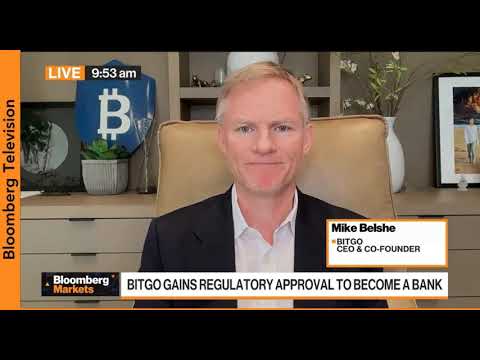
BitGo — Investor Video Playlist


Industry Resources
| Financials Resources |
| Federal Reserve Economic Data |
| Federal Reserve |
| FDIC Data |
| American Banker |
| The Banker |
| Banking Technology |
| Diversified Capital Markets Resources |
| International Financing Review (IFR) |
| Financial News |
| Global Capital |
External Quote Links
| Y Finance | Barrons |
| TradingView | Morningstar |
| SeekingAlpha | ValueLine |
| Motley Fool | Robinhood |
| CNBC | Etrade |
| MarketWatch | Unusual Whales |
| YCharts | Perplexity Finance |
| FinViz |
Prefer one of these to Trefis? Tell us why.