
How Low Can Lowe’s Stock Go?

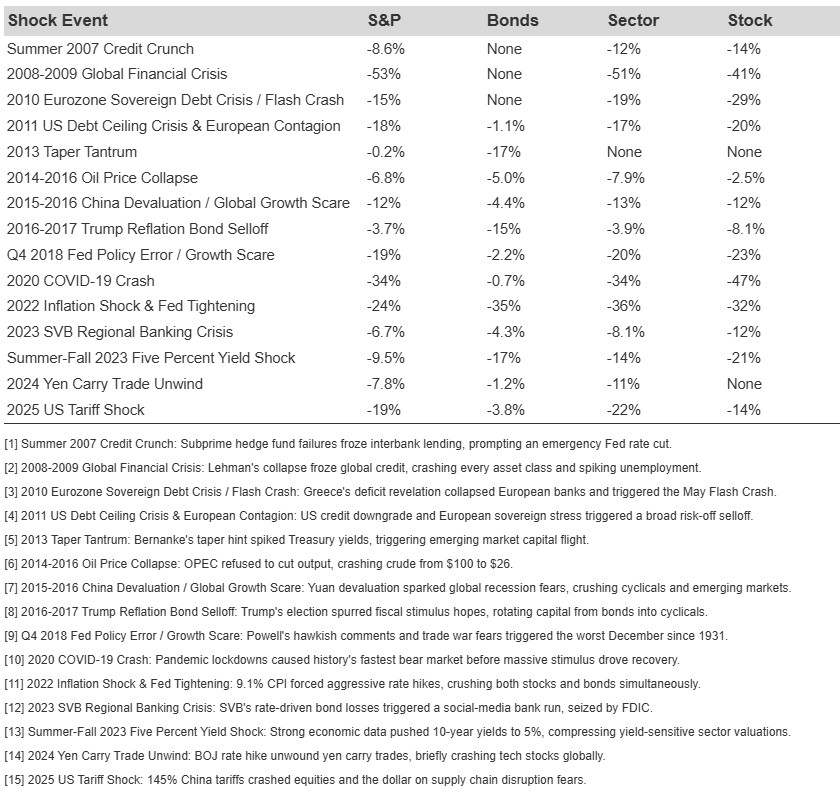
Every seasoned investor knows that market shocks are inevitable, but few are prepared for the specific depth of the hit. Historically, across 15 major crises, Lowe’s (NYSE: LOW) absorbs an average drawdown of 18% compared to the S&P 500’s average decline of 16%. While the stock often tracks the broader market, certain economic fractures trigger a much steeper trapdoor effect that catches retail investors off guard.
If you are holding Lowe’s in your portfolio, you need to know the “floor.” This type of historical reset is common among mature value plays; for instance, a similar deep-dive analysis can be seen in the Is Nokia Still Undervalued?, which explores how market leaders recalibrate after significant shocks. Analyzing Lowe’s historical survival through major liquidations establishes a mathematical baseline for its potential bottom. While past drawdowns are not predictive of future performance, they offer a quantitative framework for risk assessment in volatile environments. Leveraging these stress tests helps investors distinguish between terminal declines and standard cyclical resets, ensuring portfolio decisions remain data-driven rather than reactionary.

Image by Steve Buissinne from Pixabay
How Does It Handle Growth and Demand Scares?
The 2020 COVID-19 Crash saw pandemic fears and a concurrent Saudi-Russia oil price war triggered the fastest bear market in history as governments shut down global economies. While aggressive monetary easing and unprecedented fiscal stimulus eventually catalyzed a V-shaped recovery, Lowe’s stock experienced a 47% drawdown, significantly deeper than the S&P 500’s 34% decline and the 0.7% dip in bonds. Lowe’s often exhibits greater volatility than its primary rival, Home Depot (HD), during initial retail shocks because its customer base has a higher concentration of DIYers, who are typically more sensitive to immediate economic uncertainty than the Pro-heavy segments favoured by Home Depot.
What Happens During Credit and Liquidity Crises?
During the 2008-2009 Global Financial Crisis, the unwinding of housing leverage and Lehman Brothers’ bankruptcy froze global financial plumbing, sending unemployment to 10% and oil to $35/bbl. Lowe’s stock demonstrated relative resilience with a 41% drawdown, outperforming the S&P 500’s 53% decline while bonds remained stable. This performance contrasts with niche peers such as Floor & Decor (FND) and Tractor Supply Co. (TSCO), which have distinct risk profiles. At the same time, Lowe’s diversified scale helped it weather the Great Recession better than the broader market; these specialized competitors often face more volatile drawdowns when credit freezes specifically target professional contractors or rural discretionary spending.
How It Fares During Sovereign and Geopolitical Risk?
During the 2010 Eurozone Crisis and Flash Crash, Greece’s deficit revelation and junk downgrades exposed fiscal weaknesses, collapsing European banks, and triggering the market plunge. Lowe’s stock saw a 29% drawdown, nearly double the S&P 500’s 15% decline, while bonds held steady. This highlights a critical performance baseline: while Lowe’s is more vulnerable than the broader index during geopolitical scares, it often proves more defensive than high-end discretionary peers like Williams-Sonoma (WSM), which typically face sharper contractions as luxury spending retracts faster than the core home maintenance and repair categories that anchor Lowe’s business.
Past Market Shock Drawdowns Summarized For LOW
So What Can You Do For Your Investments?
When a growth and demand shock hits, Lowe’s will contract predictably. Recognizing this behavior as a mathematical feature rather than a flaw allows investors to avoid selling at the exact wrong moment. Success in timing an entry or holding through a correction requires recognizing this dual personality: Lowe’s often carries a higher beta than the S&P 500 during retail-specific scares, yet it has demonstrated an ability to outperform during broad liquidity crises. Distinguishing between these two types of market shocks is the key to managing a resilient portfolio and turning a market hit into a long-term opportunity.
To navigate these sharp swings, the Trefis High Quality Portfolio offers a more resilient approach by focusing on durable fundamental compounding across a diversified set of winners. The HQ Portfolio has delivered 105% returns since inception, consistently outperforming its benchmark (a combination of the S&P 500, S&P Mid-Cap, and Russell 2000). Why did HQ outperform? See the full story behind the HQ Portfolio performance metrics. and the five key reasons for its consistent success.