
TSMC Stock: In the AI Arms Race, The Foundry Wins
In the AI boom of 2026, one company stands out as a clear winner—no matter who comes out on top in the chip wars: TSMC.
The AI semiconductor space is likely to enter a period of intense competition and strategic uncertainty. As the industry moves from the brute-force phase of training giant models to the challenge of running them cheaply and efficiently at scale, designers are splintering into competing camps. Nvidia stock (NASDAQ:NVDA) is defending its $4 trillion market cap and general-purpose GPU empire, Broadcom (NASDAQ:AVGO) is arming hyperscalers with custom silicon to cut costs, and Marvell is quietly powering the data flows that make large-scale inference possible.
Yet beneath this surface-level divergence, one constant remains: control of advanced manufacturing, not chip design, will likely be the decisive advantage.
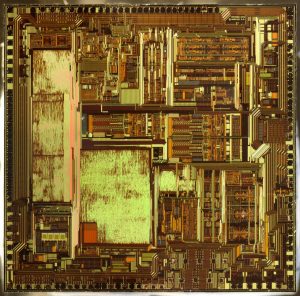
Image by WikimediaImages from Pixabay
- What Is Driving Biogen’s Recent Drop and What Comes Next
- Does Caterpillar Stock Still Have Room to Run?
- Cash Machine Trading Cheap – Centene Stock Set to Run?
- Can a $25B Investment Surge Sustain Micron’s 20% AI Memory Grab?
- The Hidden Dangers Facing Apple Stock
- How to Get Paid to Buy PYPL at a Steep Discount
The Nvidia, Broadcom, and Marvell Dilemma
Nvidia remains the undisputed leader in AI compute. Its Blackwell architecture sets the benchmark for raw performance, and its software ecosystem with CUDA continues to act as a powerful moat. But dominance comes with risk. Sure, Nvidia trades at about 39x estimated FY’26 earnings and about 25x FY’27 earnings – not too rich considering its recent growth. But it remains to be seen if growth can hold up in the long run, after the big initial capex wave for model training investments winds down.
As hyperscalers pivot from maximum performance to efficiency-per-dollar, even a modest slowdown in demand growth or a shift toward cheaper, task-specific silicon introduces downside pressure. General-purpose GPUs, once the default solution, are increasingly being scrutinized for their cost in large-scale inference workloads. Nvidia’s top-end chips often cost over $30,000. If growth slows, the stock price could decline.
If Nvidia builds the versatile and powerful “Swiss Army knife” of AI chips, its challengers are building scalpels. Broadcom has emerged as the leader in custom AI ASICs. By co-designing chips such as Google’s TPUs and Meta’s MTIA, and by securing a major deal to build OpenAI’s first custom inference chip, Broadcom is helping hyperscalers escape the so-called “Nvidia tax.”
Marvell, meanwhile, dominates the less glamorous but equally critical layer of AI infrastructure: data movement. Its networking and optical connectivity chips act as the circulatory system of modern data centers, preventing bottlenecks as inference workloads scale across clusters. Together, these companies sit at the heart of a structural shift. Custom silicon is projected to grow at roughly a 27% CAGR per Mordor Intelligence as hyperscalers optimize for cost and efficiency.
You might be wrong about which chip company wins, but you don’t have to be wrong about what they all depend on.
TSMC: Where the AI Stack Converges
Whether it is an Nvidia GPU, a Broadcom ASIC, or a Marvell networking chip, it’s almost a certainty that the silicon comes off a TSMC wafer.
As of 2026, TSMC controls more than 90% of the advanced-node market required for cutting-edge AI chips. For companies operating at scale, there is effectively no alternative. TSMC’s investment case rests on this lead in advanced manufacturing. As the world’s largest semiconductor foundry, it produces the lion’s share of the most advanced chips globally. In Q4 2025, revenues rose 21% year-over-year to $33.7 billion, with 77% of wafer revenue coming from 7-nanometer and smaller AI and 5G circuits.
Advanced nodes (3nm, 5nm, and 7nm) now account for nearly 74% of TSMC’s output, underscoring how central leading-edge manufacturing has become to its business. In AI, this position is even more entrenched. TSMC already dominates 3nm and 5nm production and is pushing into 2nm gate-all-around technology, reinforcing a technological moat that rivals struggle to match. Its scale, yield reliability, and advanced packaging capabilities have made it the default manufacturing partner for every major AI chipmaker, from Nvidia and AMD to hyperscalers designing custom silicon. While competitors such as Intel are advancing toward nodes like 18A, they remain well behind TSMC in yield, efficiency, and production maturity. New fabs in the U.S. and Japan are also designed to mitigate geopolitical concentration risk in Taiwan.
The Numbers Look Compelling
The company’s balance sheet is strong, with over $90 billion in cash and marketable securities. Margins also highlight the strength of the company’s business model. Gross margins hover near 62%, while operating margins expanded to almost 54% over the last quarter – up a solid 500 basis points from a year ago. This reflects pricing power, efficiency, and its ability to out-execute rivals like Intel and Samsung, who continue to face headwinds with next-generation node transitions.
TSMC’s market cap surpassed $1.5 trillion in early 2026, yet it still trades at a discount to its customers like Nvidia or Broadcom. Based on 2027 consensus earnings estimates, TSMC is trading at a forward P/E of roughly 19x to 20x. For a company growing earnings at a rate of about 25% (based on estimates for FY’26 and FY’27) with 50%+ operating margins, this represents a rare “value play” in a high-growth sector. Because competitors are struggling, TSMC has successfully implemented price hikes on its 2nm wafers. They are capturing the profit that would normally be competed away in a multiplayer market.
Nvidia has the prestige, and Broadcom and Marvell have momentum. But TSMC has something more durable: everyone depends on it.
While TSMC stock appears risky, the Trefis High Quality (HQ) Portfolio, with a collection of 30 stocks, has a track record of comfortably outperforming its benchmark that includes all three – S&P 500, Russell, and S&P midcap. Why is that? As a group, HQ Portfolio stocks provided better returns with less risk versus the benchmark index—less of a roller-coaster ride, as evident in HQ Portfolio performance metrics.
Invest with Trefis Market-Beating Portfolios