
Why Did Tesla Stock Jump?
For questions about this article or underlying research, email help@trefis.com.
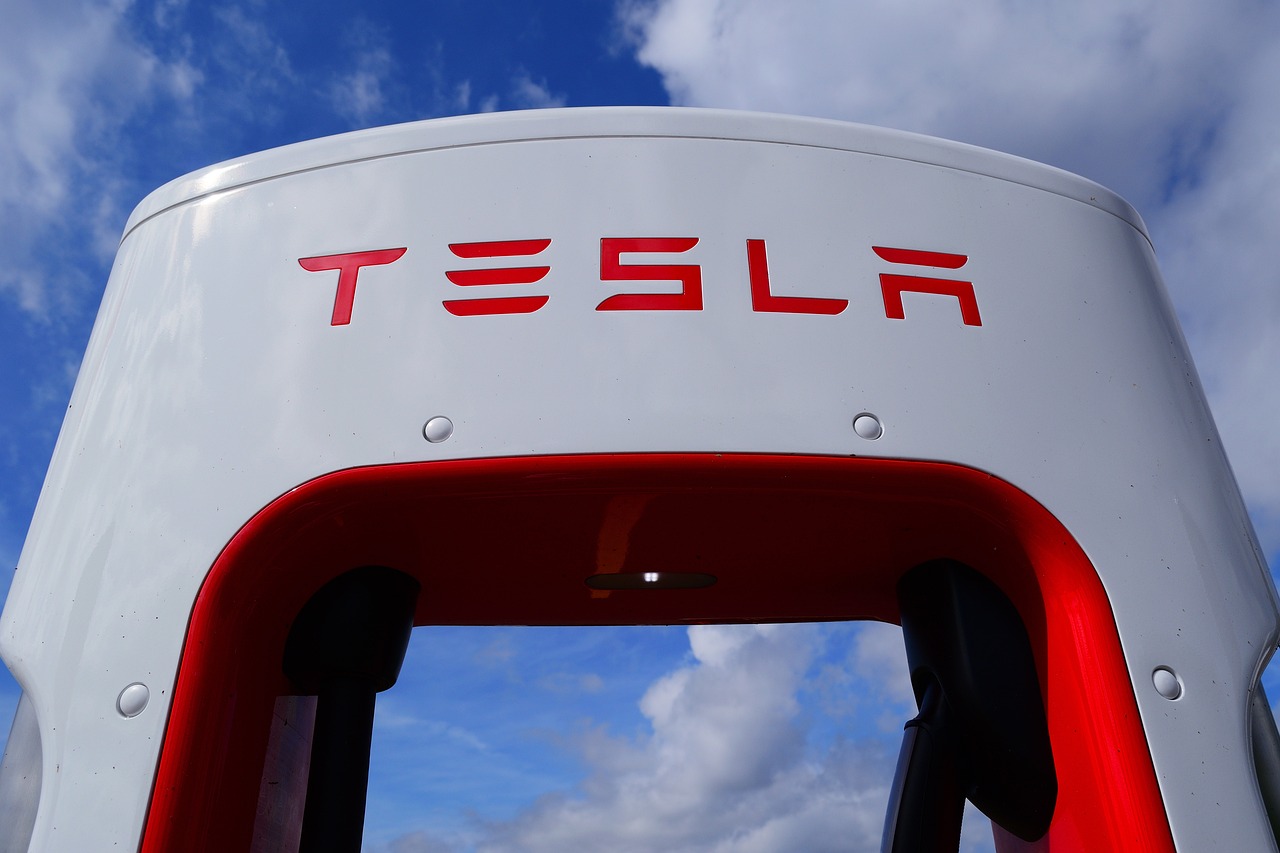
Tesla (TSLA) stock climbed 5.2% on Monday, October 26, 2026, outpacing a 0.7% gain for the S&P 500. Several news reports that day tied the gain to a Barclays upgrade. Barclays raised Tesla to Overweight from Equal Weight and lifted its price target to $450 from $370, citing a potential merger with SpaceX. Another report said the gain was possibly due to Latvia authorizing Tesla’s FSD software, the tenth European Union country to approve it. How much does that software matter to what Tesla sells?
Why Does A European Approval Matter To Tesla?
The software matters because management calls Full Self-Driving, or FSD, the main reason people buy Tesla’s cars. During its third-quarter call on October 21, 2026, management said the software “continues to be the key driver for demand.” Management said that over 75% of the cars Tesla delivered in North America that quarter came with a sign-up for a paid FSD subscription.
By that quarter, Tesla had reached over 1.7 million paid FSD customers worldwide. Management said on the same call that it expects to be fully approved throughout Europe and many other countries, while noting that the timing is not in its control. Latvia is one more country on that path.
Demand is not what limits Tesla for now, though. Management said demand for its vehicles is running far ahead of production. Tesla ended the quarter with its highest backlog in four years, and deliveries were held back mainly by how many cars it could build.
Tesla Rose Far More Than Its Sector And Peers
The XLY fund that tracks Tesla’s sector, consumer discretionary, gained 1.0% during the same session. Tesla itself helped lift the fund, since the fund holds its shares.
Tesla’s peers saw mixed results. Among them, General Motors rose 0.5%, while Rivian Automotive and Lucid Group each fell 3.4%. Tesla moved well ahead of its sector and of every company on its peer list, so most of the gain was its own.
Where Does Tesla Stock Stand After Monday?
A rise of this size is not rare for Tesla. The stock rose at least this much on six sessions in the prior 365 days. Its latest move this large in either direction was a 5.9% fall on September 4, 2026.
Over the twelve months to October 26, Tesla stock lost 12.8%, while the S&P 500 returned 15.3%. At Monday’s close of $391.62, the stock was 20% below its highest close of the past year, $489.88 on December 16, 2025. It remained well above its lowest, $298.32 on July 29, 2026. Over the three months from July 28 to October 26, the shares returned 27.4%, compared with 3.6% for the S&P 500.
At Monday’s close, Tesla traded at 12.3 times its sales over the past twelve months, compared with 3.2 times for the S&P 500. Tesla is expected to report its fourth-quarter 2026 results in January 2027, and the number of paid FSD customers is the measure to watch.
Does This Mean You Should Act On TSLA?
Our purpose is to inform you with unique data so you make the right investment decisions. That said, betting on a single stock is always risky, no matter which direction you choose.
There is a smarter approach. Since its inception, the Trefis High Quality (HQ) Portfolio has returned 105%, beating the benchmark that combines the three major indices – the S&P 500, S&P Mid-cap, and Russell 2000. And it did so without taking the concentrated risk that comes with do-it-yourself stock picking. If that is how you want to invest, the HQ Portfolio is the place to start.
Spot an error or want more like this? Tell us in 10 seconds.