
Why Rio Tinto Stock Has Rallied 47% — And What Comes Next
Rio Tinto (NYSE: RIO)’s share price performance over the past half-year has been nothing short of spectacular. The stock has surged around 47%, underscoring a powerful combination of strong commodity markets, strategic corporate execution, and investors’ renewed appetite for materials stocks. This remarkable run tells a story far bigger than a simple cyclical uptick; it’s about a company reinventing itself while capitalizing on industrial demand and structural shifts in the global economy.
Another catalyst grabbing investor attention recently is Rio Tinto’s preliminary merger discussions with Glencore, a move that could dramatically reshape the global mining industry. The talks, which resurfaced after earlier negotiations stalled in 2024, revolve around a potential all-share combination that would create the world’s largest mining group with an enterprise value exceeding $200 billion. Strategically, the logic is compelling: a combined portfolio would significantly deepen exposure to copper and other critical minerals, just as demand accelerates from electrification, AI data centers, and the energy transition. While no formal offer has been made and regulatory scrutiny would be intense across multiple jurisdictions, the mere possibility of such a deal has reinforced the view that Rio Tinto’s assets are increasingly scarce — and increasingly valuable.
If you seek an upside with less volatility than holding an individual stock like RIO, consider the High Quality Portfolio. It has comfortably outperformed its benchmark—a combination of the S&P 500, Russell, and S&P MidCap indexes—and has achieved returns exceeding 105% since its inception. Why is that? As a group, HQ Portfolio stocks provided better returns with less risk versus the benchmark index; less of a roller-coaster ride, as evident in HQ Portfolio performance metrics. Separately, see – Alcoa’s 2x Run Explained
Commodity Markets in the Driver’s Seat
At the heart of Rio Tinto’s rally lies the undeniable strength across key commodity markets. Rio’s shares recently reached all-time 52-week highs, with prices climbing as high as $85+ per share in mid-January 2026, reflecting sustained momentum over months of positive investor sentiment.
Copper, in particular, has emerged as a core engine for the stock’s climb. With prices riding near record levels above roughly $11,800 per tonne late in 2025, copper’s appeal stems from its central role in electrification, renewable energy infrastructure, electric vehicles, and artificial intelligence data centers — sectors that require vast amounts of the metal for wiring and electrified components. Tight supply dynamics, including forecast deficits that analysts suggest could widen in 2026 due to constrained new mine output, have kept prices elevated and commodity bulls firmly in control.
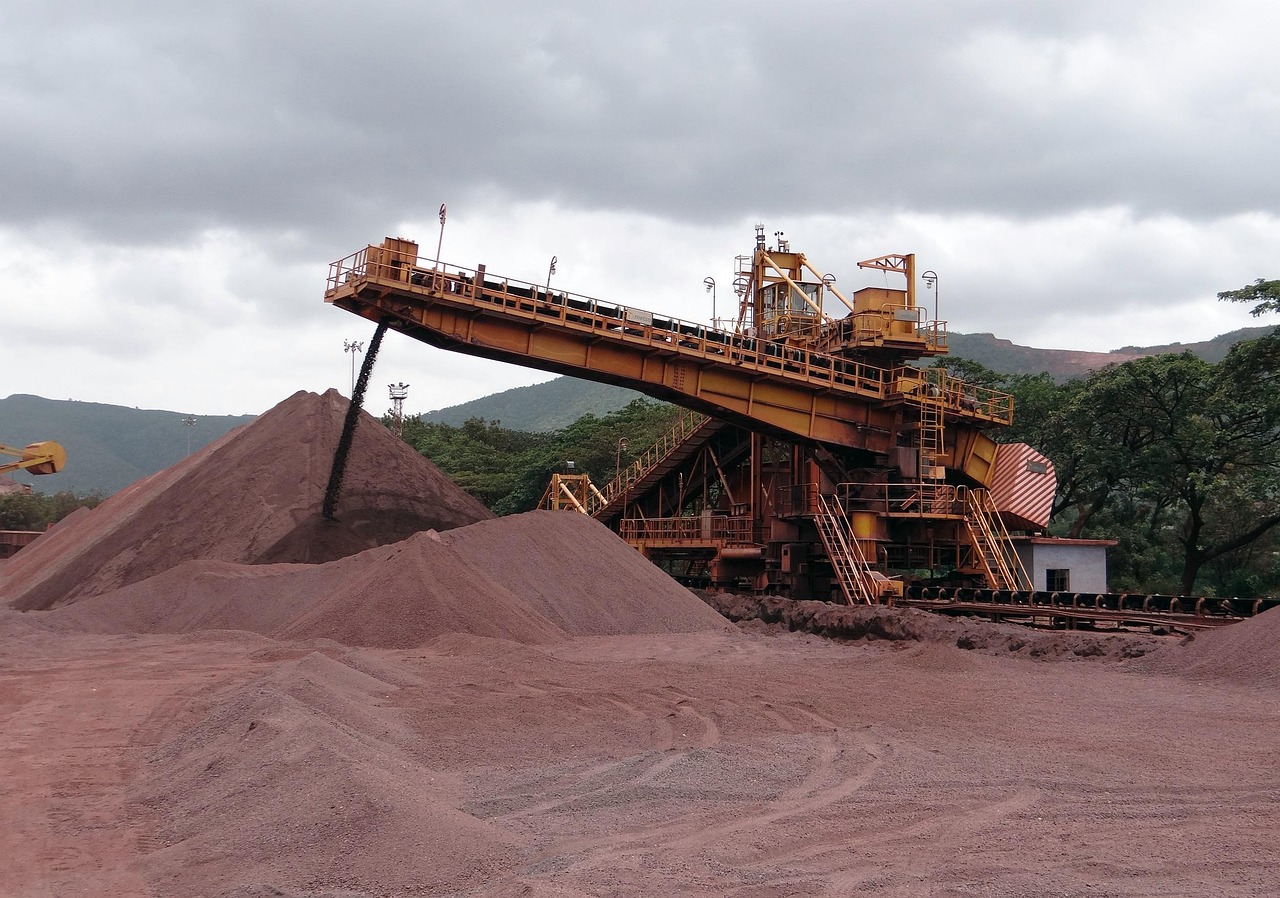
While iron ore — historically Rio’s bread-and-butter product — has shown more mixed pricing pressure amid variable Chinese demand, the company’s iron ore shipments remain robust. Pilbara shipments grew quarter-over-quarter in 2025, helping underpin cash flows even as prices softened.
Beyond copper and iron ore, other segments like bauxite and aluminum have also contributed to overall production growth. Bauxite output rose 9% year-on-year in the third quarter of 2025, and aluminum production improved as global industrial demand held steady.
Operational Execution and Strategic Shifts
Rio Tinto’s operational results have reinforced investor confidence through solid production and diversification. In its 2025 half-year results, the company reported an underlying EBITDA of $11.5 billion and strong operating cash flow of $6.9 billion, showing resilience even when iron ore pricing was about 13% lower compared with previous periods.
The company also upgraded production guidance for bauxite, expecting 59–61 million tonnes for the full year — an increase from earlier forecasts — and saw copper equivalent output climb as well.
Strategically, Rio has been sharpening its portfolio. The company has positioned itself around three core pillars — iron ore, copper, and its aluminum and lithium businesses — while streamlining non-core assets. Rio’s acquisition of Arcadium Lithium and its focus on renewable energy partnerships, such as a 15-year power deal to support its U.S. Kennecott operations, signal a pivot toward future-facing commodities needed for decarbonization and electrification.
Such moves have helped investors see Rio Tinto not just as a traditional iron ore miner but as a diversified resource play with exposure to the metals shaping tomorrow’s economy.
Market Sentiment and Broader Sector Dynamics
The broader mining sector’s performance has also buoyed Rio’s stock. Bullish commodity markets have lifted peers like BHP Group and Fortescue, reinforcing a rotation into materials stocks as macro uncertainty clouds traditional growth equities. Investors have been drawn to hard assets as inflationary pressures and industrial demand patterns favor companies that produce tangible commodities.
Challenges and Risks Ahead
Despite this strong momentum, headwinds remain. Iron ore pricing is heavily dependent on Chinese steel demand, which has faced periodic softness in key cycles. Commodity prices can also retrace quickly if supply bottlenecks ease or global growth slows. Additionally, investors are watching Rio’s potential mega-merger discussions with Glencore, which could radically transform its portfolio but also carries execution and regulatory risk.
Another factor is corporate leadership change and execution on strategic divestments. How Rio navigates asset sales, capital allocation, and long-term growth investments will be critical as markets shift.
What Comes Next for Rio Tinto
Looking forward, Rio’s trajectory will likely continue to be shaped by commodity cycles and its ability to capture value from high-growth metals like copper and lithium. If prices for these key inputs remain elevated due to structural supply deficits and demand tied to electrification and decarbonization, Rio’s diversified portfolio should benefit. Operational execution — especially at scale and cost discipline — will be key in converting production strength into shareholder value.
Earnings results and guidance updates in upcoming quarters will be major catalysts. Should Rio successfully balance expansion in higher-growth segments while maintaining healthy cash flows from iron ore, the stock could extend its rally further. However, macroeconomic volatility, supply curve shifts, or a cooling of industrial demand could prompt consolidation or pullbacks.
In a market where materials are increasingly viewed as strategic assets, Rio Tinto’s half-year surge signals more than a temporary lift — it reflects a company in transformation. Investors now watch closely, not just for commodity price headlines, but for the execution and strategic choices that will define Rio’s next chapter.
See, investing in a single stock without comprehensive analysis can be risky. Consider the Trefis Reinforced Value (RV) Portfolio, which has outperformed its all-cap stocks benchmark (combination of the S&P 500, S&P mid-cap, and Russell 2000 benchmark indices) to produce strong returns for investors. Why is that? The quarterly rebalanced mix of large-, mid-, and small-cap RV Portfolio stocks provided a responsive way to make the most of upbeat market conditions while limiting losses when markets head south, as detailed in RV Portfolio performance metrics.
Invest with Trefis Market-Beating Portfolios
See all Trefis Price Estimates