
Should You Buy Occidental Petroleum Stock For Its Cash?
Occidental Petroleum (OXY) generates free cash flow equal to 7.8% of its market value per year. That compares with 4.4% for the median S&P 500 company. A yield this high presents a clear binary. Either the shares are cheap for what the business makes, or the market expects that cash to fall. So can Occidental keep that cash coming while it pays down its debt?
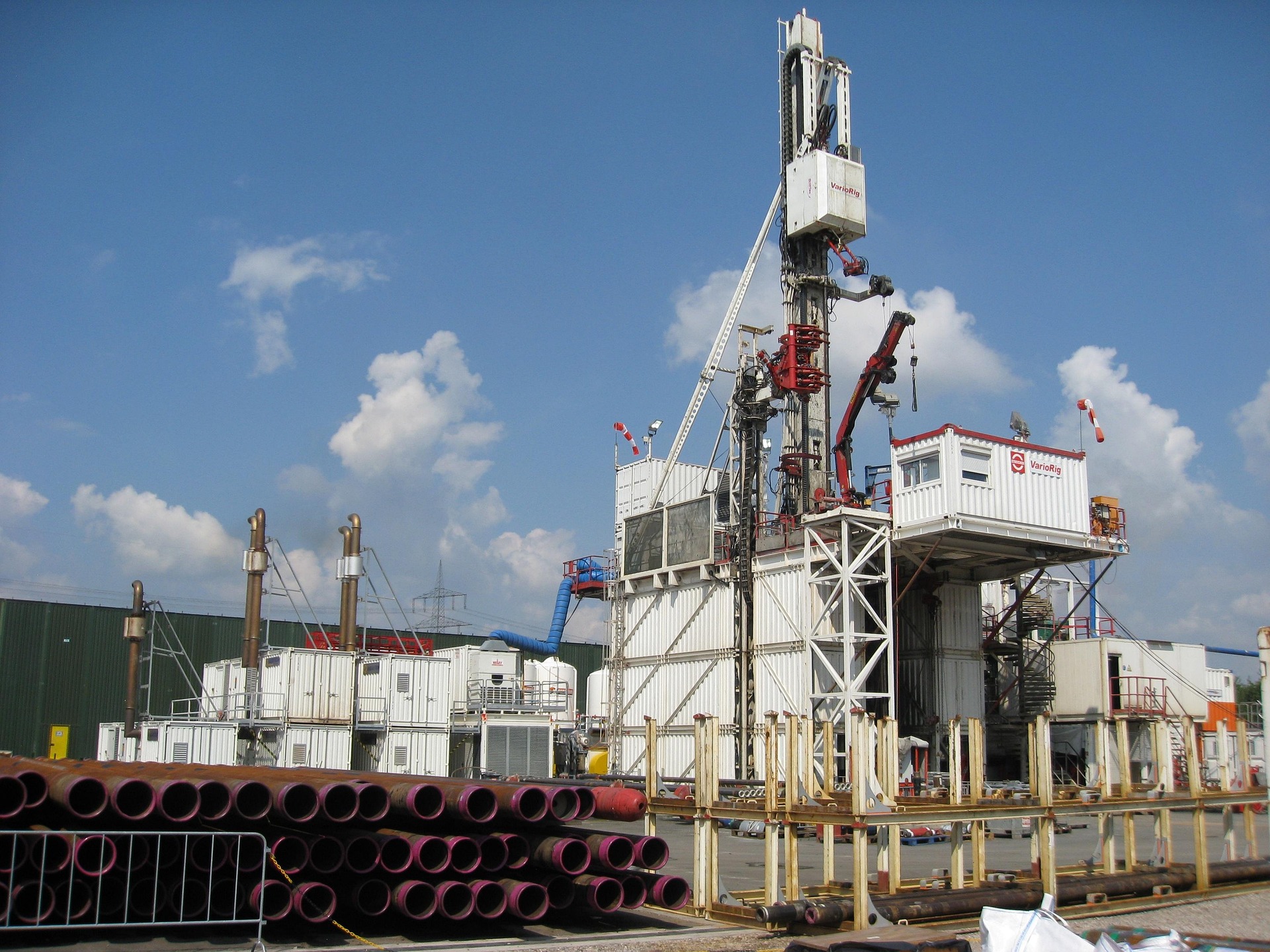
Occidental Spends Less Than Its Business Brings In
Occidental has generated positive free cash flow in every rolling twelve-month period over the last three years. Shareholders technically own a portion of this cash just as they own a share of the profit. Investors typically place a premium on this cash once they recognize it.
The company produces this cash by pumping oil and gas in regions such as the Permian and the Gulf of America. Over the last twelve months, Occidental kept 27.1% of its sales as operating profit, up from 17.8% two years earlier.
Much of this money flows straight back into the business. Operations brought in $11.0 billion of cash over the last twelve months, while the company spent $6.2 billion on capital projects. The remaining $4.8 billion in free cash flow is down from $6.1 billion a year earlier. Three years ago, that figure stood at $8.4 billion, and free cash flow has not climbed back to that level since.
How Much Debt Does Occidental Have To Serve?
Occidental carries net debt (total debt minus cash) equal to 17% of its market value. On management’s narrower measure, principal debt less unrestricted cash, net debt is $7.6 billion. Lenders are paid before shareholders. A fairer calculation therefore measures the yield against market value plus net debt on the first measure. Under this formula, the yield is 6.7%, rather than 7.8%.
Between its last two quarterly calls, Occidental reduced its principal debt by $1.5 billion to $11.8 billion. Management’s first use for cash is to lower principal debt to a $10 billion target. Currently, the company’s operating profit covers its yearly interest bill 5.7 times over.
What Could Shrink Occidental’s Cash?
Two variables threaten this cash generation: commodity prices and Occidental’s own wells. Revenue fell 8.3% in the twelve months ended June 2025, then rose 7.3% in the twelve months ended June 2026. Management credited higher commodity prices, along with cost discipline, for the strong free cash flow of the second quarter. The high yield suggests the market doubts this lift will last.
Management put the base decline of existing wells at about 25% each year. For 2027, management expects capital spending to start at $5.9 billion, a level it says should hold production roughly flat with 2026. About $5.0 billion to $5.1 billion of that is sustaining capital, which excludes exploration and multi-year projects such as the Gulf of America waterflood. Management plans to slow this annual decline to 20% by 2030 through advanced recovery projects. Executives also expect this slower decline and better capital efficiency to lower the spending needed to hold output flat. Both of these remain targets, not results.
If the decline rate does not slow, the company must put more cash back into its wells. Furthermore, if debt remains above the $10 billion goal, a larger share of cash will keep going toward repayment. Either way, less is left for shareholders.
Is Occidental Cheap, Or Shrinking?
Occidental’s operating margin has risen to 27.1% from 17.8% two years earlier, and it is actively paying down debt toward management’s $10 billion goal. Yet its sales and cash are less settled. Revenue fell in the year to June 2025 before recovering in the latest twelve months, and free cash flow sits below last year’s level. Part of the strength in the latest quarter also came from higher commodity prices. Investors evaluating the business should closely watch Occidental’s free cash flow in its third-quarter 2026 report.
How To Act On OXY?
Now you know OXY better. And that’s our purpose: to make you informed before you invest your money. However, making a bet on a single stock carries its own risks.
There is a smarter choice. Since its inception, the Trefis High Quality (HQ) Portfolio has beaten the benchmark that combines the three major indices – the S&P 500, S&P Mid-cap, and Russell 2000. And it did so without taking the concentrated risk that comes with do-it-yourself stock picking.
If you’d rather act on OXY itself:
| Play Offense | Play Defense |
|---|---|
| Learn More About OXY & Invest | Save Taxes On Capital Gains |
| Earn From OXY Cash Secured Puts | Covered Call Against OXY |