
Is Corning Stock A Buy At 50 Times Earnings?
Corning (GLW) reported Q1 2026 core sales of $4.35 billion, representing an 18% year-over-year increase. The core insight hiding beneath this headline beat is how entirely the AI-driven acceleration is offsetting the more modest growth currently seen in the company’s traditional Glass Innovations segment.
The AI Infrastructure Tailwinds
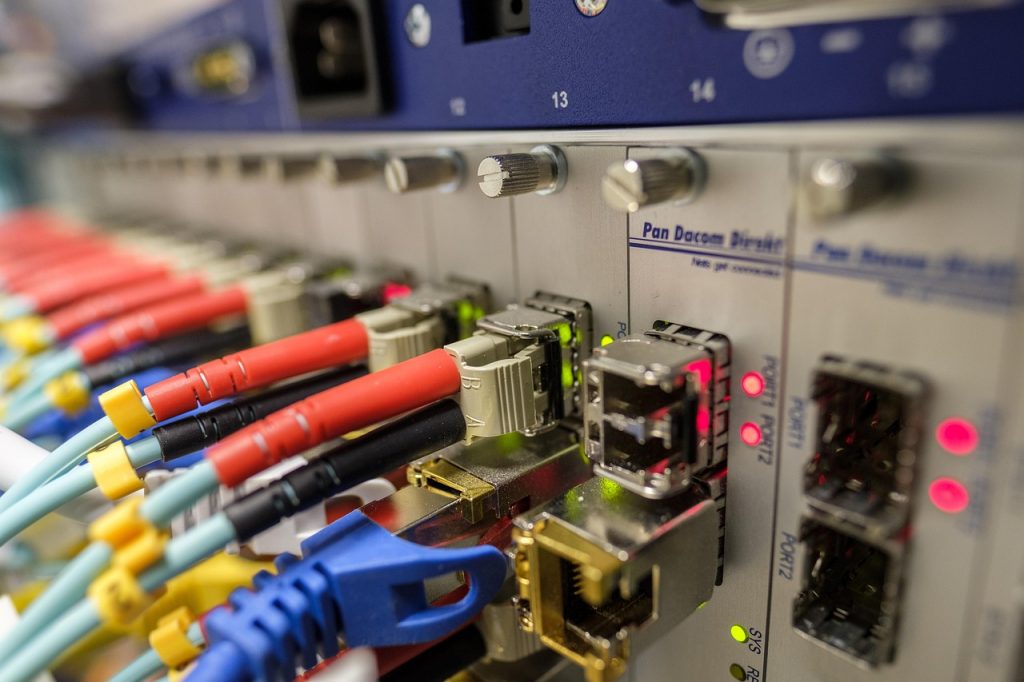
The Optical Communications segment surged 36% year-over-year to $1.8 billion, driven by the structural demand for high-density AI data center architectures. The company secured a $6 billion multi-year agreement with Meta Platforms (META) alongside two similarly sized hyperscaler deals in Q1.
Furthermore, the Solar segment recorded 80% year-over-year growth. This combined secular strength expanded core gross margins by 120 basis points to 39.1% and operating margins by 220 basis points to 20.2%. See how Corning’s growth and margins compare to those of its peers, including Thermo Fisher Scientific (TMO) and Danaher (DHR). Corning’s core EPS rose 30% to $0.70, and management guided Q2 2026 sales to $4.6 billion. The AI infrastructure thesis is materializing exactly as projected.
The Cyclical Smartphone Drag
However, the Glass Innovations segment, which accounts for 32% of total revenue, stalled at just 1% year-over-year growth in Q1. Industry forecasts project global smartphone shipments will decline between 7% and 15% in 2026 due to component shortages and rising costs. A double-digit unit contraction will directly pressure high-margin Gorilla Glass volumes. Current market sentiment appears focused on the Optical surge, potentially underestimating the impact of near-term cyclical headwinds in mobile.
The Valuation Reality Check
Crucially, the market has already aggressively priced in this structural shift. Corning currently trades at 48 times its forward expected adjusted earnings. This is a severe expansion from its three-year average P/E multiple of approximately 21x. See how Corning’s stock valuation compares with its peers. Investors are valuing a capital-intensive, cyclical materials manufacturer at a premium typically reserved for asset-light technology companies. The fundamental asymmetry has deteriorated, narrowing the margin of safety for investors entering at these levels.
Actionable Strategy
The transition of Corning into a primary AI infrastructure enabler is verified by the Q1 data, but the current valuation demands flawless execution. If the optical segment growth normalizes below 25% or the smartphone market contraction exceeds a 10% decline, the 48x multiple will compress. The actionable strategy is to hold current positions and wait for the July IDC smartphone shipment data or an earnings-driven multiple contraction before allocating fresh capital. The $168 average of analysts’ price estimates implies only a 10% upside potential from here.
Building long-term wealth requires a mechanism to manage these stock-specific risks while capturing the upside of the AI era. This objective is central to the Trefis High Quality Portfolio (HQ) strategy, which focuses on identifying companies with structural moats and high-integrity cash flows. The HQ strategy has outperformed its market benchmark since inception, delivering returns of over 105%.