
What’s Next For Corning Stock?
Corning stock (GLW) surged 16% on January 27, 2026, closing at $110 and marking a new 52-week high. The catalyst? A blockbuster multi-year deal with Meta Platforms (META) worth up to $6 billion through 2030 to supply fiber-optic cables for Meta’s AI data centers. This announcement came just hours before Corning’s Q4 2025 earnings release scheduled for today, January 28, 2026.
Why Did The Stock Jump So Dramatically?
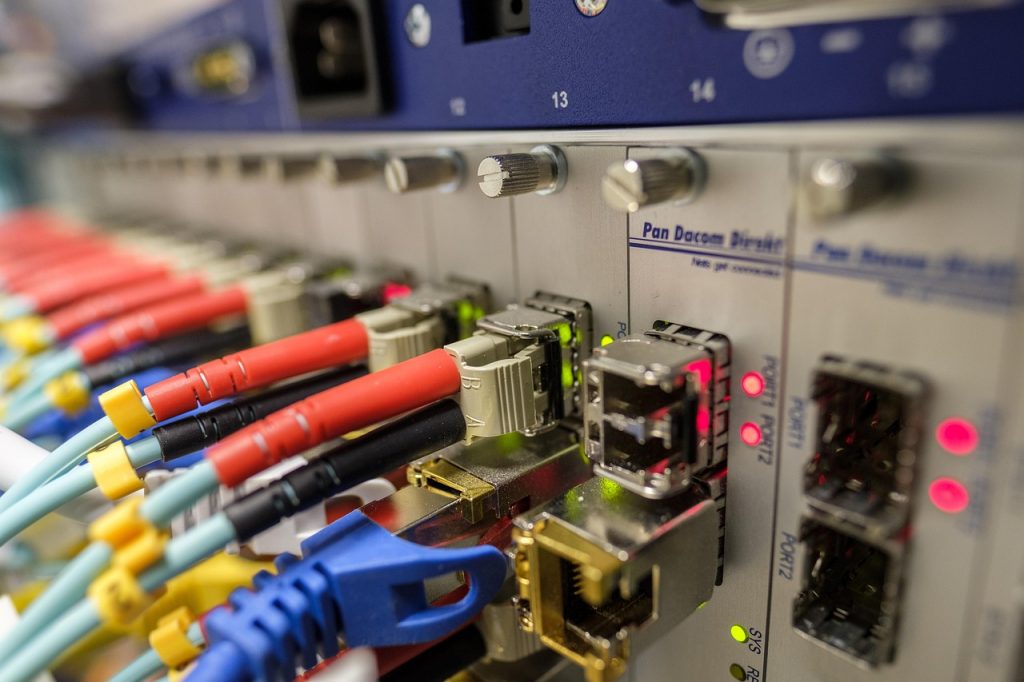
The magnitude of this deal caught the market by surprise. Meta has committed to purchasing Corning’s latest generation optical fiber, cabling, and connectivity equipment for massive AI data center projects, including the one-gigawatt Prometheus facility in Ohio and a similar-scale site in Louisiana. Meta’s Louisiana data center alone will require 8 million miles of fiber.
What makes this particularly compelling? AI data centers require significantly more fiber than traditional cloud computing infrastructure. In Q3 2025, Corning’s optical communications revenue jumped 33% to $1.65 billion, with enterprise sales in this segment growing 58% year-over-year. The shift from copper to fiber within server racks presents an additional massive opportunity as AI companies deploy hundreds of graphics processors per rack.
That being said, if you seek an upside with less volatility than holding an individual stock, consider the High Quality Portfolio. It has comfortably outperformed its benchmark – a combination of the S&P 500, Russell, and S&P MidCap indexes – and has achieved returns exceeding 105% since its inception. Why is that? As a group, HQ Portfolio stocks provided better returns with less risk versus the benchmark index; less of a roller-coaster ride, as evident in HQ Portfolio performance metrics.
Financial Performance: Strong Growth Trajectory
Corning’s recent financial performance shows impressive momentum. For Q4 2025, analysts expect revenue of $4.36 billion and EPS of $0.71, representing a 12.5% revenue increase and 24.6% EPS growth year-over-year. The company has consistently beaten estimates, surpassing EPS forecasts 75% of the time and revenue projections 100% of the time over the past two years.
Looking at full-year 2025, analyst estimates stand at $2.52 EPS on approximately $16.35 billion in revenue. For 2026, consensus estimates have been revised upward from $3.01 to $3.09 per share. This represents roughly 23% EPS growth year-over-year – solid, but does it justify current multiples?
The optical communications segment has become the star performer. With major clients including Nvidia, OpenAI, Google, Amazon, and Microsoft alongside Meta, Corning is expanding production capacity to meet surging demand. The company projects its North Carolina facility will become the world’s largest fiber-optic cable manufacturing plant when fully operational.
Valuation: Limited Upside From Here?
Here’s where things get interesting. At $110, Corning trades at a trailing P/E ratio of approximately 71x based on TTM EPS of $1.56. However, using adjusted EPS without non-recurring items of $2.38, the adjusted P/E drops to 46x. Even accounting for 2026 estimates of $3.09 per share, the forward P/E sits around 36x.
How does this compare historically? Over the past 13 years, Corning’s median P/E without non-recurring items has been just 18x. The current multiple of 36x forward earnings exceeds the normalized historical range.
Compared to the broader technology sector’s average P/E of 32x, Corning currently trades at a significant premium. Within its peer group – including companies like Thermo Fisher Scientific at 32x and TE Connectivity at 50x – Corning’s valuation premium is noticeable but not extreme.
Is The Premium Justified?
The bull case argues yes – the Meta deal provides exceptional revenue visibility through 2030, and the structural shift to fiber in AI infrastructure represents a multi-year growth runway. Management’s confidence in expanding capacity signals they see sustained demand, not a temporary spike.
But here’s the counterargument: the $6 billion Meta deal, while impressive, translates to roughly $1.2 billion annually over five years. That’s meaningful but incremental when Corning already generates $16+ billion in annual revenue. The deal adds perhaps 8-10% to the top line, not a fundamental transformation.
More concerning? The stock has already doubled over the past 12 months, up 114% year-over-year and 22% year-to-date through January 27. Much of the AI-driven growth story appears priced in. Analyst price targets from Bank of America recently moved to $110 – essentially where the stock closed yesterday.
At 36x forward earnings for a company expecting 20% EPS growth, Corning trades at a PEG ratio of around 1.8x. That’s not cheap, especially when historical averages suggest a multiple closer to 17-20x would be more appropriate, even with elevated growth expectations. To justify the current valuation, Corning would need to sustain 25-30% annual EPS growth for multiple years – a high bar even with the Meta windfall.
The Verdict
The Meta deal is undeniably positive and validates Corning’s strategic positioning in AI infrastructure. The financial momentum is real, with strong growth across optical communications and improving margins. However, with the stock trading well above historical norms, exceeding analyst targets, and pricing in significant growth already, the risk-reward appears asymmetric. Any execution hiccups, slower-than-expected AI buildout, or margin pressure from capacity expansion could trigger a multiple compression. For investors who’ve enjoyed the rally, we believe that the stock seems to be at a natural point to take profits rather than chase further upside.
Also, investing in a single stock without comprehensive analysis can be risky. Consider the Trefis Reinforced Value (RV) Portfolio, which has outperformed its all-cap stocks benchmark (combination of the S&P 500, S&P mid-cap, and Russell 2000 benchmark indices) to produce strong returns for investors. Why is that? The quarterly rebalanced mix of large-, mid-, and small-cap RV Portfolio stocks provided a responsive way to make the most of upbeat market conditions while limiting losses when markets head south, as detailed in RV Portfolio performance metrics.
Invest with Trefis Market-Beating Portfolios
See all Trefis Price Estimates