
Collect 13% On CIEN Stock Now, Own It 60% Cheaper If It Dips
Here is a way to collect an immediate income stream from the networking boom, which you keep no matter what, while lining up a chance to buy a key supplier at a deep discount if it ever gets there.
After a blistering run, shares of optical networking specialist Ciena (CIEN) have pulled back from their highs, despite the company recently posting a monster quarter. For investors who see opportunity in the AI-driven demand for data plumbing but are wary of chasing a hot stock, this creates an interesting setup for a trade that pays you to be patient.
13.5% annualized yield at a 60% margin of safety, by selling put options.
- Sell a put option on CIEN expiring 6/17/2027, with a strike price of $175.
- Collect roughly $1,245 in premium per contract (each contract covers 100 shares).
- That works out to about 8.5% annualized on the $17,500 of cash you set aside to secure the trade.
- Park that cash in a money market or savings account earning roughly 5.0%, and your total yield climbs to about 13.5%.
- And if CIEN falls below $175, you buy it at $175, already a 60% discount to today’s $432.05, and after the premium, your entry drops to about $162.55 a share, about a 62% discount to today’s price.
Two Outcomes, You Keep The Premium Either Way
If CIEN stays above $175 through 6/17/2027, the put expires worthless, and you simply keep the full $1,245 premium. That is about 7.1% on the $17,500 you set aside over 308 days, roughly 8.5% annualized, while that same collateral keeps earning about 5.0% money-market yield on top, for the 13.5% total above. You never buy the stock and keep the income, free to do it again.
If CIEN closes below $175, you are assigned and buy 100 shares at $175. The $1,245 premium you already pocketed lowers your effective cost to about $162.55 a share, roughly a 62% discount to today’s price, though if the stock has fallen further by then you would be holding a paper loss.
So what happens if CIEN really does close below $175, and you are the one buying? Then everything rests on a single question.
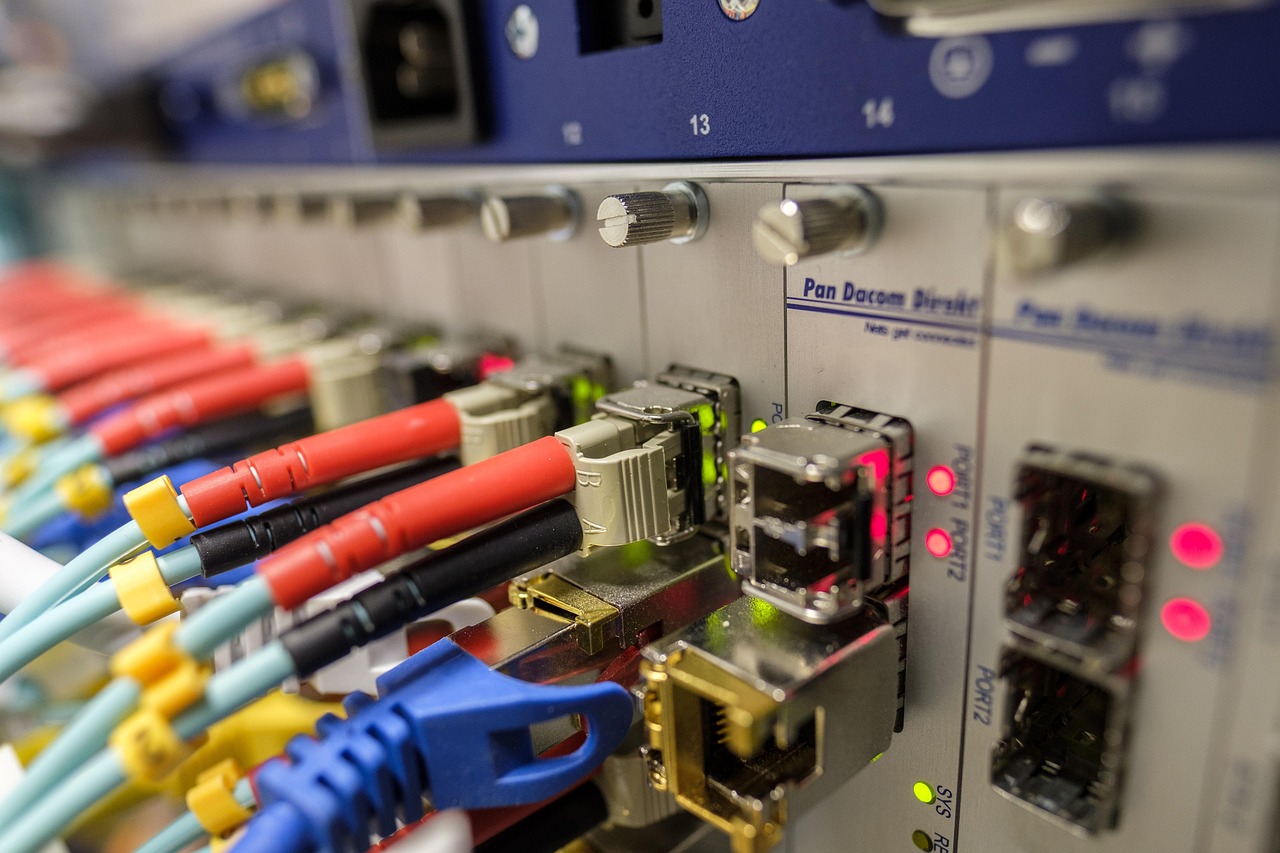 Photo by Bru-nO on Pixabay
What You Would Actually Be Buying
So, how comfortable would you be owning this business if it got cheaper? Because that is the real question. If the stock falls below your chosen price, you are on the hook to buy it. The bull case is straightforward and powerful. Ciena is riding a massive wave of network infrastructure spending, with fiscal second-quarter revenue jumping 40% year-on-year to $1.57 billion. Management is guiding for full-year 2026 revenue growth of 32% at the midpoint. The demand appears locked in, with the company’s backlog swelling to $7.7 billion, providing what the CFO calls “excellent visibility into 2027.” Ciena is also landing key design wins with the world’s biggest cloud providers for next-generation systems like its RLS Hyper-Rail platform, positioning it at the heart of the AI buildout.
But that enormous backlog is precisely what gives skeptics pause. On the company’s latest earnings call, analysts repeatedly probed whether this surge in orders could be a repeat of the post-COVID supply chain scramble, where customers ordered far ahead of need, leading to a painful inventory correction later. Management insists this time is different, stating the equipment is “going into the ground. They’re not going into warehouses.”
There are also subtle pressures to watch. While margins have been strong, the company’s full-year guidance implies a potential softening in the fourth quarter, and the CFO acknowledged the need to be “prudent about some inflationary pressures.” This is the scenario that could push the stock lower: a combination of slowing orders as supply chains normalize and costs that are harder to pass on.
Ultimately, this trade is a bet on whether you believe the current demand is durable. You are paid an upfront, non-refundable income to agree to buy a critical technology supplier at a significant discount to today’s price. If you believe the AI buildout has years to run and Ciena’s backlog is solid, you are essentially getting paid to set a buy order at a price you might have wished for anyway. The one thing to watch is the quality of that backlog. As long as it keeps converting smoothly into revenue without signs of cancellations or pushouts, the bull case holds. This income-first approach isn’t unique to one stock; for another take on a similar strategy in the networking space, you can see how it applies to a peer.
Wondering whether another stock offers a better yield, or what this same trade would pay on a name you already like? You can screen the latest cash-secured put yields across the market for yourself. And if it is exposure to technology as a whole you want rather than this one name, our ETF Scorecard ranks the technology funds. Going broader than any one sector, to a quality-first mix across the whole market, is where the portfolio below comes in.
Where This Trade Fits A Bigger Plan
Selling a cash-secured put is a smart way to manufacture income now and engineer a cheaper entry on a stock you have actually researched. The catch sits in the trade itself: it is a single name, and if that name falls hard you are the one left holding it. It is a good tool, not a whole portfolio.
That is where the Trefis High Quality (HQ) Portfolio comes in. It pairs the kind of active idea you just read about with a hands-off core of about 30 quality businesses, each chosen on the full weight of its fundamentals rather than a single setup, then sized and re-balanced with discipline. The result is a track record of outpacing a benchmark that combines the three major indices – the S&P 500, S&P Mid-cap, and Russell 2000. Run trades like this on top of a foundation that is not riding on any one of them.