
The SLB Paradox: Short-Term Friction, Long-Cycle Fuel
Despite SLB’s heavily disrupted Q1, why is the market betting on a multi-year boom?
At first glance, SLB’s (SLB) chart presents a striking contrast. Over the last year, the stock notched a 40% gain, comfortably outpacing the S&P 500’s 24% return. To an outside observer, it would seem the oilfield services giant is firing on all cylinders. Yet, digging into the company’s Q1 financial report reveals a far more complicated operational reality.
A Quarter To Forget
Let’s be blunt: the first quarter of 2026 was a mess. Geopolitical turmoil in the Middle East hammered operations. Excluding a recent acquisition, revenue fell 7% year on year. Adjusted EBITDA margin collapsed, dropping 346 basis points to 20.3%. The company even burned through cash, posting free cash flow of slightly negative $23 million. To top it off, management warned the next quarter would be even worse, with an incremental earnings hit of $0.06 to $0.08 per share. So, where did the 43.3% gain come from?
Pricing In The Long-Term Energy Complex
The market appears to be looking straight through the temporary volatility. The market seems to be making a bold, counterintuitive bet: that the very “fragility of the global energy complex,” as the CEO put it, is the catalyst for a new super-cycle. The argument is that today’s supply disruptions are forcing countries to get serious about energy security, sparking a wave of investment in everything from deepwater exploration to reviving old fields. Management is already talking about a “positive outlook for SLB into 2027 and 2028.” The stock’s run suggests the market believes them.
The tangible need for these long-term investments becomes clear when analyzing SLB’s top-tier customers. As highlighted in the Trefis analysis, The Number That Could Test Exxon Mobil Stock, even the most operationally excellent supermajors are fighting persistent infrastructure headwinds.
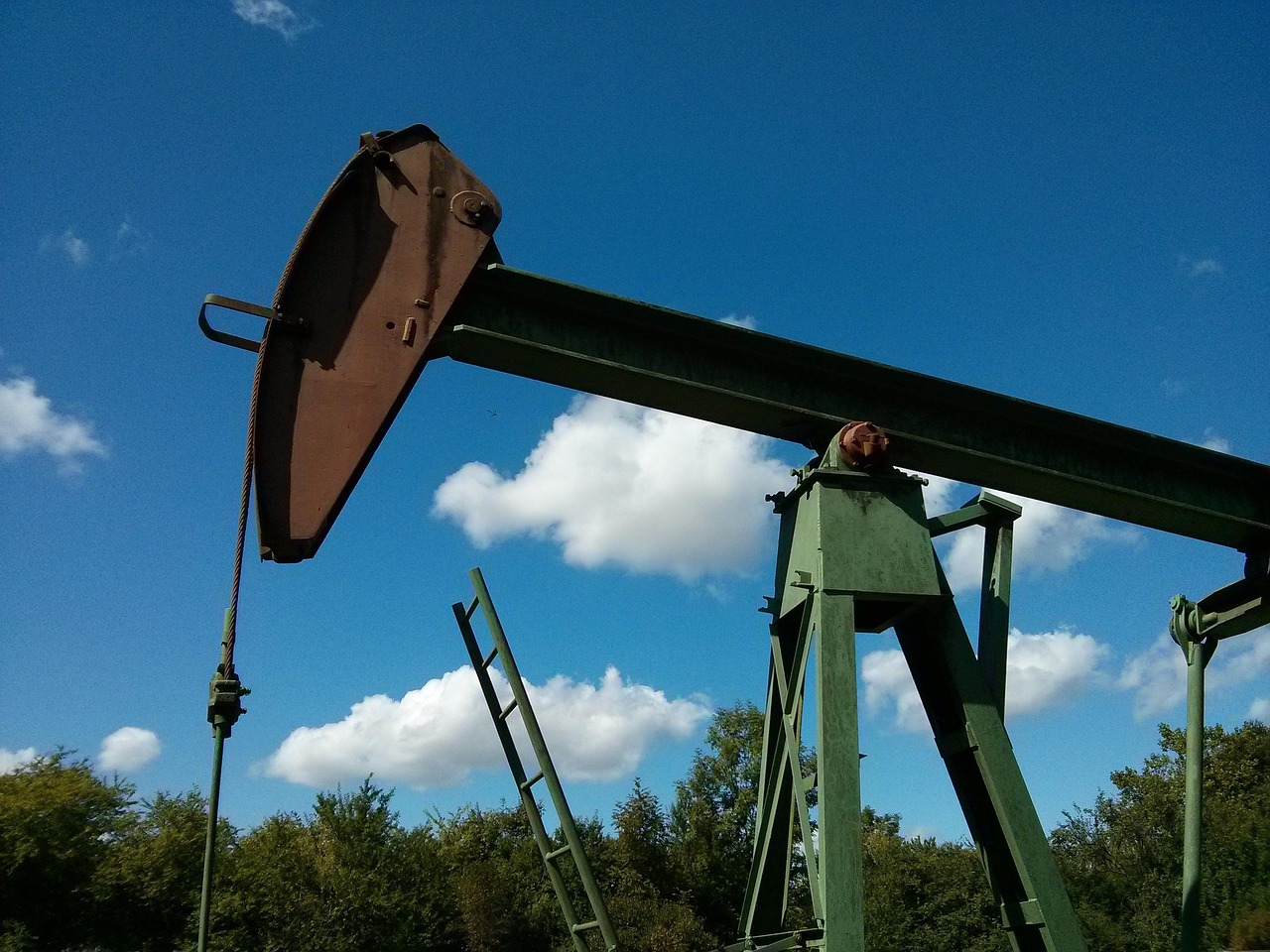
Photo by Moni49 on Pixabay
Not Just An Oil Bet
Higher oil prices are only part of the story. SLB is building new growth engines that have nothing to do with a drill bit. Its Digital division revenue grew 9% year on year. And its data center solutions business, a play on the AI infrastructure boom, is a “bright spot, with 45% growth year on year.” The company expects that unit to exit the year at a $1 billion run rate. It’s a compelling narrative of a legacy giant finding new life.
However, execution timelines can test investor patience, especially when commodity markets shift. This tension was clearly on display following the announcement of the U.S.–Iran peace agreement (with a formal signing ceremony slated for Geneva on June 19), which immediately eased long-standing supply disruption concerns in the Middle East.
As a result, Brent crude futures plunged more than 5% to three-month lows near $78 per barrel, raising fears of a near-term global supply surplus. This drop in crude prices coincided with SLB’s Digital Investor Day. While management confirmed solid metrics, the presentation focused heavily on long-range 2030 financial targets rather than immediate quarterly upgrades.
Without a near-term catalyst to offset the slumping oil market, the stock experienced a sharp 5.16% pullback to $50.33 on “sell the news” profit-taking. This recent drop highlights a persistent vulnerability: despite a compelling macro narrative, SLB has actually been the laggard in its own peer group. Peer BKR jumped 54% over the same period, HAL climbed 63%, and FTI soared an incredible 90%.
Where Does This Fit In Your Portfolio
For investors holding or eyeing the stock today, the core question remains unchanged. Is SLB a fundamentally sound compounder temporarily weighed down by a cooling oil market and short-term friction, or is it simply proving to be the slowest horse in a fast race?
Chasing single-name moves is its own kind of risk. The Trefis High Quality (HQ) Portfolio takes the other side of that bet: 30 quality names, sized and re-balanced with discipline, and a track record of outpacing a benchmark that combines all major indices – the S&P 500, S&P Mid-cap, and Russell 2000.