
Is Oracle Stock A Smart Buy At $230?
Oracle (ORCL) stock dropped 5.83% yesterday as investors grew anxious over soaring AI infrastructure costs and locked in gains, snapping a massive three-day rally that had driven shares to annual highs. With the stock now hovering around $230, is it still a smart buy?
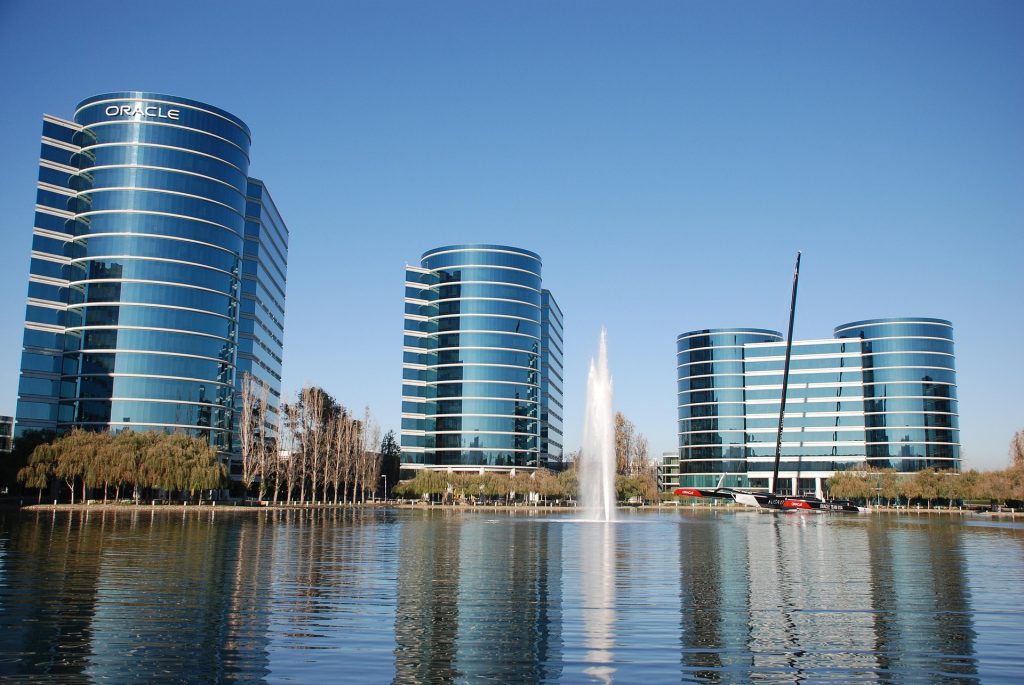
Image by JJ from Pixabay
Is the valuation too steep compared to the broader market?
Yes, Oracle trades at a clear premium. If you look at the multiples, its price-to-sales ratio stands at 9.9 versus the S&P 500 average of 3.2. Its price-to-earnings ratio tells a similar story, sitting at 39.0 compared to the benchmark’s 23.8. (See Oracle’s valuation metrics). Oracle is not alone in facing intense valuation scrutiny. For a closer look at another cloud giant wrestling with elevated market expectations, see our analysis on Amazon Stock’s High-Altitude Problem.
Chasing single-name AI momentum is its own kind of risk. The Trefis High Quality (HQ) Portfolio takes the other side of that bet: 30 quality names, sized and re-balanced with discipline, with a track record of consistently outpacing the S&P 500.
Does Oracle’s top-line growth justify this premium?
The growth numbers certainly build a strong case. Over the last three years, Oracle’s revenue grew at an average rate of 10.2%, outperforming the S&P 500’s 5.8%. Looking closer, revenue expanded 14.9% from $56 billion to $64 billion over the last 12 months, while the benchmark managed 7.4%. In the most recent quarter, Oracle’s revenue surged 21.7% to $17 billion from $14 billion a year ago, easily outstripping the S&P 500’s 8.7% improvement.
How profitable is the business under the hood?
Remarkably profitable. Over the last four quarters, Oracle generated $21 billion in operating income, translating to a 32.3% operating margin, nearly double the market average of 18.4%. Operating cash flow hit $24 billion, yielding a 36.7% margin against the benchmark’s 21.1%. Net income reached $16 billion, representing a 25.3% net margin versus 12.9% for the S&P 500. This stellar cash generation rivals other tech giants focused on efficiency. To see how another mega-cap leverages structural cash flow, review Can META Stock Compound Its Way Higher?
Can the balance sheet handle aggressive expansion?
The financial foundation is solid. Oracle carries $153 billion in debt against a market capitalization of $662 billion as of June 3, 2026. This puts its debt-to-market equity ratio at a manageable 23.1%. Liquidity is also robust, with cash and equivalents accounting for $39 billion of its $245 billion in total assets. That is a 16.0% cash-to-assets ratio, well ahead of the market’s 6.7%.
How does the stock hold up when the market panics?
Historically, it shows strong resilience. During the 2022 inflation shock, the stock dropped 41.1% from its $103.65 peak to $61.07, but fully recovered by May 25, 2023. It later soared to a high of $328.33 in September 2025 before settling at the current $230 level. In the 2020 pandemic crash, it fell 28.6%, beating the S&P 500’s 33.9% drop, and recovered by July 2, 2020. During the 2008 financial crisis, it declined 41.1%, outperforming the benchmark’s 56.8% plunge, and fully recovered by December 18, 2009.
What is the final verdict for investors?
Oracle delivers strong metrics across growth, profitability, financial stability, and historical resilience. However, the aggressive price run-up makes a direct entry highly sensitive to short-term volatility. Given the elevated valuation, a conservative strategy is to wait for the upcoming Q1 earnings report before building a position. When parsing the report, focus specifically on management’s capital expenditure guidance and cloud margin trends. If margin compression is less severe than feared, any macro pullback toward technical support in the $210 to $220 range may offer a more favorable risk-reward entry profile. That said, if investors remain willing to pay a heavy premium for AI momentum, sitting on the sidelines carries the risk of missing out on further upside.